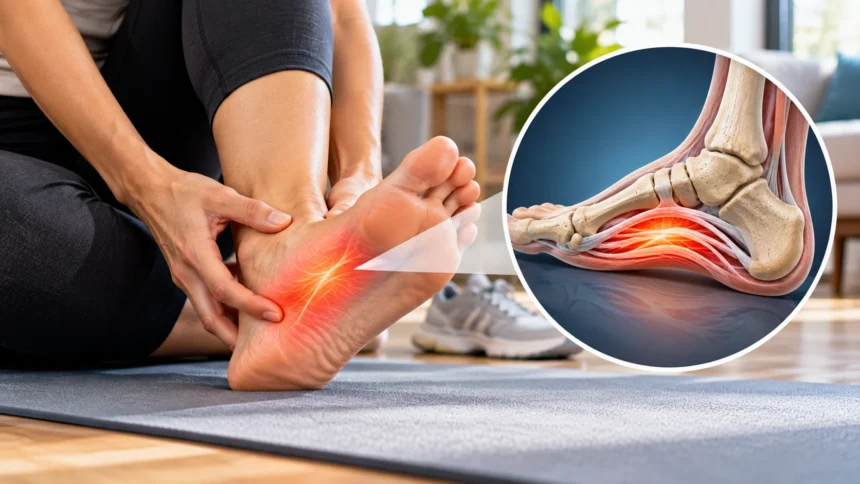
What Does Foot Pain in the Arch Mean?
Foot pain in the arch refers to discomfort along the curved middle section of the foot between the heel and the ball of the foot. The pain may feel sharp, aching, burning, tight, or tender depending on what is causing it. Some people notice symptoms only during activity, while others feel discomfort when standing, walking, or taking their first steps after rest.
The arch is supported by bones, ligaments, tendons, muscles, and connective tissue that work together every time you move. These structures absorb force and help transfer weight from the heel toward the front of the foot. When one area becomes irritated, overloaded, weak, or injured, pain can develop anywhere along the inner, outer, or central part of the arch.
Occasional soreness after unusually long periods of walking may settle with rest and activity changes. Persistent or worsening arch pain deserves more attention, especially when it affects normal walking or exercise. Understanding where the pain occurs, when it started, and what activities make it worse can provide useful clues about the underlying cause.
Common Causes of Foot Pain in the Arch
Plantar fascia irritation is one of the most common reasons people experience pain through the bottom of the foot. The plantar fascia is a strong band of tissue extending from the heel toward the toes and helping support the arch. Repeated loading, changes in activity, or reduced tissue capacity can make this structure sensitive and painful.
Muscle and tendon problems can also produce arch discomfort. The posterior tibial tendon, flexor tendons, and smaller muscles underneath the foot contribute to supporting the arch during walking and standing. Overuse, sudden increases in training, weakness, or altered foot mechanics may place additional stress on these structures and cause localized soreness.
Other possible causes include stress injuries, nerve irritation, flat feet, high arches, poorly fitting shoes, arthritis, and direct trauma. Because several structures are packed into a relatively small area, different conditions can produce similar symptoms. Persistent pain should therefore be evaluated based on its location, activity pattern, medical history, and accompanying symptoms rather than self-diagnosed from one sensation.
Plantar Fascia Problems and Arch Pain
The plantar fascia helps maintain the shape of the foot and absorbs force when you walk, run, or stand. When this tissue becomes irritated, discomfort often begins near the heel but can extend forward into the arch. Symptoms may be especially noticeable after periods of rest, including when taking the first few steps in the morning.
Pain may ease once the foot warms up but return after prolonged walking, running, or standing. Some people also notice tenderness when pressing along the inside of the heel or arch. This pattern does not automatically confirm plantar fascia involvement, because several other tissues can cause similar pain around the bottom of the foot.
Reducing sudden increases in activity, wearing supportive footwear, and gradually strengthening the foot and calf may help some people. Gentle mobility can also be useful when comfortable. If pain remains severe or persists for several weeks, assessment by a physiotherapist, podiatrist, or another healthcare professional can help clarify what is contributing.
Can Flat Feet Cause Arch Pain?
Flat feet occur when the arch becomes lower while standing, causing more of the sole to contact the ground. Many people naturally have low arches without experiencing any symptoms. Problems are more likely when the foot struggles to tolerate activity, becomes fatigued easily, or develops excessive strain through surrounding muscles and tendons.
A flexible flat foot may appear relatively normal when sitting but flatten more noticeably during weight-bearing. This change can increase demand on tissues that help control the foot and ankle. Some people may experience aching through the inner arch, ankle fatigue, or discomfort after prolonged walking, especially when activity increases faster than the body can adapt.
Flat feet do not always require special treatment. If symptoms are present, strengthening, appropriate footwear, load management, and sometimes temporary arch support may help depending on the situation. The aim should be improving comfort and function rather than trying to create a perfectly shaped arch based only on appearance.
Can High Arches Cause Foot Pain?
High arches can also contribute to foot discomfort because they may distribute pressure differently across the sole. A rigid high arch may absorb shock less efficiently, placing greater pressure on the heel and ball of the foot. Some people also develop tightness or soreness through the central arch after running, standing, or walking for long periods.
Shoes that do not match the shape of a high-arched foot can increase irritation. If the shoe presses against the top of the foot or provides inadequate cushioning underneath, repetitive movement may become uncomfortable. People with high arches may also notice calluses or pressure points in areas that receive greater loads during walking.
Supportive footwear with adequate cushioning may improve comfort for some individuals. Foot and ankle strengthening can also help improve control and load tolerance. Persistent pain, frequent ankle instability, or unusual changes in foot shape should be assessed professionally rather than managed solely by buying increasingly supportive shoes.
How Walking and Running Can Trigger Arch Pain
Walking and running repeatedly load the arch as the foot absorbs impact and pushes the body forward. A sudden increase in distance, speed, hills, or training frequency can overload tissues that are not yet conditioned for the additional demand. This is a common reason arch pain appears after beginning a new fitness program or returning to exercise.
Training surfaces can also influence symptoms. Repeated running on hard ground, steep hills, or uneven trails may increase demand on certain tissues, particularly when combined with worn-out shoes or inadequate recovery. However, no single surface is universally harmful, and the total amount of activity usually matters more than one environmental factor.
Gradual progression is one of the most effective ways to reduce overuse problems. Increase distance and intensity in manageable steps while allowing time for recovery. If arch pain worsens during each session or remains elevated the following day, reducing the training load temporarily may help prevent a minor irritation from becoming more persistent.
How the Hips and Lower Body Affect Foot Mechanics
The foot does not work independently from the rest of the lower body. Movement at the hips, knees, and ankles influences how force travels through the leg during walking and running. Weakness, fatigue, or poor coordination higher in the chain can sometimes change how the foot lands and how much work the arch performs.
Muscles around the hips help control the position of the thigh and pelvis during each step. Strong hip extensors contribute to propulsion and lower-body stability, which can influence overall walking and running mechanics. This does not mean hip weakness directly causes arch pain, but lower-body coordination can matter when several contributing factors are present.
A complete rehabilitation plan may therefore include more than foot exercises alone. Strengthening the calves, hips, glutes, and core can help improve how the entire lower body manages load. Addressing the broader movement system may be especially useful when foot pain repeatedly returns during sports or longer periods of activity.
Footwear and Arch Pain
Shoes can affect how comfortable your feet feel during daily activities and exercise. Footwear that is too tight, excessively worn, or poorly matched to your foot shape may create pressure points and increase irritation. Shoes that suddenly change heel height, cushioning, or support can also alter how forces move through the arch.
There is no single perfect shoe for everyone with arch pain. Some people prefer greater cushioning, while others feel more comfortable with a firmer or more flexible shoe. The most practical choice is usually footwear that fits properly, feels comfortable during your normal activities, and does not consistently reproduce pain.
Orthotics or arch supports can provide temporary relief for some people by changing how pressure is distributed under the foot. However, they are not always necessary and should not replace strengthening when reduced tissue capacity is part of the problem. Professional guidance may help when symptoms continue despite changing footwear or reducing irritating activities.
How to Relieve Foot Pain in the Arch
Relative rest can help when arch pain begins after a sudden increase in activity. This does not always mean avoiding all walking or exercise, but reducing the movements that strongly aggravate symptoms may allow irritated tissues to settle. Lower-impact activities can sometimes maintain fitness while decreasing repeated pressure through the painful area.
Cold therapy may temporarily reduce discomfort after activity for some people. Gentle foot mobility, calf stretching, and rolling the sole over a soft ball may also feel helpful, provided these techniques do not increase pain. Avoid aggressive massage or stretching directly into severe tenderness because excessive pressure can make irritated tissues more sensitive.
Over-the-counter pain medicines may be appropriate for some individuals, but they should be used according to medical guidance and product instructions. People with medical conditions, medication interactions, or persistent symptoms should speak with a healthcare professional. Relief strategies work best when combined with gradually restoring strength and normal activity tolerance.
Exercises That May Help Arch Pain
Foot-strengthening exercises can help improve the ability of the arch to manage daily loads. Toe control exercises, gentle arch contractions, heel raises, and balance drills are common options. Start with low resistance and focus on smooth, controlled movement rather than trying to create a strong cramping sensation underneath the foot.
Calf strength is also important because the calf muscles and Achilles tendon help control the ankle and transfer force during walking. Slow heel raises can gradually improve strength through the lower leg and foot. The difficulty can progress from both legs to single-leg variations once basic movements can be performed comfortably.
Exercise should be adjusted according to symptoms. Mild effort or temporary muscle fatigue may be normal, while sharp pain, increasing swelling, or worsening discomfort after every session suggests the workload may be too high. A physiotherapist can help determine which exercises are most appropriate when pain has lasted for several weeks.
When Arch Pain May Be a Stress Injury
Stress injuries can develop when bone is repeatedly loaded without enough recovery between activities. Runners, athletes, military personnel, and people who suddenly increase walking or training volume may be more vulnerable. Pain is often localized to a specific area and can become progressively worse with weight-bearing activity rather than improving as the foot warms up.
Swelling and tenderness over a small area can sometimes accompany a stress injury. In more advanced cases, discomfort may occur during ordinary walking or even at rest. Continuing high-impact exercise despite increasing pain can worsen the injury and extend the amount of time needed for recovery.
If you suspect a stress fracture or another bone injury, reduce impact activity and seek medical assessment. Imaging may be required depending on symptoms and examination findings. Do not attempt to run through sharply localized foot pain simply because there was no single traumatic event when the discomfort first appeared.
When Nerve Problems Cause Arch Pain
Nerve irritation can cause burning, tingling, numbness, or electric-like pain in the foot. Symptoms may occur through the arch, heel, toes, or ankle depending on which nerve is affected. This type of discomfort often feels different from the aching or tenderness associated with ordinary muscle and tendon overuse.
Nerve symptoms can originate locally around the ankle and foot or sometimes higher in the leg or lower back. Pressure on a nerve, previous injuries, certain health conditions, or prolonged positions may contribute. Because nerve-related foot pain has several possible causes, treatment depends on identifying where and why the nerve is irritated.
Persistent numbness, weakness, loss of sensation, or burning pain should be professionally evaluated. These symptoms are especially important for people with conditions that can affect nerve health or circulation. Early assessment may help prevent complications and identify whether the source is neurological, musculoskeletal, or related to another medical condition.
When Should You See a Doctor for Arch Pain?
Consider seeking medical advice when arch pain lasts for several weeks despite activity changes and supportive self-care. Evaluation is also useful if pain repeatedly returns each time you resume normal walking or exercise. A clinician can examine foot mechanics, tenderness, strength, mobility, and your recent activity history to identify likely contributing factors.
Seek care sooner if you cannot comfortably bear weight, the foot becomes significantly swollen, or pain follows a major injury. Redness, unusual warmth, fever, or an open wound also deserve prompt attention. These symptoms may indicate something other than a straightforward overuse problem and should not be treated with exercise alone.
Urgent assessment may be needed for sudden severe pain, significant deformity, loss of sensation, or a cold or unusually discolored foot. People with diabetes, circulation problems, or significant nerve conditions should also be cautious about persistent foot symptoms. Early medical evaluation is preferable when normal healing seems delayed or neurological changes are developing.
Conclusion
Foot pain in the arch can develop from plantar fascia irritation, tendon overload, foot structure, training changes, nerve problems, footwear, or other musculoskeletal issues. The location and timing of symptoms can provide useful clues, but similar conditions often overlap. Persistent pain should therefore be considered in the context of movement, activity level, and overall health.
Relief often involves temporarily reducing aggravating activities while maintaining comfortable movement. Supportive footwear, gentle mobility, progressive foot and calf strengthening, and gradual return to activity can help many common overuse problems. Paying attention to the hips, knees, and overall lower-body mechanics may also support a more complete recovery.
If arch pain is severe, continues for several weeks, or appears with swelling, numbness, weakness, or difficulty bearing weight, professional assessment is appropriate. Early guidance can help distinguish common tissue irritation from stress injuries, nerve problems, or other conditions. The goal should be restoring comfortable function rather than simply masking pain and returning to activity too quickly.
FAQs
What is the most common cause of foot pain in the arch?
Plantar fascia irritation is a common cause, but tendon problems, activity changes, footwear, flat feet, high arches, and muscle fatigue can also contribute. Persistent symptoms may require professional assessment.
Why does my arch hurt when I first wake up?
Pain during the first morning steps is often associated with irritation of the plantar fascia. The tissue may feel stiff after rest and become more comfortable once the foot gradually begins moving.
Can walking too much cause arch pain?
Yes. A sudden increase in walking distance or time can overload the tissues supporting the arch. Reducing activity temporarily and rebuilding walking volume gradually may help when overuse is the main factor.
Should I stretch a painful foot arch?
Gentle stretching may help some causes of arch pain, but aggressive stretching can irritate sensitive tissues. Stop if stretching increases pain, numbness, or burning and seek guidance if symptoms continue.
How long does arch pain take to go away?
Recovery varies according to the cause and how long symptoms have been present. Mild overuse pain may improve within weeks, while persistent tendon, plantar fascia, or stress-related problems may require longer rehabilitation.