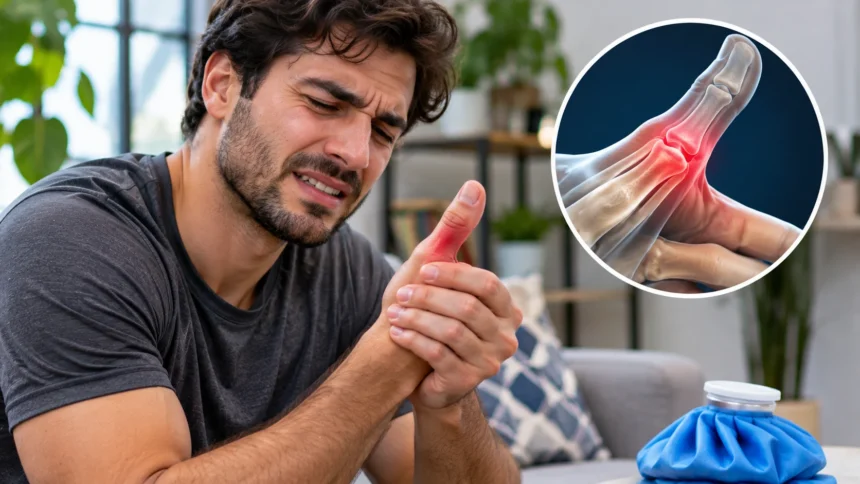
A jammed thumb can make everyday activities uncomfortable, especially when gripping objects, writing, opening containers, or using your phone. This type of injury often happens when the thumb bends awkwardly or experiences a sudden impact. Pain, swelling, stiffness, and tenderness may develop shortly afterward. Although some injuries are mild, others involve damaged ligaments, fractures, or joint instability that require medical attention.
Understanding a jammed thumb is important because not every painful thumb injury is a simple sprain. The thumb contains several joints, ligaments, tendons, and bones that work together to support movement. Damage to any of these structures may affect normal hand function. Recognizing the symptoms and knowing when to seek help can reduce the risk of complications.
Most people want to know whether their thumb is sprained, how long healing takes, and what they can safely do at home. The answers depend on the severity and location of the injury. This guide explains common causes, warning signs, treatment options, and recovery expectations. It also covers practical steps for protecting your thumb while it heals.
What Is a Jammed Thumb?
A jammed thumb is a common term for an injury caused by sudden force against the thumb joint. It often happens when the thumb bends backward, sideways, or beyond its normal range of motion. The impact may stretch or tear supporting ligaments. Depending on the force involved, surrounding tissues, cartilage, or bones may also become injured.
The thumb has two main finger-like joints and a joint connecting it to the hand. These structures allow gripping, pinching, and other precise movements. Ligaments help stabilize the joints, while muscles and tendons control movement. When an unexpected force affects these structures, pain and reduced mobility can develop quickly.
A jammed thumb is not a specific medical diagnosis because different injuries can produce similar symptoms. A mild ligament sprain may resemble a more serious tear or small fracture. Swelling can also make the exact location of damage difficult to identify. A healthcare professional may need to examine the thumb and recommend imaging to determine the cause.
Common Causes of a Jammed Thumb
Sports injuries are among the most frequent causes of jammed thumbs. Basketball, volleyball, football, and other activities involving balls or physical contact can place sudden pressure on the thumb. An awkward catch may force the joint beyond its normal position. This movement can injure the ligaments or surrounding structures.
Falls are another common cause, particularly when someone extends a hand to protect themselves. The thumb may become trapped against the ground or bend backward during the impact. Accidental collisions with furniture or other objects can create similar injuries. Even routine activities may cause problems when unexpected force affects the thumb joint.
The severity of an injury depends on the direction of force and the structures involved. Some impacts cause temporary irritation, while others produce significant ligament damage or fractures. Previous injuries and joint instability may also influence how the thumb responds. Understanding how the injury happened can help a clinician identify which structures need examination.
Signs and Symptoms of a Jammed Thumb
Pain is usually the first noticeable symptom after a thumb injury. It may occur immediately or become more apparent as swelling develops. Common symptoms include tenderness, stiffness, bruising, and discomfort when gripping objects. Some people also notice reduced movement or difficulty applying pressure through the thumb.
Swelling may appear around the injured joint and sometimes extend into nearby parts of the hand. Bruising can develop when small blood vessels are damaged during the impact. The thumb may feel uncomfortable when bending or straightening. However, swelling and bruising alone cannot determine whether the injury is mild or serious.
More concerning symptoms include visible deformity, severe pain, numbness, and significant joint instability. A person may feel that the thumb cannot support normal gripping or pinching movements. Difficulty moving the thumb after an injury also deserves medical attention. These signs may indicate a fracture, dislocation, or substantial ligament injury.
Jammed Thumb vs. Sprained Thumb
The terms jammed thumb and sprained thumb are often used interchangeably, but they do not mean exactly the same thing. A jammed thumb describes how an injury may feel or occur. A sprain specifically involves stretching or tearing a ligament. Therefore, some jammed thumb injuries are sprains, while others involve different structures.
Ligaments connect bones and help keep joints stable during movement. A mild sprain may involve stretched ligament fibers with relatively limited swelling and discomfort. More severe sprains can involve partial or complete ligament tears. The degree of damage influences joint stability, treatment requirements, and expected recovery time.
It is difficult to distinguish a sprain from other thumb injuries using symptoms alone. Fractures and certain tendon injuries can produce similar pain and swelling. A medical examination may include checking tenderness, movement, and joint stability. Imaging may be recommended when the clinician suspects a fracture or another significant structural injury.
Can a Jammed Thumb Actually Be Broken?
A thumb that appears jammed may sometimes have a fracture rather than a simple ligament injury. Sudden impact, twisting, or forceful bending can damage one of the thumb bones. Fractures may occur near the joints or along the bones themselves. Some injuries also involve small bone fragments where a ligament attaches.
Possible signs of a broken thumb include significant swelling, bruising, tenderness, and difficulty moving the affected area. Severe pain or visible deformity increases concern, but not every fracture produces dramatic symptoms. Some people can still move a fractured thumb. Therefore, movement alone should never be used to rule out a broken bone.
If a fracture is suspected, avoid forcing the thumb into position or repeatedly testing its strength. Medical professionals may use X-rays to examine the bones and determine appropriate treatment. Some fractures require immobilization, while displaced or unstable injuries may need specialist care. Early assessment helps reduce the risk of improper healing and lasting stiffness.
Understanding Thumb Ligament Injuries
Ligament injuries are an important concern because the thumb depends on stable joints for gripping and pinching. One commonly injured structure is the ulnar collateral ligament, located near the base of the thumb where it connects to the hand. This ligament can be damaged when the thumb is forced away from the palm. Such injuries are sometimes called skier’s thumb.
A damaged thumb ligament may cause pain, swelling, tenderness, and difficulty holding objects securely. Severe tears can make the joint feel unstable during pinching movements. Some complete tears cannot heal properly without specialist treatment. This is why persistent weakness or instability after an injury should not be ignored.
Treatment depends on whether the ligament is stretched, partially torn, or completely disrupted. Mild injuries may improve with appropriate support and rehabilitation. More serious injuries sometimes require surgical evaluation, particularly when the joint remains unstable. A healthcare professional can determine the appropriate approach after examining the thumb and reviewing relevant imaging.
Why Does a Jammed Thumb Swell?
Swelling is part of the body’s natural response to tissue injury. When ligaments, joint structures, or nearby tissues become damaged, inflammatory processes begin around the affected area. This response increases fluid accumulation and can make the thumb appear enlarged. Swelling may also contribute to stiffness and discomfort during movement.
The amount of swelling varies according to the injury and individual circumstances. Some minor injuries cause noticeable puffiness, while certain fractures or ligament tears produce swelling that develops gradually. Bruising may appear alongside the swelling. Neither feature reliably indicates the exact severity of the underlying damage.
Mild swelling may improve with appropriate rest, elevation, and cold application. However, rapidly increasing swelling, severe pain, or changes in sensation require prompt evaluation. Rings or tight accessories should be removed early if they come off easily. Avoid forcing jewelry over an enlarged joint because this can worsen discomfort or interfere with circulation.
How to Treat a Jammed Thumb at Home
Initial home care may be appropriate for a minor thumb injury without severe pain, deformity, numbness, or significant loss of function. Reduce activities that place pressure on the injured thumb, including heavy gripping and forceful twisting. Protecting the joint from additional stress can support early recovery. However, home care should not replace medical assessment when a fracture or significant ligament injury is possible.
Applying a wrapped cold pack can help reduce discomfort and manage swelling during the early stages. Place a thin towel between the cold pack and your skin. Use it for approximately 15 to 20 minutes at a time, allowing breaks between applications. Stop if the skin becomes unusually painful, pale, or numb.
Keeping the hand comfortably elevated may also help limit swelling after an injury. Avoid repeatedly bending the thumb to check whether it has improved. If symptoms worsen, movement becomes difficult, or the joint feels unstable, arrange medical evaluation. A seemingly minor injury may require professional treatment when supporting structures are damaged.
Should You Ice or Heat a Jammed Thumb?
Cold application is generally preferred during the early period after a recent thumb injury. A wrapped cold pack can provide temporary pain relief and help manage swelling. It should never be placed directly against the skin because excessive cold can cause irritation or tissue damage. Short, controlled applications are safer than prolonged exposure.
Heat may sometimes help relieve stiffness later in recovery, particularly after acute swelling has settled. However, applying warmth immediately after an injury may increase discomfort or swelling in some cases. The appropriate approach depends on the injury and current symptoms. Avoid using heat over an area that remains unusually swollen, red, or hot.
Neither ice nor heat repairs a torn ligament or treats a fracture directly. These methods primarily help manage symptoms while healing occurs. If pain persists or normal movement does not return, further evaluation may be necessary. Choosing the correct treatment requires understanding the underlying injury rather than relying only on temperature-based remedies.
Do You Need a Splint for a Jammed Thumb?
A splint may help protect an injured thumb by limiting movements that place stress on damaged structures. Certain ligament injuries and fractures require immobilization while healing takes place. A thumb spica splint is one commonly used support that stabilizes the thumb and part of the wrist. However, the appropriate device depends on the injury.
Using an unsuitable splint can cause discomfort or fail to support the affected joint properly. Excessively tight supports may also interfere with circulation or produce numbness. For this reason, medical guidance is valuable when significant swelling, instability, or persistent pain is present. A clinician can recommend suitable support and explain how long it should be worn.
Prolonged immobilization without appropriate supervision may contribute to stiffness and reduced movement. Recovery plans often include a gradual return to motion when the injured structures are sufficiently stable. Avoid removing prescribed support early simply because pain improves. Follow the recommended treatment plan to help protect healing tissues and restore function safely.
How Long Does a Jammed Thumb Take to Heal?
Recovery time varies depending on whether the injury involves mild tissue irritation, a ligament sprain, or a fracture. Minor injuries may improve over several days, while ligament sprains can take several weeks to heal. More serious tears or fractures may require longer recovery periods. Individual healing also depends on treatment and the demands placed on the thumb.
Pain and swelling often decrease before the injured structures have fully recovered. This can make it tempting to resume sports, heavy gripping, or other demanding activities too early. However, returning before adequate healing may increase the risk of reinjury. Functional recovery should guide activity progression rather than relying only on reduced discomfort.
A healthcare professional may assess joint stability, range of motion, and strength before recommending a return to demanding activities. Some people benefit from hand therapy to restore comfortable movement and function. Recovery expectations should be individualized rather than based on a fixed timeline. Persistent symptoms deserve reassessment to identify complications or an overlooked injury.
Gentle Exercises During Jammed Thumb Recovery
Gentle movement may help restore flexibility after a thumb injury once a healthcare professional confirms that the joint is stable enough. Appropriate exercises can reduce stiffness and support normal hand function. However, the timing depends on the type and severity of damage. Beginning exercises too early may aggravate a ligament tear or fracture.
A rehabilitation program may include controlled thumb bending, straightening, and other comfortable movements. Exercises should remain within the range recommended by a clinician or hand therapist. Avoid forcing the joint through pain or attempting to test its strength aggressively. Gradual progress is generally safer than making sudden increases in activity.
Strengthening exercises may become appropriate later when the injured tissues have recovered sufficiently. Activities involving gripping or pinching should be introduced according to the rehabilitation plan. If swelling or pain increases after exercise, the program may need adjustment. Professional guidance helps ensure that recovery activities match the specific injury rather than following generic advice.
When to See a Doctor for a Jammed Thumb
Medical assessment is recommended when thumb pain or swelling is significant, symptoms worsen, or normal hand function remains limited. Difficulty gripping objects, persistent tenderness, and joint instability can indicate more than a mild sprain. A clinician can examine the injury and determine whether imaging is needed. Early evaluation may prevent complications related to untreated ligament damage.
Seek urgent medical attention if the thumb looks deformed, becomes severely painful, or cannot move normally after an injury. Numbness, unusual color changes, or impaired circulation are additional warning signs. An open wound associated with a suspected fracture also requires immediate assessment. These symptoms should not be managed solely with home remedies.
Some serious thumb injuries are less obvious and may initially resemble ordinary sprains. Pain near the thumb’s base, difficulty pinching, or a joint that feels unusually loose deserves professional evaluation. Continuing normal activities with an unstable joint may worsen the problem. Prompt diagnosis improves the likelihood of receiving suitable treatment before lasting functional difficulties develop.
How Doctors Diagnose a Jammed Thumb
Diagnosing a thumb injury usually begins with questions about how the injury occurred and which symptoms developed afterward. A healthcare professional may ask whether the thumb bent backward, experienced a direct impact, or became twisted. They will also consider pain location, swelling, bruising, and movement limitations. These details help identify structures that may be damaged.
During examination, the clinician may assess tenderness, joint alignment, range of motion, and stability. Special care is necessary when significant ligament damage or a fracture is suspected. X-rays are commonly used to identify broken bones or certain joint alignment problems. Additional imaging may be considered when soft tissue injury remains a concern.
The diagnosis determines whether treatment involves protection, immobilization, rehabilitation, or specialist care. Mild injuries may require relatively simple management, while unstable ligament tears or fractures need more structured treatment. Follow-up appointments can help monitor healing and movement. Understanding the specific injury helps patients follow appropriate recovery guidance and avoid unnecessary risks.
How to Prevent Jammed Thumb Injuries
Preventing every thumb injury is not possible, especially during sports and unpredictable falls. However, appropriate technique and protective equipment may help reduce some risks. Athletes should follow sport-specific safety guidance and learn safe catching or handling techniques. Choosing suitable equipment can also support more controlled movement during activities.
Previous thumb injuries deserve particular attention because incomplete recovery may affect joint stability. Returning to demanding activities before adequate healing can increase the likelihood of another injury. A healthcare professional may recommend protective support for selected situations. Such equipment should be used according to medical and sporting guidelines rather than as a substitute for proper recovery.
Hand strength, coordination, and general physical conditioning may also support everyday function. However, exercises cannot guarantee protection from sudden impact or forceful bending. Avoid activities that cause significant thumb pain, particularly during recovery. Paying attention to early symptoms and seeking appropriate treatment helps protect long-term hand mobility and function.
Conclusion
A jammed thumb can result from sudden impact, awkward bending, or forceful movement during everyday activities and sports. Common symptoms include pain, swelling, stiffness, bruising, and difficulty gripping objects. Although many minor injuries improve with appropriate care, some involve serious ligament damage or fractures. Recognizing this difference is important for protecting normal thumb function.
Initial care may include reducing painful activities, applying wrapped cold packs, and keeping the hand comfortably elevated. However, severe pain, deformity, numbness, or joint instability requires prompt medical assessment. Appropriate splinting and rehabilitation depend on the specific diagnosis. Following professional guidance can help prevent further injury and support a safer recovery.
Healing time varies according to the severity of the injury and the structures involved. Avoid returning to demanding activities simply because pain has decreased. If symptoms persist or normal movement remains difficult, seek further evaluation. With timely diagnosis, appropriate treatment, and gradual rehabilitation, many people can regain comfortable thumb movement and everyday hand function.
Frequently Asked Questions
How Do You Know if Your Thumb Is Jammed or Broken?
Both injuries can cause pain, swelling, and bruising. A fracture may also cause deformity or significant tenderness, but symptoms overlap. A medical examination and X-ray may be necessary to distinguish them.
Can a Jammed Thumb Heal on Its Own?
Mild injuries may improve with appropriate protection and recovery time. However, significant ligament tears, fractures, and unstable joints may require medical treatment. Persistent pain or weakness should be evaluated professionally.
How Long Should You Ice a Jammed Thumb?
Apply a cold pack wrapped in a towel for approximately 15 to 20 minutes at a time. Allow breaks between applications and avoid placing ice directly against the skin.
Should You Keep Moving a Jammed Thumb?
Avoid forcing painful movements immediately after an injury. Gentle motion may become appropriate once a clinician confirms that the joint is stable, particularly when a fracture or serious ligament tear is possible.
When Is a Jammed Thumb a Serious Injury?
A jammed thumb may be serious when it causes severe pain, deformity, numbness, significant instability, or difficulty moving. These symptoms can indicate a fracture, dislocation, or major ligament injury requiring prompt assessment.