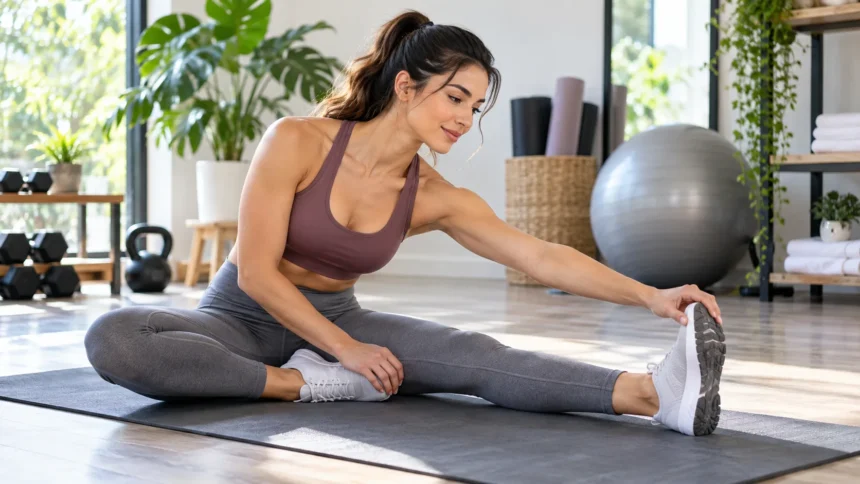
The seated hamstring stretch is a simple flexibility exercise that targets the muscles along the back of the thighs. It is commonly used in warm-down routines, physical therapy, mobility sessions, and general stretching programs. Because it requires little equipment, many people use it at home, at the gym, or after long periods of sitting.
Tight hamstrings can make bending, walking, running, or certain strength exercises feel restricted. A seated hamstring stretch may help improve flexibility and make everyday movement more comfortable when performed regularly. However, the stretch should feel controlled and mild rather than sharp, painful, or excessively intense.
Good technique matters because rounding the lower back or aggressively reaching for the toes can shift tension away from the hamstrings. Understanding proper form, useful variations, and common mistakes can make the exercise more effective. With gradual practice, the seated hamstring stretch can become a practical part of a balanced mobility routine.
What Is a Seated Hamstring Stretch?
A seated hamstring stretch is performed while sitting with one or both legs extended and gently leaning forward from the hips. The movement lengthens the hamstring muscles located along the back of the thighs. Depending on the variation, you may also feel tension through the calves, glutes, or lower back.
The hamstrings consist of several muscles that help bend the knee and extend the hip. They are active during walking, running, climbing stairs, jumping, and many lower-body exercises. Maintaining comfortable hamstring flexibility can therefore support a wide range of everyday and athletic movements.
There are several ways to perform the stretch, including single-leg and double-leg versions. Beginners often find the single-leg variation easier because the opposite knee can remain bent for additional comfort. The ideal version is the one that allows you to maintain good posture while feeling gentle tension without pain.
What Muscles Does the Seated Hamstring Stretch Target?
The main muscles targeted are the hamstrings, which run from the pelvis down the back of the thigh toward the knee. These muscles include the biceps femoris, semitendinosus, and semimembranosus. Together, they help control hip extension and knee flexion during movement.
Depending on your position, the stretch may also create mild tension through the calf muscles. Pointing or flexing the ankle can change how much tension you feel along the back of the lower leg. However, the primary goal should remain a comfortable stretch through the back of the thigh rather than forcing sensation into the calf.
The gluteal muscles and tissues around the lower back may also move during the exercise. Excessive spinal rounding can make the stretch feel stronger in the back instead of the hamstrings. Keeping the chest lifted and hinging from the hips helps direct more of the movement toward the intended muscles.
What Are the Benefits of a Seated Hamstring Stretch?
One of the main benefits is improved hamstring flexibility. Regular stretching can gradually increase the comfortable range available at the hips and knees. Greater flexibility may make activities such as bending, reaching, walking, or performing certain exercises feel less restricted.
The stretch can also help reduce feelings of tightness after prolonged sitting or lower-body activity. People who spend many hours at a desk may notice stiffness through the back of the thighs. Gentle stretching can introduce movement to the area and make changing positions feel more comfortable.
Another advantage is convenience. The seated hamstring stretch requires no specialized equipment and can be performed on the floor, a mat, a bench, or even a firm bed. This makes it easy to include in a short mobility routine without needing access to a gym or exercise machine.
How Do You Perform a Single-Leg Seated Hamstring Stretch?
Sit on the floor with one leg extended in front of you and the opposite knee bent comfortably. Allow the bent knee to fall outward if that position feels natural. Sit tall and point the toes of the straight leg upward without aggressively pulling them back.
Begin the movement by hinging forward from the hips rather than collapsing through the lower back. Move your chest toward the extended thigh until you feel gentle tension along the back of the leg. Your hands can rest on the thigh, shin, or wherever they comfortably reach.
Hold the position while breathing normally, then return slowly to an upright posture. Repeat the stretch on the opposite side using the same controlled approach. Avoid bouncing or trying to force your hands toward the foot, because greater reach does not necessarily mean a more effective stretch.
How Do You Perform a Double-Leg Seated Hamstring Stretch?
Sit with both legs extended in front of you and keep the knees comfortably straight without locking them aggressively. Place your hands on your thighs or beside your legs. Try to sit tall and imagine lengthening through the top of your head before beginning the forward movement.
Hinge forward from the hips while keeping the chest relatively lifted. Move only until you feel mild to moderate tension along the back of both thighs. Your hands can slide forward naturally, but reaching the toes should not become the main goal of the movement.
The double-leg version may feel more intense because both hamstrings are stretched simultaneously. People with limited flexibility may find it difficult to keep the spine neutral in this position. If your lower back rounds excessively or the stretch feels uncomfortable, use the single-leg variation instead.
How Long Should You Hold the Stretch?
Many people start by holding a seated hamstring stretch for around 15 to 30 seconds. This is usually long enough to feel the muscles gradually relax without requiring an excessive hold. Beginners can use shorter periods and increase the duration as flexibility and comfort improve.
You may repeat the stretch two or three times on each side depending on your goals. There is usually little benefit in forcing extremely long holds when the position becomes uncomfortable. Controlled breathing and consistent practice generally matter more than trying to stretch for several minutes at once.
The stretch should feel steady rather than increasingly painful. If the sensation becomes sharp, burning, or unusually intense, reduce the range or stop. A useful stretch should feel manageable enough that you can remain relaxed instead of tightening your entire body to tolerate the position.
When Is the Best Time to Stretch Your Hamstrings?
Many people prefer static hamstring stretching after exercise when the muscles are already warm. After walking, running, cycling, or strength training, a short stretch may feel comfortable and can be included as part of a cool-down routine. This is also a convenient time to work on general flexibility.
Before intense physical activity, dynamic movements are often more practical than long static holds. Leg swings, walking lunges, and controlled hip movements can prepare the body for faster or more demanding exercise. A brief hamstring stretch can still be used when needed, but it should not replace an active warm-up.
You can also stretch at a separate time of day. For example, people who sit for long periods may use a short mobility routine during work breaks or in the evening. The best time is usually the one that allows you to stretch consistently without rushing or forcing the movement.
What Are Common Seated Hamstring Stretch Mistakes?
One common mistake is rounding the lower back excessively. When the spine collapses forward, much of the movement may come from the back instead of the hips. Try to keep the chest lifted and hinge forward from the pelvis until you feel tension in the hamstrings.
Another mistake is pulling aggressively on the foot or toes. Reaching farther does not automatically improve flexibility and can place unnecessary tension through the calf or nervous system. Let your hands rest wherever they naturally reach without turning the stretch into a competition.
Bouncing is also unnecessary. Repeatedly jerking deeper into the stretch reduces control and may irritate sensitive tissues. A slow approach allows you to notice where tension begins and gives the muscles time to adapt to the position without sudden force.
How Can Beginners Modify the Seated Hamstring Stretch?
Beginners can bend the extended knee slightly if straightening it creates too much tension. A small bend can make it easier to hinge from the hips while maintaining better posture. As flexibility improves, the knee may gradually straighten without needing to force the position.
Sitting on a folded towel or firm cushion can also help. Elevating the hips slightly may make it easier to tilt the pelvis forward and reduce excessive rounding of the lower back. This simple adjustment can significantly improve comfort for people with limited hip or hamstring mobility.
A stretching strap or towel can be used around the foot if reaching the leg is difficult. Hold the strap lightly rather than pulling forcefully. The purpose is simply to help maintain position while keeping your shoulders and upper body relaxed.
Can a Seated Hamstring Stretch Help With Lower Back Tightness?
Tight hamstrings can sometimes contribute to a feeling of restricted movement around the hips and lower back. Stretching them may make bending or changing positions feel more comfortable for some people. However, lower back tightness can have many causes and should not automatically be blamed on the hamstrings.
The relationship between hamstring flexibility and back discomfort varies from person to person. Weakness, prolonged sitting, spinal sensitivity, hip mobility, and general activity levels can all influence symptoms. A complete movement program may therefore include strength, mobility, and regular activity rather than relying on hamstring stretching alone.
If the seated stretch increases lower back pain, it should be modified or stopped. Excessive spinal rounding or nerve sensitivity can make this position uncomfortable. A physical therapist or healthcare professional can help identify a more suitable exercise when symptoms repeatedly worsen during forward bending.
What Is the Difference Between Hamstring Tightness and Nerve Tension?
Hamstring tightness usually feels like a broad pulling sensation along the back of the thigh. The feeling tends to remain localized to the muscle and often changes gradually with stretching. It should not normally cause strong tingling, numbness, or electric sensations down the leg.
Nerve tension can sometimes feel similar to hamstring tightness but may produce sharper or more unusual symptoms. Tingling, burning, numbness, or sensations extending below the knee can indicate that neural structures are being irritated. Increasing ankle flexion or rounding the spine may make these symptoms more noticeable.
If the seated hamstring stretch repeatedly causes nerve-like symptoms, avoid forcing the position. Stretching harder is unlikely to solve nerve irritation and may make symptoms worse. A healthcare professional can assess whether the discomfort is muscular, neurological, or related to another structure.
How Can You Improve Hamstring Mobility Over Time?
Consistency is one of the most important factors in improving mobility. Performing gentle hamstring stretches several times per week may gradually improve comfortable range of motion. Short, regular sessions are often easier to maintain than occasional intense stretching that leaves the muscles sore.
Strength training can also support better mobility. Exercises such as controlled hip hinges, bridges, Romanian deadlifts, and other appropriate lower-body movements train the hamstrings through useful ranges. Building strength can help you control flexibility instead of focusing only on how far the muscle can stretch.
General physical activity also matters. Regular walking, strength training, and changing positions throughout the day can help prevent the body from becoming excessively stiff. Mobility tends to improve most effectively when stretching is combined with movement rather than used as the only strategy.
Who Should Be Careful With Seated Hamstring Stretching?
People with recent hamstring strains should avoid aggressive stretching until healing has progressed appropriately. Pulling strongly on an injured muscle can increase irritation and delay recovery. Follow rehabilitation guidance rather than assuming stretching should begin immediately after every muscle injury.
People with significant sciatica, nerve symptoms, or certain lower back conditions may also need modifications. Forward bending can aggravate symptoms in some situations, particularly when pain or tingling travels down the leg. The stretch should be stopped if neurological symptoms appear or become stronger.
Recent hip, knee, or spine surgery may also require movement restrictions. In these situations, general stretching advice should not replace instructions from your surgeon or rehabilitation professional. Individual medical history determines whether the seated hamstring stretch is appropriate and how much range should be used.
Conclusion
The seated hamstring stretch is a simple and accessible exercise for improving flexibility along the back of the thighs. It can be performed using one leg or both legs and requires little equipment. Good technique involves hinging from the hips and stopping when gentle tension is felt.
The most effective stretch is not necessarily the deepest one. Keeping the spine controlled, avoiding bouncing, and breathing normally can make the movement safer and more comfortable. Beginners can bend the knee slightly, sit on a cushion, or use a strap to modify the exercise.
Improving hamstring mobility usually requires consistency rather than aggressive stretching. Combining flexibility work with regular movement and appropriate strength training can support better overall mobility. Stop and seek professional advice if the stretch causes sharp pain, numbness, tingling, or worsening symptoms.
FAQs
How long should I hold a seated hamstring stretch?
A common starting point is around 15 to 30 seconds. You can repeat the stretch two or three times while keeping the sensation comfortable and avoiding sharp or increasing pain.
Should my knee be completely straight?
Not necessarily. A slight bend is perfectly acceptable, especially for beginners. Keeping the knee slightly bent can make it easier to hinge from the hips without excessively rounding the lower back.
Why can’t I touch my toes during a hamstring stretch?
Limited hamstring flexibility, hip mobility, body proportions, and spinal movement can all affect your reach. Touching your toes is not required for an effective hamstring stretch.
Can I do a seated hamstring stretch every day?
Many people can stretch daily if the exercise feels comfortable and does not increase symptoms. However, regular movement and strength training should also be included for balanced mobility.
Why do I feel tingling during a hamstring stretch?
Tingling may indicate nerve tension rather than simple muscle tightness. Stop forcing the stretch if numbness, burning, or electric sensations appear and seek professional guidance if the symptoms persist.