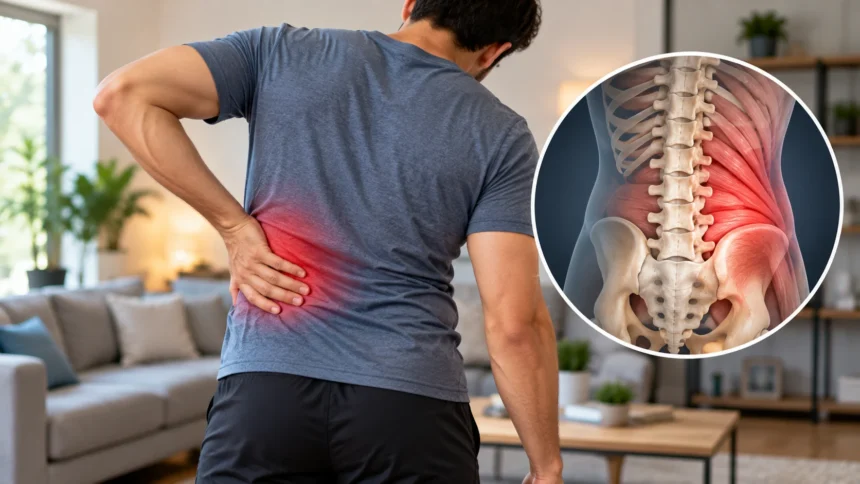
Lower back left side pain can range from a mild ache after sitting too long to sharp discomfort that interferes with walking, sleeping, or everyday movement. In many cases, the cause is related to muscles, joints, posture, or physical activity. However, pain in this area can sometimes come from structures outside the spine, so the pattern of symptoms matters.
Your lower back contains muscles, ligaments, vertebrae, discs, nerves, and joints that work together to support movement and body weight. Organs in the abdomen and pelvis can also refer pain toward the lower back. This means left-sided discomfort does not automatically point to one specific condition, especially when there are no other symptoms.
Understanding when the pain started, what makes it better or worse, and whether it travels elsewhere can provide useful clues. Mild mechanical pain often improves with time and gentle activity. Persistent, severe, unexplained, or worsening pain should be evaluated by a healthcare professional rather than repeatedly treated at home without knowing the underlying cause.
Muscle Strain Is a Common Cause of Left-Sided Back Pain
A strained muscle is one of the most common explanations for pain on one side of the lower back. It can happen after lifting something heavy, twisting suddenly, exercising differently than usual, or performing repetitive physical work. Even an awkward movement that seems minor can irritate muscles or surrounding soft tissues.
Muscle-related pain often feels sore, tight, aching, or tender rather than deeply internal. It may become more noticeable when bending, standing from a chair, turning in bed, or using the affected muscles. Some people also notice stiffness that is worse after resting for a long period and improves slightly once they begin moving.
Most mild muscle strains gradually improve with activity modification, comfortable movement, and time. Complete bed rest is generally not necessary for uncomplicated back pain and may increase stiffness when continued too long. If pain becomes severe, does not improve, or follows significant trauma, professional evaluation can help determine whether another injury is involved.
Poor Posture and Prolonged Sitting Can Trigger Pain
Sitting for many hours can place sustained stress on the muscles and joints of the lower back. If you regularly lean toward one side, cross the same leg, or work with a poorly positioned desk setup, the load may become uneven. Over time, one side of the back can feel tighter or more uncomfortable than the other.
Posture is rarely about finding one perfect position that must be maintained all day. The body generally responds better to variety and regular movement than to remaining rigidly upright for hours. Changing positions, standing periodically, and taking short walking breaks can reduce the amount of time your lower back spends under the same type of stress.
Workstation adjustments may also help if symptoms regularly appear during desk work. Keep frequently used items within easy reach, choose a chair that feels supportive, and position your screen so you do not constantly twist. Small changes can reduce repeated strain, particularly when combined with regular movement throughout the day.
Could a Herniated Disc Cause Pain on the Left Side?
Spinal discs sit between the vertebrae and help absorb forces during movement. A disc can sometimes become irritated, bulge, or herniate, potentially affecting nearby nerves. When this occurs on the left side of the lower spine, symptoms may be felt in the left lower back, buttock, or leg.
Disc-related pain can vary considerably between people. Some experience localized back pain, while others develop pain that travels down the leg along with tingling, numbness, or weakness. Symptoms may become worse with certain movements, prolonged sitting, coughing, or bending, although these patterns are not enough to confirm a diagnosis by themselves.
Many disc-related problems improve without surgery, particularly when there is no severe or progressive neurological deficit. Treatment may include activity modification, appropriate exercise, pain management, and physical therapy depending on the situation. Persistent weakness, loss of sensation, or major changes in bladder or bowel control require urgent medical evaluation.
Sciatica Can Cause One-Sided Lower Back Pain
Sciatica describes symptoms that occur when the sciatic nerve or related nerve roots become irritated. The discomfort often begins in the lower back or buttock and travels down one leg. When the left side is affected, you may notice burning, shooting, electric, or aching pain extending into the left thigh, calf, or foot.
Some people with sciatica also experience pins and needles, numbness, or weakness. Sitting for long periods, certain bending movements, or lifting may aggravate symptoms depending on the underlying cause. A herniated disc is one possible reason, but spinal narrowing and other musculoskeletal problems can also contribute to nerve irritation.
Treatment depends on symptom severity and the reason the nerve is affected. Gentle movement and professionally guided exercises may help some cases, while others require medication or further assessment. Seek prompt care if weakness is rapidly progressing or symptoms are accompanied by difficulty controlling the bladder or bowels.
Sacroiliac Joint Problems May Be Responsible
The sacroiliac joints connect the lower spine to the pelvis and sit on both sides near the upper buttocks. Irritation around the left sacroiliac joint can sometimes create pain that feels like it comes from the lower left back. The discomfort may also spread into the buttock, hip, or upper thigh.
Sacroiliac-related discomfort can become noticeable during activities such as climbing stairs, standing on one leg, getting out of a car, or remaining in one position for extended periods. Pregnancy, repetitive loading, joint conditions, and previous injuries may influence this area. However, symptoms can overlap with many other causes of lower back pain.
Because the location alone cannot confirm sacroiliac joint dysfunction, an examination may be needed when pain continues. A healthcare professional may assess movement, strength, tenderness, and other possible sources. Treatment often focuses on restoring comfortable movement and gradually improving strength rather than simply avoiding activity indefinitely.
Kidney Problems Can Sometimes Cause Left Back Pain
The kidneys are located higher than many people realize, toward the back of the abdomen below the ribs. A kidney-related problem can sometimes cause pain on one side that may be described as back or flank pain. This discomfort often feels deeper than typical muscle soreness and may not change much with ordinary movement.
Kidney stones can cause intense pain that may come in waves and travel toward the lower abdomen or groin. Nausea, vomiting, or blood in the urine may also occur. A kidney infection can cause flank or back pain along with fever, chills, painful urination, frequent urination, or feeling generally unwell.
These symptoms require medical attention because kidney problems cannot be diagnosed safely based only on the location of pain. Severe pain, fever, vomiting, urinary changes, or visible blood in the urine should not be treated as a simple back strain. Appropriate testing can determine whether the urinary system is involved.
Digestive Problems May Be Felt in the Lower Back
Digestive issues can occasionally create discomfort that is felt near the lower back or left side of the abdomen. Constipation, trapped gas, bowel irritation, and other gastrointestinal problems may produce pressure or aching that seems to extend toward the back. The pain may occur together with bloating or changes in bowel habits.
When digestive symptoms are responsible, discomfort may change after eating, passing gas, or having a bowel movement. You may also notice abdominal cramping, fullness, diarrhea, or constipation. These accompanying signs can help distinguish digestive discomfort from pain that is primarily triggered by movement of the spine or surrounding muscles.
Persistent abdominal and back pain should not automatically be blamed on digestion. Severe abdominal tenderness, repeated vomiting, black or bloody stools, fever, or unexplained weight loss deserves medical evaluation. These symptoms can signal conditions that require more than home treatment or dietary adjustments.
Pelvic and Reproductive Conditions Can Cause Referred Pain
In women, certain pelvic and reproductive conditions can sometimes cause pain that is felt on one side of the lower back. Menstrual cramps, ovarian cysts, endometriosis, or other pelvic problems may produce discomfort that extends toward the back. The timing of symptoms in relation to the menstrual cycle can sometimes provide useful context.
Pain may also occur alongside pelvic pressure, unusual bleeding, pain during sex, changes in menstrual patterns, or abdominal discomfort. Because these symptoms have many possible causes, it is difficult to identify the source from back pain alone. A medical history and appropriate examination may be necessary when symptoms are persistent or recurrent.
Sudden severe pelvic or lower abdominal pain requires particular attention, especially when accompanied by dizziness, fainting, heavy bleeding, fever, or pregnancy. These signs may need urgent evaluation. Do not assume intense one-sided pain is simply a muscle problem when other significant pelvic symptoms are present.
Can Weak Core and Hip Muscles Contribute?
Muscles around the abdomen, hips, and pelvis help control movement and support the lower back during everyday activities. When these muscles are weak, poorly coordinated, or easily fatigued, the lower back may take on more work. This does not mean weakness is always the cause, but it can be one contributing factor.
Strengthening may help some people once severe or acute symptoms have settled and movement can be performed comfortably. Exercises should be selected according to individual ability rather than copied blindly from online routines. Movements such as leg raises can challenge the core, but they should be modified or avoided if they increase lower back pain.
A balanced program often includes hip strength, trunk control, walking, and gradually increasing general activity. The best exercises vary depending on the cause of pain, mobility, and fitness level. If you are unsure which movements are appropriate, a physical therapist can assess your symptoms and suggest safer progressions.
How to Manage Mild Lower Left Back Pain at Home
For mild pain that appears related to activity or muscle strain, continuing gentle movement is often more comfortable than remaining completely inactive. Short walks and easy daily activities can help prevent stiffness. Reduce activities that clearly aggravate the pain, but avoid assuming that every movement is harmful simply because the area feels sore.
Heat can be helpful for muscle tightness or stiffness, while some people prefer cold after a recent strain. Use either option for short periods with a protective layer between the skin and the heating or cooling source. Neither method treats every cause of back pain, so consider them comfort measures rather than a complete solution.
Over-the-counter pain medicines may be appropriate for some adults, but they are not safe for everyone. Certain medicines can interact with other drugs or be unsuitable for people with stomach, kidney, heart, or other medical conditions. A pharmacist or healthcare professional can help you choose an appropriate option when you are uncertain.
When Lower Back Left Side Pain Needs Medical Attention
Seek medical assessment if pain is severe, keeps worsening, persists for several weeks, or repeatedly returns without an obvious reason. You should also get help if back pain significantly limits walking, sleep, work, or normal daily activities. Persistent symptoms may need examination to identify whether the problem involves muscles, nerves, joints, or another system.
Urgent care is important when back pain appears with new bladder or bowel control problems, numbness around the groin, or rapidly worsening weakness in the legs. These symptoms may indicate serious nerve compression. Significant trauma, such as a major fall or vehicle collision, also warrants careful evaluation when severe back pain develops afterward.
Fever, unexplained weight loss, history of cancer, severe night pain, blood in the urine, or significant abdominal symptoms also deserve medical attention. These signs do not automatically mean something serious is present, but they make professional evaluation more important. Getting assessed early can help rule out conditions that require specific treatment.
Conclusion
Lower back left side pain can have many possible causes, ranging from muscle strain and prolonged sitting to irritated nerves, sacroiliac joint problems, kidney issues, or pelvic conditions. The location of the pain provides only part of the picture. How the symptoms began and what accompanies them are often more important.
For mild mechanical discomfort, gentle movement, activity modification, appropriate heat or cold, and gradual strengthening may help. Avoid repeatedly forcing stretches or exercises that make the pain noticeably worse. Maintaining regular movement and addressing prolonged sitting habits can also reduce some common sources of lower back irritation.
Pain that is severe, persistent, unexplained, or accompanied by neurological, urinary, abdominal, or systemic symptoms should be evaluated by a healthcare professional. Do not rely on self-diagnosis based on one symptom alone. An appropriate assessment can clarify the cause and guide treatment that fits your individual situation.
Frequently Asked Questions
Why does only the left side of my lower back hurt?
One-sided pain can come from a muscle strain, irritated joint, nerve problem, or nearby organ. The cause depends on the pain pattern, recent activity, and any additional symptoms.
Can kidney pain feel like lower left back pain?
Yes, kidney problems can sometimes cause one-sided back or flank pain. Fever, urinary burning, blood in the urine, nausea, or severe waves of pain make medical evaluation especially important.
Is left lower back pain a sign of sciatica?
It can be if the pain travels from the lower back into the buttock or leg and is accompanied by tingling, numbness, or weakness. Not all left-sided back pain is sciatica.
Should I exercise with lower left back pain?
Gentle activity is often appropriate for mild uncomplicated back pain, but exercises that increase symptoms should be stopped or modified. Severe pain, injury, or neurological symptoms should be assessed first.
When is lower left back pain an emergency?
Seek urgent care for new bladder or bowel problems, groin numbness, rapidly worsening leg weakness, major trauma, severe abdominal symptoms, or back pain accompanied by serious illness signs.