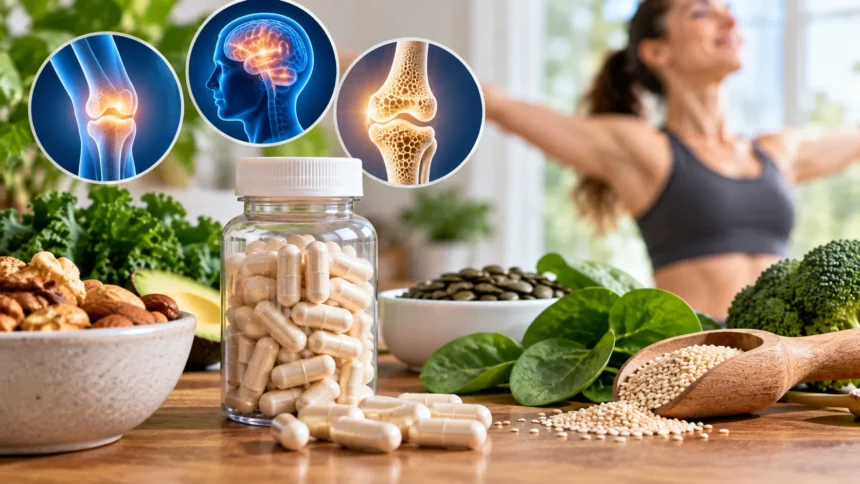
Boron Benefits: Uses, Dosage & Possible Side Effects
Boron is a naturally occurring trace mineral found in many fruits, vegetables, nuts, legumes, and other plant foods. Although the body appears to use boron in processes involving bone metabolism, minerals, hormones, and inflammation, it is not currently classified as an essential nutrient with an established Recommended Dietary Allowance. Interest in boron benefits has grown because small studies suggest that adequate intake may support bone health, mineral metabolism, and possibly joint function. Supplements are also marketed for testosterone, athletic performance, and brain health, although evidence for some of these claims remains limited. Understanding what research actually suggests can help you separate reasonable uses from exaggerated promises.
Most people consume some boron naturally through a varied diet without thinking about it. Problems are more likely to arise when supplements are taken in high amounts because more is not automatically better. There is no universally established “ideal” daily boron dose for improving health, and the safe upper limit should not be interpreted as a recommended target. People considering a supplement should also account for food intake, other supplements, medications, age, and existing health conditions. This guide explains boron uses, possible benefits, dosage considerations, food sources, side effects, and safety concerns in a practical way. It also highlights where scientific evidence is encouraging and where stronger research is still needed.
What Is Boron and What Does It Do in the Body?
Boron is a trace element that occurs naturally in the environment and enters the human diet mainly through plant-based foods. Fruits, vegetables, nuts, legumes, and certain beverages can all contribute small amounts depending on how the food was grown and processed. Unlike nutrients such as calcium, iron, or vitamin C, boron does not currently have an established Recommended Dietary Allowance for adults. Researchers continue to study whether it should be considered essential for human health or better described as a beneficial trace element. Even without an official daily requirement, boron appears to interact with several biological processes. These include mineral metabolism, bone development, inflammatory signaling, and possibly hormone activity.
One area of particular interest is the way boron appears to interact with calcium, magnesium, phosphorus, and vitamin D. These nutrients all contribute to normal bone structure and mineral balance, so researchers have investigated whether boron helps the body use or regulate them. Some studies suggest that boron intake may influence how minerals are retained or excreted. That does not mean boron can replace calcium, vitamin D, exercise, or medical treatment for bone disease. Instead, it may function as one small part of a much broader nutritional system. The exact mechanisms and the amount needed to produce meaningful benefits in humans remain active areas of research.
Boron may also influence enzymes and signaling compounds involved in inflammation. This has led researchers to explore whether dietary or supplemental boron could affect conditions involving chronic inflammatory activity. Laboratory findings and small human studies have generated interest, but they do not yet justify treating boron as a proven anti-inflammatory therapy. Inflammation is influenced by numerous factors, including body weight, physical activity, sleep, diet, infections, and chronic disease. A supplement cannot realistically replace these broader factors. Boron should therefore be viewed as a nutritional compound with potential biological effects rather than as a medication for inflammatory conditions.
Another area of research involves steroid hormones such as testosterone and estrogen. Small studies have reported changes in certain hormone measurements after boron supplementation, which has made boron popular in some men’s health and bodybuilding communities. However, results are inconsistent, sample sizes are often small, and short-term laboratory changes do not necessarily translate into better strength, muscle growth, fertility, or sexual performance. Women also produce testosterone and estrogen, and boron may influence aspects of hormone metabolism in both sexes. Much more research is needed before specific hormone-related benefits can be confidently recommended. Claims that boron reliably “boosts testosterone” should therefore be treated cautiously.
The body absorbs dietary boron relatively efficiently and eventually eliminates much of it through urine. Because boron is obtained from many ordinary foods, people eating a varied plant-rich diet may already consume meaningful amounts naturally. Intake can vary considerably between individuals because plant foods differ in boron concentration. There is no routine medical test used to screen the general population for “boron deficiency” in the same way doctors might evaluate iron or vitamin B12 deficiency. This is another reason supplementation should not automatically be assumed necessary. For most people, improving overall dietary quality is a reasonable first step before adding a standalone boron product.
Potential Boron Benefits for Bone and Mineral Health
Bone health is probably the most studied potential benefit of boron. Bones require more than calcium alone because magnesium, phosphorus, vitamin D, protein, hormones, and physical activity all contribute to maintaining bone tissue. Boron appears to interact with several of these factors, which has led researchers to investigate whether it supports healthy bone metabolism. Some studies suggest that low boron intake may affect mineral handling or markers associated with bone health. However, the available research is not strong enough to establish boron as a treatment for osteoporosis. It is better understood as one possible nutritional contributor within a larger bone-health strategy.
Boron may influence the body’s handling of calcium and magnesium. In some experimental settings, boron intake has been associated with changes in urinary mineral loss, suggesting that it may affect how efficiently certain minerals are retained. This relationship has generated interest because calcium and magnesium play important roles in bone structure, nerve signaling, and muscle function. The effects may also depend on vitamin D status and other dietary factors. Taking boron while neglecting calcium, protein, vitamin D, or resistance exercise would therefore be an incomplete approach to protecting bone health. Nutrition works through combinations of nutrients rather than isolated ingredients acting independently.
Vitamin D is another reason researchers have studied boron and bone strength together. Vitamin D helps regulate calcium absorption and is essential for normal skeletal health, while boron may influence aspects of vitamin D metabolism. Some research has suggested that boron could affect concentrations or utilization of vitamin D metabolites, although the clinical significance is not fully established. People who are deficient in vitamin D need appropriate assessment and treatment rather than relying on boron to compensate. Correcting a confirmed vitamin D deficiency is supported by much stronger evidence than using boron alone. Boron may eventually prove useful as a supporting nutrient, but it should not replace established bone-health recommendations.
Postmenopausal women have received particular attention in boron research because declining estrogen levels can accelerate bone loss. Some small studies have explored whether boron affects estrogen metabolism, mineral retention, or other variables related to skeletal health after menopause. Interesting findings have been reported, but the evidence remains too limited to recommend boron as a standalone strategy for preventing fractures or treating low bone density. Women at increased risk of osteoporosis benefit more from comprehensive assessment involving bone-density testing when appropriate, nutrition, exercise, and medical treatment when needed. Supplemental boron should be considered only within that larger context.
Anyone concerned about maintaining strong bones should focus first on well-established measures. These include adequate calcium and vitamin D, sufficient protein, resistance training, weight-bearing activity, avoiding smoking, and limiting excessive alcohol. Hormonal conditions, certain medications, aging, and chronic illnesses can also affect bone density and may require professional management. Boron-rich foods can comfortably fit into a bone-supportive eating pattern because many are also rich in fiber, antioxidants, and other nutrients. Supplements may be reasonable in selected situations, but they should not create a false sense of protection. Healthy bones depend on long-term habits rather than one trace mineral.
Can Boron Help With Joint Health and Inflammation?
Boron has attracted attention for joint health because researchers have observed relationships between boron intake and inflammatory processes. Some studies have investigated boron-containing compounds in people with osteoarthritis or joint discomfort. Results have suggested possible benefits in certain groups, but the studies are generally too limited to establish boron as a standard arthritis treatment. Osteoarthritis involves cartilage changes, mechanical stress, inflammation, age, body weight, injury history, and other factors. A single mineral cannot address every cause of joint pain. Boron may eventually prove to have a supportive role, but stronger clinical trials are needed to define who might benefit and at what dose.
One proposed explanation involves inflammatory markers and enzymes that influence tissue responses. Boron compounds appear capable of interacting with certain biochemical pathways related to inflammation in laboratory research. Some small human studies have also reported changes in inflammatory markers after supplementation. These findings are scientifically interesting but should not be interpreted as proof that boron works like an anti-inflammatory medicine. Clinical outcomes such as pain, mobility, stiffness, and quality of life matter more than changes in a single blood marker. Until larger trials confirm consistent benefits, boron should remain a supplementary nutritional consideration rather than a replacement for proven arthritis management.
People with knee, hip, hand, or spinal osteoarthritis may understandably look for supplements that could reduce discomfort. However, joint pain should first be understood properly because not every painful joint is caused by osteoarthritis. Rheumatoid arthritis, gout, injuries, infections, nerve problems, and other conditions can produce similar symptoms but require very different treatment. Adding boron without identifying the cause could delay more appropriate care. Exercise, muscle strengthening, weight management when relevant, physical therapy, and medically recommended pain strategies currently have stronger practical support. A boron supplement may be discussed with a healthcare professional as an additional option rather than a primary treatment.
Dietary boron may still fit naturally into an anti-inflammatory eating pattern. Foods such as fruits, nuts, legumes, and vegetables provide boron alongside fiber, polyphenols, vitamins, minerals, and healthy fats. Eating more of these foods can support overall health even if boron itself turns out to contribute only modestly to inflammation control. This is one advantage of obtaining nutrients primarily through food rather than high-dose supplements. The benefits of a plant-rich diet do not depend on one compound. People receive a broad mixture of nutrients that may work together in ways that individual capsules cannot fully reproduce.
If joint pain is persistent, worsening, swollen, red, or associated with significant morning stiffness, professional assessment is more useful than increasing supplement doses. Sudden severe joint pain with fever also needs prompt medical evaluation. For people already taking medication for arthritis or another inflammatory condition, supplements should be discussed with a doctor or pharmacist. Boron should not be used as a reason to stop prescribed therapy. The most balanced view is that early research around boron and joint health is promising enough to justify continued investigation but not strong enough to support dramatic treatment claims.
Boron, Testosterone, Hormones, and Exercise Performance
Boron supplements are frequently promoted as natural testosterone boosters, particularly in products aimed at men, athletes, and bodybuilders. This marketing often comes from small studies that observed changes in testosterone, estrogen, or sex hormone-binding globulin after boron supplementation. Although these findings are interesting, they have not been consistent enough to establish boron as a reliable testosterone-enhancing supplement. Short study durations and small participant numbers make the results difficult to generalize. Hormone concentrations also fluctuate naturally based on sleep, stress, time of day, body composition, illness, and calorie intake. A short-term blood-test change does not automatically translate into a meaningful physical benefit.
People sometimes assume that if a supplement raises testosterone even slightly, it must increase muscle size or strength. That conclusion is not supported simply by detecting a change in a laboratory measurement. Muscle growth depends heavily on progressive resistance training, adequate protein, calorie intake, recovery, sleep, genetics, and overall hormonal health. There is currently no strong evidence that ordinary boron supplementation produces dramatic improvements in athletic performance or muscle development in healthy adults. Athletes should therefore avoid expecting steroid-like effects from a trace mineral. Boron may support normal physiology, but that is very different from functioning as a powerful anabolic agent.
Boron has also been studied in relation to estrogen metabolism, particularly in postmenopausal women. Some research has suggested that boron intake may influence levels of certain estrogen-related compounds. This possible hormonal interaction may partly explain why boron has attracted interest in bone-health research. However, people with hormone-sensitive medical conditions should not assume that supplemental boron is automatically safe simply because it is sold without prescription. Hormonal biology is complex, and supplements can sometimes have effects that are not obvious from marketing labels. Anyone with a history of hormone-sensitive disease should discuss concentrated boron supplements with a healthcare professional before regular use.
Claims linking boron to fertility, libido, or sexual health should also be approached carefully. Healthy reproductive function depends on many hormones, nutrients, blood vessels, nerves, medications, stress levels, and medical conditions. Boron has not been established as a treatment for infertility, erectile dysfunction, low libido, or clinically diagnosed testosterone deficiency. Men with symptoms such as persistent fatigue, reduced libido, erectile difficulties, or loss of muscle should not self-treat based solely on supplement advertising. Proper medical evaluation can identify whether testosterone is genuinely low and whether another condition is contributing. Treating the underlying cause is more important than trying random hormone-boosting products.
The practical takeaway is that boron participates in biological processes that may influence hormone metabolism, but the evidence does not support guaranteed hormone enhancement. Someone eating a balanced diet may already receive boron naturally without needing a supplement. If a supplement is used, conservative amounts are more sensible than high doses taken in pursuit of rapid testosterone changes. Lifestyle factors such as sleep, strength training, adequate nutrition, healthy body weight, and management of chronic disease have far stronger effects on general hormonal health. Boron should be viewed as a trace nutrient, not as a shortcut to major hormonal or athletic improvements.
Boron and Possible Benefits for Brain and Cognitive Function
Researchers have also explored whether boron intake influences the brain and cognitive performance. Some controlled dietary studies have suggested that very low boron intake may be associated with differences in attention, memory, hand-eye coordination, or other cognitive measures. These findings have led to interest in boron’s possible role in nervous-system function. However, the amount and quality of available research are much smaller than for well-established brain-health factors. It would therefore be premature to describe boron as a proven memory supplement. The findings are better understood as evidence that trace minerals may influence neurological function in ways researchers are still working to understand.
The brain relies on carefully controlled electrical activity, energy metabolism, hormones, and mineral balance. Because boron interacts with several biochemical pathways, researchers have proposed that it could indirectly affect neurological performance. The mechanisms remain uncertain, and no single pathway explains all of the observations reported so far. Human cognition is also difficult to study because sleep, education, caffeine, stress, medications, mood, nutrition, and age can influence test results. A small improvement in one cognitive task does not necessarily mean a supplement prevents dementia or improves long-term brain health. Stronger studies would be necessary before making claims of that magnitude.
People worried about memory loss should not rely on boron supplements as their primary response. Forgetfulness can occur because of poor sleep, depression, anxiety, medication side effects, thyroid disorders, vitamin B12 deficiency, neurological disease, and many other causes. New or progressively worsening memory problems deserve medical assessment, particularly when they interfere with work, safety, or daily activities. Boron supplementation is not an established treatment for Alzheimer’s disease or other forms of dementia. Marketing language suggesting otherwise should be viewed skeptically. Investigating potentially reversible causes is much more useful than experimenting with high doses of a trace element.
A varied diet remains one of the easiest ways to obtain boron while supporting overall brain health. Many boron-rich foods, including fruits, nuts, and legumes, also provide antioxidants, healthy fats, potassium, magnesium, and fiber. Dietary patterns rich in whole plant foods have broader nutritional value than isolated supplementation. Regular physical activity, adequate sleep, social connection, managing blood pressure, avoiding smoking, and treating diabetes also matter substantially for long-term brain health. These factors have evidence that extends far beyond any single nutrient. Boron can fit naturally within that broader lifestyle without needing to become the central focus.
The possibility that boron contributes to normal cognitive function remains scientifically interesting. Future research may help clarify whether certain intake levels are particularly helpful or whether benefits mainly appear when diets are unusually low in boron. Until then, claims about sharper thinking, faster memory, or improved concentration should remain modest. People who choose a supplement should do so because they understand the uncertainties rather than because they expect a dramatic cognitive transformation. Good health decisions are often based on the total strength of evidence, not on one promising study. Boron is a good example of a nutrient where curiosity is justified but certainty is not.
Best Food Sources of Boron
Plant foods are generally the richest natural sources of boron, which means a varied diet can provide the mineral without supplementation. Fruits such as prunes, raisins, grapes, apples, pears, peaches, and avocados can contribute meaningful amounts. The exact boron content of a food can vary depending on soil conditions, farming methods, geography, and processing. For this reason, food-composition values are not always as standardized as they are for nutrients such as protein or sodium. Nevertheless, people who regularly eat fruits and vegetables are likely to obtain more boron than those whose diets contain very few plant foods. Food sources also provide many additional nutrients at the same time.
Nuts and legumes are another useful source of dietary boron. Almonds, peanuts, hazelnuts, beans, lentils, and similar foods can contribute to daily intake while providing protein, fiber, healthy fats, magnesium, and other minerals. These foods fit easily into snacks, salads, breakfast dishes, and main meals. A person does not need to calculate boron content precisely at every meal because there is no established daily requirement that must be tracked. Instead, eating a variety of whole foods naturally increases exposure to trace nutrients. This approach is generally more balanced than attempting to obtain boron from one specific food every day.
Vegetables can contribute smaller but still useful amounts depending on the type and serving size. Broccoli, potatoes, leafy vegetables, and other plant foods may provide boron as part of an overall nutrient-dense eating pattern. Because food concentrations vary, a varied diet is preferable to relying on a single item. People following vegetarian or plant-forward diets often consume considerable amounts of boron naturally because so many of their staple foods are plant based. This does not necessarily mean that higher intake always creates additional benefits. It simply shows that obtaining boron through ordinary foods can be easy for many people.
Certain beverages and dried fruits can also contribute boron. Dried fruits are particularly concentrated because removing water increases the concentration of many naturally occurring compounds per serving. However, dried fruit can also be high in natural sugars and calories, so portion size still matters. Some beverages derived from plant ingredients may contain boron as well, although concentrations vary widely. Rather than choosing foods solely for their boron content, it makes more sense to consider the complete nutritional profile. A balanced diet should support blood sugar, cardiovascular health, digestion, and overall nutrient intake at the same time.
Getting boron from food has another advantage: it makes excessive intake much less likely. Normal dietary patterns rarely approach levels associated with toxicity because food contains relatively small quantities distributed across meals. Supplements, on the other hand, can deliver several milligrams in a single capsule and make it easier to combine multiple sources unintentionally. People who take multivitamins should check whether boron is already included before adding a separate product. Dietary diversity remains a sensible foundation for most healthy adults. Supplements are most useful when they address a clear reason rather than automatically replacing nutritious foods.
Boron Dosage: How Much Should You Take?
There is currently no established Recommended Dietary Allowance or Daily Value for boron because experts have not determined a precise amount required to prevent a recognized deficiency disease. This makes boron dosage different from nutrients such as vitamin C or iron. People sometimes interpret the absence of a recommended amount as permission to take large doses, but that is not appropriate. Lack of an RDA means the optimal requirement has not been firmly established, not that unlimited intake is safe. Dietary intake commonly falls within the low-milligram range. Most people eating a varied diet already consume some boron every day.
Many commercial boron supplements provide approximately 1 to 3 milligrams per serving, although products with higher amounts are also available. These common supplement amounts should not be interpreted as an officially recommended medical dose. Research studies have used a variety of dosages depending on the health outcome being investigated. Because evidence is incomplete, there is no universally accepted dose for improving bones, testosterone, joints, or cognition. Someone choosing a supplement should generally avoid assuming that increasing the dose will increase the benefit. Trace nutrients often have a range where adequate amounts support normal function while excessive amounts create unnecessary risk.
For adults, the established tolerable upper intake level is 20 milligrams of boron per day from all sources. This upper limit is intended as a safety boundary, not as a target intake or recommended supplement dose. Regularly approaching the upper limit offers no proven advantage for most healthy people. It is also important to count boron contained in multivitamins, mineral products, sports supplements, or combination formulas. Taking several products at once can increase total intake without the user realizing it. Reading Supplement Facts labels is therefore an important part of avoiding excessive exposure.
Children and teenagers have lower upper limits than adults because body size and developmental factors affect safety. Pregnant and breastfeeding adults also need to stay within age-appropriate safety limits and should be especially cautious about unnecessary supplementation. Anyone considering boron during pregnancy should discuss the product with a healthcare professional rather than relying on general supplement advice. The same applies to people with kidney problems because the kidneys play an important role in eliminating boron. When elimination is impaired, the safety of routine supplementation may be different. Personalized medical guidance becomes more important when health conditions are present.
If you decide to use a boron supplement, choosing a modest amount is usually more sensible than pursuing high-dose protocols found online. Take the product according to its label and avoid combining multiple boron-containing supplements unless advised by a professional. Taking it with food may reduce stomach discomfort for people who are sensitive to supplements. There is no compelling evidence that complicated cycling schedules or extremely precise timing dramatically improve its effects. Evaluate whether the supplement is providing a meaningful reason to continue rather than taking it indefinitely by habit. Nutrition should remain the foundation, with supplements playing a supporting role when appropriate.
Possible Boron Side Effects and Safety Concerns
Boron from ordinary foods is generally considered safe for healthy people. Side effects are more likely when concentrated supplements are used in excessive amounts. Reported symptoms of too much boron can include nausea, vomiting, diarrhea, abdominal discomfort, headache, and skin changes. Very high exposure can be toxic and may affect multiple body systems. This is why the adult upper intake level should be taken seriously even though many supplements provide far smaller amounts. Taking extra boron in an attempt to obtain faster benefits is not a safe strategy.
Digestive symptoms are among the easiest warning signs to notice after starting a supplement. Nausea, loose stools, cramping, or stomach upset may occur when a product is poorly tolerated or the amount is too high for the individual. These symptoms can also be caused by other ingredients in combination supplements, so boron is not always responsible. Stopping a nonessential supplement and reviewing the label can help identify potential triggers. Persistent vomiting or diarrhea requires attention because dehydration and electrolyte imbalance can develop. Severe symptoms after a large accidental ingestion require prompt medical advice.
People with kidney disease should be particularly cautious because boron is primarily eliminated through the kidneys. Reduced kidney function could alter how the body handles supplemental amounts, potentially increasing exposure. A person with chronic kidney disease should therefore avoid self-prescribing boron without discussing it with their healthcare team. The same caution applies when several mineral supplements are being used simultaneously. Kidney disease can change the way multiple nutrients and electrolytes need to be managed. General supplement recommendations for healthy adults do not necessarily apply to people with impaired kidney function.
People with hormone-sensitive conditions should also discuss boron supplementation with a clinician because of its possible effects on steroid-hormone metabolism. This caution may be relevant for individuals with certain breast, ovarian, uterine, or prostate conditions, depending on their medical history. Evidence does not prove that modest boron intake causes these diseases, and boron-containing foods do not generally need to be avoided. The concern is mainly about concentrated supplemental use when hormone-related effects remain incompletely understood. Supplements can produce exposures different from normal food intake. A personalized discussion is therefore more appropriate than automatically assuming either complete safety or complete danger.
Boric acid and borax should never be confused with dietary boron supplements. Household borax and many boric acid products are not intended to be swallowed as nutritional sources of boron. Internet trends sometimes encourage using household or industrial compounds internally, but doing so can result in dangerous exposure. Only products specifically manufactured and labeled as dietary supplements should even be considered for oral supplementation. Accidental ingestion of a potentially toxic boron-containing product warrants immediate professional advice. Safe supplement use begins with choosing the correct product rather than experimenting with chemicals intended for other purposes.
Who May Consider Boron Supplements and Who Should Be Careful?
A healthy adult who eats a varied diet does not necessarily need a boron supplement. There is no routine recommendation that everyone should take boron daily, and no recognized widespread deficiency syndrome has established supplementation as essential. People interested in bone or joint health may encounter boron as part of a multivitamin or mineral formula. In that situation, a small amount may be reasonable if total intake stays within safe limits. The more important question is whether the overall diet supplies adequate protein, calcium, magnesium, vitamin D, and other nutrients. Boron should complement good nutrition rather than distract from larger dietary gaps.
People at risk of osteoporosis may be particularly interested in boron because of its relationship with mineral and hormone metabolism. However, someone with low bone density needs a complete strategy rather than a boron-only approach. Medical assessment may include vitamin D levels, calcium intake, medications, family history, hormonal factors, and bone-density testing. Resistance exercise and adequate protein also matter substantially. If osteoporosis is diagnosed, prescription treatment may be needed to reduce fracture risk. Boron supplementation should not delay therapies with much stronger evidence for preventing serious bone loss.
Athletes and men seeking higher testosterone should be cautious about heavily marketed boron products. The research does not establish boron as a dependable way to raise testosterone enough to produce meaningful gains in muscle, strength, or sexual performance. Supplements marketed for “testosterone support” may also combine boron with many other ingredients, making safety and effectiveness harder to evaluate. Athletes subject to drug testing should be particularly careful with poorly regulated multi-ingredient products because contamination can occur. A third-party-tested supplement from a reputable manufacturer is preferable if supplementation is chosen. Training, nutrition, and recovery remain the foundations of performance.
Pregnant or breastfeeding people should avoid taking unnecessary high-dose boron supplements without medical guidance. Nutrition requirements change during pregnancy, and safety data for concentrated supplements may be more limited than for ordinary food sources. Boron from fruits, vegetables, nuts, and other normal foods is not generally a concern as part of a balanced diet. The issue is intentionally adding supplemental doses without a clear reason. A prenatal vitamin may already contain numerous nutrients, so adding separate products can create unnecessary overlap. Discussing the complete supplement list with a prenatal healthcare professional is the safest approach.
Anyone experiencing chronic symptoms should also avoid using boron as a substitute for diagnosis. Joint pain, fatigue, low libido, weak bones, or memory problems can all have many potential causes. A supplement may temporarily create a sense that something is being treated while the underlying condition remains unidentified. Medical evaluation becomes particularly important when symptoms are severe, persistent, or progressively worsening. Boron may eventually have a clearer role in several areas of health as research develops. For now, its most reasonable place is as a naturally occurring dietary trace mineral and, when appropriate, a modest supplemental ingredient rather than a cure-all.
Frequently Asked Questions
What are the main benefits of boron?
Boron may support bone and mineral metabolism and has been studied for possible effects on joints, inflammation, hormones, and cognitive function. Evidence is strongest for biological involvement in mineral and bone-related processes, while many other advertised benefits still require better research.
How much boron should I take daily?
There is no established Recommended Dietary Allowance for boron. Many supplements contain about 1–3 mg per serving, while the adult tolerable upper intake level is 20 mg per day from all sources; that upper limit is a safety boundary, not a recommended target.
Does boron increase testosterone?
Some small studies have reported changes in testosterone or related hormones after boron supplementation, but results are inconsistent. Boron should not be considered a proven treatment for low testosterone or a reliable muscle-building supplement.
What foods are high in boron?
Fruits, dried fruits, nuts, legumes, avocados, grapes, apples, pears, prunes, raisins, and various vegetables can provide boron naturally. Actual amounts vary depending on the food and growing conditions.
Can too much boron be harmful?
Yes. Excessive boron exposure can cause digestive problems and other toxic effects, so high-dose supplementation should be avoided. People with kidney disease, pregnancy, or hormone-sensitive medical conditions should discuss supplemental boron with a healthcare professional before regular use.