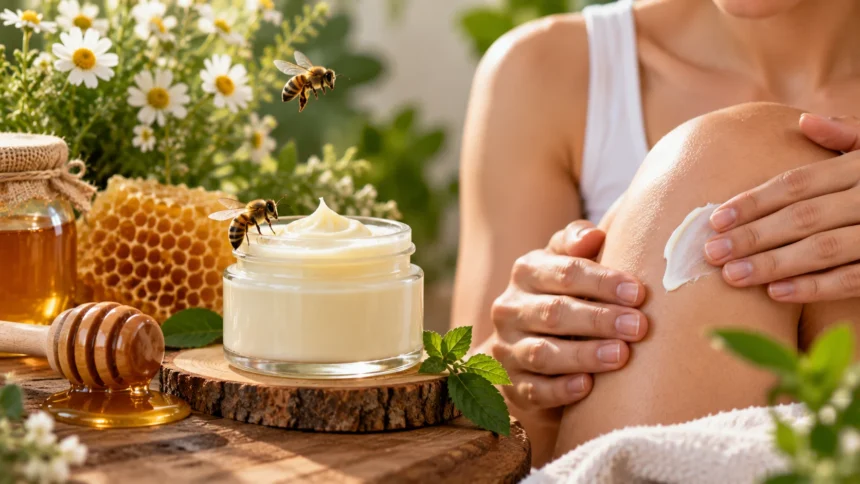
Bee Venom Cream: Benefits, Uses, Risks & Evidence
Bee venom cream has moved from a niche apitherapy product into the wider skincare and wellness market, where it is promoted for concerns ranging from wrinkles and acne to sore joints and irritated skin. Bee venom, sometimes called apitoxin, is a complex substance produced by honeybees and contains biologically active compounds such as melittin, apamin, enzymes, and peptides. Laboratory research suggests some of these components can influence inflammation, immune activity, microorganisms, and skin-cell signaling. Those findings have encouraged manufacturers to include purified bee venom in creams, serums, masks, and other topical products. However, laboratory effects do not automatically prove that a commercial cream will produce meaningful benefits in people. The concentration, formulation, condition being treated, and individual response all matter.
Interest in bee venom cream is understandable because a small number of human studies have reported encouraging findings for facial wrinkles, acne, and atopic dermatitis. At the same time, much of the research remains relatively small, short-term, or focused on specially formulated products that may not represent every cream sold online. Claims that bee venom acts like “natural Botox,” permanently removes wrinkles, cures arthritis, or treats serious skin disease should therefore be approached cautiously. Safety is another important consideration because bee venom can trigger allergic reactions, including potentially severe reactions in susceptible people. A product applied to the skin may also contain fragrances, essential oils, preservatives, or other ingredients that cause irritation independently of the venom. Understanding both the possible benefits and the limitations of the evidence makes it easier to decide whether bee venom cream deserves a place in a skincare or wellness routine.
What Is Bee Venom Cream and How Does It Work?
Bee venom cream is a topical product containing a measured amount of venom collected from honeybees, usually Apis mellifera. The venom is generally incorporated into a cosmetic or topical base along with ingredients such as moisturizers, oils, botanical extracts, or skin-conditioning agents. Unlike an actual bee sting, a properly manufactured cream does not inject venom beneath the skin through a stinger. Instead, the ingredients remain mainly on or near the surface where they may interact with skin tissue. Products vary widely in concentration and formulation, so two creams carrying the same “bee venom” label may behave very differently. This variation is one reason results from one researched formulation cannot automatically be applied to every commercial product.
Bee venom itself is a biologically active mixture rather than a single chemical. Melittin is one of its best-known peptides and has been studied extensively for inflammatory, antimicrobial, and cell-signaling effects in laboratory research. Other components include apamin, phospholipase A2, mast-cell-degranulating peptides, enzymes, amino acids, and small molecules. These substances evolved as part of the honeybee’s defense system, which explains why venom can produce pain, inflammation, and immune responses after a sting. Researchers have nevertheless investigated whether carefully controlled concentrations might produce useful biological effects. The challenge is finding concentrations and delivery methods that potentially provide a benefit without creating excessive irritation or allergic reactions.
Many skincare claims surrounding bee venom focus on its possible effects on inflammation and collagen-related processes. Laboratory experiments have suggested that certain bee venom components can influence inflammatory pathways and enzymes involved in breaking down components of the skin’s extracellular matrix. These mechanisms have led to interest in bee venom as a possible anti-aging cosmetic ingredient. However, biochemical activity in a laboratory is not the same as visible improvement in a person’s skin. Human skin has a complex barrier that affects how ingredients penetrate and behave. Product formulation, frequency of use, concentration, age, sun exposure, and other skincare products can all change the outcome.
Bee venom cream is also sometimes marketed as creating a mild stimulating effect that makes skin look temporarily plumper or firmer. Marketing descriptions occasionally compare this effect with Botox, but the comparison is scientifically misleading. Botox works by temporarily reducing nerve signals to specific muscles when injected by a trained medical professional. Bee venom cream does not work through the same established mechanism and should not be expected to reproduce the predictable effects of botulinum toxin injections. Any visible firming may instead relate to hydration, mild local stimulation, or other ingredients in the cream. Consumers should be cautious when a cosmetic claim sounds equivalent to a medical procedure.
It is equally important to distinguish cosmetic bee venom cream from bee venom therapy used in some traditional or complementary medicine practices. Apitherapy can involve different preparations and may include injections, acupuncture-style administration, or intentional bee stings, all of which involve different levels of exposure and risk. Evidence from those procedures cannot automatically prove that a topical cream works for the same condition. A cream generally exposes the body differently and may deliver a much smaller amount of active compounds. When evaluating bee venom benefits, the route of administration matters. Research should therefore be interpreted according to the exact formulation and method that was actually studied.
Potential Benefits of Bee Venom Cream
One proposed benefit of bee venom cream is its ability to influence inflammatory activity in the skin. Certain bee venom peptides have demonstrated anti-inflammatory effects in experimental settings by affecting signaling pathways involved in cytokine production. This has encouraged researchers to investigate bee venom for inflammatory skin conditions and other disorders associated with excessive inflammatory activity. However, bee venom can also provoke inflammation and allergic responses, which creates an important paradox. A substance capable of altering inflammatory pathways is not automatically suitable for every inflamed skin condition. Whether it helps or irritates depends heavily on concentration, formulation, individual sensitivity, and the condition being treated.
Antimicrobial activity is another area that has attracted scientific interest. Laboratory studies have found that bee venom and some of its components can inhibit certain microorganisms under controlled conditions. This is one reason researchers have explored bee venom cosmetics for acne, where bacteria and inflammation can contribute to lesion development. However, acne is a multifactorial condition involving oil production, clogged follicles, inflammation, hormones, and microbial activity. Killing bacteria in a laboratory dish does not automatically translate into reliable acne clearance on human skin. Bee venom should therefore not be viewed as a replacement for established treatments such as retinoids, benzoyl peroxide, or other therapies recommended according to acne severity.
Bee venom has also been investigated for possible effects on wound-related processes and skin regeneration. Experimental studies have suggested that certain venom components can influence keratinocytes, fibroblasts, collagen formation, and inflammatory signaling involved in tissue repair. These findings are scientifically interesting because those cells play important roles in maintaining healthy skin. However, applying an ordinary cosmetic bee venom cream to an open wound is not recommended unless the product has specifically been developed and medically evaluated for that purpose. Cosmetic creams are not necessarily sterile and may contain ingredients inappropriate for damaged tissue. Wound care should follow evidence-based medical recommendations rather than relying on general skincare claims.
Another reason consumers seek bee venom products is the promise of smoother, firmer-looking skin. Some preliminary human research has found reductions in measured wrinkle characteristics after consistent use of a bee venom serum. These results have contributed to the ingredient’s reputation as an anti-aging option. Yet moisturizers themselves can temporarily improve the appearance of fine lines by increasing hydration in the outer layer of skin. When a bee venom cream contains glycerin, oils, humectants, or occlusive ingredients, some cosmetic improvement may come from the base formula rather than the venom alone. Well-controlled comparisons are necessary to determine how much benefit is specifically attributable to bee venom.
Bee venom products are also promoted for muscle discomfort, joint stiffness, arthritis, and other painful conditions. Bee venom has a long history in complementary medicine, and researchers have studied its effects on pain and inflammation through several administration methods. However, evidence for a typical over-the-counter topical bee venom cream is much less established than marketing language can make it appear. Studies involving injections or bee venom acupuncture cannot simply be treated as evidence for creams. Anyone with persistent joint pain should first consider the underlying cause, particularly when swelling, injury, fever, or reduced mobility is present. Symptom relief should never replace appropriate evaluation of a potentially significant musculoskeletal condition.
Bee Venom Cream for Wrinkles and Anti-Aging Skincare
The anti-aging reputation of bee venom is largely based on the idea that certain components may influence collagen-related activity and the biological processes involved in skin aging. Collagen provides structural support to the skin, while ultraviolet exposure and natural aging gradually change collagen quantity and organization. Laboratory research has explored whether bee venom can influence enzymes associated with collagen breakdown and signaling involved in skin-cell repair. These mechanisms are plausible enough to justify additional research. However, consumers should distinguish a plausible biological mechanism from a clinically proven anti-aging treatment. Many ingredients show promising activity in cells but produce much smaller effects when applied to intact human skin.
A small human study of women with facial photoaging examined a serum containing a low concentration of bee venom used consistently over several weeks. Researchers reported improvements in measurements such as wrinkle area, wrinkle depth, and visual wrinkle grading. Those findings suggest that bee venom deserves further investigation as a cosmetic ingredient. However, the study involved a relatively small group of participants and did not establish that every bee venom cream will have the same effect. Larger randomized studies involving diverse skin types would provide stronger evidence. Until such research is available, bee venom should be considered an emerging cosmetic ingredient rather than a proven equivalent to established anti-aging treatments.
Consumers may encounter claims that bee venom cream “tricks” the skin into thinking it has been stung, causing increased circulation and collagen production. This explanation is popular in beauty marketing because it is easy to understand, but it oversimplifies complicated skin biology. Bee venom contains substances capable of producing local biological responses, yet the extent of those responses from a diluted cosmetic product is not always clear. More stimulation is also not necessarily better because excessive inflammation can damage the skin barrier. A good skincare product should improve appearance without repeatedly causing burning, swelling, or irritation. Visible redness should not automatically be interpreted as proof that a cream is rebuilding collagen.
For people primarily concerned about premature skin aging, several interventions have much stronger supporting evidence than bee venom cream. Daily broad-spectrum sunscreen helps reduce ultraviolet damage, which is one of the major preventable causes of wrinkles and uneven pigmentation. Topical retinoids and retinol products have considerably more research supporting their effects on photoaged skin, although they can also cause irritation and are not appropriate for everyone. Moisturizers can improve skin hydration and temporarily soften the appearance of fine lines. Vitamin C and certain other ingredients may also be useful depending on formulation and skin tolerance. Bee venom can be considered an optional addition rather than the foundation of an anti-aging routine.
Expectations matter when trying any bee venom anti-wrinkle product. A cream may improve hydration, texture, or the appearance of fine lines without fundamentally reversing the aging process. Deep wrinkles caused by structural changes, repetitive muscle movement, and long-term sun damage generally do not disappear because of a cosmetic cream. Dermatologic procedures can provide stronger effects when someone wants more significant correction. People who enjoy bee venom skincare and tolerate it well may decide that modest cosmetic improvement is worthwhile. The most responsible way to use it is with realistic expectations rather than assuming dramatic before-and-after marketing images represent typical results.
Bee Venom for Acne, Eczema, and Other Skin Concerns
Bee venom has been studied in acne because of its combination of antimicrobial and anti-inflammatory properties. Small human studies using purified bee venom cosmetics or serums have reported reductions in acne lesion severity over relatively short treatment periods. These findings are encouraging, but the studies have generally involved limited participant numbers and specialized formulations. Acne can range from a few occasional clogged pores to severe inflammatory or scarring disease. A small cosmetic study cannot establish bee venom as a first-line treatment across that entire spectrum. People with persistent or scarring acne should consider proven therapies and professional dermatologic care rather than experimenting with multiple alternative products.
Another area of investigation is atopic dermatitis, commonly known as eczema. A controlled study involving an emollient containing bee venom reported improvements in eczema severity and itching compared with a similar base product in participating patients. This suggests that bee venom-related formulations may have potential for certain inflammatory skin conditions. However, eczema involves a damaged skin barrier, and people with eczema can be especially sensitive to fragrances, essential oils, preservatives, and other cosmetic ingredients. Bee venom itself can also trigger hypersensitivity. Anyone considering a bee venom product for eczema should therefore be particularly cautious, especially during a severe flare or when the skin is cracked, bleeding, or infected.
Bee venom has also appeared in experimental research related to psoriasis, pigmentation conditions, wound healing, and other dermatologic concerns. Much of this work remains preclinical, involves different delivery methods, or comes from relatively small studies. A common mistake in online wellness content is to combine all bee venom research and present it as proof that one retail cream treats numerous unrelated conditions. Different diseases have completely different biological mechanisms and require different evidence. A study involving cells or animals may help scientists decide what to investigate next, but it is not sufficient proof of human treatment effectiveness. Disease claims therefore deserve considerably more scrutiny than general cosmetic claims.
People should also remember that the cream surrounding the bee venom may influence results substantially. An eczema product may contain moisturizing ingredients that repair the skin barrier, while an acne serum may contain other ingredients affecting oil, hydration, or inflammation. If the entire formulation improves symptoms, researchers need appropriate control groups to determine the specific contribution of bee venom. This is particularly relevant when shoppers compare a researched product with an unrelated cream purchased online. Similar ingredient names do not mean the products have equivalent concentrations, stability, or skin delivery. Product quality and formulation science can influence both effectiveness and safety.
Anyone using bee venom cream for a diagnosed skin disease should avoid stopping prescribed medication without discussing the change with a healthcare professional. Conditions such as eczema, psoriasis, severe acne, and infected dermatitis can worsen when effective treatment is delayed. Complementary skincare can sometimes be used alongside standard care, but compatibility depends on the condition and other products being applied. Burning, rapidly increasing redness, blistering, facial swelling, or widespread hives are not normal signs that a product is “working.” Those reactions should prompt discontinuation and appropriate medical attention. A treatment should make the skin healthier over time rather than requiring someone to tolerate escalating inflammation.
Bee Venom Cream for Joint Pain, Arthritis, and Muscle Soreness
Bee venom has a long history of use in traditional approaches to painful joints and inflammatory conditions. Interest in this area continues because melittin and other venom components can influence inflammatory and pain-related signaling in experimental research. Some clinical studies of bee venom therapy have reported pain-related improvements in certain conditions. However, many of those studies involve injections, acupuncture-style administration, or other techniques that differ substantially from applying a cream to the skin. The amount of venom reaching deeper tissues may be very different. As a result, evidence supporting bee venom therapy generally should not be presented as direct proof that commercial joint creams provide the same benefits.
Topical bee venom creams marketed for arthritis often include several additional ingredients, such as menthol, botanical extracts, essential oils, or moisturizing agents. Some of those ingredients can create cooling, warming, tingling, or counterirritant sensations that temporarily change how discomfort feels. A consumer may experience short-term relief without knowing whether the bee venom itself produced the effect. This does not mean the cream has no value for that individual, but it complicates claims about the active mechanism. High-quality trials need to compare a bee venom formulation with an identical product that does not contain bee venom. Without that type of comparison, marketing claims can easily become stronger than the supporting evidence.
Arthritis is also not a single condition. Osteoarthritis involves changes in cartilage, bone, and other joint structures, while rheumatoid arthritis is an autoimmune inflammatory disease that can progressively damage joints and other organs. Gout involves crystal deposition, and joint pain may also come from injuries, tendons, infections, or other conditions. A topical cream that temporarily changes discomfort does not address all of these causes. Someone with a hot, very swollen, suddenly painful joint should not simply apply bee venom cream and wait for improvement. Identifying the underlying cause is more important than choosing a topical product based solely on the word “arthritis.”
For mild muscle soreness after ordinary activity, a bee venom cream may be marketed as a soothing massage product. The massage itself can produce temporary comfort, while emollient ingredients reduce friction and make the experience more pleasant. Whether bee venom adds a meaningful benefit beyond the rest of the formulation remains less certain. People should avoid applying potentially irritating products immediately after shaving, onto broken skin, or after activities that have already caused skin chafing. Using larger amounts does not necessarily create stronger pain relief and could increase irritation or allergen exposure. Directions on the product label should therefore be followed rather than assuming more cream will produce better results.
Persistent musculoskeletal pain deserves appropriate assessment when it limits movement, repeatedly interrupts sleep, follows a significant injury, or is accompanied by swelling, weakness, numbness, or fever. Bee venom cream should not delay evaluation of fractures, infections, inflammatory arthritis, nerve problems, or other conditions requiring specific treatment. Evidence-based approaches to joint pain may include exercise, physical therapy, weight management, appropriate medications, or condition-specific treatments. A topical bee venom product, if used at all, should be considered a complementary option rather than a cure. The strongest claims seen in advertisements are often far more confident than the current evidence supporting ordinary bee venom creams.
Bee Venom Cream Risks and Side Effects
The most important risk of bee venom is allergy. Honeybee venom contains proteins and other components capable of provoking an immune response, and some people can experience serious systemic allergic reactions. A history of a severe reaction after a bee sting is therefore highly relevant when considering a topical bee venom product. Even though a cream exposes the body differently from a sting, intentionally applying an allergen without medical guidance may be unsafe for someone with known venom hypersensitivity. Severe reactions can involve widespread hives, swelling, breathing difficulty, dizziness, or a dangerous drop in blood pressure. Such symptoms require emergency medical attention rather than home treatment.
Milder local reactions are more likely than anaphylaxis and can include redness, itching, burning, warmth, swelling, or rash where the cream was applied. These symptoms can result from bee venom itself or from another ingredient in the product. Fragrances, essential oils, preservatives, botanical extracts, and certain emulsifiers can all trigger irritation or contact dermatitis. This makes it difficult to identify the responsible ingredient based on appearance alone. Continuing to apply a cream that causes progressively worsening irritation is not a useful way to “build tolerance.” Skin inflammation can become more severe with repeated exposure in some situations.
Sensitization is another concern worth understanding. A person may tolerate an ingredient initially but develop an immune reaction after repeated exposure. This means using a product successfully several times does not provide a permanent guarantee against future allergy. Bee venom is particularly relevant because its proteins can interact strongly with the immune system. People should therefore pay attention to new reactions even after months of previously comfortable use. Swelling beyond the application area, widespread hives, throat tightness, wheezing, or faintness should be treated much more seriously than minor temporary skin tingling. A severe previous reaction also warrants professional allergy advice before any further exposure.
The location of application matters because thin or sensitive skin may react more strongly than areas with a more resilient barrier. Bee venom cream should generally be kept away from the eyes, inside the nose, mouth, and other mucous membranes unless a product has specifically been designed for such use. Broken, freshly irritated, sunburned, or recently exfoliated skin can allow ingredients to penetrate differently and may increase burning or irritation. Combining bee venom with strong acids, retinoids, scrubs, or other irritating products may also make reactions more likely. A complicated skincare routine can make it difficult to determine which product caused a problem.
Product quality creates another potential risk because bee venom creams vary widely between manufacturers. Concentration may not always be communicated clearly, and some products combine numerous active botanical or essential-oil ingredients. Consumers should be cautious with products that make sweeping claims to cure arthritis, remove moles, heal infections, eliminate eczema, and reverse wrinkles simultaneously. A long list of unrelated medical promises should raise questions about the quality of the marketing. Packaging should provide a readable ingredient list, instructions, manufacturer information, and basic safety warnings. Buying from a reputable source cannot eliminate allergic risk, but it can reduce uncertainty about what is actually being applied to the skin.
Who Should Avoid Bee Venom Cream or Use Extra Caution?
People with a known allergy to bee venom should generally avoid experimenting with bee venom creams unless an allergy specialist or other qualified clinician specifically advises otherwise. A previous systemic reaction to a honeybee sting is particularly important. Severe venom allergy can involve rapid-onset breathing problems, swelling, hives, dizziness, or cardiovascular symptoms. The fact that a product is labeled “natural,” “cosmetic,” or “for external use” does not eliminate the underlying allergenic proteins. Anyone who carries epinephrine because of insect-sting allergy should be especially cautious. Skincare experimentation is not worth creating an avoidable risk of a serious allergic reaction.
People with severe eczema, highly reactive skin, chronic urticaria, or a history of multiple cosmetic allergies may also want professional advice before using bee venom products. An already damaged skin barrier can respond unpredictably to biologically active or fragranced ingredients. During an eczema flare, even products that are normally tolerated may sting or worsen inflammation. A dermatologist can help distinguish between appropriate moisturization and experimental ingredients that could complicate treatment. People receiving treatment for skin disease should also consider how a new cream might interact with existing topical medications. Introducing one new product at a time makes adverse reactions easier to identify.
Pregnancy and breastfeeding are situations in which unnecessary exposure to poorly studied cosmetic actives deserves additional caution. There is limited high-quality evidence establishing the safety of regular topical bee venom use during pregnancy or breastfeeding. Absorption from different formulas may also vary. Someone who is pregnant does not need to assume that every bee-derived skincare ingredient is dangerous, but there is little reason to accept uncertain risk for an optional cosmetic benefit. A healthcare professional can help evaluate individual products if use is being considered. This is particularly important when a cream includes several active botanical ingredients rather than bee venom alone.
Parents should also be cautious about applying bee venom cream to children without professional guidance. Children’s skin can differ from adult skin in sensitivity and barrier function, and younger children may accidentally transfer products from their hands to their eyes or mouth. Products marketed for adults may contain fragrances, menthol, essential oils, or other substances that are inappropriate for a child. A rash in a child also deserves accurate diagnosis because eczema, infection, allergy, insect bites, and other conditions can look similar. Treating an unidentified rash with a trendy active ingredient may delay appropriate care. Pediatric skin treatments should prioritize well-established safety and effectiveness.
Anyone planning to use bee venom cream around the eyes should exercise particular caution. The skin around the eyes is thin and easily irritated, while accidental transfer onto the ocular surface can cause significant discomfort. Anti-wrinkle bee venom products are sometimes marketed specifically for crow’s feet, which makes this issue especially relevant. The product should only be used in the area recommended by the manufacturer and should not be placed directly into the eye. If eye exposure causes persistent pain, redness, light sensitivity, or vision changes, the eye should be assessed appropriately. Cosmetic wrinkle treatment should never come at the expense of eye safety.
How to Use and Choose Bee Venom Cream More Safely
Start by reading the full ingredient list rather than focusing only on the words “bee venom” on the front of the package. A cream may contain multiple active or potentially irritating ingredients that influence both effectiveness and tolerability. Look for clear directions, manufacturer details, concentration information when available, and warnings about allergy or sensitive skin. Avoid assuming that an expensive product contains more effective bee venom than an inexpensive one because price is not evidence of clinical performance. Similarly, a high venom concentration is not automatically better. With biologically active ingredients, increasing exposure can sometimes increase side effects more than benefits.
Before using a new cosmetic broadly, a small-area trial can help identify obvious local irritation, although it cannot guarantee that a severe allergy will never occur. Apply a limited amount to intact skin according to product instructions and monitor for redness, itching, burning, or swelling. Do not intentionally perform a home challenge if you have a history of serious bee-sting allergy, because a patch-style experiment is not a substitute for medical allergy evaluation. People with known venom sensitivity require a different level of caution. Product testing should be used to identify ordinary cosmetic intolerance, not to prove that a potentially dangerous allergen is safe for someone at high risk.
When adding bee venom cream to a skincare routine, introducing it gradually can make reactions easier to recognize. Avoid starting it on the same day as several acids, retinoids, exfoliants, or other strong active ingredients. If burning or redness occurs, it will otherwise be difficult to determine which product caused the problem. Use only the amount recommended instead of applying thick layers in an attempt to accelerate results. Cosmetic improvements generally require consistent, tolerable use rather than intense short-term exposure. Stop using the product if irritation becomes persistent, painful, blistered, or progressively worse rather than interpreting the reaction as evidence that the cream is working.
For anti-aging use, bee venom cream should complement rather than replace the essentials of good skin care. Daily sun protection remains one of the most important steps for limiting preventable photoaging. Gentle cleansing, an appropriate moisturizer, and evidence-supported active ingredients can then be selected according to individual skin concerns. If bee venom is added, its effect should be assessed over a realistic period rather than judging temporary tightness or redness immediately after application. Taking photographs under similar lighting can provide a more objective way to evaluate whether the product is making a visible difference. If no meaningful improvement occurs, there is little reason to continue simply because the ingredient is fashionable.
Consumers should also pay attention to how a product is marketed. Claims such as moisturizing, improving appearance, or helping skin feel smoother are different from claims that a cream treats arthritis, cures eczema, eliminates infections, or permanently rebuilds damaged joints. Medical-sounding promises require stronger evidence than ordinary cosmetic claims. In the United States, cosmetics generally are not individually preapproved by the FDA before reaching the market, so “available for sale” should not be confused with proof of effectiveness. Shoppers benefit from separating regulatory labeling from scientific evidence. A trustworthy product description should communicate realistic benefits rather than relying on dramatic disease claims or fear-based marketing.
What Does the Evidence Really Say About Bee Venom Cream?
The overall evidence for bee venom cream is best described as interesting but still developing. Laboratory studies provide plausible reasons to investigate bee venom because its components can influence inflammation, microorganisms, cell signaling, and tissue-related processes. A handful of human studies also provide preliminary support for certain topical applications. However, the number of high-quality trials remains much smaller than the volume of marketing surrounding bee venom products. Many studies involve specific formulations, relatively small groups, or short follow-up periods. This means the scientific literature supports further research more strongly than it supports broad claims that bee venom cream reliably treats numerous conditions.
The evidence for cosmetic wrinkle improvement is encouraging but limited. A small clinical study reported measurable improvement in facial wrinkle characteristics after repeated use of a bee venom serum. That suggests the ingredient may have genuine cosmetic potential rather than being based entirely on marketing. However, one small study cannot establish the magnitude of benefit across different ages, skin tones, concentrations, and formulations. It also does not prove that bee venom works better than established anti-aging ingredients. Larger randomized controlled trials would help determine whether improvements are clinically meaningful and how much comes specifically from the venom.
Evidence involving acne and atopic dermatitis is also worth taking seriously without overstating it. Small acne studies have reported improvements with purified bee venom formulations, while a larger controlled study of an emollient containing bee venom found improvements in atopic dermatitis measures. These results support continued investigation. At the same time, neither condition should be treated as though bee venom is now a universally established first-line therapy. Dermatologists already have multiple evidence-based treatments that can be selected according to disease type and severity. Bee venom products may eventually find a clearer role, but stronger comparative research is needed before that role can be defined confidently.
Evidence for typical bee venom creams marketed for joint or muscle pain is less straightforward. Research into bee venom therapy sometimes shows potentially beneficial effects, but treatment methods in those studies may involve injections or specialized administration rather than ordinary topical creams. Extrapolating from one route to another can exaggerate what a consumer should realistically expect. Commercial joint creams may also contain several additional ingredients responsible for warming, cooling, or soothing sensations. More rigorous placebo-controlled studies specifically evaluating topical bee venom preparations would help clarify their usefulness. Until then, claims of dramatic arthritis relief should be viewed cautiously.
For most consumers, the decision comes down to balancing modest potential benefits against uncertain effectiveness and a meaningful allergy risk. Someone without venom allergy who wants to try a reputable cosmetic product may find that it improves hydration, texture, or the appearance of fine lines. Another person may notice no difference at all, while someone with sensitive skin may develop irritation. Bee venom cream is therefore neither a miracle treatment nor an ingredient that must automatically be avoided by everyone. It is an emerging topical ingredient with some promising human research, substantial unanswered questions, and an unusual safety issue that deserves respect. Realistic expectations are the best starting point.
Frequently Asked Questions About Bee Venom Cream
What is bee venom cream used for?
Bee venom cream is commonly marketed for anti-aging skincare, wrinkles, skin hydration, acne-related concerns, joint discomfort, and muscle soreness. Evidence is stronger for some experimental skincare uses than for broad claims involving arthritis or chronic pain.
Does bee venom cream really work for wrinkles?
A small human study found improvements in measures such as wrinkle area and depth after regular use of a bee venom serum. However, evidence remains limited, and bee venom cream should not be considered equivalent to Botox or other established wrinkle treatments.
Is bee venom cream safe if you are allergic to bees?
People with known bee venom allergy should avoid experimenting with bee venom products unless a qualified healthcare professional specifically advises otherwise. Bee venom can provoke serious allergic reactions in susceptible individuals.
Can bee venom cream help arthritis pain?
Bee venom has been researched for pain and inflammatory conditions, but much of that evidence involves treatment methods other than ordinary topical creams. More high-quality research is needed before typical bee venom joint creams can be considered proven arthritis treatments.
What are the side effects of bee venom cream?
Possible side effects include itching, redness, burning, swelling, rash, and contact irritation. Rare but potentially serious allergic reactions can involve widespread hives, facial or throat swelling, breathing difficulty, dizziness, or anaphylaxis.