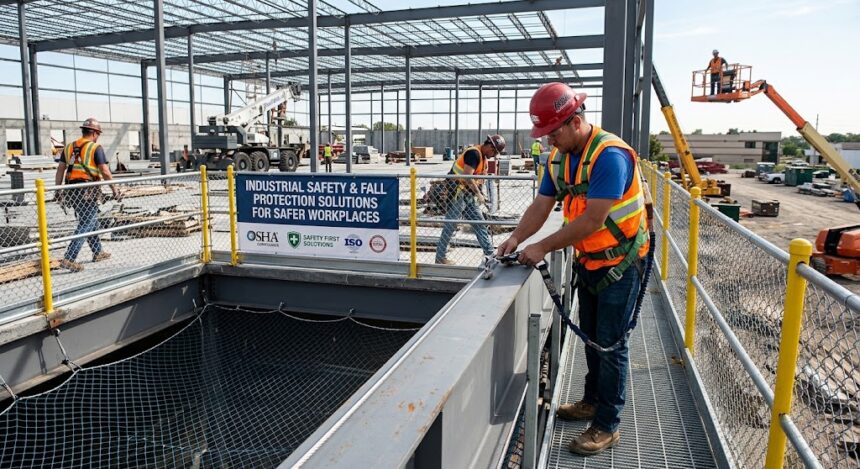
Industrial workplaces such as refineries, warehouses, manufacturing plants, and construction sites face numerous safety challenges, particularly when employees work near elevated platforms, mezzanines, ladders, and loading areas. Reliable fall protection systems are essential for reducing workplace accidents and protecting workers from serious injuries. Companies like Intrepid Industries specialize in manufacturing OSHA-compliant safety products, including self-closing safety gates, toeboards, safety hooks, and custom molded polyurethane components. A properly installed gravity gate can provide a practical barrier at access points, helping prevent accidental falls while allowing workers to move safely between work areas.
Why Industrial Safety and Fall Protection Matter
Workplace safety is a fundamental responsibility for employers operating in demanding industrial environments. Falls from elevated surfaces can cause severe injuries, lost working hours, increased insurance costs, and disruptions to daily operations. Even a seemingly minor oversight, such as leaving an access opening unprotected, can create a significant hazard.
Effective fall protection begins with identifying potential risks throughout a facility. Employers should evaluate elevated workstations, maintenance platforms, stairways, loading docks, and equipment access points to determine where additional protective measures are necessary. By combining physical barriers, employee training, routine inspections, and established safety procedures, businesses can create safer working conditions.
Compliance with applicable Occupational Safety and Health Administration (OSHA) requirements is another important consideration. Employers must understand which standards apply to their specific operations and ensure that protective equipment meets the relevant requirements. Choosing durable, appropriately designed safety products helps organizations support compliance while protecting their workforce.
The Role of Safety Gates in Industrial Environments
Safety gates are an important part of fall protection systems because they help secure openings that workers regularly use to access elevated areas. Unlike fixed barriers, these gates allow authorized movement while providing a protective barrier when the opening is not in use.
Businesses looking for safety gates industrial facilities can depend on should consider several factors, including installation location, opening dimensions, environmental conditions, traffic levels, and the durability of the materials. A gate designed for a busy warehouse may need to withstand frequent operation, while equipment installed in a refinery may require additional consideration of corrosion, chemicals, and other demanding conditions.
Self-closing safety gates offer a particularly useful solution for frequently accessed openings. Their closing mechanism helps return the gate to its protective position after use, reducing the chance that an opening will be left exposed because someone forgets to close it.
However, automatic closing alone does not guarantee compliance. The gate must be appropriate for the hazard, installed correctly, maintained properly, and used in accordance with applicable safety requirements.
Essential Components of a Complete Fall Protection System
A reliable workplace safety strategy involves more than installing a single protective product. Different components work together to address specific hazards and provide comprehensive protection.
1. Self-Closing Safety Gates
Self-closing gates help protect access openings on elevated platforms, industrial walkways, mezzanines, and maintenance areas. They allow workers to pass through designated entry points while helping restore a barrier after passage.
When selecting a gate, facility managers should verify that its dimensions, mounting arrangement, closing mechanism, and materials suit the intended application. Regular inspections can identify loose fasteners, damaged hinges, or mechanisms that no longer operate correctly.
2. Toeboards for Falling Object Prevention
Toeboards are installed along exposed platform edges to help prevent tools, equipment, and other materials from falling onto workers below. They are particularly valuable in warehouses, manufacturing facilities, and construction environments where personnel may work on multiple levels.
Falling objects can create serious hazards even when employees below are not working directly beneath an elevated platform. Properly selected and installed toeboards help control these risks and contribute to a safer working environment.
3. Safety Hooks and Protective Accessories
Safety hooks and related accessories support secure connections, equipment handling, and specific industrial safety applications. Their suitability depends on the product’s intended purpose, load requirements, and operating environment.
Employers should confirm that each accessory is used within its specified limits and is compatible with the equipment it supports. Products intended for general attachment or material handling should never be assumed to provide personal fall-arrest protection unless specifically designed and approved for that purpose.
4. Custom Molded Polyurethane Components
Industrial environments often require components that can withstand repeated use, impact, abrasion, and demanding operating conditions. Custom molded polyurethane products can provide useful solutions for applications requiring specialized shapes, protective surfaces, or resilient components.
Manufacturers can develop custom parts to address particular equipment requirements and facility conditions. Selecting suitable materials and designs can help extend service life, reduce maintenance needs, and support the dependable operation of industrial systems.
Improving Safety Across Different Industrial Facilities
Every workplace presents its own combination of risks. Selecting the right fall protection solutions requires an understanding of how employees move through the facility and where accidents are most likely to occur.
Refineries and Processing Plants
Refineries contain elevated platforms, inspection walkways, pipes, tanks, and equipment that may require frequent maintenance. Workers can encounter slippery surfaces, restricted access points, and exposure to harsh environmental conditions.
Durable safety gates, protective barriers, and appropriately selected accessories can help secure elevated openings and support safer maintenance activities. Facility managers should also consider corrosion resistance, chemical compatibility, inspection schedules, and the specific OSHA standards applicable to their operations.
Warehouses and Distribution Centers
Warehouses often feature mezzanines, elevated storage areas, conveyor systems, and loading platforms. Employees may move heavy goods throughout the day, making unobstructed access and reliable fall protection especially important.
Self-closing gates can help protect platform openings, while toeboards reduce the risk of materials falling onto personnel below. Clear walkways, suitable guardrails, and regular equipment checks further improve workplace safety.
Construction Sites
Construction environments change constantly as structures develop and temporary work platforms are installed or relocated. These changing conditions require frequent hazard assessments and properly selected protective equipment.
Safety gates and edge protection can help control access to elevated areas, while additional measures may be required for scaffolds, roof work, and exposed edges. Employers should ensure that workers understand the limitations of each protection system and receive training appropriate to their tasks.
Choosing Durable and OSHA-Compliant Safety Products
Purchasing industrial safety equipment requires careful evaluation. While price is a consideration, the lowest-cost option may not provide the durability, functionality, or suitability needed for a demanding work environment.
Before purchasing safety products, facility managers should consider the following factors:
-
Applicable safety standards: Confirm that the product and its installation meet the OSHA requirements and other applicable standards for the intended use.
-
Material quality: Evaluate resistance to corrosion, abrasion, chemicals, weather, and repeated operation.
-
Application requirements: Check opening sizes, mounting surfaces, clearance, traffic patterns, and the hazards being addressed.
-
Installation instructions: Follow the manufacturer’s specifications to ensure the equipment performs as intended.
-
Maintenance requirements: Establish inspection schedules and replace damaged or malfunctioning components promptly.
-
Manufacturer support: Look for clear product documentation, technical specifications, and assistance with selecting suitable solutions.
It is also important to distinguish between a product marketed as suitable for industrial safety and one whose particular design and installation satisfy the requirements of a specific application. Compliance depends on the complete protective arrangement, not simply the product description.
How Intrepid Industries Supports Workplace Safety
Manufacturers play an important role in helping businesses address industrial hazards through dependable, application-specific safety products. Intrepid Industries provides an example of a manufacturer focused on OSHA-compliant safety solutions, including self-closing safety gates, toeboards, safety hooks, and custom molded polyurethane components.
These products address different workplace needs, from protecting elevated access openings to reducing falling-object risks and supplying specialized components for industrial equipment. For facility managers, having access to purpose-built products can simplify the process of identifying appropriate solutions for refineries, warehouses, construction sites, and other demanding environments.
Durability is especially important in facilities where safety equipment is used repeatedly or exposed to challenging operating conditions. Products designed for their intended environments can help reduce premature wear and support consistent performance when properly installed and maintained.
Businesses evaluating potential suppliers should review product specifications, installation requirements, and documentation to ensure that the selected equipment matches their operational needs. Working with an experienced manufacturer can also help facility managers identify practical options for addressing specific safety challenges.
Developing a Proactive Workplace Safety Program
Even high-quality protective equipment cannot replace a comprehensive safety program. Employers should combine engineering controls with training, supervision, maintenance, and regular risk assessments to reduce preventable incidents.
A practical workplace safety program should include routine inspections of gates, guardrails, toeboards, and other protective equipment. Employees should be encouraged to report damaged components, missing barriers, and unsafe access points as soon as they identify them.
Training is equally important. Workers need to understand why barriers must remain functional, how to use designated access points, and when additional personal protective equipment is required. Supervisors should reinforce safe practices and ensure that temporary changes to a work area do not introduce unaddressed fall hazards.
Businesses should also document inspections, maintenance activities, and corrective actions. These records help demonstrate that safety responsibilities are being managed systematically and make it easier to identify recurring problems.
Conclusion
Industrial safety and fall protection require a combination of thoughtful planning, reliable equipment, and consistent workplace practices. From self-closing safety gates and toeboards to specialized safety hooks and custom molded polyurethane components, the right products can help organizations address hazards in refineries, warehouses, construction sites, and manufacturing facilities.
Solutions such as those offered by Intrepid Industries demonstrate the importance of selecting purpose-built equipment for demanding industrial applications. By assessing workplace risks, verifying applicable OSHA requirements, maintaining protective systems, and training employees, businesses can reduce fall risks, protect workers, and build a stronger culture of safety.