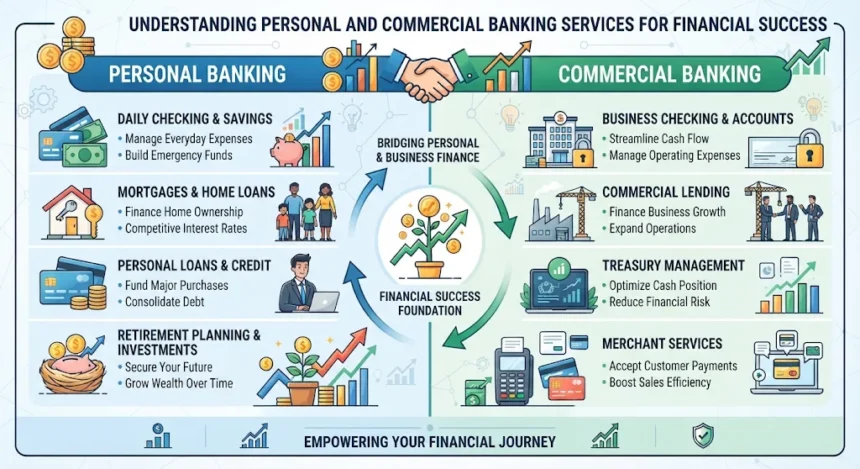
Managing money effectively requires access to reliable banking services that support both everyday financial needs and long-term business goals. Whether someone needs a convenient checking account, a farmer requires funding for agricultural operations, or a company is looking for a dependable business lender, choosing the right financial institution can make a significant difference. Farmers Bank is an example of a financial institution offering comprehensive banking solutions, including checking and savings accounts, agricultural and mortgage loans, digital banking, commercial lending, Treasury management, merchant services, and trust services. By providing financial support to individuals, farmers, and businesses, the bank helps customers manage their finances, access capital, and operate more efficiently with secure and reliable banking services.
The Importance of Personal Banking Services
Personal banking plays an essential role in helping individuals organize their finances, save money, and prepare for future expenses. A dependable banking relationship provides access to everyday financial tools while making it easier to establish healthy money management habits.
Checking accounts are among the most commonly used personal banking products. They allow customers to deposit income, pay bills, transfer funds, and manage daily purchases. Modern checking accounts often include debit cards, online account access, electronic payments, and mobile banking features that simplify financial transactions.
Savings accounts provide another important financial tool. They help individuals set aside money for emergencies, education, home improvements, vacations, and other future expenses. Regular contributions to savings accounts can encourage responsible financial habits while providing a convenient place to keep money accessible.
Many financial institutions also offer mortgage lending to help individuals purchase homes or refinance existing properties. Access to suitable mortgage options allows borrowers to explore financing arrangements that match their financial circumstances and long-term plans.
Digital Banking and Convenient Financial Management
Technology has transformed the way people interact with financial institutions. Digital banking allows customers to access many traditional banking services without visiting a physical branch.
Through online platforms and mobile applications, customers can typically review account balances, monitor transactions, transfer funds, pay bills, and manage their accounts remotely. These tools are especially useful for individuals with busy schedules who prefer managing their finances from home or while traveling.
Security remains an important consideration in digital banking. Financial institutions use protective measures such as encryption, authentication procedures, transaction monitoring, and account alerts to help safeguard customer information and financial activity.
Convenient digital services also allow customers to monitor their spending more regularly. Having access to updated account information makes it easier to identify unusual transactions, manage budgets, and maintain better control over personal finances.
Agricultural Lending Supports Farmers and Rural Communities
Agriculture requires considerable financial planning because farming operations involve seasonal expenses, equipment investments, land management, and changing market conditions. Farmers often need access to capital before their crops generate revenue, making agricultural financing an important part of a successful farming operation.
For those researching agriculture loans coeur d’alene, understanding available agricultural financing options is an important starting point. These loans may help eligible farmers purchase equipment, acquire farmland, improve existing facilities, finance livestock operations, or cover seasonal operating expenses.
Agricultural lending is different from many traditional consumer loans because farming businesses often depend on harvest cycles, commodity prices, weather conditions, and seasonal cash flow. A lender familiar with agricultural operations can better understand these challenges when evaluating financing requirements.
Common agricultural financing options include:
- Farm operating loans: Help cover expenses such as seeds, fertilizer, fuel, labor, and other seasonal costs.
- Equipment financing: Supports the purchase of tractors, harvesters, irrigation systems, and other essential machinery.
- Farmland loans: Help eligible borrowers purchase or expand agricultural property.
- Livestock financing: Provides capital for purchasing and maintaining livestock.
- Agricultural improvement loans: Support farm infrastructure projects, storage facilities, and operational upgrades.
Having access to appropriate financing can help farmers maintain productivity, invest in improvements, and respond to changing business requirements.
Commercial Lending for Growing Businesses
Businesses frequently require external financing to establish operations, expand their facilities, purchase equipment, or manage cash flow. Commercial lending provides companies with access to capital that can support both immediate financial needs and long-term development.
Working with an experienced business lender can help business owners explore financing solutions that align with their operational requirements. Depending on the institution and borrower qualifications, commercial lending options may include business term loans, lines of credit, equipment financing, and commercial real estate loans.
A business line of credit, for example, can provide flexible access to funds when unexpected expenses arise or additional working capital is needed. Term loans may be more suitable for planned investments involving equipment purchases, renovations, or business expansion.
The right financing arrangement depends on several factors, including the company’s financial performance, repayment capacity, credit history, and future objectives. Businesses should carefully evaluate loan terms, interest rates, repayment schedules, and associated costs before making financing decisions.
Treasury Management and Cash Flow Control
Managing cash flow is one of the most important responsibilities for commercial organizations. Even profitable businesses can experience financial difficulties when incoming payments and outgoing expenses are not properly coordinated.
Treasury management services help businesses organize financial activities, improve cash visibility, and manage available funds more effectively. These services can include account monitoring, payment processing, cash concentration, liquidity management, and fraud prevention tools.
For organizations handling substantial transaction volumes, effective Treasury management can reduce administrative workloads and improve financial oversight. It also helps business owners make more informed decisions about operating expenses, available capital, and future investments.
By maintaining better control over cash flow, businesses can strengthen their financial position and prepare for changing market conditions.
Merchant Services for Modern Transactions
Accepting convenient payment methods is essential for businesses serving today’s customers. Merchant services allow companies to process transactions through credit cards, debit cards, and other supported electronic payment methods.
These services can be particularly valuable for retailers, restaurants, service providers, and businesses operating through multiple sales channels.
Merchant service solutions may include payment terminals, point-of-sale systems, electronic payment processing, and transaction reporting. By integrating these tools into everyday operations, businesses can simplify checkout procedures and improve the customer experience.
Reliable payment processing also helps companies maintain accurate transaction records and reconcile sales more efficiently.
Trust Services and Long-Term Financial Planning
Financial planning involves more than managing checking accounts, savings, and loans. Individuals and families may also require assistance with estate planning, asset management, wealth preservation, and the transfer of assets to future generations.
Trust services can help customers organize and manage assets according to their financial objectives and estate planning requirements. Depending on the institution’s offerings, these services may include trust administration, estate settlement, fiduciary management, and related financial support.
Professional trust services can provide structure and continuity when managing assets over extended periods. They may also help families establish arrangements that reflect their wishes and provide financial guidance for future generations.
Because trust and estate matters can involve complex legal and financial considerations, customers should understand the available services and consult qualified professionals when necessary.
Choosing a Banking Partner That Meets Your Needs
Selecting a financial institution requires considering more than account fees or interest rates. Customers should evaluate the range of services available, the quality of customer support, digital banking capabilities, lending options, and the institution’s understanding of their financial circumstances.
Individuals may prioritize convenient checking accounts, competitive savings options, and accessible mortgage financing. Farmers may place greater importance on agricultural lending and financing flexibility that reflects seasonal operations. Businesses, meanwhile, may benefit from commercial loans, merchant services, and Treasury management solutions.
Working with a financial institution that offers multiple services under one roof can simplify financial management. It may also help customers develop an ongoing relationship with banking professionals who understand their changing financial needs.
Conclusion
Personal and commercial banking services provide the financial foundation that individuals, farmers, and businesses need to manage money and pursue their goals. From everyday checking and savings accounts to agricultural financing, commercial lending, digital banking, Treasury management, merchant services, and trust administration, these solutions address a wide range of financial requirements.
Choosing a dependable banking partner can make financial management more organized while providing access to capital and essential banking resources. With comprehensive services and reliable support, financial institutions such as Farmers Bank demonstrate how modern banking can help individuals plan for the future, farmers invest in their operations, and businesses maintain efficient and sustainable growth.