What Are Standing Side Bends?
Standing side bends are a simple movement that involves bending the torso laterally while keeping the body upright. The exercise can be performed using only body weight or with resistance such as a dumbbell, kettlebell, or cable. It is commonly included in mobility routines, warm-ups, core workouts, and general fitness programs because it requires very little equipment or space.
During a standing side bend, the trunk moves toward one side while the opposite side of the torso lengthens. The movement involves muscles around the abdomen, lower back, hips, and spine. Depending on how the exercise is performed, standing lateral bends may be used primarily for mobility, stretching, trunk control, or strengthening the muscles that support side-to-side movement.
Although standing side bends look easy, technique still matters. Moving too quickly, bending forward instead of sideways, or using excessive resistance can reduce the value of the exercise and place unnecessary stress on the lower back. Learning the correct setup and maintaining controlled movement can make side bends safer and more useful within a balanced exercise routine.
Muscles Worked During Standing Side Bends
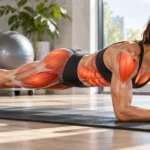
The oblique muscles are among the primary muscles involved in standing side bends. These muscles run along the sides of the abdomen and help with lateral flexion, rotation, and trunk stability. When you bend toward one side, the obliques on that side contract while muscles on the opposite side lengthen, creating controlled movement through the torso.
The quadratus lumborum, often called the QL, also plays an important role. This deep lower-back muscle connects the pelvis to the lower ribs and lumbar spine and helps bend the trunk sideways. It also contributes to spinal stability, which makes it important during everyday actions such as carrying objects, walking, maintaining posture, and shifting weight from one side to another.
Other muscles contribute as stabilizers, including the erector spinae, transverse abdominis, gluteal muscles, and muscles around the hips. Your legs and feet also help maintain an upright base during the movement. Standing side bends are therefore not purely an abdominal exercise because proper performance requires coordination between the trunk, pelvis, hips, and lower body.
How to Do Standing Side Bends Correctly
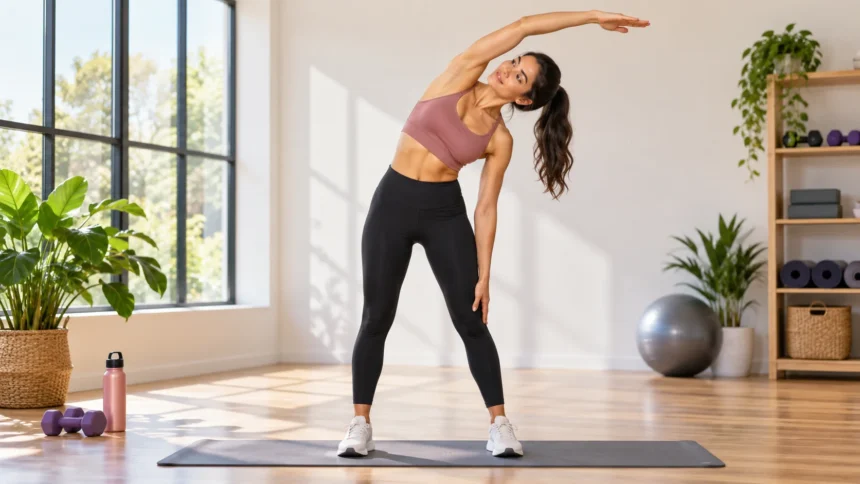
Begin by standing tall with your feet approximately hip-width to shoulder-width apart. Keep your knees relaxed rather than locking them, and distribute your weight evenly between both feet. Place your hands on your hips, behind your head, or allow one hand to slide gently down the outside of your leg while keeping your chest facing forward.
Brace your abdominal muscles lightly and slowly bend your torso toward one side without twisting or leaning forward. Move only as far as you can while keeping the motion comfortable and controlled. You should feel the side of your torso shortening on the bending side and lengthening on the opposite side without forcing your spine into an extreme range.
Return slowly to the upright starting position and repeat the movement on the opposite side. Keep your hips relatively stable rather than pushing them dramatically in the opposite direction. Controlled repetitions are generally more valuable than large movements because the goal is to maintain trunk control while moving through a comfortable side-bending range.
Benefits of Standing Side Bends
One potential benefit of standing side bends is improving awareness and mobility through lateral trunk movement. Many daily activities involve bending, reaching, carrying, and shifting weight from side to side. Practicing controlled lateral movement can help your body become more comfortable moving through different directions instead of relying only on forward and backward motion.
When resistance is added appropriately, side bends can also strengthen muscles around the sides of the core. Strong obliques and related trunk muscles contribute to spinal stability during lifting, walking, sports, and everyday activities. Core strength is not simply about visible abdominal muscles; it also involves controlling movement and resisting unwanted motion while transferring force through the body.
Standing side bends may also work well as part of a warm-up or mobility routine when performed without heavy resistance. Slow bodyweight repetitions can encourage movement through the torso before exercise. However, the exercise should usually be combined with other core movements because no single exercise develops every aspect of trunk strength, mobility, balance, and coordination.
Common Standing Side Bend Mistakes
One common mistake is bending forward while trying to move sideways. This often happens when someone focuses on reaching farther rather than maintaining proper alignment. Turning a side bend into a combination of forward flexion and rotation changes the movement pattern and may increase discomfort, particularly if the exercise is being performed with a heavy dumbbell.
Another mistake is using momentum to swing the torso quickly from side to side. Fast repetitions can make it difficult to control the trunk and may reduce muscular involvement. Slow movement allows you to feel where the motion is coming from, maintain better posture, and stop if discomfort develops instead of forcing the spine through a range that feels unnatural.
Using too much resistance is another problem, especially with weighted side bends. A heavy dumbbell may encourage excessive movement or compensation through the hips and lower back. Choose resistance that allows you to maintain control from beginning to end, and remember that adding more weight does not automatically make the exercise more effective.
Bodyweight vs Weighted Standing Side Bends
Bodyweight standing side bends are usually the simplest variation and can be suitable for beginners learning the movement. They allow you to focus on posture, breathing, and comfortable range without managing external resistance. Bodyweight variations can also be useful during warm-ups, mobility sessions, or exercise programs designed to restore confidence with basic trunk movement.
Weighted standing side bends increase the resistance placed on the obliques and other muscles responsible for controlling lateral flexion. A dumbbell is commonly held in one hand while the torso bends toward or away from the loaded side depending on the specific training approach. Resistance should remain moderate enough that the exercise can be performed without twisting, bouncing, or losing pelvic control.
Neither version is automatically better because they serve different purposes. Bodyweight side bends may be more appropriate for mobility and movement practice, while loaded variations can offer a greater strengthening challenge. Your choice should depend on your experience, goals, current fitness level, and whether you can perform the movement comfortably without aggravating the lower back or hips.
How Many Standing Side Bends Should You Do?
There is no single repetition target that works for everyone. Beginners using body weight might start with approximately 8 to 12 controlled repetitions on each side while focusing on technique. If the movement is being used primarily for mobility, fewer slow repetitions may be sufficient as long as you move comfortably and avoid forcing additional range.
For strengthening, moderate sets performed with suitable resistance may be more useful than extremely high repetition counts. Two or three controlled sets can be enough for many recreational exercisers when standing side bends are included alongside other core exercises. The resistance should feel challenging toward the end of the set without causing you to sacrifice posture or use momentum.
Frequency also depends on the intensity of the exercise and your overall training schedule. Light mobility-style side bends may be included relatively often, while heavier weighted variations require more recovery. Pay attention to soreness, fatigue, and technique, and reduce the volume if your lower back or surrounding muscles remain uncomfortable between sessions.
Standing Side Bends for Core Strength and Stability
A strong core should be capable of producing movement as well as controlling it. Standing side bends train lateral flexion, but core training should also include exercises that resist side bending, rotation, and spinal extension. Combining several movement patterns can create a more complete approach to trunk strength rather than relying heavily on one abdominal exercise.
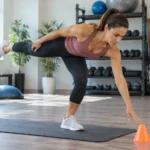
Exercises involving balance can complement side bends because they require the trunk and hips to stabilize the body while the center of gravity changes. For example, a single-leg balance reach can challenge coordination and stability in a different way. Combining controlled trunk exercises with balance work can help develop broader movement skills for daily activities and fitness.
Planks, side planks, suitcase carries, dead bugs, bird dogs, and Pallof presses are other exercises commonly used for core stability. These movements train the abdominal and trunk muscles without repeatedly bending the spine. A varied program can therefore develop strength through several functions, including resisting motion, transferring force, maintaining posture, and producing controlled movement.
Are Standing Side Bends Good for Flexibility?
Bodyweight side bends can create a gentle stretching sensation through the side of the torso. Muscles around the ribs, abdomen, lower back, and hips may lengthen as you move away from one side. This can make standing lateral bends useful in general mobility routines, particularly for people who spend long periods sitting and perform relatively little side-to-side movement.
However, flexibility should not be measured by how far you can force your body toward the floor. The natural amount of lateral spinal movement differs between individuals based on anatomy, mobility, training history, and comfort. A smaller controlled range is usually preferable to aggressively pushing into a deeper bend simply because another person appears capable of moving farther.
Breathing can also improve the quality of the movement. Taking a relaxed breath while maintaining upright posture may help reduce unnecessary tension through the shoulders and torso. Avoid holding your breath or forcing a stretch, and stop if you experience sharp pain, numbness, tingling, or symptoms that travel into the hip or leg.
Can Standing Side Bends Reduce Belly Fat?
Standing side bends can strengthen muscles along the sides of the abdomen, but they cannot selectively remove body fat from the waist. Fat loss occurs through broader changes in energy balance rather than through exercising one specific body part. Performing hundreds of side bends therefore does not guarantee that fat around the stomach or love handles will disappear.
If reducing body fat is a goal, overall physical activity and nutrition usually play larger roles. Strength training, walking, cardiovascular exercise, sufficient protein, sleep, and sustainable eating habits can all support body composition goals. Core exercises remain useful because they strengthen muscles underneath body fat and contribute to physical performance, posture control, and general fitness.
It is also important to separate core training from appearance-based claims. Standing side bends can help train the obliques, but their value does not depend on whether they change waist size. They can simply be treated as one movement within a broader exercise routine designed around strength, mobility, balance, cardiovascular fitness, and overall health.
Standing Side Bend Variations to Try
The basic bodyweight side bend is usually the best starting point because it makes technique easier to learn. Once you can maintain good posture, you can experiment with placing your hands overhead to increase the lever length. This version may create a stronger stretch through the side of the torso, so the movement should remain slow and within a comfortable range.
Dumbbell side bends provide resistance and are commonly used for strengthening. Hold a dumbbell in one hand while keeping your shoulders level and torso facing forward, then move slowly through the side bend. Avoid holding heavy weights in both hands, because equal resistance on each side may reduce the useful loading effect while still increasing compression through the body.
Cable side bends are another option because the cable provides continuous resistance throughout the movement. Some exercisers prefer them because resistance can be adjusted in small increments. Regardless of the variation, start conservatively, prioritize alignment, and use a version that allows you to control the motion without discomfort in the spine, hips, shoulders, or pelvis.
Who Should Be Careful With Standing Side Bends?
People experiencing active lower-back pain should be cautious with repeated or heavily loaded side bending. Certain spinal conditions may be aggravated by lateral flexion, particularly when movement is forced or resistance is excessive. If bending sideways consistently produces sharp pain, shooting symptoms, numbness, or tingling, stop the exercise and consider discussing those symptoms with a qualified healthcare professional.
Anyone recovering from a recent back, rib, abdominal, hip, or pelvic injury should also avoid assuming that standing side bends are automatically appropriate. Exercise recommendations depend on the injured tissue and stage of recovery. A movement that feels harmless for one condition may irritate another, which is why individualized guidance can be valuable during rehabilitation.
Pregnant individuals or people with significant balance problems may need modifications as their center of gravity and stability change. Holding onto a stable surface or choosing another core exercise may sometimes be more comfortable. The exercise should never require you to push through pain, dizziness, instability, or symptoms that become progressively worse with repeated movement.
Tips for Getting Better Results From Standing Side Bends
Focus on movement quality before trying to increase resistance or repetitions. Keep your feet firmly planted, lightly brace the abdomen, and imagine moving directly sideways rather than forward or backward. A mirror can sometimes help you notice twisting, leaning, or hip movement that may be difficult to recognize while concentrating on the exercise.
Use a slow tempo so your muscles remain responsible for controlling the movement. Moving for roughly two seconds into the bend and two seconds back toward the starting position can prevent momentum from taking over. There is no need to follow an exact tempo, but intentionally slowing down can improve awareness and help you maintain consistent technique.
Finally, include standing side bends within a balanced program instead of treating them as a complete core workout. Combine them with exercises for abdominal bracing, rotation control, hip strength, balance, and general conditioning. Progress gradually as your control improves, and reduce the difficulty whenever your technique starts to deteriorate or discomfort appears.
Conclusion
Standing side bends are a straightforward exercise that can support lateral trunk mobility, body awareness, and oblique strength. They can be performed using body weight for mobility or with external resistance for a greater strengthening challenge. Proper technique involves moving directly sideways, maintaining control, keeping the chest facing forward, and avoiding unnecessary twisting or momentum.
The exercise works best as one part of a varied training routine. Combining standing side bends with planks, carries, balance exercises, hip strengthening, and cardiovascular activity provides a more complete approach to fitness. Your repetition range, resistance, and frequency should reflect your goals, training experience, recovery, and ability to maintain comfortable movement.
Most importantly, standing side bends should not cause sharp or radiating pain. Use a range of motion that feels natural and gradually increase difficulty instead of forcing deeper bends or heavier weights. If symptoms persist or you have an existing back, hip, or pelvic condition, professional guidance can help determine whether the exercise is appropriate for you.
Frequently Asked Questions
What muscles do standing side bends work?
Standing side bends mainly target the obliques and quadratus lumborum while involving additional trunk, back, and hip muscles for stability. The exact muscular demand changes depending on whether body weight or resistance is used.
Are standing side bends good for beginners?
Yes, bodyweight standing side bends can be beginner-friendly when performed slowly with a comfortable range of motion. Beginners should learn proper alignment before adding dumbbells, cables, or other forms of resistance.
Do standing side bends reduce love handles?
Standing side bends strengthen muscles around the waist but cannot target fat loss from one specific area. Overall fat reduction depends more on nutrition, total activity, energy balance, and sustainable lifestyle habits.
Should I use dumbbells for standing side bends?
Dumbbells can increase the strengthening challenge once you have mastered the bodyweight version. Start with manageable resistance and avoid weights that cause twisting, swinging, excessive range, or lower-back discomfort.
Are standing side bends bad for your back?
They are not automatically harmful, but excessive resistance, poor technique, or certain existing back conditions may make them uncomfortable. Stop if you develop sharp, radiating, or worsening pain and seek appropriate professional advice.