Robot Vacuums: Are They Worth Buying?
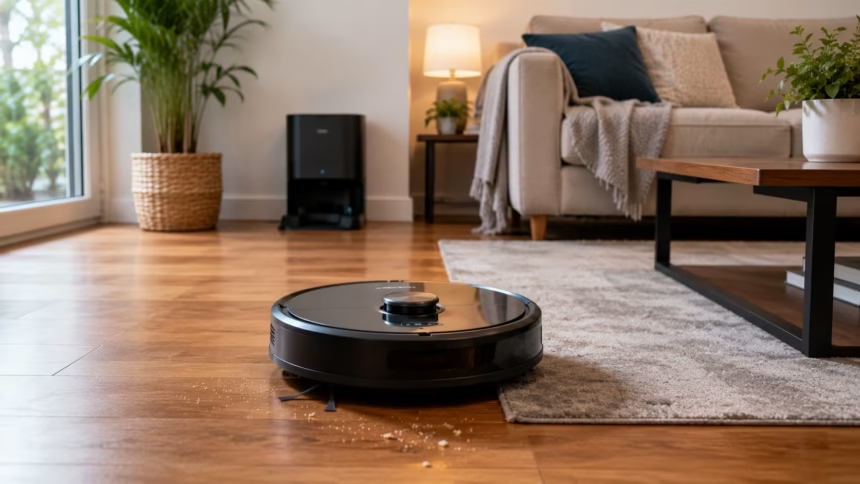
Robot vacuums promise something nearly every busy household wants: cleaner floors with less daily effort. These compact machines move independently around rooms, collect dust and debris, and return to a charging dock when their battery runs low. Premium models can also empty their own dustbins, recognise obstacles and mop hard flooring.
The attraction is easy to understand. Instead of pushing a full-size vacuum around the house several times a week, you can schedule a smart vacuum cleaner to run while you work, sleep or complete other tasks. Regular automated cleaning can stop crumbs, pet hair and surface dust from building up between deeper cleaning sessions.
However, robot vacuums are not perfect replacements for traditional cleaning equipment. They may struggle with stairs, thick rugs, tight corners, tangled cables and deeply embedded dirt. Their value depends on your home layout, flooring, lifestyle, expectations and willingness to maintain the machine.
So, are robot vacuums worth buying? For many people, they are worth the investment as convenient maintenance cleaners. For others, a powerful upright or cordless vacuum may provide better performance for less money. This guide will help you decide which category you belong to.
How Does a Robot Vacuum Work?
A robot vacuum uses sensors, wheels, brushes and suction to move around a room and collect debris. Side brushes sweep dirt away from walls and furniture edges, while a central roller guides dust, crumbs and hair into the suction channel and internal dustbin.
Basic models may move in semi-random patterns, changing direction whenever they encounter a wall or object. More advanced robot vacuums use LiDAR navigation, cameras or other mapping systems to understand the room layout and follow a more organised cleaning route.
Once the robot creates a digital map, compatible apps may allow you to divide the home into rooms, select specific cleaning zones and create no-go areas. This makes it possible to clean the kitchen after dinner without sending the vacuum through every room.
When the battery becomes low, the robot normally returns to its charging station. Some models recharge and then continue from the point where they stopped. Self-emptying robot vacuums can also transfer collected debris into a larger bag or container inside the docking station.
What Robot Vacuums Clean Well
Robot vacuums are particularly effective at collecting everyday surface debris from hard floors. Dust, crumbs, cereal, loose hair and small particles are usually manageable when the machine runs regularly and the floor is reasonably clear.
They can also maintain low-pile carpets and rugs by removing surface dust before it becomes deeply embedded. Models with automatic suction adjustment may increase power when they detect carpet and reduce it again when they move onto hardwood, tile or laminate.
A robot vacuum for pet hair can be useful in homes where cats or dogs shed continuously. Daily cleaning prevents loose fur from collecting in corners or forming visible clumps beneath furniture. Rubber rollers may also resist hair tangles better than traditional bristle brushes.
These machines perform best as maintenance cleaners rather than emergency deep-cleaning tools. Running the robot several times a week usually produces better results than expecting it to remove a month of accumulated dirt during one long cleaning session.
What Robot Vacuums Do Not Clean Well
Robot vacuums cannot climb stairs, so every level of a multi-storey home must be handled separately. You may need to carry the robot between floors, purchase another unit or continue using a standard vacuum in areas the robot cannot reach.
Corners and narrow spaces can remain challenging because the machine’s body is usually round. Side brushes help move debris toward the suction path, but they may not remove every particle from square corners, behind doors or around complicated furniture legs.
Deep carpet cleaning is another limitation. A high-quality upright vacuum generally provides stronger suction and more aggressive brush action for removing embedded dirt from thick carpet. Robot models may also have difficulty crossing deep-pile rugs or dark floor coverings.
They cannot clean curtains, sofas, mattresses, shelves or stair edges. Even households that own an advanced robotic vacuum cleaner usually need a cordless, canister or upright vacuum for above-floor cleaning and occasional detailed work.
Are Robot Vacuums Worth It for Busy Households?
A robot vacuum can be highly valuable when limited time is the main obstacle to keeping floors clean. Scheduled cleaning allows the machine to work consistently without requiring you to set aside a full block of time for vacuuming.
Parents may find it useful for managing crumbs, dry food and general mess in frequently used rooms. Running the robot after breakfast or dinner can reduce the amount of debris that gets carried from the kitchen into bedrooms and living areas.
People who work long hours can also benefit because the cleaning happens without direct supervision. A mapped robot can clean selected rooms while the household is empty and return to its dock before everyone comes home.
The machine will not eliminate every cleaning task, but it can reduce how often you need to perform a complete manual vacuum. For a busy household, that regular assistance may be more valuable than achieving the strongest possible suction during every session.
Are Robot Vacuums Good for Pet Hair?
Robot vacuums are often worth buying for pet owners because they can collect hair every day. Frequent removal prevents fur from becoming deeply embedded in rugs, gathering under furniture or spreading across hard floors whenever people walk through the room.
Look for a model with strong carpet pickup, a tangle-resistant roller and a larger dustbin. Long human hair and pet fur can wrap around traditional brush bars, so an easily removable roller will make regular maintenance faster.
A self-emptying robot vacuum is especially helpful in a home with several pets. The docking station can hold multiple cleaning sessions of debris, reducing the need to empty a small onboard bin after every run.
Pet owners should still expect maintenance. Fur may collect around wheels, side brushes and filters, while litter or food can block the suction path. The robot saves cleaning time, but it does not become completely maintenance-free.
Robot Vacuums on Hardwood, Tile and Laminate
Hard flooring is generally where robot vacuums deliver their most consistent performance. Smooth surfaces allow the wheels to move easily, while loose dust and crumbs remain accessible instead of sinking into dense carpet fibres.
Models with soft rubber or carefully designed brush rollers may be preferable for delicate flooring. Check that the wheels and underside remain free from trapped grit, as hard particles dragged beneath any cleaning machine could potentially mark a sensitive finish.
A vacuum-and-mop robot can add light wet cleaning after dry debris has been collected. Basic systems drag a damp pad across the floor, while more advanced models use rotating or vibrating pads and can lift them when travelling over carpet.
Robot mopping is best for regular maintenance rather than removing dried spills or heavy stains. You will still need to mop manually from time to time, particularly around edges, beneath low cabinets and in areas requiring firm scrubbing.
Robot Vacuums on Carpets and Rugs
A robot vacuum can maintain low- and medium-pile carpet when it offers adequate suction and a well-designed brush system. Automatic carpet detection is useful because it allows the machine to increase cleaning power only where additional suction is needed.
Thick carpet creates more difficulty. The robot may move slowly, become stuck or fail to collect debris buried deep within the fibres. High thresholds and shag rugs can also prevent the machine from entering certain areas.
Lightweight rugs may bunch up when a robot pushes against them. Loose tassels can wrap around the roller, while black patterns may confuse cliff sensors on some machines. Securing rug edges or creating virtual boundaries can prevent repeated interruptions.
Households with extensive carpet should view a robot as a supporting cleaner. It can reduce visible dust and hair between manual sessions, but a conventional carpet vacuum will usually remain necessary for thorough cleaning.
How Important Is Smart Mapping?
Smart mapping is one of the most valuable upgrades available in a modern robot vacuum. Instead of wandering until the battery runs low, a mapped model can follow an organised route and recognise which areas have already been cleaned.
LiDAR robot vacuums scan the surrounding space to create accurate maps, even in relatively low light. Camera-based systems can also navigate effectively, although performance may depend more on lighting and how the manufacturer processes visual information.
Mapping allows room-by-room scheduling. You might clean the kitchen daily, the living room every second day and the bedrooms twice a week. This targeted approach can save battery power and reduce unnecessary noise.
It also supports virtual walls, no-go zones and no-mop areas. These controls are useful around pet bowls, delicate rugs, children’s play areas or spaces where cables and small objects frequently remain on the floor.
Obstacle Avoidance and Home Preparation
Obstacle avoidance helps a robot identify items that should not be pushed, climbed or collected. Advanced models may recognise shoes, electrical cables, toys and pet waste, but no system should be treated as completely reliable.
A quick floor check before each run is still recommended. Remove charging cords, socks, small toys, jewellery and lightweight objects that could become trapped in the roller or suction inlet.
Furniture placement can also affect navigation. The robot needs enough clearance to move between chair legs and reach its docking station. Very low furniture may allow the machine to enter but prevent it from turning or escaping.
A robot-ready home does not need to be perfectly empty. Small adjustments, such as securing cables and lifting curtains from the floor, can significantly improve cleaning performance and reduce the number of rescue notifications.
Robot Vacuum and Mop Combos: Are They Worth It?
A robot vacuum and mop combo can be worthwhile when most of your home has hard flooring. The vacuum collects dry debris first, while the mop pad removes light dust and fresh marks left behind on the surface.
Basic combinations require you to attach the pad, fill a small water tank and remove the mop after cleaning. Premium docking stations may wash and dry the pads, refill clean water and collect dirty water automatically.
Even advanced models have limitations. Mopping pads can spread dirt when they are not cleaned frequently, and the robot may not apply enough pressure to remove sticky food, grease or older stains.
The combination feature is most useful for maintaining floors between manual mopping sessions. It improves convenience, but buyers should not assume that a single robot can completely replace both a powerful vacuum and a traditional mop.
Self-Emptying Docks and Automatic Maintenance
Self-emptying docks transfer debris from the robot’s small internal bin into a larger container after cleaning. This can reduce daily handling and is especially useful for people with pets, allergies or large floor areas.
Some premium stations also wash mop pads, dry them with warm air and refill the robot’s water supply. These features make cleaning more automatic, but the station still requires periodic care.
Disposable dust bags and replacement cleaning solutions add ongoing costs. Bagless docks avoid purchasing bags but may release more dust when emptied, which can be inconvenient for people sensitive to airborne particles.
Automatic docks are also much larger than ordinary charging bases. Before buying, measure the intended location and confirm that the station will have enough open space for the robot to enter and leave reliably.
Battery Life and Cleaning Coverage
Battery life determines how much floor area a robot can cover before returning to charge. Small apartments may not require an especially large battery, while larger homes benefit from extended runtime and automatic recharge-and-resume functionality.
Manufacturers often advertise runtime under ideal conditions. Strong suction, thick carpet, repeated obstacle avoidance and active mopping can reduce the actual cleaning time available from one charge.
An efficient navigation system may matter more than the maximum battery claim. A robot that follows a logical route can clean more floor in 90 minutes than a basic model that repeatedly crosses the same areas.
Battery capacity gradually decreases with age. Check whether the battery is replaceable and whether official parts are reasonably available, as this can extend the practical lifespan of the robot vacuum cleaner.
Noise Levels and Daily Convenience
Robot vacuums are usually quieter than many full-size vacuums, but they are not silent. The sound level increases when a model enters maximum suction mode or empties itself into a docking station.
Scheduling can reduce the inconvenience. Many people run their robot while they are away from home, while others prefer daytime cleaning so unexpected problems can be handled quickly.
The self-emptying process can be surprisingly loud even though it lasts only a short time. Apartment residents or families with sleeping children may want to disable automatic emptying during quiet hours.
Notification controls are also important. A useful app should clearly report when the bin is full, the brush is tangled or the robot is stuck without sending excessive promotional alerts.
Maintenance You Should Expect
The dustbin must be emptied regularly unless the robot has a self-emptying base. A full bin reduces airflow and cleaning performance, particularly in homes with pets or heavy daily debris.
Filters need to be cleaned or replaced according to the manufacturer’s instructions. Dirty filters restrict suction and can allow fine dust to circulate inside the machine instead of being contained effectively.
Hair should be removed from the main roller, side brushes and wheel axles. Even tangle-resistant designs may collect fibres around their ends, so the underside should be inspected at least once a week in high-shedding households.
Sensors and charging contacts also need occasional wiping. Dust on these components can interfere with navigation, docking and charging, making the robot appear unreliable when the real problem is simple maintenance.
The Hidden Costs of Owning a Robot Vacuum
The purchase price is only one part of the total cost. Replacement filters, side brushes, rollers, mop pads, dust bags and cleaning solution may all be needed during the machine’s lifespan.
Some parts require more frequent replacement in homes with pets or extensive carpeting. Before choosing a model, check the cost and availability of consumables rather than focusing only on the advertised features.
Repairs can become expensive after the warranty period. Batteries, drive wheels, sensors and docking components may eventually need attention, and not every brand provides long-term parts support.
Connected features may also depend on the manufacturer continuing to maintain its app and cloud services. A robot that relies heavily on online controls may lose convenience if software support becomes limited in future years.
Privacy and App Considerations
Smart robot vacuums may collect floor maps to support room recognition and efficient navigation. Camera-based models can process visual information as part of obstacle detection, so buyers should review the brand’s privacy controls.
Check whether mapping features can operate locally or require cloud storage. Look for options to delete maps, control data sharing and manage household accounts through a secure password.
App quality can strongly affect the ownership experience. A reliable application should make schedules, maps and cleaning zones easy to manage without frequent connection failures.
People who prefer limited connectivity can choose a simpler model with physical controls. However, they may lose useful features such as room selection, virtual boundaries, remote monitoring and detailed cleaning history.
How Much Should You Spend?
Budget robot vacuums can handle basic hard-floor cleaning, but they may use random navigation, smaller dustbins and simpler obstacle sensors. They are most suitable for uncluttered apartments and buyers with modest expectations.
Mid-range models often provide the best balance of value and convenience. Features may include LiDAR mapping, room selection, carpet detection, stronger suction and reliable app controls without the cost of a highly automated dock.
Premium robot vacuums add sophisticated obstacle recognition, self-emptying, advanced mopping and automatic dock maintenance. These features reduce daily involvement but do not always produce a matching increase in basic vacuuming performance.
Set your budget according to the problem you want to solve. Paying more makes sense when automation and pet-hair control are priorities, but a simpler mapped vacuum may be sufficient when you only want help maintaining open hard floors.
Signs a Robot Vacuum Is Right for You
A robot vacuum is likely to be worthwhile when your floors collect light debris every day. Homes with pets, children or high foot traffic can benefit from frequent automated cleaning that prevents visible mess from building up.
It is also a good match for people who dislike routine floor maintenance but can still perform occasional deep cleaning. The robot handles repetition, while the owner manages corners, stairs, furniture and detailed vacuuming when necessary.
Open layouts, hard floors and low-pile rugs create favourable conditions. The value increases further when the home can be kept reasonably free from cables, clothing and small objects.
People with limited mobility may also find automated cleaning helpful, although the robot still needs maintenance and occasional repositioning. A family member, carer or cleaning professional may need to manage brushes, filters and floor preparation.
Signs You May Not Need One
A robot vacuum may not be a sensible purchase when the home has many stairs, high thresholds or small crowded rooms. Frequent manual rescues can remove much of the convenience the machine is supposed to provide.
Homes dominated by thick carpet may receive better value from a strong upright vacuum. A robot can collect surface debris, but it may not provide the deep agitation needed for heavily used carpet.
It may also disappoint people who expect completely hands-free cleaning. Dustbins, filters, brushes, water tanks and docking stations all require attention, even on expensive models marketed as highly automatic.
A cordless stick vacuum may be the better choice when cleaning sessions are quick and the home stays relatively tidy. Manual cleaning can deliver stronger targeted performance without the setup, app management and consumable costs of a robot.
How to Choose the Best Robot Vacuum
Begin with your floor types and the amount of debris your household produces. Pet owners need effective hair pickup, while homes with mostly hard floors may benefit more from good edge cleaning and a capable mopping system.
Next, consider navigation. Smart mapping, room selection and virtual boundaries usually improve convenience more than attention-grabbing suction numbers that are difficult to compare across brands.
Look at maintenance design as carefully as cleaning performance. The roller, filter and dustbin should be easy to remove, while replacement parts should be affordable and available from a trustworthy source.
Finally, read the warranty terms and return policy. Testing the robot in your actual home is valuable because thresholds, furniture, rugs, lighting and Wi-Fi conditions can affect performance in ways that showroom demonstrations cannot reveal.
Robot Vacuum vs Cordless Vacuum
A robot vacuum wins on consistency because it can clean automatically several times each week. A cordless vacuum wins on control because you can direct its full power toward a spill, rug or difficult corner.
Cordless models also clean stairs, upholstery and above-floor surfaces. They require active effort, but a quick five-minute session may remove a specific mess faster than preparing the floor for a robotic cleaning cycle.
Many households benefit from owning both. The robot maintains open floor areas, while the cordless vacuum handles stairs, sofas, edges and sudden spills.
When the budget only allows one machine, consider your priority. Choose a robot for automatic maintenance and a cordless vacuum for versatility, stronger spot cleaning and complete control over where the machine goes.
How Long Do Robot Vacuums Last?
A robot vacuum may remain useful for several years when it is maintained properly and replacement parts remain available. The battery, brushes and filters are normal wear components that may need attention before the entire machine fails.
Heavy use can shorten component life, particularly when the robot handles large amounts of pet hair or repeatedly crosses rough thresholds. Regular cleaning reduces strain on motors, wheels and rollers.
Software support also affects longevity. Mapping improvements, app compatibility and security updates can determine whether a connected robot continues to feel practical as phones and home networks change.
Choosing a well-supported model may therefore be more important than buying the machine with the longest feature list. Repairability, replaceable batteries and accessible consumables can provide better long-term value.
Tips for Getting Better Cleaning Results
Run the robot frequently rather than waiting for the floors to become visibly dirty. Daily or alternate-day cleaning allows a small machine to manage debris before it becomes deeply embedded.
Keep the charging dock against a stable wall with open space around it. An obstructed dock can cause failed charging attempts and leave the robot stranded after a cleaning session.
Use room schedules based on need. High-traffic areas may require daily cleaning, while guest rooms can be cleaned less often. Targeted scheduling saves battery power and reduces unnecessary wear.
Inspect the first few runs carefully. Adjust no-go zones, secure loose rugs and move cables based on where the robot struggles. A short setup period can prevent repeated problems and improve future automation.
Are Robot Vacuums Worth Buying? Final Verdict
Robot vacuums are worth buying for people who value convenience and want cleaner floors throughout the week. Their strongest benefit is not perfect cleaning but dependable maintenance with less daily effort.
They work especially well in homes with hard flooring, low-pile carpets, pets and open layouts. Smart mapping and scheduled cleaning make them more useful than basic models that move randomly and require frequent intervention.
They are less compelling for thickly carpeted, cluttered or multi-level homes. A conventional vacuum remains necessary for stairs, upholstery, corners and deeper carpet cleaning, regardless of how advanced the robot becomes.
The best way to view a robot vacuum is as a household assistant rather than a complete replacement for manual cleaning. When your expectations match its strengths, it can save meaningful time and keep everyday mess under control.
Frequently Asked Questions
Do robot vacuums really clean well?
Robot vacuums clean everyday dust, crumbs and loose hair well, especially on hard floors. They are best for regular maintenance and usually cannot match a full-size vacuum for deep carpet cleaning.
Are robot vacuums worth it for pet owners?
Yes, they can be particularly useful for collecting pet hair every day. Choose a model with tangle-resistant rollers, strong carpet pickup and a self-emptying dock if your pets shed heavily.
Can a robot vacuum replace a normal vacuum?
A robot vacuum can reduce how often you use a traditional vacuum, but it rarely replaces one completely. Stairs, furniture, tight corners and deep carpets still require manual cleaning.
How often should you run a robot vacuum?
Many households benefit from running it daily or every other day. Frequent cleaning prevents debris from accumulating and allows the small dustbin and suction system to work more effectively.
Is a robot vacuum with mopping worth it?
It is useful for light maintenance on tile, laminate and sealed hardwood floors. However, it cannot fully replace manual mopping when floors have sticky stains, grease or heavily soiled areas.