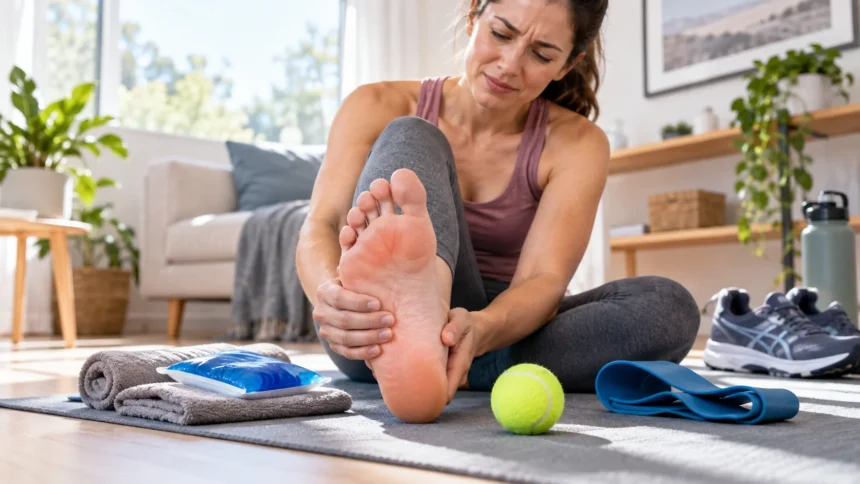
Pain on the bottom of the foot can turn simple activities like walking, standing, or exercising into an uncomfortable experience. The discomfort may appear around the heel, arch, ball of the foot, or across the entire sole. Fortunately, many mild cases respond well to simple home strategies that reduce pressure, calm irritation, and support normal movement.
The right relief approach depends on what is causing the discomfort and where the pain is located. Overuse, poorly fitting shoes, tight muscles, plantar fascia irritation, and changes in activity levels are common contributors. Understanding these factors can help you choose practical steps that provide relief while reducing the likelihood of the pain returning.
Why Does the Bottom of My Foot Hurt?
Pain underneath the foot can develop when muscles, ligaments, tendons, joints, or soft tissues experience more stress than they can comfortably handle. Long periods of standing, walking on hard surfaces, suddenly increasing exercise, or wearing unsupportive footwear may all contribute. The location and timing of the discomfort often provide useful clues about what may be irritating the foot.
Heel and arch pain are frequently associated with irritation of the plantar fascia, a strong band of tissue running along the bottom of the foot. The discomfort may feel especially noticeable during the first few steps after getting out of bed or after sitting for a long period. Tight calves and repeated loading can also increase tension through this area.
Pain near the ball of the foot may develop from pressure on the metatarsal area, while localized tenderness can occur with calluses, muscle strain, or irritated nerves. Sometimes discomfort begins after changing shoes, increasing running mileage, or spending more time on your feet. Persistent, severe, or unexplained pain should be professionally assessed rather than treated only with home remedies.
How to Relieve Pain on Bottom of Foot Quickly
One of the simplest first steps is to reduce activities that clearly aggravate your foot. You do not necessarily need complete bed rest, but temporarily limiting long walks, running, jumping, and prolonged standing can reduce repeated irritation. Giving the tissues a chance to settle may make other pain-relief strategies more effective.
Applying a wrapped cold pack to the uncomfortable area can help calm temporary soreness after activity. Use cold therapy for roughly 10 to 15 minutes at a time and avoid placing ice directly against your skin. Some people also find that rolling the sole gently over a chilled water bottle combines cooling with light massage.
Try to avoid walking barefoot on hard floors while the bottom of your foot is irritated. Supportive shoes or cushioned indoor footwear can reduce pressure and provide additional arch support during daily activities. Quick relief usually works best when reduced loading, comfortable footwear, stretching, and gradual movement are used together rather than relying on one technique.
Stretch Your Calves and Plantar Fascia
Tight calf muscles can increase tension through the heel and bottom of the foot, particularly during walking and running. A gentle standing calf stretch can therefore be useful when foot discomfort is related to stiffness or overuse. Keep your back heel down, lean forward gradually, and stop before the stretch becomes painful.
You can also stretch the plantar fascia directly by sitting down and placing the affected foot across your opposite knee. Gently pull your toes backward toward your shin until you feel a mild stretch through the arch and bottom of the foot. Hold the position comfortably rather than forcing your toes into an aggressive stretch.
Consistency is usually more helpful than stretching intensely for one session. Gentle stretches can be performed several times throughout the day, especially after waking up or before periods of prolonged walking. If stretching increases sharp pain, numbness, burning, or swelling, discontinue the movement and consider having the foot evaluated by a healthcare professional.
Massage and Roll the Bottom of Your Foot
Gentle self-massage can temporarily reduce tightness in the muscles and connective tissues along the sole. Use your thumbs to apply comfortable pressure through the arch, heel, and other tense areas without pressing directly into severe tenderness. Slow movements are usually preferable to aggressive massage, particularly when the foot is already sensitive.
A tennis ball or massage ball can also be used while sitting or standing with light support. Place the ball underneath your foot and slowly roll it from the heel toward the forefoot for a few minutes. Adjust the amount of pressure by changing how much body weight you place on the ball.
Massage should feel comfortable or mildly relieving rather than intensely painful. Pressing extremely hard into an irritated plantar fascia or sensitive nerve may increase symptoms instead of improving them. Combining gentle rolling with stretching and supportive footwear may help the foot feel more comfortable during everyday movement.
Wear Supportive and Comfortable Footwear
Shoes influence how pressure moves through your feet with every step, making footwear an important consideration when dealing with sole pain. Look for shoes that feel stable, fit comfortably around the heel and forefoot, and provide suitable cushioning for your activities. Shoes that are excessively worn or compressed may no longer provide the support they once did.
A narrow toe box can squeeze the front of the foot and increase pressure around the toes and ball of the foot. On the other hand, shoes that are too loose may allow excessive movement and rubbing. Your footwear should hold the foot comfortably without creating pressure points, numbness, or irritation during walking.
Some people feel more comfortable using arch-supporting insoles or cushioned inserts, especially when standing for long periods. However, an insert that works well for one person may not suit another foot shape or condition. If foot pain repeatedly returns despite appropriate shoes, professional footwear or orthotic guidance may be more useful than repeatedly trying random inserts.
Modify Activities While Your Foot Recovers
Continuing to push through painful exercise can keep irritated tissues under repeated stress and make recovery more difficult. Temporarily reduce movements that noticeably increase symptoms, particularly running, jumping, long-distance walking, or high-impact workouts. This does not always mean stopping all physical activity, because comfortable low-impact movement may still be possible.
Cycling, swimming, or other lower-impact activities may help you remain active without repeatedly loading the painful area in the same way. The best choice depends on the cause and severity of your foot discomfort. Any alternative activity should be reduced or stopped if it causes the pain to worsen during exercise or later that day.
When symptoms begin improving, gradually return to your normal activities instead of immediately returning to your previous intensity. Increase walking distance, running mileage, or exercise volume progressively while watching how your foot responds. A gradual approach allows the muscles and connective tissues to adapt to increasing demands without sudden changes in load.
Strengthen Your Feet and Lower Body
Stronger foot muscles can help support the arches and improve control during walking, standing, and exercise. Simple exercises such as controlled heel raises, toe movements, and gentle arch activation may improve strength when performed consistently. Start with comfortable resistance and focus on slow, controlled movement rather than completing as many repetitions as possible.
Strength elsewhere in the lower body can also influence how forces travel through the legs and feet. Hip stability, for example, plays a role in controlling leg alignment during walking, running, and other weight-bearing movements. Learning about hip abductor function can provide useful context for understanding how muscles higher in the leg contribute to overall movement mechanics.
Strengthening exercises should be progressed gradually, particularly if you are already experiencing pain. Begin with movements that do not noticeably worsen your symptoms and slowly increase difficulty as your tolerance improves. If a particular strengthening exercise consistently creates sharp or increasing discomfort, modify it rather than assuming that pain means the exercise is working.
Relieve Morning Heel and Arch Pain
Some people notice that pain underneath the heel or arch feels strongest during their first few steps after waking. The tissues may temporarily feel stiff after remaining relatively still overnight, making sudden full loading uncomfortable. Moving the ankle and toes gently before standing can help prepare the foot for the first steps of the day.
Before getting out of bed, try slowly pointing and flexing your ankle several times. You can also gently pull the toes back to create a comfortable stretch along the bottom of your foot. Once standing, wear supportive footwear instead of immediately walking barefoot across hard flooring if barefoot walking tends to trigger symptoms.
Morning discomfort that repeatedly improves with movement but returns after rest can occur with plantar fascia irritation. Home strategies may help mild cases, but symptoms that remain persistent or progressively worsen deserve professional attention. Early evaluation can help identify whether another condition is contributing to heel or arch pain.
Adjust Relief Based on Where Your Foot Hurts
Pain concentrated around the heel often benefits from reducing repetitive impact, improving calf flexibility, and wearing shoes with appropriate cushioning and support. Avoid suddenly increasing running or walking distance while the heel remains sensitive. If your first morning steps are especially painful, gentle movement and stretching before standing may make walking more comfortable.
Arch discomfort may be influenced by fatigue, plantar fascia irritation, footwear, or repetitive loading. Supporting the arch while temporarily reducing aggravating activities can help decrease unnecessary strain. Gentle massage, calf stretching, and gradual strengthening may also be useful when they can be performed without producing sharp or worsening symptoms.
Pain around the ball of the foot may require reducing pressure on the forefoot and checking whether your shoes provide enough space. High heels and narrow footwear can concentrate body weight toward this area and increase discomfort. Burning, tingling, numbness, significant swelling, or very localized severe pain should be assessed rather than automatically treated as ordinary overuse.
Prevent Bottom-of-Foot Pain From Returning
Sudden increases in physical activity are a common reason otherwise manageable tissues become irritated. If you are beginning a walking, running, or fitness routine, increase the workload progressively instead of dramatically changing distance or intensity in a few days. Your feet need time to adapt to repeated impact and weight-bearing demands.
Pay attention to footwear condition as well as overall fit. Shoes gradually lose cushioning and support, particularly when they are frequently used for running, work, or prolonged standing. Rotating appropriate footwear and replacing excessively worn shoes may reduce repeated stress on sensitive areas of the sole.
Regular mobility and strengthening can also become part of your prevention routine rather than something you perform only when pain develops. Maintaining comfortable calf flexibility, foot strength, and lower-body control may improve how your body manages movement demands. Recovery time between demanding activities is equally important, especially after unusually long periods of standing or exercise.
When Should You See a Healthcare Professional?
Foot pain deserves medical attention when it is severe, persistent, progressively worsening, or interfering significantly with normal walking. You should also seek assessment after a significant injury or when you cannot comfortably place weight on the affected foot. Sudden swelling, deformity, or intense tenderness may indicate something more significant than temporary muscle or soft-tissue irritation.
Numbness, persistent tingling, burning sensations, unusual weakness, or changes in skin color should not be ignored. These symptoms may involve structures other than simple muscles or connective tissue. People with diabetes, circulation problems, or other conditions affecting foot health should generally be especially cautious about new or unexplained foot symptoms.
A healthcare professional can examine your foot, assess walking mechanics, and determine whether additional testing or treatment is appropriate. Depending on the underlying problem, management may involve physical therapy, footwear modifications, activity adjustments, or other targeted treatment. Getting the correct diagnosis is particularly important when home care has not produced meaningful improvement.
Conclusion
Learning how to relieve pain on the bottom of the foot starts with identifying the activities and pressures that may be aggravating it. Reducing excessive loading, using supportive footwear, applying cold when appropriate, and performing gentle stretches can provide practical relief for many minor cases. The goal is to calm irritation while maintaining comfortable movement.
Massage, strengthening exercises, and gradual activity progression can become useful longer-term strategies after the initial discomfort begins settling. Paying attention to your footwear, training volume, and lower-body movement may also reduce repeated stress on the sole. Avoid forcing stretches or exercises that consistently make symptoms worse.
Foot pain that persists, becomes severe, or includes swelling, numbness, weakness, or difficulty walking should be professionally evaluated. Different conditions can cause similar symptoms, so the most effective treatment depends on the underlying cause. Responding early to ongoing discomfort can help you return to normal daily activities more comfortably.
FAQs
What is the fastest way to relieve pain on the bottom of the foot?
Reduce aggravating activity, wear supportive footwear, and try gentle stretching or brief cold therapy. The fastest approach depends on the cause, so persistent or severe pain should be professionally assessed.
Why does the bottom of my foot hurt when I walk?
Walking pain may result from plantar fascia irritation, overuse, tight muscles, unsuitable footwear, or increased pressure on the heel or forefoot. The exact cause often depends on where the pain occurs.
Should I massage the bottom of my foot if it hurts?
Gentle massage or rolling may help reduce temporary tightness and discomfort. Avoid aggressive pressure over extremely painful, swollen, numb, or injured areas because excessive force can aggravate sensitive tissues.
Is walking barefoot good for bottom-of-foot pain?
Barefoot walking may aggravate symptoms for some people, particularly on hard surfaces or when heel and arch pain are present. Supportive footwear can temporarily reduce pressure while irritated tissues recover.
How long does pain on the bottom of the foot take to improve?
Recovery time varies depending on the cause, severity, activity level, and treatment approach. Mild overuse discomfort may improve relatively quickly, while persistent plantar or structural problems may require longer-term management.