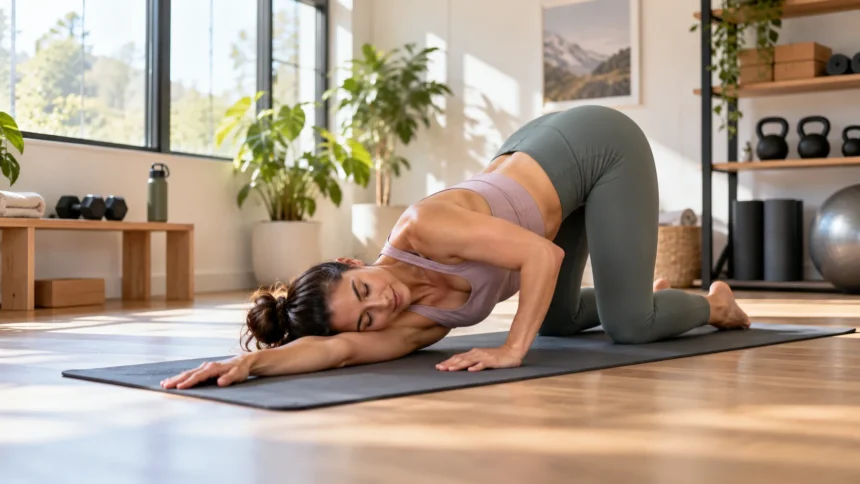
The thread the needle stretch is a gentle mobility exercise commonly used to improve movement through the upper back, shoulders, and chest. It combines controlled spinal rotation with a comfortable shoulder stretch, making it useful before workouts, after long periods of sitting, or during a mobility routine. Because it requires no equipment, it can easily be performed at home, at the gym, or during a work break.
This stretch is especially helpful for people who feel stiff through the thoracic spine or upper body after sitting at a desk, driving, or performing repetitive activities. The movement encourages rotation without placing excessive demand on the lower back. When performed with steady breathing and good technique, it can help improve mobility while promoting a relaxed, controlled range of motion.
What Is the Thread the Needle Stretch?
The thread the needle stretch is a floor-based mobility movement performed from a hands-and-knees position. During the exercise, one arm reaches underneath the opposite arm while the upper body gently rotates toward the floor. The shoulder and side of the head may lower toward the ground as the movement continues within a comfortable range.
The exercise gets its name from the motion of sliding one arm beneath the body, similar to passing thread through the eye of a needle. Although the movement appears simple, it involves several areas at once, including the thoracic spine, shoulders, upper back, and chest. This makes it useful for people looking to improve rotational mobility.
Thread the needle is usually performed slowly rather than as a fast or forceful stretch. The goal is not to reach as far as possible but to move smoothly while maintaining control through the spine and shoulders. A comfortable range combined with relaxed breathing generally provides more benefit than aggressively forcing the body deeper into rotation.
What Muscles Does Thread the Needle Stretch?
Thread the needle primarily targets muscles around the upper back and shoulders. The movement can create a gentle stretch through the rear shoulder, trapezius, rhomboids, and surrounding muscles as the arm passes underneath the body. These tissues contribute to shoulder blade movement, posture, and control of the upper spine during everyday activities.
The chest and side of the torso can also become involved, particularly when the movement includes opening the arm upward before reaching underneath. Muscles such as the pectorals, latissimus dorsi, and muscles around the rib cage may experience a comfortable stretch. The exact sensation depends on your flexibility, shoulder position, and available spinal rotation.
Your core muscles also work lightly during the stretch to help stabilize the lower body. Keeping the hips relatively centered encourages more of the rotation to occur through the upper spine instead of twisting excessively through the lower back. This combination of mobility and stability is one reason thread the needle is commonly included in warm-ups and movement routines.
Benefits of the Thread the Needle Stretch
One of the main benefits of thread the needle is improved thoracic spine mobility. The thoracic spine is the middle and upper portion of the back, and it needs adequate rotation for many everyday and athletic movements. Gentle rotational exercises can help maintain comfortable movement, especially for people who spend long periods sitting in relatively fixed positions.
The stretch may also help reduce feelings of stiffness around the shoulders and upper back. Reaching underneath the body encourages the shoulder blade to move while gently lengthening surrounding tissues. This can feel especially useful after desk work, upper-body training, or activities that keep the arms positioned forward for extended periods.
Another benefit is that thread the needle combines movement with controlled breathing. Slow breathing during the stretch can encourage a more relaxed position and make it easier to explore your available range without forcing it. Because no equipment is required, the exercise can also be incorporated into short mobility sessions almost anywhere.
How to Perform the Thread the Needle Stretch
Begin on your hands and knees with your wrists positioned roughly underneath your shoulders and your knees below your hips. Keep your spine comfortable and your neck relaxed rather than excessively arching or rounding your back. Spread your fingers naturally on the floor so your supporting hand creates a stable base throughout the movement.
Lift one arm away from the floor and gently rotate your chest toward that side if comfortable. Then bring the arm back down and slide it underneath the opposite arm with your palm facing upward. Allow your shoulder to move toward the floor as your upper body rotates, keeping the motion smooth and avoiding any sudden twisting.
Pause briefly when you reach a comfortable stretch through the upper back or shoulder. Breathe steadily, then press gently through the supporting hand to return to the starting position. Repeat the movement several times before switching sides, making sure both directions feel controlled rather than focusing on how far your hand travels.
Proper Thread the Needle Form
Good form begins with keeping your hips relatively stable throughout the exercise. Some movement is natural, but allowing the hips to shift dramatically can reduce the rotational demand on the upper back. Think about keeping your lower body centered while allowing the ribs, shoulders, and upper spine to produce most of the movement.
Your supporting arm should remain comfortable and stable rather than collapsing under your body weight. Keep the shoulder away from the ear and avoid locking the elbow forcefully. The reaching arm should glide beneath the body without being pushed farther than your shoulder or upper back comfortably allows.
Neck position is also important during the stretch. Allow your head to follow the movement naturally rather than forcing your chin toward your chest or turning your neck aggressively. If your shoulder reaches the floor comfortably, you may gently rest the side of your head down, but this position is not necessary to receive the benefits.
Common Thread the Needle Mistakes
One common mistake is rotating too much through the lower back instead of the thoracic spine. When the hips shift significantly or the lower back twists excessively, the movement may become less effective for upper-back mobility. Keeping your pelvis reasonably steady can help direct more of the rotation toward the intended area.
Another mistake is trying to push the shoulder aggressively toward the floor. Greater depth does not automatically mean a better stretch, and forcing the range can irritate sensitive shoulders or surrounding tissues. Move only until you feel mild, comfortable tension and avoid continuing deeper if you experience sharp pain, pinching, or numbness.
Holding your breath is another habit that can make the stretch feel more difficult. Breathing steadily helps keep the movement relaxed and may allow you to gradually explore a comfortable range. Instead of rushing through repetitions, use slow breathing and controlled movement so each repetition feels deliberate and easy to manage.
How Long Should You Hold Thread the Needle?
Thread the needle can be performed dynamically or held as a static stretch depending on your goal. For a warm-up, you might move slowly through five to eight repetitions on each side without holding the deepest position for very long. This approach helps prepare the upper back and shoulders for movement while keeping the body active.
For a mobility or cool-down session, you may hold the stretched position for approximately 20 to 30 seconds if it feels comfortable. During the hold, continue breathing naturally rather than trying to increase the range with every breath. One or two gentle holds per side may be sufficient for many general mobility routines.
More time is not always better, especially if your shoulder, neck, or upper back begins to feel irritated. Consistency usually matters more than performing extremely long holds in a single session. A few controlled repetitions several times each week can be a practical way to maintain mobility without turning the stretch into an exhausting exercise.
When to Use Thread the Needle in a Mobility Routine
Thread the needle can work well near the beginning of a warm-up before upper-body or full-body exercise. The dynamic version encourages movement through the spine and shoulders without requiring heavy resistance. It can be particularly useful before activities involving reaching, pressing, pulling, throwing, or rotational movements.
The stretch can also be included after workouts when you want to gradually transition from training into lower-intensity movement. Slow repetitions combined with steady breathing may help the upper body feel less stiff after strength training. However, stretching should complement appropriate recovery rather than being treated as a solution for every type of soreness or pain.
It can also be paired with mobility work for other areas of the body. For example, someone building a general recovery routine might combine upper-back stretches with gentle lower-body mobility and practical strategies for foot pain relief when appropriate. Addressing different areas individually can help create a more balanced whole-body routine.
Thread the Needle for Shoulder Mobility
Thread the needle can encourage movement around the shoulder blade while gently stretching tissues across the back of the shoulder. As the arm passes underneath the body, the shoulder blade moves around the rib cage rather than remaining fixed. This motion can support comfortable shoulder mechanics during reaching and other upper-body movements.
People who spend much of the day working at a computer may notice stiffness around the shoulder blades and upper back. Thread the needle introduces movement in a direction that is often missing during desk work. Performing the exercise slowly can help restore variety to the shoulder and upper-spine positions used throughout the day.
However, the movement should not cause sharp pain inside the shoulder joint. People with a recent shoulder injury, significant instability, or persistent pain may need a modified exercise or professional guidance. Mobility exercises are most useful when they match the individual’s current range rather than forcing the shoulder into uncomfortable positions.
Thread the Needle for Upper Back Mobility
The thoracic spine naturally contributes to rotation, extension, and overall upper-body movement. When this region feels stiff, people may compensate by moving more through the neck, shoulders, or lower back. Thread the needle provides a controlled way to practice rotation through the middle and upper portions of the spine.
Improved thoracic mobility can be useful during activities such as reaching overhead, rotating during sports, or turning while performing everyday tasks. The goal is not to create extreme flexibility but to maintain enough movement for comfortable function. Gentle exercises performed consistently can often be more practical than occasional aggressive stretching sessions.
To emphasize the upper back, focus on keeping the hips quiet and allowing the rib cage to rotate. Imagine the movement coming from the area between your shoulder blades rather than simply reaching your hand as far as possible. This cue can help make the exercise more intentional while reducing unnecessary movement through other areas.
Thread the Needle Stretch for Desk Workers
Extended desk work often places the body in relatively repetitive positions. The shoulders may remain forward, the upper back may move very little, and the neck can become tired from maintaining one posture for long periods. Thread the needle can introduce gentle rotational movement and give the upper body a break from prolonged stillness.
You do not need a lengthy stretching session to benefit from movement during the workday. A few slow repetitions on each side can be performed during a short break if you have a comfortable floor space available. Combining mobility exercises with standing, walking, and changing positions regularly can provide more variety throughout the day.
It is also helpful to avoid viewing one stretch as a complete solution for poor workstation habits or persistent discomfort. Adjusting your chair, monitor height, keyboard position, and movement frequency may also matter. Regular physical activity and strength training can further support the muscles responsible for maintaining comfortable posture and movement.
Modifications for Beginners and Limited Mobility
If placing the shoulder close to the floor feels difficult, simply reduce how far you slide your arm underneath the body. You can stop at any point where you feel a gentle stretch without strain. Range of motion usually improves more safely through gradual exposure than by forcing the body into a position it is not prepared for.
A folded towel, cushion, or yoga block can also be placed under the head or shoulder for additional support. This reduces the amount of rotation required while allowing you to relax into the movement. Supportive modifications are particularly helpful when stiffness makes the standard position uncomfortable or difficult to maintain.
People who cannot comfortably kneel may perform a modified rotational movement while seated or standing. For example, sitting upright and gently rotating the upper body can provide a similar mobility challenge without loading the knees. The best variation is one that allows controlled thoracic movement while keeping your joints comfortable.
How Often Should You Do Thread the Needle?
Many people can perform thread the needle several times per week as part of a normal mobility routine. Because the movement is generally low intensity, it may also be used more frequently when it feels comfortable. The appropriate frequency depends on your activity level, mobility needs, and how your body responds after each session.
If you sit for extended periods, short daily mobility sessions may be more useful than waiting until significant stiffness develops. Performing a few controlled repetitions can help break up long periods of inactivity. However, mobility exercises should be combined with regular walking, strength training, and varied movement rather than replacing broader physical activity.
Pay attention to how you feel during and after the exercise. Mild stretching sensations are expected, but lingering pain or worsening discomfort suggests that the movement may need to be modified or avoided temporarily. Consistent comfortable practice should leave you feeling mobile rather than increasingly irritated.
Safety Tips for Thread the Needle Stretch
Move slowly throughout the exercise and avoid using momentum to force rotation. Your available range may differ from one side to the other, and this does not mean both sides must immediately look identical. Work within a comfortable range while allowing mobility to develop gradually through consistent practice.
Stop the stretch if you feel sharp pain, tingling, numbness, or unusual weakness. These sensations are different from the mild muscular tension commonly experienced during stretching. Continuing to push through painful symptoms can aggravate an existing issue rather than improve mobility.
People recovering from shoulder, neck, spine, wrist, or upper-back injuries should consider professional guidance before adding unfamiliar mobility exercises. The same applies if discomfort repeatedly interferes with sleep or everyday movement. A healthcare or rehabilitation professional can help determine whether thread the needle is appropriate and suggest modifications when needed.
Conclusion
The thread the needle stretch is a simple mobility exercise that targets the upper back, shoulders, chest, and thoracic spine. It encourages controlled rotation while allowing the shoulder blades to move naturally around the rib cage. Because it requires no equipment, it is easy to include in warm-ups, recovery routines, or short movement breaks.
Good technique matters more than reaching the deepest possible position. Keeping the hips relatively stable, moving slowly, breathing steadily, and avoiding painful ranges can make the exercise both comfortable and effective. Beginners can reduce the range or use support until their mobility and confidence gradually improve.
Performing thread the needle consistently can help maintain useful upper-body movement, especially when combined with strength training and varied daily activity. It should be one part of a balanced mobility routine rather than the only exercise you rely on. Comfortable, controlled movement performed regularly is generally more valuable than aggressive stretching performed occasionally.
FAQs
What is the thread the needle stretch good for?
Thread the needle helps improve thoracic rotation and mobility around the upper back and shoulders. It can also provide a gentle stretch through the rear shoulder, chest, and muscles surrounding the shoulder blades.
How long should I hold the thread the needle stretch?
You can hold the position for around 20 to 30 seconds during a mobility session. For a dynamic warm-up, perform about five to eight slow repetitions per side instead of holding the stretch.
Can I do thread the needle every day?
Many people can perform thread the needle daily if the movement remains comfortable and pain-free. Keep the intensity gentle and reduce the frequency if your shoulders, wrists, neck, or back become irritated.
Does thread the needle help upper back stiffness?
Thread the needle can help introduce gentle rotation into a stiff upper back, particularly after prolonged sitting. However, persistent or severe stiffness may require assessment to identify underlying mobility, strength, or joint issues.
Should thread the needle hurt?
No. You may feel mild stretching or tension through the upper back and shoulder, but sharp pain, numbness, tingling, or pinching are signs to stop and modify the exercise.