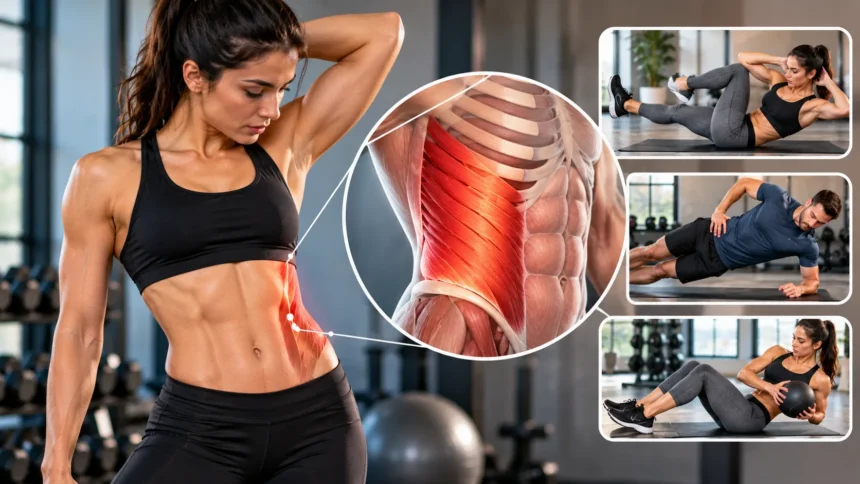
The obliques are important abdominal muscles that help support your spine, stabilize your core, and control movements such as twisting and bending. Located along the sides of the abdomen, these muscles work together with other core muscles to maintain balance and support everyday activities. Whether you are walking, lifting objects, exercising, or simply maintaining good posture, your oblique muscles contribute to controlled movement.
Understanding what obliques are can help you appreciate how your abdominal muscles function beyond basic exercises. The obliques include two major muscle groups called the external obliques and internal obliques. Both contribute to spinal stability, torso rotation, and side bending, although their individual actions differ. This guide explains oblique muscle anatomy, functions, benefits, exercises, common injuries, and practical ways to maintain healthy core muscles.
What Are Obliques?
The obliques are abdominal muscles located along the sides of the torso, extending between the ribs and pelvis. They form part of the abdominal wall and help control movements involving the trunk. Their primary functions include rotating the torso, bending sideways, and supporting abdominal pressure. These muscles also contribute to stability during standing, walking, and physical activities.
There are two main layers of oblique muscles on each side of the abdomen. The external obliques form the more superficial layer, while the internal obliques lie underneath them. Their muscle fibers run in different directions, allowing coordinated movement and stability. Together with other abdominal muscles, they help maintain trunk control during different activities.
The obliques work continuously during many ordinary movements, even when people are not performing specific abdominal exercises. Reaching across the body, turning while seated, and carrying objects can all involve oblique muscle activity. Their role becomes especially noticeable during movements requiring rotation or resistance to twisting. Healthy oblique function supports efficient movement and overall core coordination.
Where Are the Oblique Muscles Located?
The oblique muscles are positioned on both sides of the abdomen, between the lower ribs and the pelvis. They extend across the lateral abdominal wall and connect with several important anatomical structures. Their location allows them to influence movement throughout the torso. They also contribute to the muscular support surrounding the abdominal organs.
The external obliques lie closer to the surface of the body. Their fibers generally run diagonally downward and inward from the lower ribs. The internal obliques sit beneath the external layer, with fibers arranged in a different direction. This layered structure helps the muscles generate and control different types of trunk movement.
Although the obliques are often described as side abdominal muscles, their influence extends beyond the waist region. They connect with tissues that help stabilize the trunk and coordinate movement between the ribs and pelvis. Their relationship with the deeper abdominal muscles is particularly important. Together, these structures support posture and movement throughout the day.
Understanding Oblique Muscle Anatomy
Oblique muscle anatomy includes the external obliques and internal obliques, which form important layers of the abdominal wall. These muscles work with the rectus abdominis and transversus abdominis to support the trunk. Their different fiber directions allow them to contribute to twisting, bending, and stabilization. Understanding their anatomical arrangement helps explain how they function together.
The external obliques originate from the lower ribs and attach to structures including the pelvis and abdominal connective tissue. Their diagonal fiber orientation allows them to assist with rotation toward the opposite side. The internal obliques originate partly from the pelvis and connective tissues of the lower back. They contribute to rotation toward the same side when acting individually.
Both muscle groups also assist with side bending and abdominal compression. When the left and right obliques contract together, they contribute to trunk stabilization and certain forward-bending movements. Their activity depends on the task being performed and the position of the body. Coordinated muscle function is more important than isolated contractions during most everyday activities.
What Are External Obliques?
The external obliques are the outermost muscles of the lateral abdominal wall. They extend from the lower ribs toward the pelvis and the central connective tissue of the abdomen. These muscles are involved in trunk rotation, side bending, and abdominal compression. Their broad structure allows them to contribute to movement across a relatively large area.
One important function of the external obliques is rotating the torso toward the opposite side. For example, the right external oblique contributes to rotating the trunk toward the left. It works with other muscles to produce smooth, controlled movement. External oblique activity also helps resist unwanted rotation when the body needs to remain stable.
The external obliques participate in activities such as walking, reaching, carrying objects, and certain sports movements. They also assist when a person bends sideways or controls movement against resistance. Although these muscles may become more developed through training, their main importance is functional. Strong, coordinated external obliques help support comfortable movement and trunk control.
What Are Internal Obliques?
The internal obliques lie beneath the external obliques and form the middle muscular layer of the lateral abdominal wall. They attach to structures including the iliac crest, thoracolumbar fascia, and abdominal connective tissue. Their fibers run in several directions depending on their location. This arrangement allows them to contribute to multiple trunk movements.
Unlike the external obliques, the internal obliques generally assist with rotating the torso toward the same side. For example, the right internal oblique contributes to rightward trunk rotation. It works with the left external oblique during that movement. This coordinated activity demonstrates how abdominal muscles cooperate rather than acting independently.
Internal obliques also help compress the abdominal contents and maintain trunk stability during physical activity. They contribute to movements involving controlled bending and changes in body position. Their activity can be important during lifting, walking, and maintaining balance. Strengthening the core through varied exercises can help develop the endurance and coordination of these muscles.
What Is the Function of the Oblique Muscles?
The main functions of the oblique muscles include trunk rotation, lateral flexion, abdominal compression, and core stabilization. Trunk rotation occurs when the upper body turns relative to the pelvis. Lateral flexion refers to bending the torso toward one side. Both movements require coordinated activity from the internal and external obliques.
The obliques also contribute to maintaining abdominal pressure during certain movements. Alongside the diaphragm, pelvic floor, and other abdominal muscles, they help manage forces acting on the trunk. This function becomes important when lifting objects or performing demanding physical activities. Effective coordination supports movement without requiring constant maximum muscle tension.
Another important function is resisting unwanted movement. During walking, carrying objects, or holding a stable exercise position, the obliques help control excessive twisting and side bending. This stabilizing role is sometimes called anti-rotation or anti-lateral-flexion control. It supports efficient movement by helping the trunk remain appropriately positioned.
Why Are Obliques Important for Core Strength?
Core strength involves the coordinated function of several muscles surrounding the abdomen, spine, and pelvis. The obliques are essential components of this system because they control rotational forces and help stabilize the trunk. They work with deeper abdominal muscles, back muscles, and other supporting structures. Developing their strength can improve the body’s ability to manage physical demands.
During everyday activities, the core helps transfer force between the upper and lower body. The obliques contribute to this process when walking, reaching, lifting, or changing direction. Their ability to contract and relax appropriately supports smooth movement. Weakness or poor coordination may make certain activities more challenging, although core function depends on many factors.
Training the obliques can improve muscular endurance and control when exercises are selected appropriately. However, core strength does not depend on one muscle group alone. A balanced routine should include movements that challenge different aspects of trunk stability. Gradual progression and proper technique help develop useful strength without unnecessary strain.
How Obliques Help Maintain Posture
The oblique muscles contribute to posture by helping control the position of the rib cage and pelvis. Alongside other core muscles, they assist with maintaining trunk stability during sitting and standing. Their activity changes as body position and external demands change. This continuous coordination helps people remain upright while performing everyday movements.
When carrying an object on one side, the obliques help resist excessive sideways bending. They also contribute to controlling trunk rotation during walking and other activities. This stabilizing function supports balance and efficient movement. However, posture is influenced by multiple muscles, joints, sensory systems, and individual movement habits.
Strengthening the obliques may improve the ability to maintain controlled positions during demanding activities. It does not guarantee a particular posture or eliminate every cause of back discomfort. Comfortable posture usually involves being able to move and change positions rather than remaining rigid. Balanced exercise and regular movement support overall trunk function.
How Oblique Muscles Work During Walking and Running
Walking requires coordinated movement between the shoulders, trunk, pelvis, and legs. The oblique muscles contribute to controlling the gentle rotational movements that occur during each step. They help transfer forces between the upper and lower body while maintaining stability. Their activity changes throughout the walking cycle according to movement demands.
Running places greater demands on trunk coordination because movements occur more quickly and forces are generally higher. The obliques help manage rotational motion associated with arm swinging and leg movement. They also assist with maintaining trunk stability during repeated foot contact. Efficient running involves coordination between the obliques and many other muscle groups.
Although strong obliques can contribute to physical performance, they are only one component of effective walking and running mechanics. Hip strength, leg conditioning, balance, and overall fitness also matter. Core exercises may support training when included in an appropriate program. Their benefits depend on individual needs and the demands of the activity.
Obliques and Spinal Stability
Spinal stability depends on the coordinated activity of muscles, ligaments, joints, and the nervous system. The obliques contribute by helping control movement and resist forces acting on the trunk. Their ability to generate tension supports the spine during certain activities. However, stability does not mean preventing all spinal movement.
The internal and external obliques work alongside the transversus abdominis and back muscles during lifting, bending, and carrying. These muscles adjust their activity according to the weight, position, and movement being performed. Proper coordination can help distribute physical demands across the body. No single abdominal muscle independently protects the spine from every injury.
Exercises that challenge trunk control may improve muscular endurance and movement confidence. Side planks, controlled rotations, and anti-rotation exercises can target different aspects of core function. However, exercise alone does not prevent every spinal problem. People with persistent back pain should receive guidance suited to their symptoms and medical history.
Best Exercises for Strengthening Obliques
Several exercises can strengthen the obliques by challenging trunk rotation, side bending, or resistance to movement. Side planks, bird dogs, and controlled rotational exercises are commonly used in core training. Each movement emphasizes slightly different muscular demands. Selecting appropriate exercises depends on experience, strength, and individual comfort.
Side planks challenge the muscles that resist sideways bending while supporting the body. Bird dogs involve extending opposite limbs while maintaining a stable trunk. Controlled standing rotations can challenge rotational coordination when performed without excessive force. These exercises can be modified to suit different fitness levels and movement abilities.
A balanced oblique workout should include controlled movements rather than relying on speed or high repetition counts. Beginners may benefit from simple stability exercises before progressing to more demanding variations. Proper breathing and comfortable spinal positioning are also important. Gradually increasing difficulty can help improve strength while reducing unnecessary strain.
How to Do Side Planks for Oblique Strength
The side plank is a bodyweight exercise that challenges the obliques and other muscles responsible for lateral trunk stability. Begin by lying on one side with your elbow positioned beneath your shoulder. Keep your knees bent for a modified version or extend your legs for a more demanding position. Lift your hips gently while maintaining comfortable alignment.
Hold the position without allowing your hips to drop excessively or your torso to rotate. Breathe naturally and avoid placing unnecessary pressure on the supporting shoulder. Start with a short, manageable hold before gradually increasing the duration. Lower your hips with control when the position becomes difficult to maintain.
Side planks can be useful because they train the obliques to resist sideways bending rather than repeatedly moving the spine. However, they also place demands on the shoulder and hip muscles. Individuals with relevant injuries may need modifications. The exercise should be adjusted whenever pain or excessive strain occurs.
How to Do Standing Oblique Exercises
Standing oblique exercises can challenge trunk stability while keeping the body in an upright position. One simple movement involves standing with the feet approximately hip-width apart and gently rotating the torso. Keep the hips relatively stable while turning through a comfortable range. Return to the center before repeating toward the opposite side.
Another option involves controlled side bending without weights. Stand upright, relax the shoulders, and slowly lean the torso slightly toward one side. Return to a neutral position before moving in the other direction. Avoid forcing the movement or bending beyond a comfortable range. The purpose is controlled muscle activity rather than achieving the greatest possible movement distance.
Standing exercises can be convenient for people who prefer not to train on the floor. They may also help develop coordination during movements that resemble daily activities. However, individuals with balance difficulties should use appropriate support. Adding resistance should only occur when the basic movements can be performed comfortably and consistently.
Common Mistakes During Oblique Exercises
One common mistake is performing rotational exercises too quickly without maintaining movement control. Rapid twisting can create unnecessary stress when the body is not prepared for the activity. Beginners may benefit from smaller movements and a slower pace. Controlled repetitions allow the muscles to work without relying on momentum.
Another mistake is holding the breath during demanding core exercises. Breathing naturally helps maintain comfort and supports coordinated movement. Some people also overbrace their abdominal muscles throughout an entire workout. Constant maximum tension is generally unnecessary for ordinary exercises and may make movement feel more difficult.
Ignoring pain is another important concern during oblique training. Sharp discomfort in the abdomen, ribs, or lower back should not be treated as normal muscle effort. Exercises may need to be modified when symptoms appear. Proper technique, appropriate resistance, and gradual progression are more valuable than completing difficult movements through discomfort.
What Causes Oblique Muscle Pain?
Oblique muscle pain can develop after unfamiliar exercise, repetitive twisting, or sudden movements involving the torso. Muscle strains are one possible cause, particularly during sports that require powerful rotation. These injuries may occur when muscle fibers experience excessive force. Symptoms can include localized tenderness, soreness, and discomfort during bending or twisting.
Delayed-onset muscle soreness may also occur after challenging abdominal workouts. This discomfort typically develops after exercise and improves gradually over several days. However, persistent or severe pain should not automatically be attributed to muscle soreness. Problems involving the ribs, digestive organs, or other internal structures can sometimes produce similar symptoms.
The location and nature of pain can provide useful information but do not establish a diagnosis. Muscle-related discomfort may increase when contracting or stretching the affected area. Pain accompanied by fever, vomiting, difficulty breathing, or other concerning symptoms requires medical evaluation. Identifying the underlying cause is important before selecting a treatment strategy.
How to Recover From an Oblique Muscle Strain
Recovery from an oblique muscle strain depends on the severity of tissue damage and the activities that aggravate symptoms. Mild strains may improve with temporary modification of demanding movements. Avoiding forceful twisting and heavy loading during the early stages can help reduce irritation. Complete inactivity is not always necessary when gentle movement remains comfortable.
A wrapped cold pack may provide temporary relief after certain recent muscle injuries. Gentle mobility exercises may be introduced as symptoms improve, depending on individual tolerance. However, aggressive stretching can worsen discomfort during early recovery. A physical therapist can recommend appropriate exercises when symptoms persist or athletic demands are significant.
Returning to exercise should occur gradually rather than immediately resuming maximum intensity. The affected muscles need time to tolerate repeated contraction and rotational loading. Persistent weakness, significant pain, or recurring symptoms deserve professional assessment. Recovery plans should focus on restoring comfortable movement and function rather than following a fixed timetable.
How Often Should You Train Your Obliques?
The appropriate frequency for oblique exercises depends on training intensity, experience, and overall workout structure. Many people can include core strengthening activities on several days of the week. However, demanding resistance exercises may require recovery between sessions. The goal is to develop strength consistently without creating unnecessary fatigue.
Beginners may start with a small number of controlled sets using exercises such as modified side planks or bird dogs. As coordination improves, exercise difficulty can increase gradually. More experienced individuals may incorporate resistance-based rotational movements into broader strength workouts. The amount of training should match the demands placed on the body.
Training the obliques every day is not necessary for maintaining healthy core function. Recovery allows muscles to adapt to challenging activity. A balanced program should also include exercises for other abdominal, back, hip, and leg muscles. Consistency and movement quality matter more than excessive training frequency.
Can Oblique Exercises Improve Athletic Performance?
Oblique muscles contribute to many sports movements that involve turning, reaching, throwing, or changing direction. They help coordinate the transfer of force between the upper and lower body. Activities such as tennis, golf, swimming, and certain team sports involve trunk rotation. Appropriate oblique conditioning may support movement control during these activities.
Athletic performance depends on more than abdominal strength alone. Technique, mobility, endurance, leg strength, and sport-specific coordination all influence movement quality. Oblique exercises can complement these qualities but cannot replace full-body conditioning. Their value depends on how closely training matches the physical demands of the sport.
Athletes may use rotational exercises, side planks, and anti-rotation movements to develop different aspects of trunk function. Exercise intensity should increase gradually to match training experience. Uncontrolled twisting or excessive resistance may increase injury risk. A qualified coach or physical therapist can help select appropriate movements when performance or rehabilitation goals are specific.
When Should You Seek Medical Help for Oblique Pain?
Mild oblique muscle soreness following exercise often improves with reduced activity and gradual recovery. However, pain that persists, becomes worse, or interferes with normal movement should be assessed. Significant tenderness after an injury may indicate a muscle strain or another problem. A healthcare professional can help determine whether further investigation is necessary.
Sudden severe abdominal or side pain should not automatically be attributed to the oblique muscles. Internal medical conditions can sometimes cause discomfort in similar areas. Pain accompanied by fever, repeated vomiting, fainting, or difficulty breathing requires urgent medical attention. These symptoms may indicate problems unrelated to exercise or muscle function.
Persistent pain during twisting, coughing, or ordinary activities also deserves evaluation when it does not improve. A clinician may assess muscle function, surrounding joints, and possible nonmuscular causes. Treatment depends on the diagnosis rather than the location of discomfort alone. Appropriate medical guidance helps prevent delays in identifying serious conditions.
Conclusion
The obliques are important abdominal muscles that support trunk rotation, side bending, abdominal compression, and core stability. They consist of external and internal muscle layers that work together during movement. Their functions extend beyond exercise because they contribute to walking, lifting, posture, and everyday physical activities. Understanding oblique anatomy highlights their role in overall movement and coordination.
Strengthening the obliques can support muscular endurance, trunk control, and physical performance when included in a balanced training routine. Side planks, controlled rotations, and stability exercises offer different ways to challenge these muscles. Proper technique and gradual progression are essential for comfortable training. Oblique exercises work best alongside strengthening activities for the rest of the body.
Maintaining healthy oblique muscles involves regular movement, appropriate recovery, and attention to unusual symptoms. Muscle soreness may occur after unfamiliar workouts, but persistent or severe pain requires further assessment. A balanced approach to core training supports functional strength without unnecessary strain. Strong and coordinated obliques contribute to comfortable movement throughout daily life.
Frequently Asked Questions (FAQs)
What are obliques in simple terms?
Obliques are muscles located along the sides of the abdomen. They help rotate and bend the torso, support the spine, and maintain stability during everyday movements and physical activities.
What is the difference between internal and external obliques?
External obliques form the outer layer and help rotate the torso toward the opposite side. Internal obliques lie underneath and generally assist with rotation toward the same side.
What exercises are best for strengthening obliques?
Side planks, bird dogs, controlled torso rotations, and anti-rotation exercises can strengthen the obliques. The best movements depend on fitness level, exercise goals, and individual physical limitations.
Can weak obliques cause lower back pain?
Reduced core strength or coordination may contribute to movement difficulties in some people. However, lower back pain has many possible causes, and weak obliques alone do not explain every case.
How long does it take to strengthen oblique muscles?
Improvements in coordination may occur within several weeks, while measurable strength gains generally require consistent training over a longer period. Results depend on exercise intensity, frequency, recovery, and individual fitness.