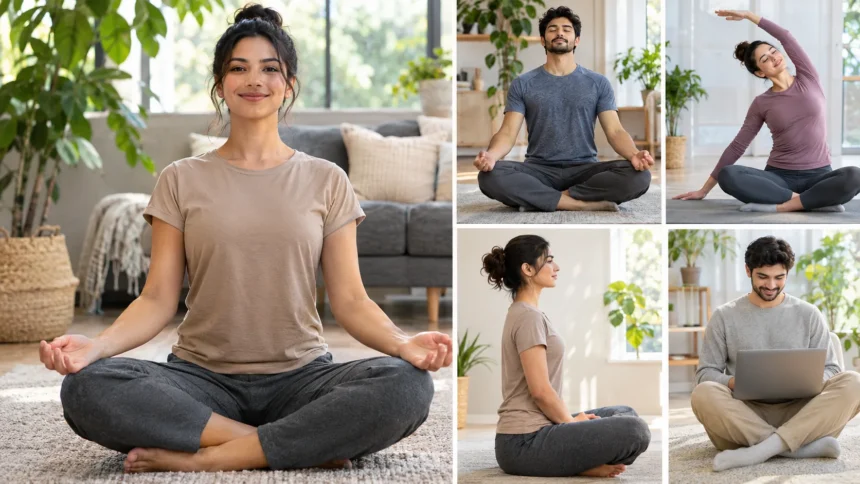
Sitting cross legged is a common position used during relaxation, meditation, exercise, and everyday activities. People often sit this way on the floor, while working, or when spending time with family and friends. Although the position may appear simple, it involves several muscles and joints that work together to support the body. Understanding how cross-legged sitting works can help you choose comfortable sitting positions and avoid unnecessary strain.
Cross legged refers to a sitting position in which the legs cross or fold in front of the body, or one leg rests over the other. The term commonly describes sitting on the floor with both knees bent outward, but it can also refer to crossing the legs while sitting in a chair. This guide explains the meaning of cross-legged sitting, its variations, possible benefits, disadvantages, and practical comfort tips.
What Does Cross Legged Mean?
Cross legged describes a seated position where the legs are crossed or arranged in a folded posture. When sitting on the floor, the knees usually bend outward while the lower legs rest in front of the body. This position is common during meditation, yoga, and informal gatherings. It allows people to sit without needing a chair.
The meaning can change slightly depending on the situation. Someone sitting cross legged on a chair may place one knee over the other. Meanwhile, a person sitting cross legged on the floor usually folds both legs inward. These positions involve different joint angles and levels of support.
The phrase is commonly written as cross-legged, particularly when used as an adjective or adverb. For example, someone might say they are sitting cross-legged on a carpet. The position itself is neither automatically healthy nor unhealthy. Comfort depends on joint mobility, sitting duration, individual preferences, and existing physical conditions.
Different Types of Cross-Legged Sitting Positions
There are several ways to sit cross-legged, and each involves slightly different joint movements. The simplest floor position involves bending both knees outward and placing the lower legs loosely in front of the body. This is sometimes called an easy seated position. It is commonly used for casual sitting and gentle relaxation.
Another variation is the half-lotus position, where one foot rests on the opposite thigh. The full lotus position involves placing both feet on the opposite thighs. These positions require considerable hip mobility and are not comfortable or appropriate for everyone. Trying to force them can place unnecessary stress on the knees.
Chair-based leg crossing is another familiar variation. A person may cross one knee over the other or rest an ankle across the opposite thigh. These arrangements differ from floor sitting because the chair supports much of the body’s weight. Changing between comfortable positions can help reduce stiffness during extended sitting.
How the Body Works When Sitting Cross Legged
Cross-legged sitting requires coordinated movement through the hips, knees, and ankles. The hip joints rotate and bend to allow the thighs to move outward. The knees also flex, while the ankles adjust according to the chosen position. Individual differences in joint structure influence how comfortably someone can sit this way.
The muscles surrounding the hips help control and support the position. These include the gluteal muscles, hip rotators, and several muscles along the inner thighs. The abdominal and back muscles contribute to keeping the upper body balanced. However, maintaining one posture for too long can cause muscular fatigue.
The spine also plays a role because the pelvis provides support for the upper body. Some people naturally sit with their pelvis tilted backward, which can create a rounded lower-back position. Others find it easier to remain upright. Using a cushion or changing positions may improve comfort without requiring rigid posture.
Is Sitting Cross Legged Good for You?
Sitting cross-legged can be comfortable and practical for people whose joints tolerate the position. It provides an alternative to conventional chair sitting and may encourage gentle changes in hip positioning. Some people enjoy the position during meditation or relaxation. However, the benefits depend on individual mobility and the amount of time spent sitting.
The position is not inherently better than all other sitting arrangements. Sitting cross-legged for extended periods can create pressure around the knees, ankles, or hips. Some people may experience stiffness or temporary tingling. These symptoms suggest that changing position or adjusting support could be helpful.
There is limited evidence that simply sitting cross-legged produces major long-term health improvements. General movement habits, physical activity, and comfortable positioning are more important than choosing one specific posture. A variety of sitting positions can be useful throughout the day. The best approach is to avoid prolonged discomfort and move regularly.
Benefits of Sitting Cross Legged on the Floor
One potential benefit of cross-legged floor sitting is the opportunity to use a different arrangement of the hips and lower body. People who normally sit in chairs may find the change comfortable for short periods. Moving between floor and chair positions also introduces variety. However, the position should not be treated as a flexibility exercise for everyone.
Cross-legged sitting can also be convenient during activities that do not require furniture. Reading, playing games, and participating in group discussions are common examples. A stable seated position may allow the hands to remain free for other tasks. Comfort often improves when the sitting surface provides sufficient cushioning.
Some people use cross-legged sitting during breathing exercises and meditation. The position can offer a stable base while attention is directed toward relaxation. Nevertheless, meditation does not require any particular leg arrangement. People can receive the benefits of mindfulness practices while sitting comfortably in a chair or another supported position.
Can Sitting Cross Legged Improve Flexibility?
Cross-legged sitting involves hip flexion and rotation, which are movements related to lower-body mobility. For people who already tolerate the position, spending brief periods in it may provide a gentle opportunity to move through these joint ranges. However, passive sitting alone is not guaranteed to improve flexibility. Results vary according to individual circumstances.
Improving flexibility generally involves controlled movement, appropriate stretching, and gradual exposure to comfortable ranges of motion. The hips and surrounding muscles may respond differently depending on activity levels and mobility. Sitting in a difficult position for extended periods is not necessary. Consistency and comfort are more useful than forcing deeper joint angles.
People with limited hip mobility should avoid pushing their knees toward the floor. A cushion beneath the hips or support beneath the thighs may make sitting easier. If the position causes joint pain, another arrangement is preferable. A physical therapist can recommend suitable mobility exercises when restrictions interfere with everyday activities.
Cross-Legged Sitting and Hip Mobility
Hip mobility influences how easily the legs move into a folded sitting position. The hip joint allows movement in several directions, including flexion, rotation, and movement away from the body’s midline. Cross-legged floor sitting combines some of these movements. Individual joint anatomy can affect the comfortable range available.
People who regularly perform activities involving hip movement may find cross-legged sitting easier. Others may experience tightness around the hips or inner thighs. This difference does not automatically indicate a medical problem. Comfortable mobility varies naturally, and the ability to sit in one position is not a complete measure of physical fitness.
Gentle hip movements may help reduce stiffness associated with prolonged inactivity. Activities such as comfortable seated rotations or controlled hip stretches can support general mobility. However, exercises should not produce sharp pain or significant discomfort. Persistent restrictions or painful symptoms may benefit from professional assessment.
Does Sitting Cross Legged Affect Your Knees?
Cross-legged sitting places the knees in a bent position while the hips rotate. For many people, this arrangement is comfortable during short periods. However, it can become uncomfortable when hip mobility is limited or the knees experience additional rotational stress. Individual knee health and previous injuries also influence tolerance.
Trying to force the knees downward in a lotus-style position can create unnecessary strain. The knee is primarily designed for bending and straightening, with more limited rotational movement. If the hips cannot provide the required motion, additional force may affect knee structures. This is one reason advanced seated yoga positions should never be forced.
People with knee pain, swelling, or recent injuries should choose a more comfortable sitting arrangement. Supporting the legs with cushions may reduce discomfort in some situations. However, positioning changes cannot treat every knee condition. Seek professional guidance when symptoms persist or interfere with normal activities.
Cross-Legged Sitting and Lower Back Posture
The position of the pelvis influences how the lower back feels during cross-legged sitting. When the pelvis tilts backward, the lower spine may become more rounded. This posture is not automatically harmful, but maintaining it for extended periods may become uncomfortable. People vary in how they naturally sit.
Sitting on a firm cushion can raise the hips slightly and sometimes make an upright position easier. Supporting the knees or thighs may also reduce muscular effort. The aim is to find a relaxed position rather than force the spine into a perfectly straight line. Comfortable movement is generally more helpful than rigid posture control.
Back discomfort can have several causes beyond sitting position. Muscle fatigue, prolonged inactivity, and existing spinal conditions may contribute to symptoms. If cross-legged sitting repeatedly causes pain, changing positions is reasonable. Persistent or worsening back discomfort should be assessed rather than attributed to posture alone.
Why Your Legs Fall Asleep When Sitting Cross Legged
Temporary tingling or numbness can occur when sitting cross-legged for an extended period. Pressure on a nerve or changes in local circulation may contribute to these sensations. People commonly describe the feeling as a leg falling asleep. It often improves after changing position and relieving pressure.
The sensation may develop around the lower legs, feet, or other affected areas. Remaining still can increase pressure on certain tissues, especially when the legs are tightly crossed. Adjusting the position or standing carefully may help normal sensation return. However, repeated or persistent numbness should not be ignored.
If numbness does not improve after repositioning, or it occurs with weakness or significant pain, medical evaluation is important. Sudden neurological symptoms require prompt attention, particularly when they involve other parts of the body. Cross-legged sitting should not routinely cause prolonged loss of sensation. Comfort and normal movement remain important safety considerations.
Can Sitting Cross Legged Affect Blood Pressure?
Crossing the legs while sitting in a chair can temporarily influence measured blood pressure in some people. The effect is particularly associated with crossing one knee over the other. This does not mean that cross-legged sitting always causes a lasting blood pressure problem. Measurement technique and individual factors influence the result.
Healthcare professionals generally recommend specific positioning when measuring blood pressure. Sitting with the back supported, feet flat on the floor, and the arm supported at heart level helps improve consistency. Legs should remain uncrossed during the measurement. Following standardized positioning reduces avoidable differences between readings.
People with concerns about high blood pressure should not rely on a particular sitting position to manage the condition. Blood pressure is influenced by many factors, including health conditions, activity, and medications. Accurate monitoring and professional advice are more useful. Changing position may improve measurement reliability but is not a substitute for treatment.
Cross-Legged Sitting During Meditation
Cross-legged sitting is often associated with meditation because it can provide a stable seated base. Many traditional meditation practices use comfortable floor positions to support quiet attention. The hands may rest on the thighs or in the lap. However, successful meditation does not depend on achieving a particular posture.
Beginners often start with a simple crossed-leg position rather than advanced lotus variations. Sitting on a cushion can provide additional comfort and support. A folded blanket may also help reduce pressure from a hard floor. The position should allow relaxed breathing without unnecessary muscular tension.
People who find floor sitting uncomfortable can meditate in a chair instead. Feet can rest on the floor while the back remains supported or comfortably upright. The focus of meditation is attention and awareness, not physical flexibility. Choosing a sustainable position helps prevent discomfort from distracting from the practice.
Cross-Legged Sitting in Yoga Practices
Yoga includes several cross-legged seated positions used during breathing exercises, meditation, and selected stretches. Sukhasana, commonly called Easy Pose, is a familiar example involving loosely crossed legs. More demanding positions include half lotus and full lotus. These poses vary considerably in their mobility requirements.
Beginners should start with positions that feel comfortable and allow natural breathing. A folded blanket or cushion may support the pelvis and improve sitting comfort. The knees should not be forced toward the ground. If a pose creates pressure or pain around the joints, a modified position is preferable.
Yoga instruction can help people understand appropriate modifications for their bodies. However, even guided exercises should respect individual limitations and existing injuries. Advanced positions are not necessary for obtaining benefits from gentle yoga practice. Comfortable movement and safe technique matter more than achieving a particular appearance.
How to Sit Cross Legged Comfortably
Begin by choosing a stable, comfortable surface such as a mat or carpet. Sit with both knees bent and allow the legs to cross loosely in front of the body. Keep the position relaxed rather than pulling your feet tightly toward the hips. Your upper body should feel balanced without excessive effort.
If your knees remain high or your lower back feels uncomfortable, consider placing a cushion beneath your hips. You can also support the thighs with folded towels or pillows. These adjustments may reduce pressure and help you relax. Avoid pushing the knees into positions that cause pain.
Start with short periods and change position whenever discomfort develops. There is no universal time that everyone should remain cross-legged. Standing, walking, or sitting differently can provide relief from stiffness. The goal is to use the position comfortably rather than build tolerance by ignoring unpleasant symptoms.
Common Mistakes When Sitting Cross Legged
One common mistake is forcing the legs into a position that exceeds comfortable hip mobility. This may create unnecessary pressure around the knees or ankles. A seated posture should not require aggressive stretching or assistance from another person. Adjusting the position is safer than attempting to achieve a specific appearance.
Another mistake is remaining cross-legged for too long without moving. Even a comfortable sitting arrangement can become tiring when maintained continuously. Muscles and joints benefit from regular changes in position. Taking movement breaks can help reduce stiffness and temporary pressure-related symptoms.
People may also assume that sitting perfectly upright is necessary at all times. However, maintaining a rigid posture can create unnecessary muscular effort. Comfortable sitting involves natural movement and occasional adjustments. Using appropriate support can help, but no single posture is ideal for every person or situation.
Who Should Avoid Sitting Cross Legged?
People with certain hip, knee, or ankle problems may find cross-legged sitting uncomfortable. Recent injuries, joint swelling, or restricted movement can make the position unsuitable. It is sensible to avoid any arrangement that produces pain or worsens existing symptoms. Alternative seated positions can provide adequate comfort and support.
Individuals recovering from surgery may also have specific movement precautions. Some hip procedures, for example, require restrictions on certain positions during recovery. These precautions depend on the operation and the healthcare professional’s instructions. Following individualized medical advice is more important than general recommendations about sitting posture.
People who experience repeated numbness, significant discomfort, or unusual weakness should also reconsider the position. Symptoms that persist after moving deserve medical attention. Cross-legged sitting is optional and not required for everyday health. A chair or another supported arrangement can be equally appropriate.
Cross Legged vs Sitting With Feet Flat
Cross-legged floor sitting and chair sitting with feet flat involve different levels of body support. A chair supports the pelvis at an elevated height, while floor sitting requires more positioning through the hips and knees. Both can be comfortable depending on individual preferences. Neither is automatically superior in every situation.
Chair sitting may be more practical for desk work because equipment can be arranged around the seated position. It also allows the feet to remain supported without requiring substantial hip rotation. Cross-legged floor sitting may be convenient during informal activities or meditation. The choice depends on the activity and available furniture.
Changing between positions can help reduce prolonged pressure on particular muscles and joints. People should not feel obligated to maintain one supposedly perfect posture all day. Comfortable seating and regular movement are more important. Using different positions provides flexibility without treating either arrangement as universally healthier.
Cross-Legged Sitting in Different Cultures
Cross-legged sitting is familiar in many cultures and everyday social settings. People may sit on floors or mats during meals, conversations, religious gatherings, and community activities. These practices reflect different traditions and living environments. Their meaning can vary depending on local customs and the surrounding situation.
In some settings, floor sitting is a practical part of household furniture arrangements. In others, it is connected with meditation, ceremonies, or traditional forms of gathering. Cross-legged positions can also appear in art and historical representations. These examples show that the posture has social significance beyond physical comfort.
Cultural practices do not mean every person can comfortably adopt the same position. Joint mobility, age, health, and personal habits influence sitting preferences. Respecting individual differences is important when participating in unfamiliar settings. Comfortable alternatives can often be used without changing the purpose of an activity.
How Long Can You Sit Cross Legged?
There is no fixed duration that is safe or comfortable for everyone. Some people can remain cross-legged briefly without discomfort, while others prefer changing positions sooner. Joint mobility, surface support, and existing health conditions influence tolerance. Listening to physical signals is more useful than following a strict timing rule.
If stiffness, tingling, or pressure develops, change your sitting position. Short movement breaks can help reduce the discomfort associated with remaining still. You may also alternate between floor sitting and chair sitting. This creates variety without placing unnecessary demands on one set of joints.
Do not attempt to remain cross-legged longer simply to improve flexibility or demonstrate endurance. Prolonged pressure and uncomfortable positioning can increase symptoms. A comfortable position should allow normal movement afterward. If repeated discomfort occurs even during short periods, consider seeking individualized advice.
When to Seek Medical Advice About Sitting Discomfort
Occasional mild stiffness during sitting is common and may improve after changing positions. However, persistent pain around the hips, knees, ankles, or back deserves attention. Symptoms that interfere with everyday activities should not be ignored. A healthcare professional can help determine whether an underlying joint or nerve problem is present.
Repeated numbness or tingling should also be evaluated, particularly when it lasts after standing or repositioning. New weakness, significant swelling, or worsening pain may indicate a problem requiring more urgent assessment. These symptoms should not automatically be blamed on tight muscles. Identifying their cause supports appropriate treatment decisions.
Seek immediate medical help for sudden severe neurological symptoms, including significant weakness or loss of control over bodily functions. These may indicate serious conditions unrelated to ordinary sitting discomfort. For less urgent symptoms, a doctor or physical therapist can recommend suitable modifications. Professional guidance is especially useful when existing injuries limit comfortable movement.
Conclusion
Cross legged is a term used to describe sitting with the legs crossed or folded in front of the body. The position is common during meditation, yoga, relaxation, and everyday social activities. It involves movement through the hips, knees, and ankles while the upper body maintains balance. Comfort depends on individual mobility, support, and sitting duration.
Sitting cross-legged may provide a convenient alternative to chair sitting, but it is not automatically healthier than other positions. Some people experience stiffness, joint pressure, or temporary tingling after remaining seated too long. Cushions and regular movement breaks can help improve comfort. Forcing the legs into difficult positions should always be avoided.
The most practical approach is choosing seated positions that feel comfortable and allow easy movement. Cross-legged sitting can be useful when it suits your body and activities, but alternatives are equally acceptable. Persistent pain, numbness, or weakness should be evaluated by a healthcare professional. Understanding these key facts helps you make informed decisions about everyday sitting habits.
Frequently Asked Questions (FAQs)
What Does Cross Legged Mean?
Cross legged means sitting with the legs crossed or folded, usually in front of the body on the floor. It can also describe sitting in a chair with one leg over the other.
Is Sitting Cross Legged Good for Your Health?
Sitting cross-legged can be comfortable for some people, but it does not provide guaranteed health benefits. Changing positions regularly and avoiding prolonged discomfort are generally more important than maintaining one particular posture.
Why Does Sitting Cross Legged Hurt My Knees?
Cross-legged sitting requires hip rotation and knee bending. Limited mobility, existing knee problems, or excessive pressure may cause discomfort. Avoid forcing the position and seek medical advice if pain persists.
Can Sitting Cross Legged Cause Numbness?
Yes, prolonged cross-legged sitting can temporarily place pressure on nerves or affect local circulation, causing tingling or numbness. Change position when symptoms occur and seek evaluation if they persist.
Is It Better to Sit Cross Legged or With Feet Flat?
Neither position is universally better. Sitting with feet flat is often practical for desk work, while cross-legged sitting may suit floor activities. Comfort, support, and regular movement matter most.