What Muscles Does a Plank Work?
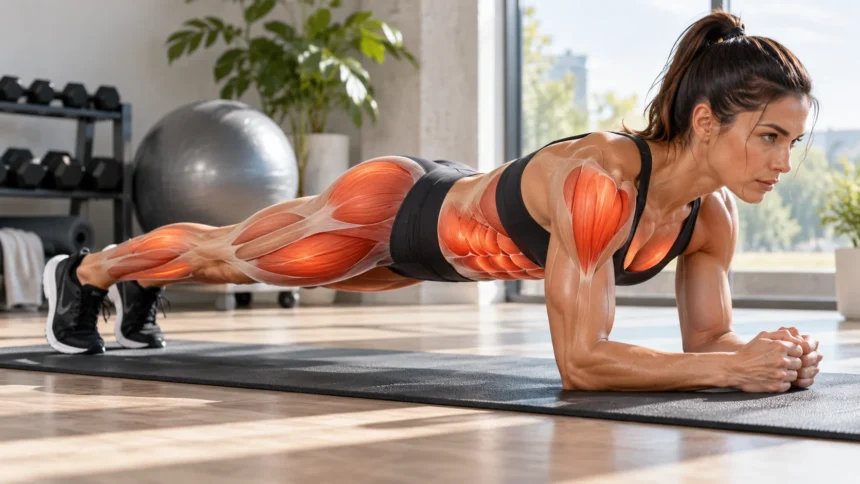
The plank is a full-body isometric exercise that primarily targets the core while also engaging the shoulders, back, chest, glutes, and legs. Instead of repeatedly bending or extending the spine, you hold the body in a stable position against gravity. This forces several muscle groups to contract at the same time to maintain alignment and prevent the hips or torso from collapsing.
The main muscles worked during a plank include the rectus abdominis, transverse abdominis, internal and external obliques, erector spinae, and other deep stabilizing muscles. Your shoulders, triceps, serratus anterior, gluteal muscles, quadriceps, and hip stabilizers also contribute. Because so many areas work together, planks are often described as a compound core stability exercise rather than a simple abdominal movement.
How strongly each muscle works depends on the plank variation, body position, technique, and duration. A forearm plank may feel different from a high plank, while side planks place greater demand on the obliques and lateral hip muscles. Regardless of the variation, good alignment is more important than simply holding the position for as long as possible.
Rectus Abdominis: The Front Abdominal Muscles
The rectus abdominis is the long abdominal muscle running vertically along the front of the torso. It is commonly associated with the visible “six-pack,” but its function extends beyond appearance. During a plank, the rectus abdominis contracts to help prevent the lower back from overextending and keeps the rib cage and pelvis in a more controlled position.
Unlike crunches, planks do not require repeated spinal flexion to activate the rectus abdominis. Instead, the muscle works isometrically, meaning it produces tension without significantly changing length. This type of contraction teaches the abdominal muscles to resist unwanted movement, which can be useful during lifting, running, sports, and everyday tasks that require trunk stability.
To engage the front abdominal muscles effectively, gently draw the ribs toward the pelvis without excessively rounding the back. Imagine tightening your midsection as though preparing for someone to lightly push your torso. The goal is firm, controlled tension while continuing to breathe normally rather than holding your breath or pulling the stomach inward as hard as possible.
Transverse Abdominis and Deep Core Stability
The transverse abdominis is one of the deepest abdominal muscles and wraps around the torso like a supportive belt. It plays an important role in controlling abdominal pressure and stabilizing the spine during movement. During a properly performed plank, this deep core muscle works with other stabilizers to maintain trunk position while the arms and legs support the body.
Deep core strength is important because many daily and athletic movements require the torso to stay relatively stable while the limbs move. Walking, carrying groceries, lifting objects, and changing direction all depend on coordinated trunk control. Plank exercises help train this ability by creating resistance without requiring large spinal movements, making them useful in many general strength programs.
You do not need to aggressively “suck in” your stomach to activate the transverse abdominis. Instead, maintain natural breathing while gently bracing the abdominal wall. A good brace should feel firm enough to support your trunk but relaxed enough that you can continue breathing steadily throughout the exercise without excessive tension in your neck or shoulders.
Obliques and Rotational Control
The internal and external obliques are located along the sides of the abdomen and help with trunk rotation, side bending, and spinal stability. During a standard plank, these muscles work to prevent the torso from rotating or shifting sideways. Their role becomes even more noticeable in side plank variations and exercises that challenge one side of the body more than the other.
Strong obliques support better control during movements that involve twisting, carrying uneven loads, or changing direction. Rather than focusing only on making the waist stronger through repeated bending, training the obliques to resist unwanted movement can improve overall core stability. Planks provide this anti-rotation challenge while keeping the torso relatively still.
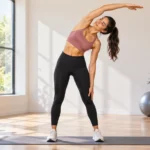
Exercises such as standing side bends train lateral trunk movement differently, while planks emphasize stability and resistance to motion. Combining different movement patterns can create a more balanced core routine when exercises are appropriate for your ability. The key is using controlled technique instead of relying on momentum or excessive range.
Shoulders, Chest, and Serratus Anterior
The shoulders work continuously during planks because they support a significant portion of your body weight. The deltoids help stabilize the upper arms, while the rotator cuff muscles contribute to shoulder joint control. In a high plank, these muscles must remain active to keep the arms stable and prevent the upper body from sinking toward the floor.
The chest muscles, particularly the pectoralis major and minor, also assist with upper-body support. Although a plank does not involve pressing movement like a push-up, the chest still contracts to maintain position. Your triceps contribute as well, especially in a high plank where the elbows remain extended and the arms support the torso against gravity.
The serratus anterior is especially important because it helps control the shoulder blades against the rib cage. During good plank form, gently pushing the floor away encourages this muscle to work effectively. Allowing the shoulder blades to collapse inward can reduce upper-body stability, while controlled protraction creates a stronger and more supported position through the shoulders.
Back Muscles Worked During a Plank
Several back muscles contribute during a plank even though the exercise is often categorized as an abdominal movement. The erector spinae muscles help control spinal position and work with the abdominal muscles to keep the trunk stable. Small stabilizing muscles around the spine also contribute to maintaining alignment from the upper back through the lower back.
The latissimus dorsi, commonly called the lats, can assist with shoulder and trunk stability when the upper body is properly engaged. Creating gentle tension through the arms and imagining that you are pulling your elbows toward your feet can increase full-body engagement. This should be done without actually moving the limbs or excessively arching the lower back.
Back discomfort during planks is not something you should automatically ignore. If the hips sag and the abdomen loses tension, the lower back may experience unnecessary strain. Shortening the hold, improving core engagement, or using an easier variation can help maintain better form, while persistent or sharp back pain should be assessed by an appropriate healthcare professional.
Glutes, Hips, and Leg Muscles
The gluteus maximus helps keep the hips extended and prevents the pelvis from dropping toward the floor. When you squeeze the glutes gently during a plank, the pelvis becomes easier to control and the lower back may remain in a more neutral position. The gluteus medius and other hip stabilizers also contribute to keeping the body steady.
The quadriceps work to keep the knees extended during most standard plank variations. Maintaining active legs creates tension from the feet through the hips, turning the plank into a true full-body exercise. When the legs become passive, the hips may begin to sag or shift, placing more demand on the lower back and reducing overall movement quality.
The calves and muscles around the ankles can also contribute by maintaining the position of the feet and lower legs. Although these muscles are not the primary target, they help create a stable base of support. Thinking of the plank as a whole-body tension exercise usually produces better technique than focusing only on tightening the stomach.
Benefits of Plank Exercises
One of the main benefits of planks is improved core stability. A stronger, more coordinated core helps transfer force between the upper and lower body during activities such as lifting, running, throwing, and carrying. Core stability also helps maintain body control during everyday movements that require the spine and pelvis to remain steady under changing loads.
Planks can also improve muscular endurance because several muscles must maintain tension for an extended period. Better endurance may help the trunk resist fatigue during workouts, sports, or physically demanding tasks. However, holding a plank for extremely long periods is not automatically better, especially if posture begins to deteriorate or the exercise no longer feels challenging in a useful way.
Another advantage is convenience. Planks require little or no equipment and can be performed in relatively small spaces, making them easy to include in home workouts, gym routines, or warm-ups. Variations can also be adjusted for beginners or advanced exercisers, allowing the difficulty to progress gradually as strength, endurance, and body control improve.
How to Perform a Plank Correctly
To perform a forearm plank, place your elbows beneath your shoulders and extend your legs behind you with your toes on the floor. Lift your hips until your body forms a relatively straight line from your head through your shoulders, hips, and heels. Keep your neck relaxed and look toward the floor rather than lifting your head excessively.
Brace your abdominal muscles and gently squeeze your glutes while keeping the hips from sagging or rising too high. Push your forearms into the floor and maintain steady tension through the upper back and shoulders. Your breathing should remain controlled throughout the hold, because holding your breath can create unnecessary tension and make the exercise harder to maintain.
Start with a duration that allows you to maintain good technique from beginning to end. For some beginners, 10 to 20 seconds may be enough, while more experienced exercisers may comfortably hold the position longer. Ending the set when alignment starts to break down is usually more useful than continuing simply to reach a specific time target.
Common Plank Mistakes to Avoid
One of the most common plank mistakes is allowing the hips to sag toward the floor. This often happens when the abdominal muscles and glutes become fatigued or are not engaged sufficiently. Sagging can increase stress on the lower back, so shorten the duration or modify the exercise when you can no longer maintain a controlled trunk position.
Raising the hips too high is another frequent compensation. While this position may make the plank feel easier, it reduces the demand on the core and changes the exercise mechanics. Try to maintain a relatively straight line through the shoulders, hips, and heels while keeping the pelvis controlled rather than pushing it dramatically upward.
Poor shoulder position can also affect comfort and effectiveness. Avoid collapsing between the shoulder blades, shrugging excessively toward the ears, or placing the elbows far ahead of the shoulders. Good upper-body alignment distributes pressure more effectively and allows the chest, shoulders, serratus anterior, and core muscles to share the workload during the exercise.
Plank Variations and How They Change Muscle Emphasis
A high plank is performed with the hands on the floor and elbows extended, similar to the top position of a push-up. This variation places more demand on the wrists and triceps while still strongly engaging the core. It can also be easier or harder than a forearm plank depending on individual shoulder strength, mobility, and body proportions.
Side planks shift more emphasis toward the obliques, lateral hip muscles, and shoulder stabilizers. Because the body is supported mainly on one side, the exercise creates a strong anti-lateral-flexion challenge. Beginners can perform the movement with the lower knee on the floor, while advanced exercisers may add leg lifts, reaches, or longer holds.
Other variations include plank shoulder taps, reverse planks, long-lever planks, and planks with alternating leg lifts. Dynamic versions increase coordination demands because the body must resist rotation while one limb moves. Progress only when you can maintain basic plank alignment comfortably, since advanced variations are most useful when stability remains controlled throughout the movement.
How Long Should You Hold a Plank?
There is no universal plank duration that works for everyone. Beginners may benefit from several short sets of 10 to 30 seconds, while more experienced people may comfortably maintain good form for longer. The best duration is one that challenges the muscles while still allowing consistent breathing, stable shoulders, and proper alignment through the hips and spine.
When a plank becomes easy for a long period, increasing the duration is only one way to progress. You can also choose a more challenging variation, increase full-body tension, add controlled limb movements, or adjust leverage. These approaches can make the exercise more demanding without requiring extremely long holds that may become repetitive rather than productive.
Quality should remain the priority. If your lower back begins to arch, your hips rise, your shoulders collapse, or you start holding your breath, the set has probably lasted too long. Rest, reset your position, and perform another shorter set if appropriate instead of continuing with poor form just to achieve a longer time.
Conclusion
The plank works far more than just the abdominal muscles. The rectus abdominis, transverse abdominis, obliques, spinal stabilizers, shoulders, chest, serratus anterior, glutes, quadriceps, and other supporting muscles all contribute to maintaining the position. This coordinated muscle activity is what makes the plank such a useful full-body stability exercise.
Regular plank training can improve core endurance, trunk control, shoulder stability, and overall body awareness when the movement is performed correctly. Proper alignment, controlled breathing, and appropriate muscle engagement matter more than extremely long hold times. Beginners can start with short intervals and gradually progress as their strength and technique become more consistent.
Choose plank variations that match your current ability and stop if you experience sharp or worsening pain. A challenging muscular effort is normal, but pain in the lower back, shoulders, wrists, or other joints should not simply be ignored. With good form and sensible progression, planks can fit effectively into many strength and conditioning routines.
FAQs About Plank Muscles Worked
What muscles do planks work the most?
Planks primarily work the abdominal and deep core muscles, including the rectus abdominis, transverse abdominis, and obliques. The shoulders, back, glutes, quadriceps, and chest also contribute significantly.
Do planks work the whole body?
Yes. Planks recruit muscles throughout the core, upper body, hips, and legs to maintain alignment. However, they should complement rather than completely replace other strength exercises that use different movement patterns.
Are planks good for building abs?
Planks can strengthen and improve endurance in the abdominal muscles, but visible abdominal definition also depends on factors such as overall body composition, nutrition, genetics, and the rest of your training program.
Is a forearm plank better than a high plank?
Neither version is universally better. Forearm and high planks challenge the body slightly differently, so the best choice depends on your goals, comfort, wrist tolerance, shoulder strength, and overall exercise experience.
How often should I do planks?
Many people can include planks in core training two to four times per week, depending on intensity and overall exercise volume. Allow enough recovery if your muscles remain sore or your technique begins to decline.