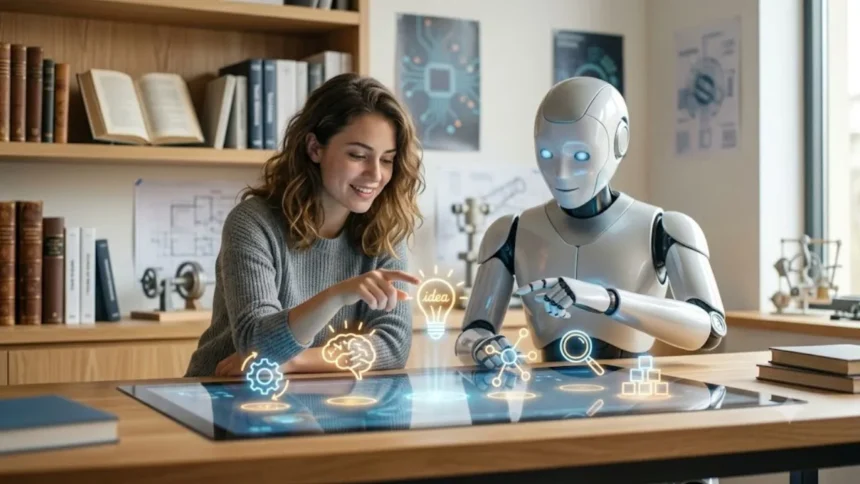
Artificial intelligence refers to smart computer systems designed to perform complex tasks that typically require human intelligence. These systems process language, make decisions, solve problems, and adapt to changing environments effortlessly. Instead of following simple static instructions, they analyze huge streams of data to make educated choices autonomously. Modern examples include virtual assistants, automated navigation tools, and advanced online recommendation algorithms.
This technology represents a massive leap forward in how software interacts with human information and physical spaces. By mimicking cognitive functions like perception and logical reasoning, machines can handle unstructured data effortlessly. Researchers continue to expand these capabilities to build systems that learn continuously without requiring constant human oversight. Today, it forms the backbone of digital innovation across scientific, commercial, and personal domains worldwide.
Building smart software requires combining computer science, advanced statistics, data engineering, and specialized hardware platforms. Engineers write complex algorithms that evaluate thousands of potential variables simultaneously to identify optimal choices. These systems evaluate past performance metrics to refine their internal models and reduce operational errors consistently. Through these continuous mathematical adjustments, machines achieve high levels of precision across varied operational environments.
The ultimate goal of artificial intelligence is to assist humanity by taking on challenging tasks. It enhances human capabilities rather than simply replacing basic physical labor in everyday workplace settings. As systems become more refined, they help us navigate complex medical, environmental, and technological challenges efficiently. Understanding these basic principles allows everyone to engage thoughtfully with an increasingly automated modern world.
The Evolution from Rules to Learning
In the early days of computing, software relied strictly on hardcoded rules written directly by human programmers. If a situation arose that was not explicitly programmed into the system, the software failed completely. Early artificial intelligence attempted to map out every single rule using decision trees and logic structures. While useful for simple tasks, this rigid approach proved far too limited for complex, unpredictable real-world situations.
Modern artificial intelligence shifted the paradigm completely by moving from rigid rules to adaptive learning algorithms. Instead of telling the computer exactly how to solve a problem, engineers now teach it how to learn. The system studies vast examples of inputs and desired outputs to discover the hidden patterns itself. This flexible approach allows modern software to handle messy, unpredictable data with remarkable ease and accuracy.
This evolution unlocked capabilities that were previously thought impossible for digital computers to achieve on their own. Tasks like recognizing a specific face in a crowd or translating idioms between languages became solvable. As computer processing power grew exponentially, software models expanded to process billions of connections simultaneously. This historic shift laid the groundwork for the powerful generative and autonomous tools used today.
As artificial intelligence continues to evolve, the boundary between software execution and creative reasoning blurs further. Modern systems do not merely follow static instructions; they continually adapt their performance based on new observations. This dynamic adaptability makes modern artificial intelligence a truly revolutionary technology across every global industry. Understanding this transition helps us appreciate how rapidly technology moves from simple tools to active partners.
How Artificial Intelligence Works
At its core, artificial intelligence operates by gathering massive datasets and searching for hidden internal relationships. Algorithms examine thousands or millions of historical examples to understand how specific inputs relate to outcomes. Through machine learning, the software automatically builds a mathematical model based on those observed patterns. This foundation allows the system to process unfamiliar information and generate accurate predictions instantly.
Deep learning takes this process further by using artificial neural networks inspired by human brain structures. These multi-layered networks break complex information into tiny features like edges, textures, or speech sounds. Each layer passes its refined calculations to the next layer until a final conclusion forms. This autonomous feature extraction enables advanced capabilities like image recognition, language translation, and voice processing.
Training an artificial intelligence model requires substantial computing power, high-quality data, and continuous optimization steps. Developers feed labeled or unlabeled data into the algorithm and compare its answers against known correct results. Whenever the system makes a mistake, it adjusts its internal parameters to lower future error rates. This iterative feedback loop transforms raw mathematical code into a highly capable analytical engine.
Once trained, these intelligent systems operate continuously in real-time environments without getting tired or losing focus. They evaluate new inputs, apply their learned patterns, and execute appropriate actions in fractions of a second. Cloud computing infrastructure allows these models to serve millions of users simultaneously across global networks. This relentless efficiency makes automated systems an essential component of modern high-speed technology platforms.
Key Types of Artificial Intelligence
To understand how artificial intelligence operates, it helps to categorize systems based on their specific functional capabilities. Narrow or weak artificial intelligence refers to software built to perform one specialized task exceptionally well. Examples include chess engines, spam filters, image classifiers, and specialized financial fraud detection algorithms. These focused systems excel in their specific domain but cannot apply their knowledge to unrelated tasks.
General artificial intelligence represents a theoretical future system that possesses broad human-like cognitive abilities across all domains. Such a system could learn new skills, reason abstractly, and solve unfamiliar problems without specialized retraining. While true general intelligence remains a subject of ongoing scientific research, current models are bridging gaps. Researchers continue to develop foundational multi-modal models that combine vision, text, audio, and physical robotics controls.
Generative artificial intelligence has emerged as one of the most visible branches of modern computing software. These models analyze massive text libraries, image collections, or audio files to learn underlying creative structures. They can synthesize original essays, generate high-resolution artwork, write functional computer code, and compose music on demand. This ability to create novel content transforms how professionals brainstorm, design products, and produce media.
Finally, autonomous agentic systems mark the newest frontier in intelligent software design and workflow automation. Rather than simply responding to single prompts, agents can break down complex goals into smaller sub-tasks automatically. They use digital tools, browse databases, write internal notes, and correct their own errors during execution. This evolving ability to plan and act independently makes artificial intelligence an active collaborator in complex tasks.
Artificial Intelligence in Daily Life
You engage with artificial intelligence throughout your day, often without actively realizing that it is running. Smartphone camera apps use computer vision algorithms to balance lighting, adjust focus, and enhance photos instantly. Streaming platforms analyze your viewing history to suggest movies, music, and shows tailored to your taste. Email services rely on smart filters to keep harmful spam out of your primary inbox automatically.
Digital voice assistants rely on natural language processing to comprehend your speech and answer verbal questions accurately. Navigation applications analyze live traffic patterns, road hazards, and historical travel speeds to calculate optimal routes. Ride-sharing platforms use predictive modeling to match drivers with nearby passengers and estimate precise fare prices. These seamless integrations make everyday modern conveniences far more reliable, intuitive, and efficient.
In financial services, smart security systems continuously monitor credit card transactions to detect and block fraudulent activity. Online retail stores deploy AI chatbots to resolve basic customer support tickets instantly at any hour. Smart thermostats learn your family’s daily temperature preferences and automatically adjust settings to save electrical energy. These quiet background operations save consumers valuable time while improving overall safety and daily comfort.
Social media platforms utilize intelligent algorithms to curate personalized news feeds and organize digital content feeds continuously. They identify trending topics, translate foreign comments, and detect harmful or abusive material before it spreads. Language tools suggest grammar fixes and autocompletion options as you type messages or professional emails. Through these quiet interventions, software enhances communication, connectivity, and daily digital interactions worldwide.
Smart Homes and Connected Devices
The integration of artificial intelligence into home appliances has created a new generation of smart living spaces. Intelligent thermostats monitor ambient temperatures, track household movement patterns, and adjust heating schedules to conserve electricity automatically. Smart refrigerators track ingredient expiration dates, offer recipe suggestions based on available food, and simplify grocery shopping lists. These connected innovations turn ordinary household appliances into proactive energy-saving assistants for modern families.
Home security platforms rely heavily on computer vision to differentiate between routine movements and potential safety threats. Cameras can distinguish between family pets, passing delivery drivers, falling tree branches, and unauthorized human intruders easily. When an unexpected event occurs, these systems notify homeowners instantly with highlighted video clips and accurate situational alerts. This intelligent monitoring provides peace of mind while reducing false alarms that plague older security hardware.
Automated cleaning robots utilize advanced spatial mapping algorithms to navigate rooms and clean floors thoroughly without human help. These devices scan room layouts, detect furniture obstacles, avoid stairs, and adjust suction power based on floor surfaces. By learning the physical architecture of your living spaces, they optimize their cleaning routes to save battery life. This hands-off convenience frees homeowners from routine domestic chores while maintaining clean living spaces consistently.
Voice-controlled smart speakers act as central control hubs for entire connected household ecosystems and daily personal routines. Users can manage lighting settings, lock exterior doors, adjust room temperatures, and set reminders using simple conversational commands. Over time, these systems adapt to individual speech patterns, regional accents, and specific family preferences seamlessly. This effortless voice interaction represents a major step toward natural, friction-free computing in personal spaces.
Why Artificial Intelligence Matters
Artificial intelligence is transformative because it processes massive datasets far faster and more accurately than humans can. In healthcare, diagnostic algorithms analyze medical scans to help doctors spot subtle early signs of disease. Pharmaceutical researchers use predictive models to design life-saving medications in months rather than spending full decades. By accelerating scientific discoveries, this technology actively improves human health outcomes and saves lives globally.
Beyond medical science, intelligent systems help tackle critical global environmental, agricultural, and industrial resource challenges. Smart agricultural equipment monitors soil health, optimizes crop irrigation, and reduces chemical fertilizer usage across farmland. Power grids use predictive analytics to balance renewable energy distribution and prevent widespread regional electrical blackouts. These sustainable innovations protect natural environments while ensuring society meets its growing resource needs
Automating tedious, repetitive administrative chores transforms the modern workplace into a more productive creative space. When software handles basic data entry, document verification, and scheduling, workers can focus on strategy. Businesses operate with lower overhead costs while delivering faster, higher-quality services to their customers. This shift elevates human work, prioritizing strategic planning, emotional intelligence, and original creative thinking.
Ultimately, artificial intelligence serves as a powerful cognitive tool that expands what human beings can achieve. It offers unprecedented capabilities to solve complex mathematical, environmental, and logistical problems that once seemed impossible. As society continues to develop these tools responsibly, they will unlock new economic and scientific potential. Embracing this technology helps ensure a safer, more efficient, and highly connected world for everyone.
Addressing Ethical Challenges
While artificial intelligence offers tremendous societal benefits, its rapid expansion raises important ethical, legal, and social questions. Algorithms trained on biased historical data can accidentally perpetuate social inequalities in hiring, lending, and law enforcement. Ensuring fairness requires developers to audit dataset sources carefully and build transparent, explainable software decision processes. Addressing these algorithmic biases early prevents automated tools from reinforcing historical prejudices across public institutions.
Data privacy remains another critical concern as intelligent software relies heavily on personal information for training and optimization. Mass data collection techniques raise valid questions about user consent, surveillance practices, and long-term data security risks. Regulatory frameworks around the world are adapting to establish strict guardrails for how personal data is collected and processed. Protecting individual privacy ensures that public trust in beneficial automated technologies remains strong over time.
The impact of automation on employment and industry workforce structures requires proactive reskilling programs and educational investments. While technology creates new career paths, the rapid transition disrupts traditional job roles reliant on repetitive manual tasks. Governments, educational institutions, and corporate leaders must work together to help workers adapt to changing market requirements. Investing in continuous lifelong education ensures that technological economic growth benefits every segment of society equally.
Finally, ensuring safety, reliability, and human oversight in mission-critical applications like self-driving transport or medical care is vital. Autonomous systems must be rigorously tested to guarantee they respond predictably to unexpected real-world edge cases. Maintaining meaningful human oversight keeps control and accountability firmly in human hands where it ultimately belongs. Thoughtful governance balances rapid technological innovation with strong ethical safeguards for the long-term benefit of humanity.
Frequently Asked Questions
What Is the Difference Between AI, Machine Learning, and Deep Learning?
Artificial intelligence is the broad umbrella term for machines that perform smart, human-like tasks. Machine learning is a specific branch inside that umbrella where computers learn directly from data patterns without explicit programming. Deep learning is an advanced subfield of machine learning that uses multi-layered artificial neural networks to process complex data like images and speech.
Will Artificial Intelligence Replace Human Jobs completely?
While artificial intelligence automates repetitive tasks, it is designed to assist and enhance human work rather than eliminate human roles entirely. Automation shifts job responsibilities toward creative problem solving, strategic management, and tasks requiring emotional intelligence. Historical technological shifts show that while old roles transform, new specialized technical careers and industries emerge continuously.
Can Artificial Intelligence Make Mistakes or Be Biased?
Yes, artificial intelligence systems can make errors and reflect biases hidden within their historical training data. If a model receives incomplete or biased data, its output predictions will reflect those flaws. Developers manage these risks by auditing datasets, running safety evaluations, and maintaining strict human oversight during deployment.
Is Artificial General Intelligence Currently Possible or Active?
Artificial general intelligence refers to a hypothetical machine that possesses human-level reasoning across all domains, which does not exist today. Current technologies operate under narrow parameters, excelling at specific tasks like language generation, pattern matching, or game playing. Building self-aware systems with generalized understanding remains an active subject of long-term scientific research.
How Is Personal Data Protected in Artificial Intelligence Systems?
Data privacy relies on strict encryption protocols, anonymization techniques, and compliance with global regulatory data privacy frameworks. Modern developers strip personally identifiable information before feeding datasets into machine learning algorithms for training. Users can safeguard their information by using privacy-focused platforms and adjusting application permissions carefully.
Conclusion
Artificial intelligence has evolved from an academic concept into a fundamental technology shaping modern human society. By combining vast amounts of data with adaptive learning algorithms, smart software simplifies complex workflows across global industries. From everyday personal conveniences to major scientific breakthroughs, these tools continue to enhance human capabilities and daily living.
Understanding how these systems operate allows individuals and organizations to navigate an increasingly automated future with confidence. As research advances, addressing ethical challenges, protecting data privacy, and prioritizing fairness will remain essential for sustainable growth. By developing and deploying these tools responsibly, society can maximize the vast benefits of intelligent systems while building a safer, more connected global community.