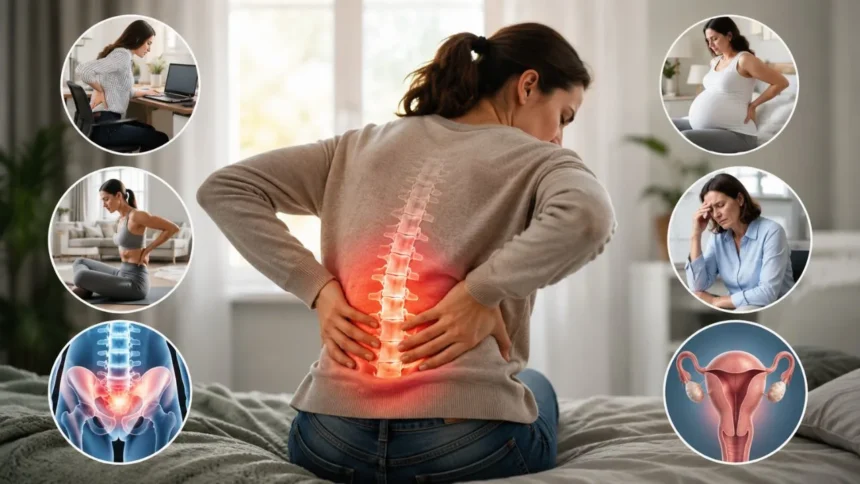
Lower back pain in females can develop for many reasons, ranging from an overstretched muscle to a condition affecting the reproductive or urinary system. The discomfort may feel like a dull ache, stiffness, pressure, burning, or a sharp sensation that travels into the buttock or leg. Because the lower back sits close to the pelvis, kidneys, uterus, ovaries, and several major muscle groups, identifying the exact source is not always simple.
Most episodes are related to muscles, joints, discs, posture, or physical strain rather than a dangerous illness. However, females may also experience referred back pain from menstrual cramps, pregnancy, endometriosis, uterine fibroids, ovarian conditions, or urinary infections. Paying attention to when the pain occurs and which symptoms accompany it can help a healthcare professional narrow down the possible cause.
For example, pain that begins after lifting a heavy object is more likely to be musculoskeletal, while discomfort that repeatedly worsens around menstruation may have a gynecological connection. Lower back pain combined with burning urination, fever, unusual vaginal bleeding, leg weakness, or numbness requires a different type of medical evaluation. The location of pain alone cannot reliably confirm a diagnosis.
This article explains what causes lower back pain in females, how common pain patterns differ, and which warning signs should not be ignored. It is intended for general education and should not replace an examination by a qualified healthcare professional. Persistent, severe, recurrent, or unexplained pain deserves individualized medical advice.
Why Lower Back Pain Can Feel Different in Females
Female lower back pain causes often overlap with those seen in everyone, including muscle strain, disc problems, arthritis, and nerve irritation. At the same time, conditions involving the uterus, ovaries, menstrual cycle, pregnancy, and menopause can add another layer to the diagnostic process. Pain from pelvic organs may also be felt as pressure or aching in the lower back rather than only in the abdomen.
Hormonal and reproductive changes may influence when pain appears. Menstrual cramping can spread from the pelvis into the lower back, while pregnancy changes body weight, posture, ligament tension, and abdominal support. After childbirth, weakened abdominal muscles and strain from feeding, carrying, or lifting a baby may contribute to continuing back or joint discomfort.
Age also changes the possible explanations. In younger females, overuse, sports injuries, painful periods, pregnancy-related conditions, and endometriosis may receive greater attention. In older or postmenopausal females, healthcare professionals may also consider osteoarthritis, spinal narrowing, bone loss, and vertebral compression fractures, particularly after a fall or sudden onset of severe pain.
These differences do not mean that lower back pain is usually caused by a gynecological problem. Mechanical or nonspecific back pain remains very common, and an exact injured structure cannot always be identified. A complete assessment considers movement, daily activities, menstrual history, pregnancy possibility, urinary symptoms, medical conditions, medications, age, and neurological signs together.
Muscle Strain, Posture and Other Mechanical Causes
A strained muscle or ligament is one of the most common explanations for sudden lower back pain. It may follow lifting, twisting, exercising, housework, repetitive bending, or an awkward movement. The pain is usually more noticeable when changing position, bending, standing up, or using the affected muscles, and the area may feel tight or tender.
Long periods of sitting can also contribute to lower back stiffness, especially when the chair, desk, or screen height encourages slouching. Standing for extended periods, wearing unsupportive footwear, repeatedly carrying a bag on one side, or lifting a child with poor technique may gradually overload the back. These habits do not always cause immediate injury, but they can repeatedly irritate muscles and joints.
Weakness or poor coordination in the abdominal, hip, pelvic, and back muscles may make everyday movements less efficient. Following pregnancy, abdominal muscle weakness and changes in movement patterns can place additional strain on the back. A physiotherapist may assess strength, flexibility, posture, movement habits, and lifting technique rather than focusing only on the painful area.
Mechanical pain often changes with position or activity. It may improve with gentle movement and worsen after staying still for too long, although individual patterns vary. Pain that continues beyond several weeks, repeatedly returns, travels down the leg, or limits normal functioning should be evaluated rather than automatically attributed to poor posture.
Herniated Discs, Sciatica and Spinal Joint Problems
The spine contains discs that provide cushioning between the vertebrae. A disc can become irritated, degenerate, bulge, or herniate, sometimes placing pressure on a nearby nerve root. Disc-related pain may remain in the lower back or spread into the buttock, thigh, calf, or foot, depending on which nerve is affected.
Sciatica describes nerve-related symptoms that travel along the path of the sciatic nerve. The discomfort may feel sharp, electric, burning, or shooting and can be accompanied by tingling, numbness, or weakness in one leg. Sciatica is commonly associated with nerve-root irritation, which may occur with a herniated disc or other narrowing around the spinal nerves.
Age-related changes in spinal discs and joints may cause recurring stiffness or aching. Osteoarthritis can affect the small joints of the spine, while spinal stenosis narrows the spaces through which nerves travel. Symptoms may become worse during walking or prolonged standing and improve when sitting or leaning forward, although an examination is needed to distinguish these patterns.
Pain does not always match what appears on an X-ray or scan. Some people have spinal changes without symptoms, while others experience significant pain despite limited imaging findings. For this reason, current guidance does not recommend routine imaging for uncomplicated lower back pain unless the result is likely to change treatment or a serious cause is suspected.
Menstrual Cramps and Painful Periods
Period-related lower back pain is commonly caused by uterine contractions. Natural chemicals called prostaglandins make the uterus contract to shed its lining, and this cramping sensation may spread into the lower abdomen, hips, thighs, and lower back. Primary dysmenorrhea usually begins shortly before or at the start of menstruation.
Mild to moderate period pain may be predictable and improve within the first few days of bleeding. However, menstrual back pain that becomes progressively worse, disrupts school or work, causes vomiting or faintness, or does not respond to usual measures deserves medical assessment. Severe period pain can sometimes be associated with an underlying gynecological condition.
Adenomyosis is one possible cause of worsening menstrual pain. It occurs when tissue similar to the uterine lining grows into the muscular wall of the uterus. It may cause increasingly painful periods, heavy bleeding, pelvic pressure, and discomfort that can be perceived in the lower abdomen or back.
Tracking symptoms across several menstrual cycles can provide useful information. A record may include the timing and severity of back pain, bleeding duration, clotting, pelvic pressure, pain during sex, bowel symptoms, and medications used. This pattern can help a clinician distinguish primary menstrual cramps from endometriosis, fibroids, adenomyosis, or another condition.
Endometriosis and Chronic Pelvic Pain
Endometriosis is a chronic inflammatory condition involving tissue similar to the uterine lining outside the uterus. Its most recognized symptom is long-term pelvic pain, particularly before and during menstruation, but the discomfort may also be felt in the lower back. Pain may occur during sex, urination, or bowel movements, depending on the areas involved.
The pain caused by endometriosis does not always match the amount of visible disease. Some people have severe symptoms with relatively limited lesions, while others have extensive endometriosis with milder discomfort. Symptoms can affect sleep, exercise, relationships, work, fertility, and emotional well-being, making early evaluation and individualized care important.
Lower back pain associated with endometriosis is often cyclical, but it may eventually become persistent. Additional clues can include painful periods, deep pain during intercourse, pain while passing stool during menstruation, heavy bleeding, bloating, infertility, or fatigue. These symptoms can overlap with digestive, urinary, and musculoskeletal disorders, so self-diagnosis is unreliable.
A normal basic examination or ultrasound does not necessarily explain every case of chronic pelvic pain. Clinicians may use the symptom history, pelvic examination, imaging, treatment response, and sometimes laparoscopy when deciding whether endometriosis is likely. Current care increasingly emphasizes earlier recognition and shared treatment decisions rather than dismissing severe period pain as normal.
Uterine Fibroids, Ovarian Cysts and Other Pelvic Conditions
Uterine fibroids are noncancerous growths that develop from uterine muscle tissue. Depending on their number, size, and position, they may cause heavy or prolonged periods, pelvic pressure, frequent urination, constipation, pain during sex, and a dull or heavy ache in the abdomen or lower back. Small fibroids may produce no symptoms.
Ovarian cysts are fluid-filled sacs that commonly develop on or inside an ovary. Many disappear without treatment, but some produce a dull or sharp pelvic ache that may be confused with lower back pain. Larger cysts can increase the risk of ovarian twisting, while a ruptured cyst may cause sudden pain.
Sudden severe one-sided pelvic or abdominal pain, especially with nausea or vomiting, requires urgent evaluation because ovarian torsion is possible. Torsion interrupts the ovary’s blood supply and cannot be diagnosed from symptoms alone. Although back pain may accompany pelvic pain, the sudden abdominal or pelvic symptoms are usually more prominent.
Persistent pelvic pressure, bloating, increasing abdominal size, urinary changes, abnormal bleeding, reduced appetite, or feeling full quickly should also be discussed with a healthcare professional. These symptoms are frequently caused by noncancerous conditions, but persistent changes require assessment because ovarian and other pelvic cancers can produce overlapping symptoms.
Pregnancy-Related Lower Back Pain
Lower back pain is common during pregnancy because the body’s center of gravity changes as the uterus grows. Abdominal muscles stretch, posture adjusts, and the joints and ligaments supporting the pelvis experience different loads. Discomfort may become more noticeable after standing, walking, lifting, or remaining in one position for an extended period.
Pregnancy back pain should not automatically be treated with medication without professional guidance. The safety of pain relievers and other treatments depends on the pregnancy stage, dose, medical history, and reason for the pain. Pregnant patients should speak with their obstetric clinician before starting or regularly using over-the-counter medication.
Back pain during pregnancy can occasionally signal a complication. Pain accompanied by contractions, pelvic pressure, fluid leakage, vaginal bleeding, fever, painful urination, or reduced fetal movement requires prompt obstetric advice. ACOG notes that back pain may occur with problems such as preterm labor or urinary infection.
A missed period or positive pregnancy test combined with one-sided pelvic pain, abnormal bleeding, shoulder pain, dizziness, weakness, or fainting requires urgent assessment for ectopic pregnancy. Early symptoms can include low back pain, mild pelvic discomfort, cramping on one side, and vaginal bleeding, but a ruptured ectopic pregnancy can become life-threatening.
Postpartum Back Pain
After delivery, muscles and joints do not immediately return to their pre-pregnancy condition. Abdominal weakness, muscle strain, hormonal changes, sleep deprivation, and healing after vaginal or cesarean delivery may all influence posture and movement. Back, neck, and joint discomfort can also arise from repetitive feeding positions and lifting a baby.
Postpartum back pain may be aggravated by bending from the waist, twisting while holding the baby, or using a feeding setup without adequate arm and back support. Bringing the baby closer to the body before lifting and alternating positions may reduce repeated strain. Persistent symptoms may benefit from an assessment of abdominal, pelvic-floor, hip, and back function.
Pain after an epidural or spinal injection is usually localized and temporary, but severe or increasing pain should be reported. Urgent care is needed when postpartum back pain is accompanied by fever, wound redness, drainage, severe headache, leg weakness, numbness, bladder or bowel changes, chest pain, breathing difficulty, or heavy bleeding.
Recovery timelines differ considerably, particularly after a complicated pregnancy, prolonged labor, assisted delivery, cesarean birth, or significant pelvic-floor injury. Postpartum pain should not be dismissed simply because caring for a newborn is physically demanding. A clinician can check for infection, nerve injury, pelvic-floor dysfunction, joint problems, or other treatable causes.
Urinary Tract and Kidney Infections
A lower urinary tract infection usually causes burning during urination, increased frequency, urgency, cloudy urine, or lower abdominal discomfort. When an infection involves the kidneys, pain may be felt in the back or side beneath the ribs rather than directly over the center of the lumbar spine. Fever, chills, nausea, or vomiting may also occur.
Kidney-related pain is typically higher and more lateral than ordinary muscular lower back pain. However, people describe pain differently, and urinary symptoms are not always obvious. Back or side pain combined with fever, shivering, painful urination, blood in the urine, pregnancy, or significant illness requires prompt medical attention.
Kidney stones can also cause severe back or side pain that may move toward the lower abdomen or groin. The pain often comes in waves and may be accompanied by nausea, restlessness, painful urination, or blood in the urine. Diagnosis may require urine testing, blood testing, and imaging, depending on the presentation.
Urinary pain should not be managed only with heat, stretching, or back exercises. Kidney infections generally require medical treatment, and delaying care can allow the infection to become more serious. Anyone who appears severely unwell, confused, breathless, faint, or difficult to wake needs emergency evaluation.
Menopause, Osteoporosis and Vertebral Fractures
Menopause itself does not explain every episode of lower back pain, but aging and declining estrogen levels affect bone and muscle health. Postmenopausal females have a greater risk of osteoporosis, a condition in which reduced bone strength increases susceptibility to fractures. Osteoporosis often remains silent until a fracture occurs.
A vertebral compression fracture happens when part of a spinal bone collapses. It may cause sudden, localized back pain after a fall, bending movement, cough, or seemingly minor strain, particularly in someone with fragile bones. Multiple fractures can contribute to height loss, a rounded upper back, limited mobility, and chronic discomfort.
Not every vertebral fracture creates dramatic symptoms. Some produce mild discomfort or are identified only when imaging is performed for another reason. New severe pain in an older female, particularly after trauma or with known osteoporosis, long-term steroid use, or significant height loss, warrants clinical assessment.
Protecting bone health includes appropriate weight-bearing activity, adequate nutrition, avoiding smoking, limiting excessive alcohol, and taking osteoporosis medication when prescribed. Bone-density screening decisions depend on age and individual risk factors, so they should be discussed with a healthcare professional rather than based on symptoms alone.
Inflammatory and Widespread Pain Conditions
Inflammatory spinal disorders can cause lower back pain that differs from a typical strain. The pain may begin gradually, be associated with prolonged morning stiffness, improve with movement, and worsen during rest or at night. Symptoms beginning at a younger age and continuing for months may lead a clinician to consider inflammatory causes such as axial spondyloarthritis.
Fibromyalgia can produce widespread pain, tenderness, sleep disturbance, fatigue, and concentration difficulties. Lower back discomfort may be one part of a broader pain pattern rather than evidence of local spinal damage. Diagnosis requires evaluating the complete symptom picture and excluding other explanations when appropriate.
Stress, poor sleep, anxiety, depression, and fear of movement can influence how persistent pain is experienced and managed. This does not mean the pain is imaginary. Chronic pain involves complex interactions between tissues, nerves, the brain, behavior, sleep, emotions, work demands, and previous experiences.
For persistent lower back pain, the most helpful approach may involve more than one type of care. Depending on the diagnosis, treatment can include graded exercise, physiotherapy, medical management, sleep support, and psychological strategies that reduce fear and improve confidence in movement. NICE recommends considering combined physical and psychological support for selected patients with persistent symptoms.
What the Timing and Location of Pain May Indicate
Pain that begins after lifting, twisting, exercising, or prolonged sitting is more suggestive of a mechanical cause. It may worsen with specific movements and improve when the activity is modified. Tenderness over the muscles and stiffness after inactivity are also common, although these findings cannot identify the exact structure involved.
Pain that travels from the back through the buttock and down one leg may indicate sciatica or nerve-root irritation. Tingling, numbness, burning, or weakness strengthens the possibility of nerve involvement. Progressive weakness or symptoms affecting both legs require faster assessment than uncomplicated pain limited to the back.
Pain that repeatedly appears before or during menstruation may be associated with dysmenorrhea, endometriosis, adenomyosis, or fibroids. Gynecological assessment becomes more important when back pain occurs with heavy bleeding, bleeding between periods, deep pain during sex, infertility, pelvic pressure, or painful bowel movements.
Pain in the side or back below the ribs may point toward the urinary tract or kidneys, particularly when fever or urinary symptoms are present. Sudden one-sided pelvic pain may indicate an ovarian problem, while back pain with pregnancy symptoms and abnormal bleeding requires ectopic pregnancy assessment. The accompanying symptoms are often more informative than pain location alone.
When Lower Back Pain Requires Urgent Care
Seek emergency medical care for lower back pain with new loss of bladder or bowel control, difficulty starting urination, numbness around the genitals or inner thighs, or rapidly increasing weakness in both legs. These may indicate cauda equina syndrome, a rare but serious compression of the nerves at the base of the spine.
Urgent assessment is also needed after a serious fall, road accident, or other significant trauma. New severe pain after a minor movement may also be concerning in someone with osteoporosis, long-term steroid exposure, advanced age, or a history of fragile-bone fractures. A spinal fracture cannot be ruled out based on pain intensity alone.
Lower back pain with fever, chills, unexplained weight loss, night sweats, severe unrelenting night pain, immune suppression, or a history of cancer requires medical review. These symptoms do not automatically mean a dangerous condition is present, but they may prompt evaluation for infection, inflammatory disease, fracture, or cancer.
Females should also seek urgent help for pain with heavy vaginal bleeding, fainting, a possible pregnancy, severe one-sided pelvic pain, persistent vomiting, high fever, or feeling extremely unwell. Pregnancy-related emergencies, ovarian torsion, ruptured cysts, kidney infection, and severe pelvic infections require timely diagnosis rather than home treatment.
How Doctors Diagnose Lower Back Pain in Females
The evaluation usually begins with questions about when the pain started, what it feels like, which activities affect it, and whether it travels into the legs. A clinician may also ask about periods, pregnancy possibility, contraception, abnormal bleeding, urinary symptoms, bowel changes, fever, injuries, previous operations, and medical conditions.
The physical examination may include posture, walking, spinal movement, muscle tenderness, hip movement, abdominal findings, reflexes, sensation, leg strength, and tests that place gentle tension on the nerves. When pelvic or reproductive symptoms are present, a clinician may recommend a pelvic examination or referral to a gynecologist.
Testing depends on the suspected cause. Urine or pregnancy tests may be needed for urinary or reproductive symptoms, while blood tests may help investigate infection, inflammation, anemia, or other medical problems. Ultrasound may be used for uterine or ovarian concerns, whereas MRI is more useful for selected spinal and nerve conditions.
Routine imaging is not recommended for every episode of uncomplicated lower back pain. Scans are generally reserved for suspected serious disease, significant neurological problems, trauma, persistent symptoms in selected cases, or situations in which imaging would alter management. Unnecessary scanning can reveal incidental changes that may not be responsible for the pain.
Managing and Preventing Lower Back Pain
For uncomplicated mechanical lower back pain, remaining gently active is generally preferable to prolonged bed rest. Short walks, comfortable daily activities, and gradual movement can reduce stiffness and help maintain confidence. Exercise choices should match the person’s health, abilities, pregnancy status, and specific diagnosis.
Heat may temporarily ease muscle tightness or menstrual cramping, while cold can sometimes help shortly after a strain. A physiotherapist can provide individualized exercises for mobility, hip strength, abdominal control, back endurance, and lifting technique. Manual therapy may be considered, but NICE recommends using it as part of a package that also includes exercise.
Medication should be chosen carefully. Pregnancy, kidney disease, stomach ulcers, asthma, blood-thinning medication, allergies, and other health conditions can affect whether a pain reliever is appropriate. Instead of combining or repeatedly using over-the-counter medicines without guidance, discuss suitable options with a doctor or pharmacist.
Prevention focuses on sustainable habits rather than perfect posture. Regular activity, strength training appropriate to ability, changing position throughout the day, safe lifting, supportive work arrangements, adequate sleep, and treatment of underlying menstrual, urinary, bone, or pelvic conditions can all contribute to better long-term back health.
Final Thoughts
Understanding what causes lower back pain in females requires looking beyond the back itself. Muscle strain, posture, disc irritation, and joint problems are common, but menstrual conditions, pregnancy, endometriosis, fibroids, ovarian cysts, kidney infections, and osteoporosis can produce overlapping symptoms.
The timing of pain provides useful clues. Pain related to movement may suggest a musculoskeletal cause, while symptoms linked with menstruation, urination, pregnancy, vaginal bleeding, fever, or pelvic pressure may indicate that another body system is involved. These patterns guide evaluation but do not replace a diagnosis.
Most lower back pain is not caused by a life-threatening condition. Nevertheless, severe or worsening pain, neurological changes, pregnancy with bleeding, high fever, major trauma, unexplained weight loss, or loss of bladder or bowel control should never be ignored.
When pain persists, repeatedly returns, or interferes with normal life, seek a professional assessment. Identifying the real cause allows treatment to address the underlying problem rather than simply masking the discomfort.
Frequently Asked Questions
Why does my lower back hurt before or during my period?
Uterine contractions caused by prostaglandins can produce cramps that spread into the lower back. Severe or worsening period pain may also be related to endometriosis, adenomyosis, or fibroids.
Can ovarian problems cause lower back pain?
Ovarian cysts and other pelvic conditions can cause discomfort that is felt in the pelvis, abdomen, or lower back. Sudden severe one-sided pain with nausea or vomiting needs urgent assessment.
How can I tell if lower back pain is coming from my kidneys?
Kidney pain is often felt toward the side of the back beneath the ribs. Fever, chills, nausea, burning urination, frequent urination, or blood in the urine make a urinary or kidney cause more likely.
When should a female worry about lower back pain?
Seek urgent care for bladder or bowel changes, saddle-area numbness, severe leg weakness, pregnancy with bleeding, high fever, major trauma, or sudden severe pelvic pain.
Can menopause cause lower back pain?
Menopause may contribute indirectly through changes in muscle and bone health. Postmenopausal females are at increased risk of osteoporosis and vertebral fractures, which can cause sudden or chronic back pain.