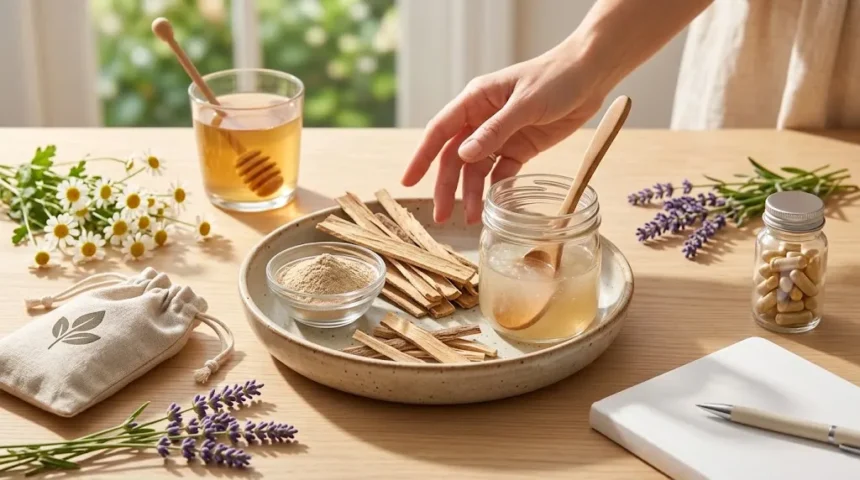
Slippery Elm Benefits for Women: Uses & Safety
Slippery elm is an herbal product made from the inner bark of the slippery elm tree, Ulmus rubra, a species native to North America. The bark contains a substance called mucilage, which becomes thick and gel-like when mixed with water. Traditionally, this soothing texture has made slippery elm popular for irritated throats, digestive discomfort, and other conditions involving sensitive mucous membranes. Women may encounter slippery elm in powders, capsules, lozenges, teas, or herbal blends marketed for digestion, urinary comfort, or intimate wellness. However, many modern claims go beyond what has been demonstrated in high-quality human research. Understanding the difference between traditional use and proven benefit is important before adding the herb to a wellness routine.
Interest in slippery elm benefits for women has increased because the herb is often promoted for bloating, constipation, irritable bowel symptoms, sore throats, vaginal dryness, urinary discomfort, and hormonal wellness. Some of these claims are based on its mucilage content and its ability to form a coating when mixed with liquid. Others are largely extrapolated from traditional herbal practice or anecdotal reports. There is not strong clinical evidence showing that slippery elm specifically balances female hormones, increases estrogen, treats vaginal infections, or improves fertility. Women considering the herb should therefore focus on realistic potential uses rather than exaggerated claims. Persistent symptoms still need proper medical evaluation.
The digestive system is the area in which slippery elm’s physical properties make the most intuitive sense. When mixed with water, the mucilage can create a soothing material that may temporarily coat irritated tissues and add bulk to intestinal contents. This is one reason the herb has traditionally been used for throat irritation, reflux-like symptoms, and bowel discomfort. Small herbal studies and combination products have explored digestive applications, but research specifically isolating slippery elm is limited. That means it cannot confidently be described as a treatment for irritable bowel syndrome, inflammatory bowel disease, ulcers, or chronic constipation. It is better viewed as a complementary product rather than a replacement for evidence-based care.
Safety also deserves attention because “natural” does not automatically mean appropriate for everyone. Slippery elm may interfere with the absorption of medications because its mucilage can form a thick coating in the digestive tract. Pregnant or breastfeeding women should be particularly cautious because reliable safety information is limited. Women with chronic digestive disorders, difficulty swallowing, unexplained weight loss, persistent bleeding, or severe abdominal pain should seek medical advice instead of self-treating symptoms with herbal products. Supplement quality can also vary considerably between brands. Choosing a transparent manufacturer and discussing regular use with a healthcare professional can reduce avoidable risks.
This guide explains the potential slippery elm benefits for women, common uses, digestive effects, intimate-health claims, preparation forms, side effects, medication concerns, and pregnancy safety in practical language. It does not assume that every traditional use has been clinically proven. Instead, it separates plausible soothing effects from claims that currently lack convincing evidence. That distinction is especially important in women’s wellness, where herbs are often marketed using vague promises involving detoxification, hormones, fertility, or “feminine balance.” Slippery elm may have a place in some personal wellness routines, but expectations should remain realistic. Knowing what the herb can and cannot reasonably do makes safer decisions easier.
What Is Slippery Elm and How Does It Work?
Slippery elm is a deciduous tree whose inner bark has been used in traditional North American herbal medicine for generations. The part commonly used in supplements is not the rough outer bark but the softer inner bark. When powdered slippery elm bark is combined with water, its plant polysaccharides absorb liquid and produce a thick, slippery texture known as mucilage. This physical property explains the herb’s name and many of its traditional applications. The mucilage can coat surfaces temporarily, which may help explain why people describe slippery elm preparations as soothing. However, a coating effect should not be confused with healing an underlying disease.
Mucilage is a type of soluble plant material that swells in contact with water. In the digestive tract, similar soluble fibers can influence stool consistency, water retention, and the way food moves through the intestines. Slippery elm may therefore have mild fiber-like properties in addition to creating a coating sensation. The exact effect can depend on the dose, preparation, hydration level, and other ingredients in the product. Some powders are taken in relatively substantial amounts, while capsules may contain considerably less material. This makes it difficult to assume that every form of slippery elm will produce the same experience.
Traditional practitioners have used slippery elm for coughs, sore throats, digestive irritation, diarrhea, constipation, and inflammatory complaints. Historical use is valuable cultural information, but it is not equivalent to modern clinical evidence. A remedy can have a long history without having been tested in large randomized human trials. Slippery elm is a good example because its reputation is much larger than the research base supporting many of its claims. Some potential uses are biologically plausible because of the mucilage, but evidence remains limited. Consumers should therefore be cautious when a supplement label promises dramatic or wide-ranging health effects.
The herb is sometimes described as an anti-inflammatory remedy, but that description needs context. Laboratory findings and traditional experience do not automatically establish meaningful anti-inflammatory effects throughout the human body. There is not strong evidence that slippery elm can treat inflammatory diseases in the same way as established medical therapies. Its most defensible role is as a demulcent, meaning a substance that can form a soothing layer over irritated mucous membranes. Even that effect may be temporary and symptom-focused. It does not necessarily address the underlying reason inflammation or irritation occurred.
Women do not appear to process slippery elm in a fundamentally different way from men, so claims of uniquely female biological effects should be treated carefully. The herb does not contain a well-established hormone therapy, estrogen replacement, or fertility-enhancing compound. Most women-specific discussions involve symptoms that happen to be common among women, such as constipation, digestive discomfort, pregnancy-related concerns, or vaginal dryness. That is different from saying the herb targets female hormones. Understanding this distinction prevents ordinary digestive properties from being repackaged as specialized women’s medicine.
Slippery Elm Benefits for Digestion and Bloating
Digestive comfort is one of the most common reasons women consider slippery elm. Its mucilage may create a soothing sensation in the mouth, throat, stomach, and upper digestive tract when consumed as a thick drink or preparation. People with occasional irritation sometimes describe this coating effect as calming. The soluble plant material can also absorb water, which may influence stool consistency. However, these properties do not mean slippery elm has been proven to cure acid reflux, gastritis, ulcers, or irritable bowel syndrome. Persistent digestive symptoms require investigation because many different conditions can produce similar discomfort.
Bloating is especially common and can occur because of constipation, meal size, fermentable carbohydrates, menstrual-cycle changes, irritable bowel syndrome, food intolerance, or other digestive conditions. Slippery elm is sometimes marketed as a direct bloating remedy, but convincing evidence for that specific effect is lacking. If the herb improves stool regularity for a particular person, bloating related to constipation might also improve indirectly. In other people, adding fermentable plant material could potentially increase gas or fullness. Individual responses therefore vary considerably. Tracking symptoms is more useful than assuming the herb will automatically reduce bloating.
Constipation is another area where slippery elm may be discussed because mucilage can behave somewhat like soluble fiber. Adequate fluid intake is important whenever fiber-rich or swelling products are used, since too little water can make digestive symptoms less comfortable. Slippery elm should not be relied upon for severe or unexplained constipation, particularly when symptoms include vomiting, abdominal swelling, rectal bleeding, intense pain, or inability to pass gas. Chronic constipation may require changes in diet, medications, pelvic-floor function, thyroid evaluation, or other medical assessment. An herbal product may not address the actual cause.
Some commercial digestive formulas combine slippery elm with herbs, fibers, probiotics, or other ingredients. Positive results from a combination product cannot automatically be attributed to slippery elm alone because several ingredients are being used simultaneously. This distinction matters when reading marketing claims based on small studies. A person may also react differently to a multi-ingredient formula compared with plain slippery elm powder. Women with sensitive digestive systems may prefer introducing only one new product at a time. That makes it easier to determine whether a supplement is helping, doing nothing, or causing unwanted symptoms.
For occasional digestive irritation, slippery elm may be reasonable for some healthy adults who tolerate it well. Expectations should remain modest and symptom-focused. If bloating, pain, diarrhea, constipation, reflux, or nausea occurs repeatedly, the priority should be identifying the cause rather than continually coating the symptoms. Conditions such as celiac disease, inflammatory bowel disease, gallbladder problems, endometriosis, irritable bowel syndrome, and medication side effects can all affect digestion. Women should seek medical evaluation when symptoms are persistent, severe, progressive, or accompanied by warning signs.
Slippery Elm for Sore Throat, Cough and Mouth Irritation
One of the most traditional uses of slippery elm is soothing an irritated throat. Lozenges and teas containing the herb become slippery when exposed to moisture, which can temporarily coat dry or scratchy tissues. This may make swallowing feel more comfortable during minor throat irritation. The effect is similar in concept to other demulcent ingredients that provide moisture and a protective sensation rather than eliminating the cause of the problem. If a sore throat is related to a common viral illness, symptom relief may be welcome while the body recovers. Slippery elm does not kill viruses or replace treatment when a bacterial infection or another condition is present.
Cough remedies sometimes include slippery elm because throat irritation can trigger coughing. By moisturizing and coating the throat, the herb may reduce the uncomfortable sensation that stimulates some dry coughs. Evidence specifically proving a major cough-reducing effect is limited, however. A cough can come from respiratory infection, asthma, allergies, reflux, smoking, medications, or other causes. Persistent cough should therefore not be treated indefinitely with lozenges without determining why it is occurring. Shortness of breath, chest pain, coughing up blood, or severe illness require prompt medical attention.
Dry mouth is another reason some people experiment with mucilage-containing products. The thick texture may temporarily make the mouth or throat feel less dry, but slippery elm does not correct underlying salivary-gland dysfunction. Medications, dehydration, autoimmune disease, menopause, diabetes, anxiety, and cancer treatments can all contribute to dry mouth. Chronic dryness can increase the risk of dental decay and oral infections, so it deserves proper assessment. Frequent water intake, appropriate saliva substitutes, dental care, and treatment of the underlying cause may be more important. Slippery elm should only be considered an optional soothing measure.
Women undergoing hormonal changes sometimes experience increased dryness in different tissues, particularly around menopause. It can be tempting to interpret any moisture-producing herbal product as a treatment for hormone-related dryness. Slippery elm’s mucilage acts physically when it contacts water; that does not mean it raises estrogen or restores mucosal tissues throughout the body. A soothing throat effect therefore cannot be extrapolated to systemic hormonal benefit. Menopausal throat or mouth symptoms may have many causes and deserve individualized assessment. Evidence-based treatments are available when dryness is persistent or disruptive.
Slippery elm lozenges can also contain sweeteners, flavorings, or other herbs that may influence tolerability. People with diabetes, food sensitivities, or allergies should check the full label rather than assuming the product contains only bark. Some lozenges may provide relief largely because sucking them stimulates saliva. Warm fluids and honey, when appropriate, may also soothe minor throat discomfort. The important point is that slippery elm can be used for comfort, not as proof that a serious condition has been treated. Symptoms lasting longer than expected should be evaluated.
Does Slippery Elm Help Vaginal Dryness or Women’s Intimate Health?
Online wellness discussions frequently claim that slippery elm can increase vaginal lubrication because its bark creates mucilage when mixed with water. That comparison sounds intuitive but is not supported by strong clinical evidence showing that eating or drinking slippery elm meaningfully increases vaginal lubrication. Mucilage formed in the digestive tract does not simply travel through the body and become vaginal moisture. Vaginal lubrication depends on hormones, blood flow, tissue health, arousal, medications, hydration, and other physiological factors. Therefore, claims that slippery elm reliably makes women “wetter” should be viewed as unproven. Anecdotal reports are not the same as controlled research.
Vaginal dryness can occur during menopause, breastfeeding, after childbirth, during cancer treatment, or while taking certain medications. Stress, insufficient arousal, hormonal changes, skin conditions, and some medical disorders can also contribute. Because the causes vary, treatment should be matched to the situation. Vaginal moisturizers and lubricants can provide direct symptom relief, while some people may benefit from prescription hormonal or nonhormonal therapies after medical assessment. Slippery elm has not been established as an equivalent treatment. Women with persistent dryness should not feel that they need to rely on an oral herb instead of discussing effective options.
Another online claim is that slippery elm improves vaginal odor, pH, or discharge. There is no good reason to use an oral slippery elm supplement as a treatment for bacterial vaginosis, yeast infection, sexually transmitted infections, or other causes of abnormal discharge. Vaginal odor and discharge can vary naturally, but strong new odor, itching, burning, pelvic pain, sores, or unusual discharge may require testing. Using herbal products to mask symptoms can delay appropriate diagnosis. The vagina also has its own microbial environment that should not be disrupted unnecessarily.
Directly placing homemade slippery elm preparations inside the vagina is not a proven or reliably safe treatment strategy. Homemade mixtures can introduce bacteria, alter the local environment, or contain particles and contaminants that were never intended for internal vaginal use. Products designed and tested specifically as vaginal lubricants or moisturizers are a more predictable option when moisture is the goal. Anyone experiencing recurrent irritation should avoid experimenting with multiple unregulated substances because this can make symptoms harder to interpret. A gynecologist or other qualified healthcare professional can help identify the cause.
Slippery elm can still be relevant to women’s wellness without being presented as a vaginal-health remedy. Women who use it for occasional throat or digestive comfort may find the mucilage pleasant and soothing. That legitimate potential use does not need to be expanded into unsupported claims about sexual function, fertility, estrogen, or vaginal cleansing. Accurate health information is especially important because intimate symptoms can be emotionally distressing. Clear expectations help women choose treatments based on evidence rather than viral supplement trends.
Slippery Elm for Constipation, IBS and Gut Regularity
Slippery elm’s soluble mucilage can absorb water and may influence the consistency of intestinal contents. This is why the herb is sometimes included in supplements marketed for bowel regularity. Some people report softer or easier stools when using fiber-like herbal products, although the response depends on diet, fluid intake, intestinal function, and dose. Slippery elm has not been studied as extensively as established fiber supplements used for constipation. Women seeking a dependable fiber strategy may have better-supported options available. Still, occasional use may be reasonable for healthy adults who tolerate the herb.
Women experience constipation for many reasons, including dietary patterns, low fluid intake, pregnancy, medications, pelvic-floor dysfunction, hypothyroidism, irritable bowel syndrome, and changes in physical activity. Simply adding a supplement cannot correct every cause. For example, constipation related to pelvic-floor coordination may require specialized pelvic-floor therapy rather than more fiber. Some people with severe bloating also feel worse when they abruptly increase fermentable fiber. A gradual and individualized approach is generally more comfortable. Persistent constipation deserves evaluation rather than escalating supplement doses indefinitely.
Irritable bowel syndrome, or IBS, can involve constipation, diarrhea, abdominal pain, bloating, or alternating bowel patterns. Slippery elm sometimes appears in herbal formulas promoted for IBS because of its mucilage and traditional digestive use. However, evidence specifically showing that slippery elm alone reliably improves IBS is not strong. IBS treatment may involve dietary modifications, appropriate fiber, medications, stress management, gut-directed psychological therapies, or other strategies depending on symptoms. A supplement that helps one person’s constipation may aggravate another person’s bloating. Symptom patterns should guide treatment rather than the general label of IBS.
Women with inflammatory bowel disease should be especially cautious about interpreting slippery elm as an anti-inflammatory treatment. Crohn’s disease and ulcerative colitis are immune-mediated diseases that can cause intestinal damage and serious complications. Herbal products should not replace prescribed medications designed to control inflammation. People with active disease may also have strictures or bowel narrowing, making bulky or swelling supplements inappropriate in some situations. Gastroenterology guidance is important before adding new fiber-like products during a flare. “Soothing” is not the same as controlling inflammatory bowel disease.
Regular bowel habits are supported by several everyday factors that usually matter more than a single herb. Adequate fluid intake, dietary fiber, physical activity, regular meals, and responding to the urge to have a bowel movement can all influence constipation. Some women also benefit from reviewing medications or iron supplements that may worsen bowel symptoms. Slippery elm can be considered an optional addition rather than the foundation of digestive health. If it produces more bloating, cramping, diarrhea, or discomfort, continuing simply because it is natural does not make sense.
Slippery Elm and Urinary Tract Health
Slippery elm is occasionally included in traditional herbal mixtures for urinary discomfort. Its reputation as a soothing plant has led some people to assume that it can coat or heal the bladder and urinary tract. However, an oral mucilage does not directly coat the bladder in the same way it coats the mouth or throat. After digestion, the substance is processed through the gastrointestinal system rather than traveling intact into the urinary tract. Claims that slippery elm directly treats bladder inflammation should therefore be viewed cautiously. Reliable clinical evidence for urinary tract infections is particularly lacking.
A urinary tract infection, or UTI, is usually caused by bacteria and often requires appropriate medical assessment. Symptoms can include burning during urination, urinary urgency, frequent urination, lower abdominal discomfort, and sometimes blood in the urine. Slippery elm is not an antibiotic and should not be relied upon to eradicate a bacterial infection. Untreated infections can sometimes spread to the kidneys, particularly when symptoms become more severe. Fever, chills, flank pain, vomiting, or feeling very unwell require prompt medical attention. Herbal tea should not delay treatment in these situations.
Interstitial cystitis or bladder pain syndrome is another condition sometimes discussed alongside soothing herbs. This condition can cause bladder pressure, urinary frequency, urgency, and pelvic discomfort without an ordinary bacterial infection. Symptoms vary considerably among individuals, and treatment often requires a personalized combination of behavioral, dietary, pelvic-floor, and medical approaches. There is not strong evidence establishing slippery elm as a standard treatment. Some patients may still choose complementary products after discussing them with their healthcare team. The important point is to avoid assuming that one herb can address a complex chronic pain condition.
Hydration can make urinary symptoms feel different, and slippery elm is often consumed mixed with water. A person might therefore associate improvement with the herb when increased fluid intake contributed to the change. This does not mean drinking excessive water is always beneficial, since very large fluid volumes can worsen urgency or frequency. Women with urinary symptoms should notice patterns involving caffeine, alcohol, hydration, sexual activity, and other triggers. Keeping a symptom diary may provide more useful information than frequently switching supplements. Persistent urinary problems deserve targeted evaluation.
Any woman experiencing recurrent UTIs, blood in the urine, unexplained pelvic pain, repeated urinary urgency, or new difficulty emptying the bladder should seek professional care. These symptoms can occur with infection, stones, bladder disorders, pelvic-floor dysfunction, medication effects, or other conditions. Slippery elm may be pleasant as a beverage, but it should not be used to obscure symptoms that need diagnosis. Reliable treatment starts with understanding what is causing the urinary problem. The herb’s traditional soothing reputation should not be extended into unsupported claims about preventing or curing UTIs.
Slippery Elm During Pregnancy and Breastfeeding
Pregnancy is a time when supplement decisions deserve particular caution. There is not enough high-quality safety research to confidently recommend routine slippery elm supplementation throughout pregnancy. Traditional herbal literature contains varying advice, but historical use alone cannot establish fetal safety. Supplements may also contain contaminants, undeclared ingredients, or additional herbs not suitable during pregnancy. Women who are pregnant should therefore discuss slippery elm with their obstetrician, midwife, or another qualified clinician before using it regularly. This is especially important for concentrated powders, capsules, or multi-herb formulations.
Pregnancy commonly causes constipation because hormonal changes can slow intestinal movement and the growing uterus changes abdominal pressure. Iron supplements can make the problem worse for some women. Although slippery elm might appear attractive because of its fiber-like mucilage, better-studied strategies are available for pregnancy-related constipation. Dietary fiber, appropriate hydration, physical activity when medically suitable, and pregnancy-compatible treatments can be discussed with a healthcare professional. Severe constipation should not simply be treated by repeatedly adding bulky herbal products. Abdominal pain or bleeding requires assessment.
Reflux and heartburn are also common during pregnancy. Because slippery elm can feel soothing in the throat, some pregnant women consider it as a natural remedy. However, the lack of robust pregnancy safety data means “natural” should not be interpreted as automatically safer than standard treatments. Lifestyle changes and medications with established pregnancy safety profiles may be preferable when symptoms are frequent. Persistent or severe upper abdominal or chest symptoms should also be evaluated rather than assumed to be ordinary heartburn. Pregnancy changes the risk-benefit calculation for every supplement.
Breastfeeding creates similar uncertainty. Reliable information about how components of slippery elm might affect breast milk or nursing infants is limited. Many herbal products have never undergone the types of studies required to establish lactation safety confidently. An occasional food-like exposure may differ from repeated concentrated supplementation, but precise safe doses have not been established. Women who are breastfeeding should therefore discuss regular use with their healthcare professional, especially if the infant was premature or has medical problems. Multi-ingredient products require extra caution because each component adds another variable.
Women trying to conceive should also be skeptical of slippery elm products marketed as fertility enhancers. There is no convincing evidence that the herb improves ovulation, egg quality, implantation, progesterone, estrogen levels, or pregnancy rates. Fertility is influenced by age, ovulation, sperm factors, tubal health, endometriosis, hormonal conditions, and many other variables. Relying on an unproven herb can delay appropriate evaluation when conception is taking longer than expected. Slippery elm should be considered a traditional soothing herb, not a fertility treatment.
Slippery Elm Side Effects and Medication Interactions
Slippery elm is generally described as well tolerated by many adults, but side effects are still possible. Digestive symptoms such as bloating, nausea, fullness, diarrhea, or altered bowel habits may occur, particularly when a person introduces a large amount suddenly. People who are sensitive to fiber-like supplements may experience more gas rather than less. Allergic reactions are possible with any botanical product, although they do not appear to be among the most commonly discussed effects of slippery elm. New itching, swelling, hives, or breathing difficulty after taking a supplement requires appropriate medical attention.
One of the most important theoretical concerns is medication absorption. Because slippery elm forms a thick mucilage, it may slow or reduce the absorption of medications taken at the same time. Direct interaction data are limited, but separating the herb from oral medications is commonly advised as a precaution. A healthcare professional or pharmacist can recommend an appropriate interval based on the specific medicine. This matters particularly for medications where consistent blood levels are important. Taking supplements and prescriptions together without mentioning them to a clinician can create unnecessary uncertainty.
Women taking thyroid medication, diabetes drugs, heart medicines, psychiatric medications, contraceptives, or other daily prescriptions should be particularly careful about regular supplement timing. This does not mean slippery elm is known to dangerously interact with every medication. Rather, the mucilage creates a plausible absorption issue that deserves consideration. People taking multiple medicines may find that avoiding unnecessary supplements is simpler than constantly separating doses. Pharmacists are especially useful for reviewing timing questions. A supplement should not make a medically necessary prescription less reliable.
Product purity is another safety issue. Herbal supplements can vary in botanical identity, concentration, contamination, and manufacturing quality. A product labeled slippery elm may also contain flavorings, sweeteners, other herbs, or proprietary blends. Independent quality testing and transparent labeling provide more confidence than vague marketing claims. Consumers should also be skeptical of products promising detoxification, hormone balancing, infection treatment, rapid weight loss, or fertility enhancement. These claims exceed what slippery elm research supports.
Anyone who develops persistent abdominal pain, difficulty swallowing, severe constipation, repeated vomiting, rectal bleeding, or unexplained weight loss should stop self-treating and seek medical evaluation. These symptoms can indicate conditions that require diagnosis rather than a soothing supplement. The same applies when a product seems to worsen existing symptoms. There is no health benefit in continuing an herb simply because it is traditionally used. Safe supplementation depends on tolerability, appropriate expectations, and awareness of when professional care is more important.
How to Use Slippery Elm More Safely
Slippery elm is commonly sold as powder, capsules, lozenges, or tea preparations. Powder is often mixed with liquid, producing the thick texture associated with the herb’s mucilage. Capsules are more convenient but may provide a different amount and experience because the mucilage develops after the capsule dissolves. Lozenges focus primarily on throat comfort, while teas or drink mixtures are often marketed for digestion. There is no universally established medical dose that has been proven effective for all of these purposes. Following the product label and avoiding unnecessarily high amounts is therefore sensible.
Adequate fluid intake is important when consuming products that swell or become thick in the digestive tract. Someone with swallowing difficulties, bowel narrowing, or certain gastrointestinal conditions should not assume a bulky mucilage product is appropriate. A clinician can help assess whether added fiber-like material is safe. Starting with modest amounts also makes it easier to notice how the body responds. Rapidly increasing intake can make bloating or bowel changes more noticeable.
Women taking oral medication should avoid swallowing slippery elm at exactly the same time unless a healthcare professional has confirmed that timing is acceptable. The concern is not that the herb chemically reacts with every medicine, but that its thick coating could affect absorption. A pharmacist can provide individualized guidance because different medications have different timing requirements. This is particularly important for drugs taken on an empty stomach or medications with narrow therapeutic ranges. Supplements should fit around essential treatment rather than interfere with it.
Choose products with clear ingredient lists and responsible manufacturing information. A simple slippery elm product is easier to evaluate than a proprietary “women’s detox” blend containing numerous herbs with undisclosed amounts. Third-party quality testing can provide additional reassurance about identity and contaminants when available. Avoid assuming that expensive, organic, wildcrafted, or “ancient” products are automatically safer or more effective. Marketing language does not substitute for quality control. The most trustworthy product is usually the one that clearly states what it contains and avoids exaggerated medical promises.
Finally, give the product a defined purpose rather than taking it indefinitely without knowing why. Someone trying it for occasional throat comfort can assess whether it actually provides noticeable relief. Someone hoping to fix chronic constipation, vaginal dryness, urinary pain, or hormone symptoms should instead consider whether those problems need a more targeted evaluation. Supplements are most useful when they serve a clear, realistic goal. If no meaningful benefit appears, continuing out of habit may only add expense and complexity.
Frequently Asked Questions About Slippery Elm for Women
What are the main slippery elm benefits for women?
Slippery elm may provide temporary soothing effects for the throat and digestive tract because its mucilage forms a thick coating when mixed with water. Evidence for women-specific benefits such as hormone balancing, fertility enhancement, or increased vaginal lubrication is limited or lacking.
Does slippery elm increase vaginal lubrication?
There is no strong clinical evidence showing that taking slippery elm reliably increases vaginal lubrication. Persistent vaginal dryness is better addressed by identifying its cause and considering proven lubricants, moisturizers, or medical treatments when appropriate.
Can slippery elm help with constipation?
Its mucilage has fiber-like properties that may influence stool consistency and bowel regularity in some people. However, evidence is less established than for commonly recommended fiber therapies, and chronic constipation should be evaluated when it persists.
Is slippery elm safe during pregnancy?
Reliable pregnancy safety data are limited, so routine supplementation should not be assumed safe simply because the product is herbal. Pregnant women should discuss slippery elm with their obstetrician, midwife, or another qualified healthcare professional before using it.
Can slippery elm interact with medications?
Potentially. Its thick mucilage may interfere with how well some oral medicines are absorbed, so people taking regular medications should ask a pharmacist or healthcare professional about appropriate dose separation.