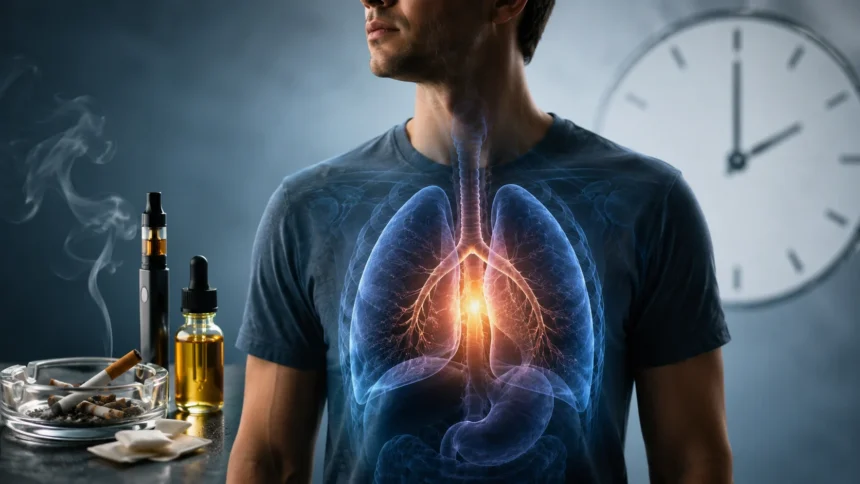
How Long Does Nicotine Stay in Your System?
The answer is not as simple as giving one number because nicotine itself disappears relatively quickly, while its metabolites can remain detectable for much longer. The most important metabolite is cotinine, which is commonly measured during nicotine testing because it lasts longer and provides a more reliable record of recent exposure. Detection time also varies depending on whether a laboratory tests blood, urine, saliva, or hair. Your frequency of nicotine use, metabolism, kidney and liver function, and the sensitivity of the test can also affect the result. Understanding these differences makes nicotine test results much easier to interpret.
Nicotine enters the bloodstream after exposure and is distributed rapidly throughout the body, including the brain, where it activates nicotinic acetylcholine receptors and contributes to dependence. The liver then breaks down most nicotine, largely through an enzyme known as CYP2A6, producing cotinine and several other nicotine metabolites. Nicotine has an average elimination half-life of roughly two hours, although published estimates vary somewhat between individuals. Cotinine remains in the body much longer, with commonly reported half-life estimates around 15 to 20 hours and laboratory estimates sometimes extending closer to 24 hours. That difference explains why a person may have very little nicotine remaining while still testing positive for nicotine exposure.
Another important point is that being free of nicotine is not necessarily the same as being free of nicotine withdrawal. Nicotine concentrations may fall dramatically within a day after someone stops using it, yet cravings, irritability, restlessness, difficulty concentrating, sleep problems, and increased appetite can continue for considerably longer. Withdrawal symptoms are often strongest during the first several days, while psychological triggers may cause occasional cravings weeks or even months later. People who use nicotine heavily or frequently may notice stronger early withdrawal than occasional users. Nicotine replacement therapy can also deliberately keep nicotine in the body while reducing exposure to harmful components of combustible tobacco. Therefore, the question of how long nicotine stays in your system has both a laboratory answer and a practical recovery answer.
How Long Does Nicotine Stay in Your System?
Nicotine itself usually leaves the bloodstream fairly quickly because its elimination half-life is short. With an average half-life of approximately two hours, the amount circulating in the body falls substantially during the first several hours after the last cigarette, vape session, pouch, or nicotine dose. After several half-lives, only a small fraction of the original amount remains, although this does not automatically mean every laboratory test will be negative. Nicotine can also be distributed into body tissues before being metabolized and excreted. Because concentrations decline so quickly, measuring nicotine alone provides only a relatively short snapshot of recent exposure. This is why healthcare professionals and laboratories often rely more heavily on cotinine when evaluating nicotine use.
Cotinine provides a much wider nicotine detection window because it is eliminated more slowly than nicotine. CDC laboratory information describes cotinine as the preferred biomarker for assessing tobacco use and secondhand smoke exposure because its half-life is substantially longer than nicotine’s. Cotinine may remain measurable for several days after the last nicotine exposure, and ARUP Consult reports that it may be detectable for up to about seven days after exposure. Heavy or long-term users can sometimes have measurable nicotine metabolites beyond that general period, particularly when sensitive urine testing is used. Mayo Clinic Laboratories notes that heavy tobacco users who remain completely abstinent for two weeks typically reach very low serum nicotine and cotinine concentrations. These figures should therefore be viewed as ranges rather than guaranteed deadlines.
How frequently you use nicotine strongly influences where you fall within those ranges. Someone who smokes one cigarette or uses a nicotine product once may begin with much lower concentrations than someone who vapes throughout the day or smokes a pack of cigarettes daily. Repeated nicotine exposure allows cotinine and other metabolites to accumulate because another dose may enter the body before metabolites from earlier doses have been fully eliminated. When frequent use stops, the body must work through this accumulated level before concentrations fall below a laboratory’s detection threshold. This helps explain why a daily user may continue testing positive longer than a person with a single exposure. The same principle can apply whether nicotine came from cigarettes, electronic cigarettes, oral nicotine, smokeless tobacco, or nicotine replacement medication.
It is also important to understand what the phrase “stay in your system” means. A chemical can be present at a concentration far too low to produce noticeable effects but still be measurable with a sensitive laboratory method. Modern testing may measure nicotine, cotinine, trans-3′-hydroxycotinine, nornicotine, or other biomarkers depending on the purpose of the test. Urine generally offers a longer detection period because nicotine metabolites may be present at higher concentrations there than they are in blood. CDC information notes that cotinine concentrations tend to be several times higher in urine than in serum. Consequently, a negative blood nicotine result does not guarantee that a urine cotinine test taken at the same time will also be negative.
For most practical purposes, nicotine itself should be thought of as a short-lived substance while cotinine should be thought of as the longer-lasting marker. Nicotine concentrations drop rapidly over hours, whereas cotinine may remain detectable for days and sometimes longer following substantial or repeated exposure. Some urinary metabolites can persist even longer after chronic nicotine use, particularly when highly sensitive testing methods are employed. The exact result depends on the test’s cutoff concentration, the specimen collected, the person’s previous nicotine intake, and individual metabolism. That is why promises that everyone will become nicotine-test negative after exactly two, three, or four days are unreliable. When a test is connected to surgery, medical treatment, insurance, or another important decision, the laboratory or healthcare provider’s specific requirements matter more than a general internet timeline.
Nicotine Detection Times by Test Type
Urine testing is one of the most commonly discussed methods because nicotine metabolites become concentrated in urine and can remain measurable longer than nicotine circulating in the blood. Laboratories often test urine for cotinine rather than simply looking for nicotine, and more comprehensive panels may measure nornicotine, trans-3′-hydroxycotinine, or tobacco-specific markers such as anabasine. ARUP Consult notes that cotinine may be detected for up to seven days following exposure, although the exact window varies considerably. It also reports that trans-3′-hydroxycotinine may persist in urine for weeks following cessation in some people with long-term or heavy nicotine use. Therefore, the familiar claim that urine is always clean after three or four days is too simplistic.
Blood or serum testing tends to provide a clearer picture of relatively recent nicotine exposure, although cotinine can still extend the detection period beyond the short nicotine half-life. Nicotine falls quickly because its half-life averages about two hours, while serum cotinine persists much longer. Mayo Clinic Laboratories reports that heavy tobacco users who have completely abstained for two weeks generally have serum nicotine and cotinine concentrations below 3 ng/mL. However, a person may reach a particular laboratory cutoff sooner than two weeks, particularly if previous nicotine exposure was relatively low. Results depend on what substance is measured and how sensitive the laboratory method is. For that reason, “blood test detection time” should never be interpreted as one universally fixed number.
Saliva testing can also detect cotinine and is sometimes used because obtaining oral fluid is convenient and noninvasive. The biological half-life of cotinine in saliva is broadly similar to its half-life in serum, although the concentration measured and the laboratory cutoff may differ. CDC documentation confirms that cotinine can be measured in saliva, urine, and serum and that its half-life is essentially similar across these fluids. Saliva testing can therefore identify recent nicotine exposure for longer than nicotine itself remains at meaningful concentrations. However, oral fluid results still depend on how much nicotine was used, how regularly it was used, and how long it has been since the last exposure. Laboratories may also use different analytical techniques and positive thresholds, so results from different testing programs are not always directly interchangeable.
Hair testing works differently from blood, saliva, or urine because compounds and their metabolites can become incorporated into growing hair. In principle, a segment of hair can provide information about exposure over a much longer historical period than a blood or urine sample. However, hair testing for nicotine is less commonly used for routine clinical confirmation of recent smoking or vaping than cotinine testing in urine, blood, or saliva. Interpretation can also be affected by the length of hair analyzed, cosmetic treatments, environmental contamination, laboratory methods, and the biomarker being measured. This makes a simple statement such as “nicotine stays in hair for exactly 90 days” misleading. Hair analysis is better understood as a potential record of longer-term exposure rather than a precise countdown from the last nicotine dose.
The laboratory cutoff is just as important as the biological detection window. A highly sensitive quantitative test can detect smaller concentrations than a screening test designed only to determine whether exposure exceeds a particular threshold. ARUP, for example, uses different cotinine concentrations when discussing active use, passive exposure, and common qualification thresholds, demonstrating why a single universal definition of a “positive nicotine test” does not exist. Secondhand exposure can also produce low measurable cotinine concentrations without producing levels typical of frequent active tobacco use. The test must therefore be interpreted according to its purpose rather than simply asking whether any molecule is present. A medical team evaluating abstinence before surgery may use a different cutoff or biomarker strategy than a research study examining environmental tobacco exposure.
Nicotine vs. Cotinine: Why Nicotine Tests Often Look for Metabolites
Nicotine and cotinine are related, but they are not interchangeable substances. After nicotine enters the body, much of it is processed by the liver, with CYP2A6 playing a major role in converting nicotine to cotinine. Nicotine’s rapid metabolism means its concentration rises and falls quickly, especially with products that deliver nicotine rapidly, such as cigarettes or some electronic cigarettes. Cotinine forms as nicotine is metabolized and remains present considerably longer. This makes cotinine a more stable indicator of recent nicotine intake than nicotine itself. CDC describes cotinine as the biomarker of choice for many assessments because it is present at higher concentrations and has a substantially longer elimination half-life.
The nicotine half-life is generally around two hours, although CDC documentation provides a broader approximate range of 0.5 to 3 hours. Cotinine’s estimated half-life is closer to 15 to 20 hours in many adults, while clinical laboratory references sometimes cite values extending toward 24 hours. Half-life means the time needed for the amount of a substance in the body to fall by approximately half, not the time needed for it to disappear completely. After another half-life, the remaining amount falls by approximately half again, producing a gradual decline rather than an instant clearance point. Individual differences can make the decline faster or slower than an average calculation predicts. This is one reason cotinine detection cannot be reduced to an exact number of hours for every person.
Cotinine is not the only metabolite laboratories can measure. Nicotine metabolism also produces compounds including trans-3′-hydroxycotinine and nornicotine, and comprehensive urine panels may look for several of these substances together. Trans-3′-hydroxycotinine is particularly relevant because it can persist in urine after cotinine concentrations have declined, especially following heavy or long-standing nicotine use. Measuring multiple metabolites can give laboratories a more complete picture than measuring nicotine alone. The ratios between certain nicotine metabolites are also useful in research because they provide information about how quickly an individual metabolizes nicotine. These metabolic differences partly explain why two people with similar nicotine intake may have noticeably different cotinine concentrations. Nicotine testing is therefore better understood as biomarker analysis rather than a simple yes-or-no search for nicotine.
Another complication is that cotinine identifies nicotine exposure, not necessarily cigarette smoking. A person who vapes nicotine, uses nicotine pouches, chews nicotine gum, wears a nicotine patch, or uses another nicotine-containing product may also produce cotinine. Consequently, an ordinary cotinine-positive result cannot by itself prove that someone smoked cigarettes. This distinction matters particularly when nicotine replacement therapy is being used as part of a smoking cessation program. A person could be successfully avoiding tobacco while still having measurable nicotine and cotinine because their treatment intentionally supplies nicotine. Laboratories and clinicians may need additional information about the person’s products and medications to interpret the result correctly. This is why disclosing nicotine replacement therapy before medically important testing is useful.
Some tests can look for anabasine, a tobacco alkaloid, when clinicians need help distinguishing tobacco exposure from the use of purified nicotine replacement products. Mayo Clinic Laboratories includes anabasine in its urine nicotine and metabolite testing, while ARUP notes that anabasine can sometimes assist in differentiating tobacco use from nicotine replacement therapy. Anabasine is not a perfect marker, however, because false-positive and false-negative interpretations are possible and some electronic cigarette products or supplements may complicate results. Testing should therefore be assessed in the wider clinical context rather than relying on one marker alone. A positive cotinine test indicates recent nicotine exposure much more reliably than it identifies the exact source of that nicotine.
What Affects How Long Nicotine Stays in Your Body?
The amount and frequency of nicotine use are among the biggest factors affecting nicotine clearance time. Someone who takes a small amount of nicotine on one occasion generally starts the elimination process with a much smaller total body burden than someone who uses nicotine repeatedly throughout the day. Daily smoking, frequent vaping, continuous use of oral pouches, or sustained nicotine replacement can maintain nicotine exposure for many hours. Cotinine can accumulate when new nicotine is repeatedly consumed before metabolites from earlier doses have been cleared. Heavy users may therefore take longer to fall below a test’s cutoff even after completely stopping. The type of test then determines whether those declining concentrations remain detectable.
Genetics also influence nicotine metabolism, particularly differences affecting the CYP2A6 enzyme. Research has shown substantial variation in CYP2A6 activity between individuals, meaning some people process nicotine and cotinine more quickly than others. Genetic variation can affect how rapidly nicotine is converted into cotinine and how quickly cotinine is subsequently metabolized. This means two people who use a similar amount of nicotine can produce different biomarker concentrations and different detection patterns. Metabolism is therefore one reason online nicotine calculators should be regarded only as rough estimates. They cannot know a person’s enzyme activity, previous exposure level, laboratory cutoff, or complete health history.
Hormonal factors can alter nicotine metabolism as well. Research has found faster nicotine metabolism on average in women than men, particularly in people using estrogen-containing contraceptives, and metabolism becomes even faster during pregnancy. Pregnancy has been associated with substantially increased clearance of both nicotine and cotinine compared with the postpartum period. These findings do not mean nicotine use is safe during pregnancy or that a pregnant person’s testing result can be predicted without laboratory measurement. Instead, they demonstrate how much biological variation can exist in nicotine pharmacokinetics. Hormonal influences are one reason a universal hour-by-hour nicotine elimination schedule does not accurately describe everyone. Any nicotine use during pregnancy should be discussed with an appropriate healthcare professional rather than managed according to a generic detox timeline.
Liver and kidney function are also relevant because nicotine is extensively metabolized in the liver and its metabolites are ultimately eliminated largely through the kidneys. Severe kidney impairment can reduce renal clearance of nicotine and cotinine and may also affect nicotine’s metabolic clearance. Liver disease or other conditions affecting metabolism can likewise alter how drugs and their metabolites are processed. These effects are highly individual and cannot be predicted simply from how healthy someone feels. People with significant liver or kidney disease should therefore avoid assuming that standard nicotine detection windows apply exactly to them. The same caution is appropriate when medications or other substances may affect metabolic enzymes. For medically necessary nicotine testing, the healthcare team should interpret results alongside relevant health conditions and treatments.
Environmental exposure can complicate interpretation even when someone has not actively smoked or vaped. Secondhand tobacco smoke can produce measurable cotinine, particularly when exposure is repeated or substantial. Mayo Clinic Laboratories notes that passive tobacco smoke exposure can result in low serum cotinine concentrations, while ARUP provides lower laboratory thresholds associated with passive exposure than those usually seen with active nicotine use. The concentration matters because an extremely low positive result can carry a different interpretation from the much higher concentrations commonly found in regular tobacco users. Exposure history should therefore be considered when interpreting borderline results. Although passive exposure typically produces lower biomarker levels than active use, avoiding smoky environments before an abstinence test may reduce unnecessary uncertainty.
Do Cigarettes, Vapes, Pouches and Nicotine Replacement Change Detection Time?
Cigarettes deliver nicotine rapidly through inhaled smoke, producing repeated rises in blood nicotine when someone smokes throughout the day. Once absorbed, however, nicotine from cigarettes enters the same basic metabolic pathways responsible for producing cotinine and other nicotine metabolites. Therefore, a nicotine or cotinine test is detecting exposure to nicotine rather than a unique signature that automatically identifies cigarette smoke. Daily cigarette smoking can produce relatively high and sustained cotinine concentrations because each cigarette adds another dose before earlier metabolites are completely eliminated. Long-term heavy smokers may consequently remain cotinine-positive longer after quitting than occasional smokers. The exact detection period still depends on the biological sample and the testing cutoff rather than cigarettes having one guaranteed clearance time.
Nicotine-containing electronic cigarettes and vapes can also lead to positive nicotine and cotinine results. The amount absorbed varies widely because devices, nicotine concentrations, formulations, puffing behavior, and frequency of use differ considerably. Someone who takes occasional puffs from a lower-dose product may have a different exposure pattern from someone who uses a high-nicotine device repeatedly from morning until night. Despite these differences, absorbed nicotine is still metabolized into cotinine, so switching from cigarettes to a nicotine vape does not make a person nicotine-free. CDC notes that nicotine is the main addictive substance in most electronic cigarettes and that stopping nicotine vaping can produce withdrawal symptoms similar to those associated with other nicotine products. A cotinine test can therefore remain positive while a person is continuing to vape nicotine.
Nicotine pouches and other oral nicotine products avoid inhaling smoke, but they still deliver nicotine through tissues in the mouth. As long as the product contains nicotine, the body can convert that nicotine into cotinine and produce a positive nicotine biomarker test. The timing of absorption may differ from inhaled nicotine, yet the person’s total daily nicotine dose and frequency remain major determinants of metabolite levels. Someone who keeps a pouch in place repeatedly throughout the day may maintain relatively continuous nicotine exposure. Stopping cigarettes while continuing nicotine pouches may reduce exposure to combustion products, but it does not start a nicotine-free testing period. If the requirement is specifically no nicotine, all nicotine-containing sources generally need to be considered.
Nicotine replacement therapy, including patches, gum and lozenges, presents an especially important distinction. These products intentionally provide nicotine to help people manage cravings and withdrawal while quitting cigarettes or other tobacco products. CDC identifies nicotine patches, gum, lozenges, inhalers, and nasal sprays as established forms of nicotine replacement therapy. Because these medications contain nicotine, using them can produce nicotine and cotinine in blood, saliva, or urine even if the person has completely stopped smoking. A routine cotinine test therefore cannot automatically distinguish successful cigarette abstinence from ongoing tobacco use when nicotine replacement is involved. Patients undergoing testing should tell their healthcare provider about nicotine replacement rather than stopping prescribed or recommended treatment solely to alter a test without medical guidance.
The practical rule is that the source changes the exposure pattern more than it changes the basic biology of nicotine metabolism. Smoking, vaping, oral nicotine, and approved nicotine replacement products can all supply nicotine that is eventually converted into cotinine. Differences in dose and delivery speed can cause different peak nicotine concentrations, but cotinine remains a useful general marker of nicotine exposure across product types. Tobacco-specific markers may occasionally help determine whether tobacco itself was used, particularly when purified nicotine medication is part of the picture. Even those markers require careful interpretation and are not perfect. Anyone facing a medical abstinence requirement should clarify whether the requirement prohibits smoking, tobacco products generally, or all nicotine products, because those are not necessarily the same instruction.
Can You Get Nicotine Out of Your System Faster?
There is no proven drink, supplement, tea, juice, sauna routine, or “nicotine detox” that can reliably force nicotine metabolites out of the body on demand. Nicotine clearance is driven primarily by metabolism and excretion, processes controlled by the liver, kidneys, enzymes, blood flow, and individual biological characteristics. Once nicotine use stops, concentrations decline naturally according to those processes. Marketing claims suggesting a detox product can guarantee a negative cotinine test within a certain number of hours should therefore be treated cautiously. Even if a product increases urination, that does not mean it has meaningfully accelerated the metabolism of nicotine stored or circulating in the body. The most dependable way for nicotine biomarkers to decline is simply to stop adding new nicotine and allow enough time for normal elimination.
Adequate hydration supports normal body function, but drinking extreme amounts of water does not suddenly erase cotinine. Excessive water consumption can also be harmful by disrupting normal electrolyte concentrations, so attempting aggressive dilution is not a safe strategy. Urine laboratories may also assess specimen characteristics that can make an unusually dilute sample noticeable or unsuitable for interpretation. Drinking a normal amount based on thirst and usual health needs is more sensible than trying to flood the body immediately before testing. People with kidney, heart, or other medical conditions may have specific fluid recommendations and should follow those instead of generic advice. Hydration should support health, not be treated as a shortcut around the biological half-life of nicotine metabolites.
Exercise is valuable for general cardiovascular and metabolic health, but there is no reliable evidence that one intense workout can make a nicotine test negative. Exercise may influence blood flow, energy use, mood, and withdrawal management, yet nicotine and cotinine still require normal metabolism and excretion. Similarly, sweating in a sauna should not be expected to remove enough nicotine metabolites to override a laboratory’s detection window. Aggressive exercise or heat exposure can also cause dehydration, which is unnecessary and potentially counterproductive. If you recently stopped nicotine, regular moderate physical activity may be helpful because it provides distraction and can support overall wellbeing during withdrawal. It should be used for health and coping rather than as a guaranteed method for manipulating test results.
If becoming nicotine-free is the goal, identifying every source of nicotine is more useful than searching for a detox method. Cigarettes, cigars, vaping liquids, disposable vapes, oral nicotine pouches, smokeless tobacco, nicotine gum, nicotine lozenges, patches, inhalers, and nasal nicotine can all extend ongoing exposure. Accidentally continuing one source means cotinine formation may continue even though another nicotine product has been stopped. Secondhand smoke may also create low-level exposure, although concentrations are usually far below those seen with active regular use. Reviewing medications and cessation products is especially important before a test that requires total nicotine abstinence. Never stop a medically recommended nicotine replacement treatment simply for testing without first clarifying the requirement with the clinician overseeing your care.
Time remains the most reliable factor in reducing measurable nicotine biomarkers. Each half-life lowers the concentration, and repeated half-lives progressively reduce the amount remaining until it falls below the relevant laboratory threshold. Because cotinine’s half-life can vary significantly between individuals, adding a reasonable time buffer is more dependable than planning around the shortest quoted detection estimate. Heavy users should be particularly cautious about assuming that a few nicotine-free days guarantee a negative result. If the test has consequences for surgery, transplantation, treatment eligibility, or another medical decision, ask which biomarker is measured and what abstinence period the healthcare team requires. Accurate information from the testing program is far more useful than trying unproven cleansing products.
What Happens After You Stop Using Nicotine?
Nicotine levels start falling soon after the final exposure because the body begins metabolizing the remaining nicotine immediately. With an average nicotine half-life of roughly two hours, blood concentrations can decline sharply during the first day. Cotinine declines more slowly, however, so laboratory evidence of nicotine use may remain after nicotine itself has fallen to very low levels. This creates an important distinction between pharmacological nicotine clearance and a completely negative cotinine test. A person can be several days into quitting and still have measurable metabolites without having used nicotine again. Conversely, a single new cigarette, vape session, pouch, or nicotine dose can introduce additional nicotine and effectively restart part of the elimination process.
Withdrawal can begin before nicotine metabolites have fully disappeared. People may experience cravings, irritability, anxiety, restlessness, trouble concentrating, increased hunger, sleep disturbances, or changes in mood after stopping regular nicotine use. NCI reports that withdrawal symptoms are generally worst during the first week and often peak within the first three days after quitting. The intensity usually decreases over the following weeks, although the experience varies considerably between people. Someone who has used nicotine frequently for years may have a different withdrawal experience from an occasional user. These symptoms reflect the brain and body adapting to the absence of nicotine rather than proof that large amounts of nicotine remain in the bloodstream.
Cravings can continue after nicotine and cotinine concentrations have fallen substantially because addiction involves learned behavior as well as physical dependence. Coffee, driving, alcohol, work breaks, stress, social situations, and seeing another person smoke or vape may all act as triggers. NCI notes that cravings can occur within hours of stopping tobacco and may become less frequent over time, although occasional psychological cravings can return much later. This explains why someone can feel a strong desire for nicotine even after a laboratory might no longer detect significant recent exposure. Cravings therefore should not be used as a personal test of whether nicotine is still in the body. Developing strategies for triggers is an important part of maintaining abstinence after the initial chemical elimination period.
For people trying to quit smoking rather than meet a nicotine-free testing requirement, nicotine replacement therapy can be useful because completely eliminating nicotine immediately is not always the main objective. The purpose of nicotine replacement is to provide controlled nicotine while reducing withdrawal and helping a person stop smoking. CDC states that quit-smoking medications can reduce cravings and withdrawal symptoms, and nicotine replacement options include patches, gum and lozenges as well as prescription forms. Someone using these treatments will continue producing cotinine until the nicotine replacement is tapered and eventually stopped. That does not mean the smoking quit attempt has failed. The distinction matters because becoming smoke-free and becoming completely nicotine-free may occur at different stages of a cessation plan.
People who are struggling with nicotine dependence do not have to rely entirely on willpower. Behavioral counseling, healthcare support, and evidence-based quit-smoking medications can improve the ability to manage cravings and withdrawal. A healthcare professional can also help choose an approach based on the type and amount of nicotine being used and any relevant health conditions. Quitting vaping may involve many of the same dependence and withdrawal challenges because nicotine remains the addictive substance involved. If a quit attempt includes slips, returning to the plan is generally more useful than treating one episode as proof that quitting is impossible. The process of eliminating nicotine from the body is relatively short compared with the longer process of changing habits, triggers, and patterns of dependence.
How Should You Interpret a Nicotine or Cotinine Test?
A positive nicotine-related test should first be interpreted according to what was actually measured. A nicotine result reflects very recent exposure because nicotine disappears relatively quickly, while a cotinine result provides a longer window into nicotine intake. Some urine panels also measure nornicotine, trans-3′-hydroxycotinine, anabasine, or several biomarkers together. A report may provide numerical concentrations rather than simply stating “positive” or “negative,” allowing the laboratory or clinician to interpret the amount in relation to its reference values. Different laboratories can use different cutoffs according to the reason for testing. For this reason, comparing a result from one program with an internet detection chart may lead to unnecessary confusion.
Testing may be requested in several medical and administrative settings. Clinicians may use nicotine testing when documenting abstinence, supporting smoking cessation, evaluating nicotine exposure, or preparing patients for certain procedures. ARUP notes that nicotine biomarker testing may be used when verifying abstinence for situations such as surgery or organ transplantation. Some healthcare programs have specific thresholds because nicotine or tobacco exposure can affect treatment planning and surgical risk assessment. The required period of abstinence can therefore be more conservative than the minimum period needed for an average person’s nicotine concentration to decline. Following the healthcare team’s stated timeline is more appropriate than aiming to stop just before the estimated biological detection window.
A low cotinine concentration does not always prove active tobacco use because environmental tobacco smoke can contribute measurable cotinine. Passive exposure generally produces lower concentrations than regular active nicotine use, but the distinction is not perfectly definitive in every individual. Mayo Clinic Laboratories has documented measurable serum cotinine associated with passive smoke exposure, while ARUP uses different reference considerations when distinguishing passive from active exposure. Nicotine replacement and electronic nicotine products add another layer of interpretation because they may generate cotinine without cigarette smoking. The clinician should therefore know about smoking exposure, vaping, pouches, nicotine medications, and regular secondhand smoke exposure before interpreting a borderline result. Laboratory data are most meaningful when combined with an accurate exposure history.
A negative result means the biomarker tested was below that laboratory’s reporting or positive threshold at the time the sample was collected. It does not prove that the person has never used nicotine, nor does it necessarily reveal exactly when nicotine was last used. Similarly, a positive test cannot always calculate the precise number of hours or days since the final exposure. Metabolic variation, dose, product type, chronic use, passive exposure, urine concentration, and analytical sensitivity all affect the measured value. Quantitative trends across repeated tests may sometimes be more informative than one isolated measurement when clinicians are monitoring abstinence. Ultimately, laboratory interpretation should focus on the test’s intended purpose rather than treating nicotine biomarkers like a stopwatch.
Anyone facing an unexpected result should discuss it with the healthcare provider or testing laboratory rather than assuming the result is wrong or attempting to correct it independently. Mention every nicotine-containing product used, including cessation medications, and disclose significant secondhand tobacco exposure when relevant. Ask whether the test measured nicotine, cotinine, additional metabolites, or tobacco-specific markers such as anabasine. If repeat testing is appropriate, the healthcare professional can determine when another specimen should be collected. This approach is particularly important when test results influence surgery or another significant medical decision. Accurate interpretation depends on the whole clinical picture, and a single number should not be separated from exposure history, laboratory methodology, and individual metabolism.
The Bottom Line on How Long Nicotine Stays in Your System
So, how long does nicotine stay in your system? Nicotine itself is cleared quickly, with an average half-life of around two hours, meaning levels decline substantially during the hours after use stops. Cotinine lasts considerably longer, typically having a half-life of roughly 15 to 20 hours, although individual values can be shorter or longer. Because cotinine remains measurable after nicotine concentrations have fallen, it is the substance laboratories frequently use to identify recent nicotine exposure. Cotinine may be detectable for several days, and ARUP notes a detection window of up to approximately seven days following exposure. Heavy or chronic use can produce longer-lasting urinary metabolite detection in some people.
Urine generally gives laboratories a longer opportunity to identify nicotine metabolites than simply measuring nicotine in blood. Blood and saliva can also reveal recent exposure, particularly when cotinine rather than nicotine itself is measured. Hair potentially provides a much longer historical record, although it is less commonly used for routine clinical nicotine monitoring and its interpretation is more complex. No single detection period applies to every test because laboratories use different analytical methods and thresholds. A result that is below one test’s cutoff could theoretically remain measurable using a more sensitive method. This is why test type and cutoff concentration should always accompany any discussion of how long nicotine can be detected.
Your nicotine use pattern matters just as much as the test. Frequent vaping, heavy cigarette smoking, repeated nicotine pouch use, or continuous nicotine replacement can create higher ongoing exposure than a one-time nicotine dose. Genetics, hormones, pregnancy, kidney function, liver function, medications, and other biological factors can also affect nicotine and cotinine metabolism. Secondhand tobacco smoke may contribute low cotinine concentrations and complicate borderline test results. As a result, a detection-time calculator can provide only a rough estimate rather than a guaranteed date when every test will become negative. The greater the consequences of the test, the more important it becomes to follow the specific instructions provided by the healthcare team or laboratory.
There is also no scientifically dependable shortcut for immediately removing nicotine metabolites. Normal hydration, balanced nutrition, adequate sleep, and appropriate physical activity support overall health, but they cannot override the biological processes responsible for nicotine metabolism. Detox drinks, excessive water intake, saunas, and extreme exercise should not be expected to guarantee an earlier negative test. Completely stopping new nicotine exposure and allowing sufficient time remains the most predictable approach when total nicotine abstinence is required. If someone is using nicotine replacement to quit smoking, however, stopping treatment solely to become cotinine-negative may work against the cessation plan. Medical advice should take priority when nicotine testing and smoking cessation goals appear to conflict.
Finally, remember that nicotine detection and nicotine dependence operate on different timelines. Nicotine levels can fall quickly while withdrawal symptoms and behavioral cravings continue for days or weeks. NCI reports that nicotine withdrawal is commonly most intense during the first week, particularly the first three days, before usually becoming less severe. Support, counseling, nicotine replacement when appropriate, and other evidence-based cessation treatments can make the transition more manageable. If your concern is specifically about an upcoming laboratory test, ask what biomarker is being measured and what period of abstinence is required. If your goal is quitting nicotine, focus not only on when nicotine leaves your system but also on building a plan that helps you stay nicotine-free.
Frequently Asked Questions
How long does nicotine stay in urine?
Nicotine itself disappears relatively quickly, but urine tests commonly look for cotinine and other metabolites that can remain detectable for several days. Cotinine may be detected for up to about seven days after exposure, while some urinary metabolites can persist longer after heavy or long-term use.
Can nicotine be out of your system in 24 hours?
A large proportion of nicotine can be eliminated within 24 hours because nicotine’s average half-life is only about two hours. However, cotinine and other metabolites generally remain much longer, so a nicotine-related laboratory test may still be positive.
How long does cotinine stay in your system?
Cotinine commonly has an elimination half-life of roughly 15 to 20 hours and can remain detectable for several days. Heavy nicotine users may take longer to fall below a laboratory cutoff, and some clinical references use approximately two weeks of complete abstinence when describing return to very low serum concentrations.
Will vaping show up on a nicotine test?
Yes, vaping a product that contains nicotine can produce nicotine and cotinine that may be detected by laboratory testing. Standard cotinine testing usually identifies nicotine exposure and does not by itself prove whether that nicotine came from cigarettes, vaping, pouches, or nicotine replacement.
Does drinking water remove nicotine faster?
Normal hydration supports healthy kidney function, but drinking large amounts of water does not reliably accelerate nicotine metabolism enough to guarantee an earlier negative test. Time without additional nicotine exposure remains the most dependable way for nicotine and cotinine concentrations to decline.