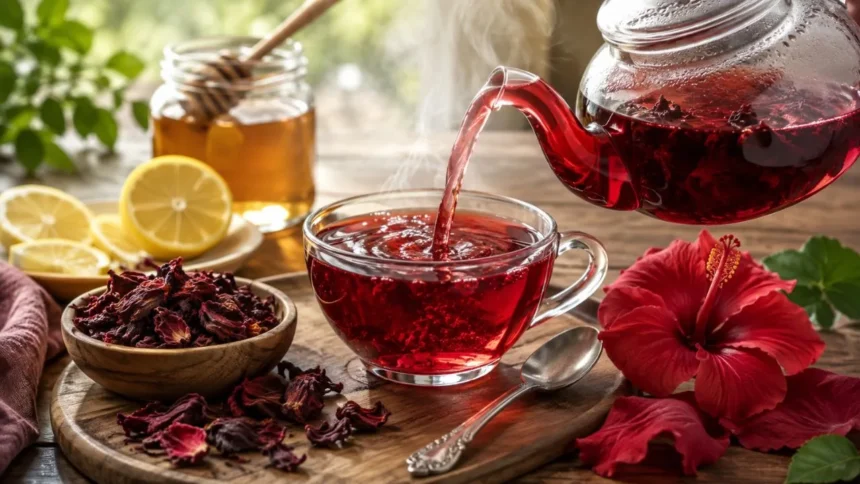
Hibiscus Tea: Benefits, Uses and How to Make It
Hibiscus tea is a brightly colored herbal drink known for its deep red appearance and pleasantly tart flavor. It is commonly served hot or cold and may be enjoyed on its own or combined with ingredients such as ginger, cinnamon, mint, honey and lemon. Because it is naturally caffeine-free, it can also be a refreshing alternative to coffee, black tea and sugary drinks.
The tea is usually made from the dried calyces of Hibiscus sabdariffa, a plant also known as roselle. These fleshy red parts surround and protect the flower before being harvested, dried and used for beverages. Hibiscus tea is known by different names worldwide, including sour tea, roselle tea, karkade, bissap, zobo, sorrel and agua de Jamaica.
Many people drink hibiscus tea because it contains plant compounds called polyphenols and anthocyanins. These compounds give the tea its rich color and antioxidant properties. Research has explored its possible effects on blood pressure, cholesterol, blood sugar and weight, although some benefits have stronger evidence than others.
Hibiscus tea can be part of a balanced lifestyle, but it should not be treated as a cure for medical conditions. Drinking it cannot replace prescribed medicines, professional treatment, nutritious food or regular physical activity. People with health conditions or those taking medication should understand its possible effects before consuming it frequently.
What Is Hibiscus Tea?
Hibiscus tea is an herbal infusion prepared by steeping dried roselle calyces in hot or cold water. Unlike traditional black, green and oolong teas, it does not come from the Camellia sinensis plant. This means it does not naturally contain caffeine unless it is blended with a caffeinated ingredient.
The beverage has a sharp, fruity flavor that is often compared to cranberries or pomegranate. Its natural tartness can feel refreshing when served chilled, particularly during warm weather. People who find it too sour may add a small amount of honey, fruit or another sweetener.
Although people commonly call the dried pieces hibiscus flowers or petals, commercial tea is usually made from the calyces of Hibiscus sabdariffa. Not every ornamental hibiscus plant is intended for food preparation. Only food-grade hibiscus sold for culinary use should be used for making tea.
Hibiscus tea has a long history in African, Caribbean, Middle Eastern, Asian and Latin American food traditions. Recipes vary between regions, with some versions containing ginger, cloves, cinnamon, pineapple or citrus. It may be served during celebrations, family meals or as an everyday cooling drink.
What Does Hibiscus Tea Taste Like?
Hibiscus tea has a naturally tart, fruity and slightly floral taste. Unsweetened tea can be quite sharp, especially when a large amount of dried hibiscus is used or the drink is steeped for a long time. Its flavor is strong enough to remain noticeable when mixed with ice, fruit or spices.
The tea does not usually taste like the fragrance of an ornamental flower. Instead, it has a refreshing acidity similar to unsweetened cranberry juice. Some people enjoy this sourness immediately, while others prefer balancing it with honey, dates, stevia or a small amount of sugar.
Adding ginger creates a warming and slightly spicy flavor, while cinnamon provides sweetness without requiring much added sugar. Fresh mint can make iced hibiscus tea more refreshing. Orange, lemon, lime, pineapple and berries also complement its bright fruit-like character.
The strength can be adjusted according to personal preference. Using fewer dried calyces or reducing the steeping time creates a lighter drink. A stronger tea can be diluted with water after brewing, allowing each person to control the concentration and tartness.
Is Hibiscus Tea Caffeine-Free?
Pure hibiscus tea is naturally caffeine-free because it is an herbal infusion rather than traditional tea. It can be suitable for people who are sensitive to caffeine or trying to reduce their intake. It is also less likely than caffeinated drinks to interfere with sleep when consumed later in the day.
However, some packaged products combine hibiscus with black tea, green tea, yerba mate or other caffeinated ingredients. Reading the ingredient label is important when avoiding caffeine completely. A product called “hibiscus blend” may not contain hibiscus alone.
Replacing a sweet caffeinated drink with unsweetened hibiscus tea may reduce both caffeine and added sugar intake. This benefit depends on how the drink is prepared. Adding large amounts of sugar, syrup or sweetened fruit juice can turn it into a high-calorie beverage.
People can enjoy pure hibiscus tea hot in the morning or chilled with meals. Its lack of caffeine makes the timing flexible for most healthy adults. However, anyone who notices dizziness, stomach discomfort or another unwanted effect should reduce the amount or stop drinking it.
Hibiscus Tea Contains Antioxidant Compounds
Hibiscus contains anthocyanins, flavonoids, phenolic acids and other plant compounds with antioxidant activity. Anthocyanins are pigments responsible for the tea’s vivid red and purple appearance. Similar compounds are also found in berries, purple cabbage, cherries and other deeply colored plant foods.
Antioxidants help the body manage oxidative stress, which occurs when unstable molecules called free radicals accumulate faster than the body can control them. Oxidative stress is involved in normal aging and many long-term health conditions. However, no single antioxidant drink can prevent every disease.
Drinking hibiscus tea can contribute plant compounds to an overall balanced diet. Its value is greatest when consumed alongside fruits, vegetables, whole grains, legumes, nuts and other nutrient-rich foods. It should not be viewed as a substitute for dietary variety.
Antioxidant activity measured in a laboratory does not always produce the same effect inside the human body. Digestion, absorption, dose and preparation methods can influence how compounds behave. This is why responsible health claims should focus on promising evidence rather than guaranteed results.
May Support Healthy Blood Pressure
Blood-pressure support is one of the most studied potential hibiscus tea benefits. Several human trials and research reviews suggest that regular hibiscus consumption may produce modest reductions in systolic and diastolic blood pressure, particularly among adults with elevated readings.
Researchers have suggested that anthocyanins and other hibiscus compounds may influence blood-vessel relaxation and processes involved in blood-pressure regulation. Hibiscus may also have a mild diuretic effect in some people. These actions could partly explain the changes observed in clinical studies.
The effect is not guaranteed and may differ according to the dose, preparation, treatment period and person’s existing health. Hibiscus tea should not replace blood-pressure medication. Stopping prescribed treatment without medical supervision could allow hypertension to become uncontrolled.
People already taking antihypertensive medicine should speak with a healthcare professional before drinking concentrated hibiscus products regularly. Combining multiple blood-pressure-lowering substances may cause readings to fall too low. Possible symptoms include dizziness, weakness, blurred vision and faintness.
May Have a Modest Effect on Cholesterol
Some studies have investigated whether hibiscus can improve cholesterol and other blood lipids. Certain trials have reported reductions in total cholesterol or low-density lipoprotein cholesterol. However, results have not been consistent across all populations or preparations.
Differences in study design make it difficult to determine an ideal amount or expected benefit. Some research has used tea, while other studies have tested concentrated capsules or extracts. A standardized extract cannot automatically be compared with an ordinary homemade drink.
Hibiscus tea may still be a heart-friendly beverage when it replaces drinks containing large amounts of sugar or saturated-fat ingredients. This indirect benefit can be meaningful. A low-sugar drink supports healthier dietary patterns even when it does not directly produce a major cholesterol reduction.
People with high cholesterol should continue following their clinician’s recommendations. Effective management may involve dietary changes, physical activity, weight management and medication. Hibiscus tea can complement these measures, but it is not a proven replacement for them.
May Influence Blood Sugar Levels
Early research suggests that hibiscus may influence blood sugar control, but the evidence remains less established than its possible effect on blood pressure. Some studies have reported improvements in fasting glucose or other metabolic measurements, while others have found little meaningful change.
Hibiscus contains plant compounds that are being studied for their possible effects on carbohydrate digestion and insulin-related processes. Most people should not expect one cup of tea to produce a rapid or predictable change. Long-term blood sugar management depends on several lifestyle and medical factors.
Sweetening the tea heavily can work against this potential benefit. Sugar, flavored syrups and sweetened condensed milk add carbohydrates that may raise blood glucose. Unsweetened hibiscus tea or a lightly sweetened version is generally a more suitable option for people monitoring sugar intake.
Anyone taking insulin or blood-sugar-lowering medicine should discuss frequent hibiscus consumption with a healthcare professional. Its effects could add to those of medication in some individuals. Shaking, sweating, confusion and unusual weakness may be warning signs of low blood sugar.
Does Hibiscus Tea Help With Weight Loss?
Hibiscus tea is sometimes marketed as a natural weight-loss drink, but it does not directly melt body fat. Recent clinical research has not established hibiscus as an effective treatment for obesity. Claims promising fast or effortless weight loss should therefore be treated cautiously.
Unsweetened hibiscus tea can still support a weight-management plan when it replaces soda, sweetened coffee or other high-calorie drinks. A plain cup contains very few calories. Reducing liquid calories may make it easier to maintain an appropriate overall energy intake.
Its bold taste can also provide variety for people who struggle to drink plain water. Better hydration may support exercise, digestion and appetite awareness, but drinking more tea alone cannot create significant fat loss. Sustainable progress requires consistent eating and activity habits.
Avoid weight-loss products containing concentrated hibiscus mixed with stimulants, laxatives or poorly identified herbs. These products may cause dehydration, digestive problems or medication interactions. Choose plain food-grade hibiscus and focus on realistic benefits rather than dramatic marketing promises.
May Support Hydration
Hibiscus tea is primarily water, making it a flavorful way to add fluids to the day. It can be served over ice during hot weather or consumed warm during colder months. Its strong natural color and tartness may make hydration more enjoyable for people who dislike plain water.
Pure hibiscus tea does not contain caffeine, so it avoids the stimulant effects associated with coffee and energy drinks. However, it should not replace all water intake. Plain water remains a simple and reliable hydration choice for daily needs.
Some people may urinate more frequently after drinking hibiscus tea. Although this does not usually cause a problem with moderate intake, excessive consumption could contribute to dehydration in sensitive individuals. This risk may be greater when combined with diuretic medicines.
During intense exercise, severe heat or illness involving vomiting and diarrhea, hibiscus tea may not provide enough electrolytes. An appropriate rehydration solution may be necessary in those situations. The drink is refreshing, but it should not be presented as a treatment for significant dehydration.
Possible Digestive Benefits
Hibiscus tea is often consumed after meals because its tart flavor can feel light and refreshing. Some traditional practices use it to support digestion or bowel regularity. Scientific evidence for treating specific digestive disorders, however, is currently limited.
Warm fluids may help some people feel more comfortable after eating, regardless of the herbal ingredient. Hibiscus tea can also replace heavy or sugary after-meal beverages. This may reduce feelings of excessive fullness when the tea is consumed without large amounts of sweetener.
The natural acidity may irritate people with acid reflux, gastritis or sensitive stomachs. Drinking a strong brew on an empty stomach could produce nausea, cramping or discomfort. A weaker preparation taken with food may be easier to tolerate.
Hibiscus should not be used to treat persistent abdominal pain, vomiting, blood in the stool or ongoing changes in bowel habits. These symptoms require professional assessment. Herbal drinks may support comfort but cannot diagnose or resolve serious digestive conditions.
Common Uses of Hibiscus Tea
The simplest use is as a hot herbal tea. It can be served plain or flavored with cinnamon, ginger, cloves, honey or citrus. A warm cup provides a caffeine-free option for mornings, evenings or any time a strongly flavored drink is desired.
Iced hibiscus tea is popular because its tart character remains refreshing after chilling. The brewed tea can be poured over ice and combined with lemon, lime, mint, orange or berries. Sparkling water can be added to create a simple non-alcoholic drink.
Strong hibiscus tea can be used as a base for smoothies, mocktails, fruit punches and homemade ice pops. It may also be added to jellies, syrups and desserts. Its natural red color can make recipes visually attractive without artificial coloring.
Some cooks use hibiscus in sauces, marinades and salad dressings because its acidity balances sweet or rich flavors. The dried calyces can sometimes be softened and added to culinary dishes. Only products clearly labeled as food-grade should be used in recipes.
How to Make Hot Hibiscus Tea
Start with approximately one to two teaspoons of dried food-grade hibiscus per cup of water. People who prefer a milder drink can begin with less. Stronger tea can always be diluted after brewing, making it easier to adjust the flavor.
Heat the water until it reaches a gentle boil, then remove it from the heat. Place the dried hibiscus in a heat-resistant cup, teapot or saucepan. Pour the hot water over it, ensuring the pieces are fully covered.
Allow the tea to steep for about five to ten minutes. A longer steeping period produces a deeper color and more intense tartness. Avoid boiling it aggressively for an extended period because this may create an unnecessarily harsh flavor.
Strain the tea into a cup and taste it before adding anything else. Honey, cinnamon, ginger, lemon or a small amount of sugar may be added according to preference. Let the drink cool slightly before serving to prevent burns.
How to Make Iced Hibiscus Tea
To prepare a larger batch, combine approximately one-quarter cup of dried hibiscus with four cups of water. The exact strength can be adjusted. Use a clean glass jar or pitcher that can be covered securely during steeping.
For a hot-brewed version, pour hot water over the dried hibiscus and steep it for ten minutes. Strain the liquid, allow it to cool and place it in the refrigerator. Dilute it with additional water when the flavor is too concentrated.
For a cold brew, add the dried hibiscus directly to cold water. Cover the container and refrigerate it for several hours or overnight. Cold brewing may produce a smoother drink with less sharpness than a strongly boiled preparation.
Strain the chilled tea and serve it over ice. Add mint, sliced citrus, berries or sparkling water for extra flavor. Store the remaining tea in a clean, covered container in the refrigerator and use it while it still smells and tastes fresh.
Simple Hibiscus and Ginger Tea Recipe
Combine one tablespoon of dried hibiscus with two cups of water. Add several thin slices of fresh ginger, depending on how spicy you want the drink. Make sure the ginger is washed and the hibiscus is intended for culinary use.
Bring the water and ginger to a gentle simmer, then turn off the heat. Add the dried hibiscus and cover the container. Let the mixture steep for approximately seven to ten minutes.
Strain the drink carefully to remove the ginger and hibiscus pieces. Taste it before adding sweetener because ginger can change how the tartness is perceived. A teaspoon of honey may be added after the tea has cooled slightly.
Serve the mixture warm or refrigerate it for an iced version. Lemon or orange can be included for a brighter citrus flavor. People with acid reflux or sensitive stomachs may prefer a weaker brew without additional lemon.
How Much Hibiscus Tea Should You Drink?
There is no universally established medical dose of hibiscus tea for every adult. Research studies have used different preparations, strengths and schedules. An ordinary beverage also differs from a highly concentrated extract or supplement.
For casual use, starting with one small cup allows you to observe how your body responds. Some healthy adults may comfortably drink more, while others experience dizziness or digestive discomfort. More tea does not automatically create greater health benefits.
People drinking hibiscus specifically to influence blood pressure or another condition should speak with a qualified healthcare professional. Self-treating with large amounts can complicate medication management. Regular blood-pressure or blood-sugar monitoring may be appropriate for some individuals.
Concentrated powders, capsules and extracts require additional caution because they may deliver much larger amounts than tea. Follow product instructions and avoid combining several hibiscus supplements. Products promising extreme detoxification or rapid weight loss are best avoided.
What Is the Best Time to Drink Hibiscus Tea?
There is no single best time that works for everyone. Because pure hibiscus is caffeine-free, it may be consumed in the morning, afternoon or evening. Personal comfort and medication timing are more important than a fixed schedule.
Some people enjoy it with meals because food reduces the intensity of its acidity. Drinking it after breakfast or lunch may be easier for individuals who develop nausea from herbal drinks on an empty stomach. A lightly brewed cup may also be better tolerated.
Those who notice frequent urination may avoid drinking a large amount before bed. Otherwise, its lack of caffeine makes it a possible evening beverage. Check that packaged blends do not contain green tea, black tea or another stimulating ingredient.
People taking blood-pressure, diabetes or diuretic medication should ask a clinician whether timing matters. Separating tea and medicine does not necessarily prevent an interaction. Professional advice should consider the exact medicine, dose and individual health history.
Side Effects of Hibiscus Tea
Moderate food-level amounts are generally well tolerated by many healthy adults. However, possible hibiscus tea side effects include nausea, gas, stomach discomfort, headache and increased urination. Strong or concentrated preparations may be more likely to cause symptoms.
Its blood-pressure-lowering potential can cause dizziness or weakness in sensitive individuals. The risk may increase when hibiscus is combined with antihypertensive medicines, dehydration or another substance that reduces blood pressure. Stop drinking it and seek advice if faintness develops.
The drink’s acidity may worsen heartburn or irritate sensitive teeth. Rinsing the mouth with plain water after drinking it may reduce acid exposure. Avoid brushing immediately after an acidic drink because temporarily softened enamel may be more vulnerable to damage.
An allergic reaction is possible, although it is not among the most commonly reported effects. Stop using the product if hives, facial swelling, breathing difficulty or throat tightness occurs. Severe allergy symptoms require emergency medical attention.
Who Should Avoid Hibiscus Tea?
Pregnant and breastfeeding people should ask a healthcare professional before using hibiscus frequently or taking concentrated extracts. Reliable safety information for these stages is limited. Normal dietary exposure and high-dose supplementation should not be treated as equivalent.
People with naturally low blood pressure may need to limit hibiscus because it could contribute to dizziness or fainting. The same caution applies to those taking medication for hypertension. Blood-pressure readings should guide decisions rather than relying only on symptoms.
Anyone using diabetes medicine, diuretics or several prescription drugs should discuss herbal products with a pharmacist or clinician. Hibiscus may affect blood pressure, blood glucose or the way certain medicines behave. Supplement labels do not always provide complete interaction information.
People preparing for surgery should tell their medical team about teas, supplements and herbal extracts they use regularly. The clinician may advise stopping certain products beforehand. This reduces the possibility of unexpected effects on blood pressure, blood sugar or medication response.
How to Choose Good Hibiscus for Tea
Look for a product labeled Hibiscus sabdariffa, roselle or food-grade hibiscus. The dried pieces should have a rich red or burgundy appearance and a naturally tart aroma. Avoid using flowers taken from an ornamental garden unless their species and food safety are confirmed.
Choose products from sellers that provide clear ingredient and storage information. Pure hibiscus should not contain artificial colors, unidentified powders or unnecessary fillers. Organic certification may be preferred by some buyers, but correct identification and responsible handling remain essential.
Tea bags offer convenience and consistent portions, while loose hibiscus allows greater control over strength. Loose pieces can also be inspected more easily. Both forms can make good tea when they are fresh, clean and stored correctly.
Keep dried hibiscus in an airtight container away from heat, moisture and direct sunlight. Discard it if it develops mold, insects, an unusual smell or obvious moisture damage. Proper storage preserves its color, flavor and overall quality.
Is Hibiscus Tea Worth Drinking?
Hibiscus tea is a flavorful, caffeine-free beverage that can be enjoyed hot or cold. Its rich color, tart taste and versatility make it a useful alternative to sugary drinks. It also contains antioxidant plant compounds that continue to attract scientific interest.
The strongest potential health benefit is modest support for healthy blood pressure, although results vary and treatment should remain medically supervised. Claims related to cholesterol, blood sugar, liver health and weight require more consistent human research before firm conclusions can be made.
For most healthy adults, an occasional cup prepared from food-grade hibiscus can fit into a balanced diet. The drink becomes less beneficial when heavily sweetened. A lightly sweetened or unsweetened recipe is generally the better everyday option.
Use hibiscus tea as a refreshing beverage rather than a miracle remedy. Pay attention to dizziness, stomach irritation and medication interactions. Responsible use allows you to enjoy its flavor while keeping expectations realistic and health decisions evidence-based.
Frequently Asked Questions
Can I drink hibiscus tea every day?
Many healthy adults can tolerate moderate amounts, but there is no universal daily dose. Begin with a small cup and consult a professional when taking blood-pressure or diabetes medication.
Does hibiscus tea lower blood pressure?
Research suggests it may modestly reduce blood pressure in some adults. It should complement medical care rather than replace prescribed antihypertensive treatment.
Can hibiscus tea help with weight loss?
It does not directly burn fat, and evidence for treating obesity is limited. Unsweetened hibiscus tea may help indirectly when it replaces high-calorie beverages.
Can I drink hibiscus tea before bed?
Pure hibiscus tea is caffeine-free, so many people can drink it in the evening. Avoid a large amount before bed if it causes frequent urination or heartburn.
Is hibiscus tea safe during pregnancy?
Safety evidence during pregnancy is limited, particularly for concentrated products and frequent use. Pregnant people should consult their healthcare professional before drinking it regularly.