“Bone on bone” is a common phrase used to describe advanced knee osteoarthritis, where the protective cartilage inside the joint has become significantly thinner. Cartilage normally helps the bones move smoothly and distributes load across the knee. When it wears down, the joint surfaces can experience more friction, stiffness, and irritation during walking, bending, or weight-bearing activities.
The phrase does not necessarily mean the bones are literally grinding against each other with every movement. Knee osteoarthritis also affects the surrounding bone, joint lining, muscles, and other tissues, all of which can contribute to pain. Some people have significant changes on an X-ray but relatively manageable symptoms, while others experience more noticeable discomfort with less dramatic structural changes.
Pain severity therefore depends on more than cartilage loss alone. Muscle strength, activity level, swelling, sleep, body weight, previous injuries, and how sensitive the joint has become can all influence symptoms. This is why treatment should focus on how the knee functions and feels rather than relying only on an imaging report or the phrase “bone on bone.”
Common Causes of Bone on Bone Knee Pain
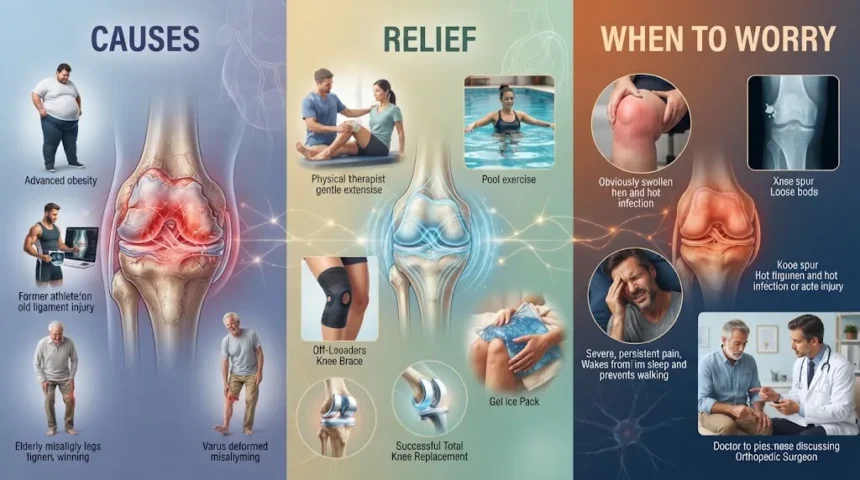
Osteoarthritis is the most common cause of severe cartilage loss in the knee. It develops gradually as the joint changes over time and can be influenced by age, previous injuries, genetics, body weight, and long-term loading. The condition may affect one part of the knee more than another, including the inner, outer, or kneecap portion of the joint.
Previous knee injuries can increase the likelihood of osteoarthritis later in life. Meniscus tears, ligament injuries, fractures, or major joint trauma can change how force moves through the knee. Even after the original injury heals, altered mechanics and cartilage damage may contribute to degenerative changes many years later.
Repeated heavy loading can also influence joint stress, although normal exercise is not automatically harmful to the knees. Strong muscles and appropriate physical activity are generally beneficial. Problems are more likely when workload consistently exceeds what the joint can tolerate, particularly when combined with previous injury, reduced strength, or significant changes in body weight.
Symptoms of Advanced Knee Osteoarthritis
Pain is usually the most noticeable symptom and may occur during walking, stairs, standing from a chair, or prolonged weight-bearing. Some people feel aching during activity and stiffness after sitting for a long time. Others notice discomfort at night or after a particularly demanding day when the joint has been exposed to more activity than usual.
Stiffness and reduced range of motion are also common. The knee may feel difficult to fully bend or straighten, especially when swelling is present. You may hear grinding, clicking, or cracking during movement, although these sounds do not always mean additional damage is occurring and can also happen in people without significant pain.
Weakness can develop when pain causes someone to use the leg less. The quadriceps may gradually lose strength, making stairs, squats, and getting out of a chair more difficult. This can create a cycle where reduced activity leads to less muscle support, which makes everyday tasks feel harder and may increase joint sensitivity.
Why Knee Pain Can Feel Worse on Some Days
Knee osteoarthritis symptoms can fluctuate even when the underlying joint structure has not changed dramatically. A long walk, repeated stairs, heavy lifting, or an unusually active day may temporarily increase irritation. Symptoms can also become more noticeable after long periods of inactivity, which is why some people feel especially stiff in the morning or after sitting.
Sleep, stress, and general health can influence how strongly pain is felt. When sleep is poor or stress levels are high, the nervous system may become more sensitive to discomfort. This does not mean the pain is imaginary; it means pain is influenced by both joint changes and how the body processes signals from the affected area.
Changes elsewhere in the body can also alter how you load the knee. Hip, back, or pelvic pain may change your walking pattern and place additional stress on one side. For example, people dealing with pregnancy-related pelvic symptoms may find this guide to SI joint pain in pregnancy useful for understanding how pelvic discomfort can affect movement.
How to Relieve Bone on Bone Knee Pain
The first step is often adjusting activities that clearly increase pain without becoming completely inactive. Shorter walks, fewer stairs, or smaller exercise ranges may be easier during a flare. The goal is to reduce excessive irritation while still keeping the knee moving, because prolonged inactivity can increase stiffness and reduce the strength needed to support the joint.
Heat may help when stiffness is the main complaint, while cold can feel better when the knee is swollen or sore after activity. Use either option for short periods and protect the skin with a cloth barrier. These approaches can make movement more comfortable, although they do not reverse cartilage loss or treat the underlying osteoarthritis.
Pain medication may be appropriate for some people, but individual medical conditions and other medicines can affect which options are safe. A doctor or pharmacist can help you choose an appropriate approach. Long-term management usually works best when symptom relief is combined with strengthening, weight management when relevant, and gradual improvements in everyday activity.
Best Exercises for Bone on Bone Knee Pain
Strengthening the quadriceps is especially important because these muscles help control the knee during walking, stairs, and standing. Sit-to-stands, supported mini squats, wall sits, and controlled knee extensions can all be useful when performed within a comfortable range. Start with light resistance and increase gradually rather than forcing painful repetitions.
Hip and glute strengthening can also support the knee. Exercises such as bridges, side steps, and step-ups help improve lower-body control and may reduce the amount of work the knee has to manage during everyday movement. A balanced program should train both the knee and surrounding muscles rather than focusing only on the painful joint itself.
Low-impact aerobic exercise can help maintain fitness and joint movement. Walking, cycling, swimming, and water exercise may be easier than repeated running or jumping for some people with advanced osteoarthritis. The best activity is one you can perform consistently without creating a large or lasting increase in symptoms afterward.
Can You Still Squat With Bone on Bone Knees?
Many people with knee osteoarthritis can still perform some form of squatting, but depth and load may need to be adjusted. A shallow squat or sit-to-stand from a higher chair can provide strengthening without requiring the knee to bend deeply. Support from a railing, countertop, or stable surface can also make the movement feel safer and more controlled.
Pain during squatting should guide the range rather than the idea that everyone must reach a particular depth. If a deep squat causes sharp pain or significant swelling afterward, reduce the depth and rebuild gradually. Heel elevation or a slightly wider stance can also make the movement more comfortable for some people.
Squats are only one option, not a mandatory exercise. Step-ups, leg presses, cycling, and seated knee extensions can strengthen the lower body in different ways. The most effective program is the one that improves strength while respecting your current tolerance instead of repeatedly provoking symptoms for the sake of using a specific exercise.
Weight, Walking, and Daily Activity
Body weight can influence the amount of force passing through the knee during walking and other weight-bearing activities. For people who are above a comfortable weight for their health, gradual weight reduction may reduce joint stress and improve mobility. The goal should be sustainable health changes rather than extreme dieting or rapid weight loss.
Walking can still be beneficial when distance and pace are adjusted to your tolerance. Shorter, more frequent walks may be easier than one long session that leaves the knee significantly more painful. Supportive footwear, flatter routes, and planned rest breaks can also make daily movement easier when the joint is sensitive.
Completely avoiding movement because of fear of “wearing out” the knee can create other problems. Muscles become weaker when they are not used, and overall fitness can decline. Regular activity within a tolerable range helps preserve strength, confidence, and independence even when X-rays show advanced osteoarthritis.
Medical Treatments That May Help
A healthcare professional may recommend different treatments depending on the severity of symptoms, medical history, and how much the pain affects daily life. Options can include pain medication, topical treatments, physical therapy, braces, or other supportive strategies. The most appropriate choice depends on the individual rather than the appearance of the knee on imaging alone.
Injections may be considered for some people when pain remains difficult to manage. Different types of injections are used in clinical practice, and the expected benefit can vary. These treatments should be discussed with a qualified clinician who can explain potential advantages, limitations, and risks based on your specific situation.
Physical therapy is often useful because it focuses on strength, movement, and practical ways to remain active. A therapist can adjust exercises when standard movements are painful and help you build a program around the activities that matter most to you. Rehabilitation can be valuable whether or not surgery is eventually considered.
When Knee Replacement May Be Discussed
Knee replacement may be considered when advanced osteoarthritis causes severe pain and major limitations despite appropriate non-surgical treatment. The decision is not based only on an X-ray showing reduced joint space. Doctors also consider pain severity, walking ability, sleep disruption, daily function, general health, and how much other treatments have helped.
Surgery replaces damaged joint surfaces with artificial components designed to restore smoother movement. Recovery requires rehabilitation and gradual strengthening, so it is still an active process rather than an instant solution. Many people experience substantial improvement, but outcomes and recovery timelines differ between individuals.
A consultation with an orthopedic specialist can help clarify whether surgery is appropriate. Some people with advanced X-ray changes function well without replacement, while others with severe symptoms may benefit from discussing it sooner. The best timing depends on how much the knee affects your quality of life rather than a single scan result.
When Bone on Bone Knee Pain Is More Concerning
Seek medical evaluation if knee pain suddenly becomes much worse without a clear reason. Rapid swelling, inability to bear weight, or a new feeling that the knee is unstable can indicate an injury or another problem beyond typical osteoarthritis. A recent fall or twisting injury also deserves assessment if normal movement becomes difficult.
A very hot, red, swollen knee accompanied by fever or feeling significantly unwell requires prompt medical attention. These symptoms can suggest infection or another inflammatory condition rather than a routine arthritis flare. Sudden calf swelling, chest pain, or unexplained shortness of breath also needs urgent assessment.
Progressive loss of function is another reason to seek help. If walking distances become shorter, sleep is regularly disrupted, or everyday tasks such as stairs and getting out of a chair are becoming increasingly difficult, a clinician can review your treatment plan. Persistent pain should not simply be accepted because someone used the phrase “bone on bone.”
Conclusion
Bone on bone knee pain most commonly refers to advanced osteoarthritis with significant cartilage loss. Symptoms can include pain, stiffness, swelling, reduced movement, and difficulty with everyday activities. However, the amount of structural change on imaging does not always match how much pain someone experiences, so treatment should focus on both symptoms and function.
Relief often involves a combination of activity modification, strengthening, low-impact exercise, symptom management, and weight management when appropriate. Keeping the quadriceps, hips, and glutes strong can support the joint and make daily movement easier. Complete inactivity usually leads to more weakness and stiffness, so movement should be maintained within a tolerable range.
Medical care is important when pain is severe, rapidly worsening, or significantly limiting daily life. Redness, fever, inability to bear weight, sudden swelling, or new instability should be assessed promptly. When non-surgical treatment no longer provides enough relief, an orthopedic specialist can discuss whether knee replacement or another intervention is appropriate.
FAQs
Can bone on bone knees get better without surgery?
Symptoms can often improve with strengthening, activity modification, weight management, physical therapy, and appropriate pain treatment. These approaches do not restore lost cartilage, but they may improve function and reduce discomfort.
Is walking good for bone on bone knee pain?
Walking can be beneficial when distance and pace are appropriate. Shorter, regular walks often work better than long sessions that cause significant pain or swelling afterward.
Does bone on bone always mean knee replacement?
No. Knee replacement is based on pain, function, quality of life, and response to other treatments, not imaging alone. Some people manage advanced osteoarthritis successfully without surgery.
What exercises are best for bone on bone knees?
Sit-to-stands, mini squats, step-ups, bridges, knee extensions, cycling, and water exercise can be useful. Exercise should be adapted to your pain level and current strength.
When should I worry about severe knee pain?
Seek medical attention for rapid swelling, inability to bear weight, a hot red joint, fever, major trauma, new instability, or sudden worsening of symptoms beyond your usual arthritis pattern.