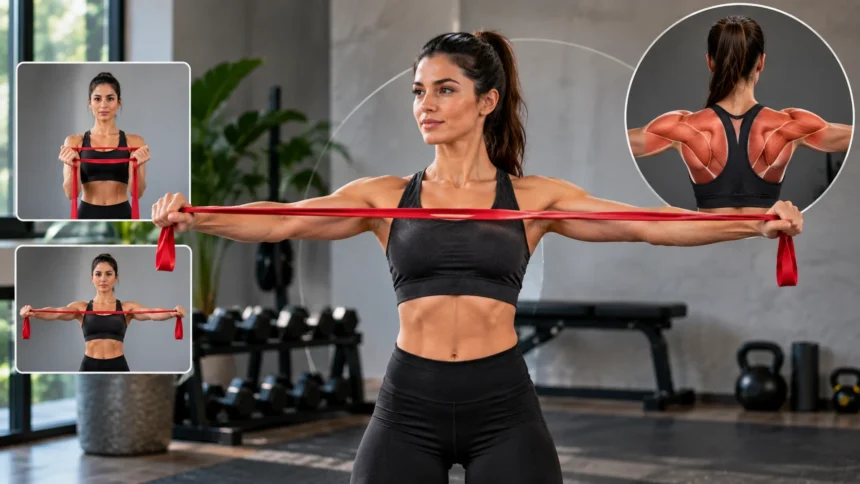
Band pull aparts are a simple resistance band exercise that targets the upper back, rear shoulders, and muscles around the shoulder blades. The movement requires very little equipment, which makes it easy to include in home workouts, gym warm-ups, travel routines, or accessory training. Despite looking basic, good technique matters if you want the exercise to feel effective and comfortable.
Many people use band pull aparts to balance pressing-heavy workouts, improve upper-back endurance, and practice better shoulder blade control. The exercise can also be useful before movements such as bench presses, overhead presses, rows, and pull-ups. Because resistance bands come in different strengths, beginners and experienced exercisers can adjust the difficulty without needing heavy equipment.
The key is to choose a band that lets you move smoothly without shrugging, leaning backward, or bending the elbows excessively. Band pull aparts should feel controlled rather than explosive. This guide explains how to perform them correctly, which muscles they work, their main benefits, common mistakes, variations, and practical tips for adding them to your workout.
What Are Band Pull Aparts?
Band pull aparts are an upper-body resistance exercise performed by holding an elastic band in front of the body and pulling the hands away from each other. As the band stretches, the shoulder blades move toward one another and the rear shoulder muscles become more active. The movement is usually performed with the arms around chest or shoulder height.
Unlike heavy rowing exercises, band pull aparts typically use lighter resistance and higher repetition ranges. The goal is often muscle activation, endurance, and movement control rather than maximum strength. This makes the exercise useful during warm-ups, accessory sessions, or lighter training days where you want to work the upper back without creating excessive fatigue.
The exercise is also convenient because resistance bands are inexpensive, lightweight, and portable. You can perform band pull aparts at home, at the gym, in an office, or while traveling. They require very little floor space and can be completed in just a few minutes, making them easy to add to a broader fitness routine.
What Muscles Do Band Pull Aparts Work?
Band pull aparts primarily work the rear deltoids, rhomboids, and middle trapezius. These muscles contribute to shoulder blade movement and help support the upper back during pulling and pressing exercises. When performed correctly, you should feel most of the effort across the back of the shoulders and between the shoulder blades rather than only in the arms.
The rear deltoids help move the upper arms backward, while the rhomboids and middle trapezius assist with drawing the shoulder blades toward one another. Smaller stabilizing muscles around the shoulder also contribute throughout the movement. This combination makes band pull aparts useful for developing better control across the back of the upper body.
Your forearms and hands also work to maintain grip on the band, while the core helps keep the torso steady. However, the core should not need to work excessively if the resistance level is appropriate. If you want to understand how trunk exercises complement upper-body work, this guide to plank muscles explains how different core muscles contribute during planks.
How to Perform Band Pull Aparts Correctly
Stand upright with your feet around hip-width apart and hold a resistance band with both hands. Extend your arms in front of your chest at approximately shoulder height, keeping a slight amount of tension in the band. Keep your chest relaxed, your neck long, and your shoulders away from your ears before starting the repetition.
Begin by pulling your hands apart while gently drawing your shoulder blades toward each other. Keep your elbows mostly straight without locking them aggressively. Continue until the band approaches your chest or until you reach a comfortable range where you can maintain good posture without leaning backward or forcing the shoulders.
Pause briefly at the end position, then slowly return your hands toward the starting point. Do not let the band snap your arms back together. The return phase should remain controlled because this keeps the target muscles engaged and helps you maintain better technique throughout the entire set.
Key Benefits of Band Pull Aparts
One of the biggest benefits of band pull aparts is that they strengthen muscles that may receive less attention in pressing-heavy routines. People who perform many push-ups, bench presses, or front-shoulder exercises often benefit from adding more upper-back and rear-deltoid work. Band pull aparts provide an easy way to increase this type of training volume.
The exercise can also improve awareness of shoulder blade movement. Learning how to pull the shoulder blades back without shrugging may help with technique during rows, pull-downs, and other upper-body exercises. Better control can make movements feel smoother and may help you avoid relying excessively on the neck or upper trapezius.
Another benefit is convenience. You do not need machines, dumbbells, or a large training area. A light resistance band can provide enough tension for effective repetitions, making band pull aparts suitable for warm-ups, home workouts, rehabilitation-style routines, or short movement breaks during the day.
Band Pull Aparts for Shoulder Stability
Shoulder stability depends on several muscles working together around the shoulder blade and upper arm. Band pull aparts train some of these muscles through a controlled pulling motion. This can be useful because the shoulder joint relies on coordinated muscle control rather than strength from one large muscle alone.
The exercise encourages the shoulder blades to move in a controlled way while the arms remain extended in front of the body. When you perform the movement slowly, you can focus on how the upper back supports the shoulder position. This is one reason band pull aparts are commonly included before upper-body strength training.
However, band pull aparts are not a complete solution for shoulder pain or instability. Existing injuries, limited mobility, or nerve-related symptoms may require a different approach. If the exercise causes sharp pain, pinching, numbness, or worsening symptoms, stop and consider seeking professional guidance before continuing.
Band Pull Aparts and Posture
Band pull aparts are often described as a posture exercise because they strengthen muscles across the upper back and rear shoulders. These muscles help control the position of the shoulder blades and can support balanced upper-body strength. People who spend long periods sitting may particularly enjoy the feeling of opening the chest and moving the shoulders after being relatively still.
However, posture is influenced by many factors, including movement habits, strength, mobility, work setup, comfort, and individual anatomy. One exercise cannot permanently correct every posture-related concern. Band pull aparts are better viewed as one useful strengthening movement within a balanced routine rather than a universal posture fix.
Combining the exercise with rows, mobility work, regular movement breaks, and lower-body training can provide a more complete approach. Changing positions throughout the day may also matter more than trying to hold one “perfect” posture continuously. The goal should be comfortable movement and balanced strength rather than rigid positioning.
Common Band Pull Apart Mistakes
Using a band that is too strong is one of the most common mistakes. When resistance is excessive, people often bend their elbows significantly, shrug the shoulders, or lean backward to finish the repetition. These compensations can reduce the emphasis on the intended muscles and make the exercise less comfortable.
Another mistake is performing the movement too quickly. Pulling the band apart explosively and allowing it to snap back reduces control during both phases of the exercise. Slow repetitions make it easier to feel the rear shoulders and upper back working while also helping you notice whether your shoulder blades are moving smoothly.
Some people also pull the band too high or too low without intending to change the exercise. For the standard version, keeping the hands around chest or shoulder height works well. Angle variations can be useful, but they should be performed deliberately rather than appearing because fatigue is changing your technique.
How Many Reps and Sets Should You Do?
For a warm-up, one to three sets of approximately 10 to 20 controlled repetitions may be enough. The goal is to activate the upper back and shoulders without exhausting them before heavier exercises. Use a light band and stop the set while your technique still feels smooth and comfortable.
If you are using band pull aparts as an accessory exercise, you may perform two to four sets of around 12 to 25 repetitions. Higher repetition ranges often work well because resistance bands create relatively light but continuous tension. The final repetitions should feel challenging without causing your posture or movement quality to break down.
There is no perfect repetition range for everyone. Your training experience, band strength, and overall workout volume all matter. Instead of chasing a specific number, focus on clean repetitions and gradually increase difficulty only when you can complete the current workload with consistent form.
Best Band Pull Apart Variations
The standard band pull apart is performed with the arms around shoulder height, but you can change the angle to add variety. A high band pull apart moves the arms slightly upward during the pulling phase. This may change where you feel the exercise across the upper back and rear shoulders.
A low band pull apart moves the hands slightly downward as the band stretches. You can also experiment with different hand positions, such as palms facing downward or slightly upward. Each variation changes the movement slightly, but you should still maintain steady shoulder blade control and avoid excessive shrugging.
Diagonal pull aparts are another option. One hand travels upward while the other moves downward, creating a diagonal line of tension. These variations can be useful once you are comfortable with the standard exercise, but beginners should first develop consistent technique with the basic version before adding more complex movement patterns.
How to Choose the Right Resistance Band
Choose a band that allows you to reach the end of the movement without losing your posture. If you cannot pull your hands apart while keeping your elbows mostly straight, the band is probably too strong. Starting lighter usually makes it easier to learn the movement and feel the intended muscles working.
You can also adjust difficulty by changing your hand position on the band. Holding the band wider generally reduces tension, while moving the hands closer together increases resistance. This allows you to make small adjustments without immediately switching to a different band.
Resistance bands naturally become harder to stretch as the movement progresses. This means the end of the repetition often feels significantly more difficult than the beginning. Choose resistance based on your ability to control the full range rather than how easy the first few inches feel.
When to Include Band Pull Aparts in Your Workout
Band pull aparts work well before an upper-body workout because they can help prepare the shoulders and upper back. Performing one or two light sets before bench presses, overhead presses, rows, or pull-ups can increase awareness of shoulder blade positioning. Keep the resistance moderate so the warm-up does not create unnecessary fatigue.
You can also perform band pull aparts after your main exercises. Using them near the end of a session allows you to add extra rear-shoulder and upper-back volume without needing heavy equipment. This can be especially useful if your workout contains several pressing movements and relatively less direct rear-deltoid work.
Another option is to include them in a short home or office movement routine. A few controlled sets can provide a simple break from prolonged sitting. However, more is not automatically better, so there is usually no need to perform hundreds of repetitions every day if your regular training already includes plenty of pulling exercises.
Best Practices for Better Band Pull Aparts
Focus on movement quality rather than trying to use the strongest possible band. Keep your neck relaxed, your torso steady, and your shoulders away from your ears. You should feel controlled tension across the upper back rather than strain in the neck, elbows, or lower back.
Use a comfortable range of motion. Your hands do not need to travel as far apart as possible if doing so causes discomfort or forces the shoulders into an awkward position. Stop where you can maintain good control, then gradually improve range if mobility and strength allow.
Inspect the band regularly for cracks, tears, or worn sections. Resistance bands can break unexpectedly if the material becomes damaged, so replacing worn equipment is important. Store bands away from sharp edges and excessive heat to help preserve their condition and make your training safer.
Conclusion
Band pull aparts are a simple but useful exercise for strengthening the rear shoulders, upper back, and muscles involved in shoulder blade control. They require very little equipment and can fit easily into warm-ups, accessory training, home workouts, or short movement sessions. Their simplicity makes them accessible, but technique still matters.
Choose a resistance level that allows smooth repetitions without shrugging, bending the elbows excessively, or leaning backward. Control both the pulling and returning phases rather than rushing through the set. A lighter band with better form is generally more useful than heavier resistance that causes compensations.
Band pull aparts can support balanced upper-body training, shoulder control, and rear-deltoid endurance when used appropriately. They work best as part of a complete program that also includes pulling, pressing, core, and lower-body exercises. Consistent technique and gradual progression will help you get the most value from the movement.
FAQs
What muscles do band pull aparts work?
Band pull aparts mainly work the rear deltoids, rhomboids, and middle trapezius. Smaller shoulder stabilizers and upper-back muscles also contribute during the movement.
Are band pull aparts good for beginners?
Yes. Beginners can use a light resistance band and focus on slow, controlled repetitions. The exercise is simple to learn and requires very little equipment or training space.
How many band pull aparts should I do?
One to three sets of 10 to 20 repetitions can work well for a warm-up. Accessory training may use slightly higher volume depending on resistance, experience, and overall workout structure.
Can band pull aparts improve posture?
They can strengthen upper-back and rear-shoulder muscles involved in controlling shoulder position. However, posture depends on several factors, so band pull aparts should be combined with broader strength, mobility, and movement habits.
Should band pull aparts cause shoulder pain?
No. Muscular effort is normal, but sharp pain, pinching, numbness, or worsening discomfort is a reason to stop. Use lighter resistance or seek professional advice if symptoms continue.