Workplace safety is a critical responsibility for businesses operating in industrial environments, construction sites, warehouses, and manufacturing facilities. Preventing falls, controlling access to hazardous areas, and protecting employees from workplace accidents require reliable safety equipment and consistent maintenance practices. Companies such as Intrepid Industries specialize in manufacturing OSHA-compliant safety products designed to improve workplace protection. Their product range includes self-closing safety gates, pedestrian gates, toeboards, safety hooks, and custom molded polyurethane components that help facilities reduce fall risks, strengthen safety procedures, and maintain compliance with applicable workplace regulations. With durable, high-quality solutions, they support safer working conditions across demanding industrial environments, including refineries and large-scale warehouses.
Why Industrial Fall Protection Matters
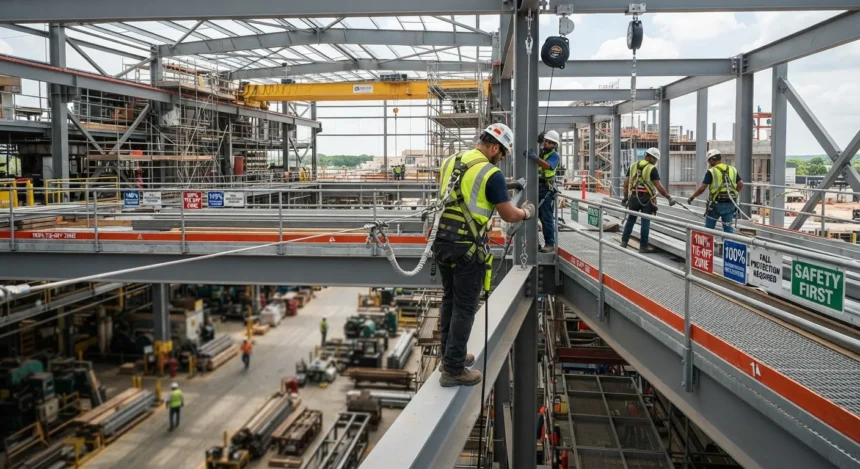
Falls remain a significant workplace hazard, particularly in environments where employees regularly work on elevated platforms, ladders, stairways, mezzanines, and industrial equipment. Even a relatively short fall can result in serious injuries, lost working hours, equipment damage, and unexpected operational expenses.
A comprehensive fall protection strategy helps organizations identify potential hazards before accidents occur. This involves installing appropriate protective equipment, establishing clear safety procedures, and ensuring employees understand how to work safely around elevated surfaces.
Businesses should regularly inspect platforms, walkways, guardrails, and access points to identify damaged or missing safety components. Investing in dependable protection systems can reduce workplace risks while creating a more organized and secure working environment.
The Importance of Safety Gates in Industrial Facilities
Industrial facilities often contain elevated walkways, loading platforms, maintenance areas, and restricted access points. These locations require effective barriers to prevent accidental falls and unauthorized access.
Installing pedestrian gates is one practical way to improve protection around these areas. Self-closing safety gates automatically return to their closed position after someone passes through, helping maintain a protective barrier without requiring employees to remember to close them manually.
Unlike temporary barriers, properly selected industrial safety gates are designed to withstand demanding working conditions. They can be installed at platform openings, ladder access points, mezzanines, and other locations where workers need convenient access without compromising safety.
When choosing safety gates, facility managers should consider:
-
Durability: Materials should withstand regular use and challenging industrial conditions.
-
Automatic operation: Self-closing mechanisms help keep access openings protected.
-
Compatibility: Gates should fit the dimensions and configuration of the intended installation.
-
Compliance: Products should meet applicable OSHA requirements and relevant safety standards.
-
Maintenance: Regular inspections help identify damaged hinges, springs, and other components.
The right gate system provides convenient access while reducing exposure to dangerous openings and elevated edges.
What Is a Toe Board and Why Is It Important?
Understanding basic fall protection components is essential when developing an effective workplace safety program. One common question among facility managers and construction professionals is: what is a toe board?
A toe board is a protective barrier installed along the lower edge of an elevated platform, walkway, or other working surface. Its primary purpose is to prevent tools, equipment, materials, and other objects from accidentally falling to a lower level.
Although relatively small compared with guardrails, toe boards play an important role in protecting employees working below elevated areas. A dropped wrench, metal component, or construction material can cause serious injuries when it falls from a height.
Toe boards are particularly useful in warehouses, industrial plants, manufacturing facilities, and construction environments where multiple employees may work at different elevations.
When selecting toe boards, businesses should evaluate their material strength, installation requirements, dimensions, and compatibility with existing platforms. They should also ensure that the installation meets applicable OSHA requirements, including relevant height and strength specifications.
Regular inspections are equally important because loose, damaged, or improperly installed toe boards may fail to provide adequate protection.
Choosing Durable Industrial Safety Products
Industrial safety equipment must perform reliably under challenging conditions. Facilities often experience heavy foot traffic, exposure to chemicals, temperature variations, moisture, and continuous equipment operation.
For this reason, product quality should be a major consideration when selecting fall protection components. Low-quality equipment can deteriorate quickly, increasing maintenance requirements and potentially creating additional workplace hazards.
Manufacturers specializing in industrial protection solutions provide products designed for specific applications. Self-closing gates, safety hooks, protective barriers, and molded polyurethane components can each contribute to a safer facility when selected and installed correctly.
Custom molded polyurethane components are particularly useful in applications that require specialized shapes, protective properties, or resistance to demanding operating conditions. Their versatility makes them suitable for various industrial equipment and safety applications.
Working with experienced manufacturers also allows businesses to identify products that match their facility layouts and operational requirements rather than relying entirely on generic solutions.
Improving Safety Across Different Industries
Fall protection requirements vary depending on the type of facility, working conditions, and potential hazards.
Refineries and chemical processing plants: These facilities often contain elevated pipelines, maintenance platforms, storage tanks, and industrial access structures. Appropriate gates, barriers, and protective components help reduce fall exposure and improve access control.
Warehouses and distribution centers: Employees frequently work around loading docks, storage platforms, mezzanines, and elevated picking areas. Properly installed safety gates and toe boards help protect workers while reducing the possibility of falling objects.
Construction sites: Temporary and permanent elevated work areas create multiple safety challenges. Reliable guardrails, access gates, and other protective equipment help establish safer working conditions as projects progress.
Manufacturing facilities: Production environments often include machinery, maintenance platforms, and restricted working zones. Durable safety products help protect employees while supporting consistent operational procedures.
Although each industry has different requirements, the objective remains the same: identify hazards, implement suitable protection measures, and maintain equipment in good working condition.
Maintaining OSHA Compliance Through Regular Inspections
Purchasing safety equipment is only one part of maintaining a compliant workplace. Businesses must also establish inspection schedules, document maintenance activities, and train employees to recognize potential hazards.
OSHA regulations provide requirements for different workplace conditions, including fall protection, guardrail systems, and protection against falling objects. Facilities should identify the specific standards applicable to their operations instead of assuming that every safety product meets every regulatory requirement.
A practical inspection program should include:
-
Checking safety gates for proper closing and secure installation.
-
Inspecting toe boards for damage, missing sections, and loose connections.
-
Examining hooks and attachment points for visible wear or deformation.
-
Reviewing elevated walkways and platforms for potential hazards.
-
Training employees to report damaged or improperly installed equipment.
-
Maintaining records of inspections, repairs, and equipment replacements.
These measures help organizations identify problems early and maintain consistent safety practices.
Investing in Workplace Protection for Long-Term Benefits
Industrial safety should be viewed as a long-term investment rather than an occasional maintenance expense. Workplace accidents can lead to medical costs, operational interruptions, regulatory penalties, and reduced employee confidence.
Reliable fall protection products help businesses address these risks while supporting a stronger workplace safety culture. Selecting durable equipment, maintaining protective barriers, and educating employees can make a meaningful difference in everyday operations.
Manufacturers such as Intrepid Industries demonstrate the importance of specialized industrial safety solutions through products such as self-closing gates, toe boards, safety hooks, and custom molded polyurethane components. By choosing appropriate protection systems and maintaining them properly, businesses can create safer facilities for employees, contractors, and visitors.
Ultimately, effective industrial safety depends on combining quality equipment, responsible installation, regular inspections, and employee awareness. These practices help organizations reduce preventable accidents, protect valuable resources, and maintain safer working environments for the long term.