Industrial automation has become an essential part of modern business operations, helping organizations improve productivity, maintain consistent quality, and reduce operational costs. Companies looking to upgrade their facilities can benefit from professional engineering services such as Pacific Blue Engineering, a control system integrator delivering customized automation solutions for industries including manufacturing, food and beverage, life sciences, entertainment, and transportation. Through advanced scada system integration, machine automation, and control technologies, they help businesses optimize processes, modernize legacy systems, improve machine safety, minimize operational risks, and gain valuable insights into their production environments.
Understanding Industrial Automation and Control Systems
Industrial automation involves using advanced technologies, programmable equipment, and computerized control systems to manage industrial processes with minimal manual intervention. These solutions allow businesses to perform repetitive operations more accurately while maintaining consistent production standards.
Control systems are central to this technology. They monitor equipment, collect operational information, and regulate processes according to predefined instructions. Programmable Logic Controllers (PLCs), Human-Machine Interfaces (HMIs), sensors, and industrial networks work together to create reliable automation environments.
When properly implemented, these technologies help organizations reduce human error, improve equipment performance, and maintain better control over complex industrial operations.
The Importance of SCADA System Integration
Supervisory Control and Data Acquisition (SCADA) systems provide businesses with centralized monitoring and control capabilities. They collect information from industrial equipment, display real-time operating conditions, and allow operators to supervise processes from a central interface.
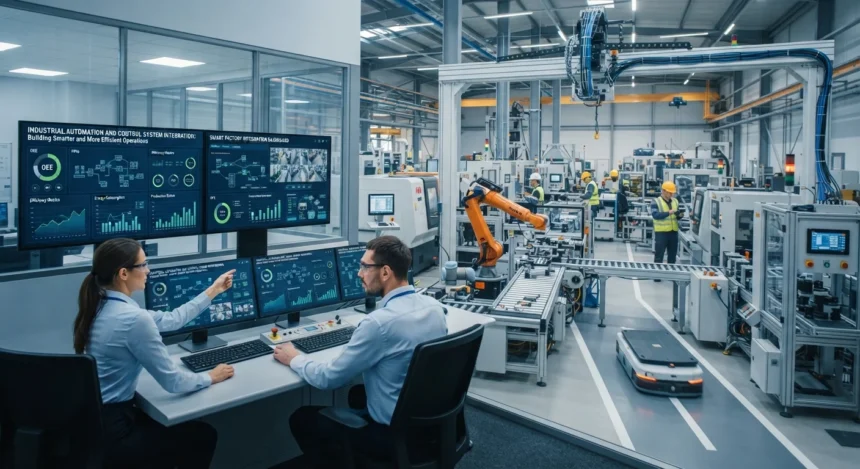
Effective scada system integration connects different machines, controllers, sensors, and software platforms into a unified monitoring environment. This makes it easier for operators to identify equipment problems, monitor production performance, and respond to unexpected conditions.
Some important benefits include:
- Real-Time Monitoring: Operators can monitor equipment performance and production activities as they happen.
- Improved Decision-Making: Operational data helps management identify inefficiencies and make informed decisions.
- Early Problem Detection: System alerts can highlight abnormal operating conditions before they develop into serious issues.
- Centralized Control: Multiple machines and processes can be monitored through a connected interface.
- Better Reporting: Historical information helps businesses evaluate performance and identify opportunities for improvement.
With a properly designed SCADA environment, organizations can gain greater visibility into their operations while improving overall system reliability.
Improving Production Through Process Control System Integration
Maintaining consistent production quality requires accurate control over industrial processes. Temperature, pressure, flow rates, speed, and other operating variables must remain within appropriate limits to achieve reliable results.
This is where process control system integration becomes particularly valuable. It connects industrial equipment, automation hardware, control software, and monitoring technologies to ensure that different stages of a production process operate together efficiently.
For example, food and beverage manufacturers rely on accurate temperature regulation, mixing operations, filling equipment, and automated packaging systems. Similarly, life sciences facilities require carefully controlled environments and dependable monitoring to maintain product consistency and meet operational requirements.
A well-integrated process control solution can help businesses achieve greater production consistency, reduce material waste, minimize downtime, and improve the coordination of industrial equipment.
Modernizing Legacy Industrial Control Systems
Many industrial facilities continue to operate with older control equipment and outdated automation technologies. Although these systems may still perform their basic functions, they can create challenges involving maintenance, compatibility, system reliability, and operational visibility.
Modernizing legacy controls allows businesses to replace outdated components, improve communication between machines, and introduce more advanced monitoring capabilities without necessarily replacing their entire infrastructure.
A successful modernization project may involve upgrading PLC hardware, replacing outdated HMIs, integrating modern SCADA platforms, improving industrial networking, and introducing updated safety technologies.
Businesses should approach these projects carefully to avoid unnecessary production interruptions. Experienced engineering teams can evaluate existing infrastructure, identify potential compatibility issues, and develop an upgrade strategy that supports both current requirements and future expansion.
Enhancing Machine Safety and Reducing Operational Risks
Workplace safety is a major consideration in industrial environments where employees interact with automated machinery, electrical equipment, and complex production processes.
Modern automation technologies can improve machine safety through protective sensors, emergency stop systems, safety controllers, interlocks, and automated shutdown procedures. These features help prevent unsafe machine operations and reduce the possibility of workplace incidents.
Control system engineers also evaluate potential hazards during system design and implementation. By incorporating appropriate safety measures into automation projects, organizations can create more dependable working environments while supporting applicable safety requirements.
In addition, automated monitoring can identify unusual equipment behavior and alert operators when intervention may be necessary. This helps businesses address potential problems before they affect production or employee safety.
Industry Applications of Advanced Automation Technologies
Industrial automation is not limited to traditional manufacturing facilities. Different industries use integrated control technologies to address their specific operational challenges.
Manufacturing: Automated production lines, robotic equipment, machine monitoring, and quality control systems help manufacturers improve production efficiency and maintain consistent output.
Food and Beverage: Automated processing, temperature monitoring, packaging systems, and production tracking help facilities maintain product quality and operational consistency.
Life Sciences: Advanced control environments support precise process monitoring, equipment coordination, and reliable operating conditions.
Entertainment: Automation technologies help manage complex lighting, audiovisual equipment, stage machinery, and other integrated systems used in entertainment venues.
Transportation: Control systems support equipment monitoring, infrastructure operations, automated processes, and improved coordination across transportation environments.
Each industry has different technical requirements, making customized engineering and system integration important for achieving reliable results.
Using Operational Data to Make Better Business Decisions
Modern automation systems do more than control machinery. They also generate valuable information that businesses can use to understand production performance and identify operational improvements.
Data collected through connected sensors, PLCs, and SCADA platforms can reveal equipment utilization, production interruptions, energy consumption, and process inconsistencies.
When this information is presented through accessible dashboards and reporting tools, managers can make decisions based on actual operating conditions rather than assumptions.
Predictive maintenance is another important application. By monitoring equipment performance and identifying unusual operating patterns, businesses can recognize potential maintenance requirements earlier and reduce unexpected equipment failures.
These capabilities help organizations move toward more informed, efficient, and proactive operations.
Choosing the Right Industrial Automation Integration Partner
Selecting an experienced engineering partner is an important step when planning an automation project. Businesses should consider technical expertise, industry experience, system compatibility, safety knowledge, and the ability to provide long-term support.
A qualified control system integrator should understand the facility’s existing infrastructure and develop solutions that address its actual operational requirements. This includes evaluating current processes, selecting appropriate technologies, designing control architectures, and supporting installation, testing, and commissioning.
Pacific Blue Engineering is an example of a company providing tailored control system integration and automation engineering services across multiple industries. Its approach to advanced systems engineering helps organizations modernize existing infrastructure, improve machine safety, enhance product quality, and achieve better operational visibility.
Working with knowledgeable integration professionals can also help businesses reduce implementation risks and ensure that new technologies align with their long-term objectives.
Conclusion
Industrial automation and control system integration are transforming how modern organizations manage production, equipment, and operational processes. Technologies such as SCADA platforms, PLCs, HMIs, and integrated process controls provide businesses with better visibility, improved consistency, and greater control over their facilities.
Whether upgrading legacy infrastructure, improving machine safety, or introducing advanced monitoring capabilities, investing in the right automation strategy can deliver lasting operational benefits. By working with experienced engineering specialists and adopting solutions suited to their specific requirements, businesses can build more reliable, productive, and future-ready industrial environments.