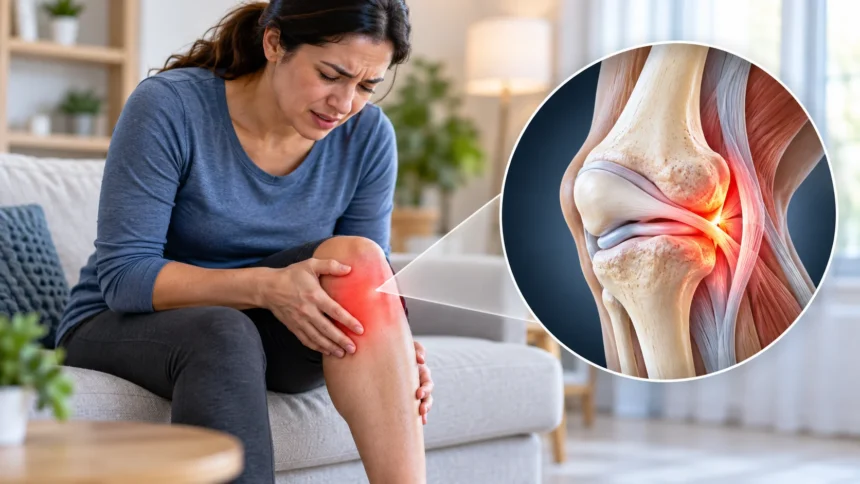
Pain on the inner side of the knee can make walking, climbing stairs, exercising, or even standing for long periods uncomfortable. The inner knee, also called the medial knee, contains ligaments, cartilage, tendons, bones, and other tissues that can become irritated through injury, overuse, or age-related changes. Symptoms may feel sharp, aching, stiff, swollen, or tender.
Some causes of inner knee pain develop suddenly after twisting, falling, or changing direction during sports. Others appear gradually because of repetitive stress, arthritis, muscle weakness, or irritation around nearby tendons. The location of the pain can provide clues, but it is not always enough to identify the exact structure involved.
Understanding common causes and appropriate relief strategies can help you respond more effectively. Mild problems often improve with activity modification and gradual rehabilitation, while severe pain, instability, major swelling, or symptoms after significant trauma may need professional assessment. This guide explains why inner knee pain happens and what you can do about it.
Where Is Inner Knee Pain Located?
Inner knee pain occurs on the medial side of the knee, which is the side closest to the opposite leg. This area includes the medial collateral ligament, medial meniscus, joint surfaces, tendons, and soft tissues. Pain may be felt directly along the joint line or slightly below the knee depending on which structure is irritated.
Some people experience very localized tenderness, while others describe a broader aching sensation extending toward the thigh or upper shin. Symptoms can appear during walking, squatting, running, or turning. The pattern may also change depending on whether the problem involves a ligament, cartilage, tendon, joint, or surrounding muscle.
Identifying the exact location can help during an evaluation. Pain directly along the joint line may suggest one group of causes, while discomfort below the joint can indicate another. However, several structures sit close together, so location should be considered alongside swelling, movement limitations, injury history, and other symptoms.
Medial Collateral Ligament Injury
The medial collateral ligament, or MCL, runs along the inner side of the knee and helps resist forces that push the knee inward. It can become strained or torn when the outside of the knee is hit or when the joint twists unexpectedly. Sports involving contact or rapid changes in direction are common situations where MCL injuries occur.
Mild MCL injuries may cause tenderness and discomfort without major instability. More significant injuries can produce swelling, difficulty walking, and a feeling that the knee is unstable. Pain is often concentrated along the inner side of the joint and may become stronger when pressure is applied from the outside.
Treatment depends on injury severity. Mild sprains may improve with temporary activity reduction, controlled movement, and gradual strengthening, while more severe injuries may require bracing or supervised rehabilitation. A healthcare professional should evaluate significant instability, major swelling, or difficulty bearing weight after an injury.
Medial Meniscus Problems
The medial meniscus is a C-shaped piece of cartilage that helps distribute pressure inside the knee. It can become injured during twisting movements, particularly when the foot remains planted while the body rotates. Degenerative changes can also make the meniscus more vulnerable over time, sometimes without a dramatic injury.
Meniscus-related pain is often felt along the inner joint line. Some people notice clicking, catching, stiffness, swelling, or difficulty fully bending or straightening the knee. Symptoms may become more noticeable during deep squats, twisting, kneeling, or movements that place greater pressure through the joint.
Not every meniscus problem requires surgery. Many cases can be managed with activity modification, strengthening, and progressive rehabilitation depending on symptoms and function. Persistent locking, recurrent swelling, or an inability to move the knee normally should be assessed by a healthcare professional.
Knee Osteoarthritis and Joint Wear
Osteoarthritis can cause pain on the inner side of the knee when cartilage within the medial joint compartment becomes worn or irritated. The condition tends to become more common with age but can also be influenced by previous injuries, genetics, joint alignment, activity history, and other individual factors.
Symptoms may include aching, stiffness, reduced mobility, swelling, or discomfort after prolonged activity. Some people feel worse after sitting for a long time and then standing, while others notice increased pain after extended walking. Symptoms can fluctuate rather than progressing in a perfectly predictable pattern.
Arthritis affects many joints in the body, and similar age-related processes can occur elsewhere, such as in neck arthritis. Management commonly focuses on maintaining movement, improving strength, controlling symptoms, and modifying activities when necessary rather than avoiding physical activity completely.
Pes Anserine Bursitis or Tendon Irritation
The pes anserine area lies on the inner side of the upper shin, slightly below the knee joint. Several tendons attach here, and a small fluid-filled bursa helps reduce friction. Repetitive stress can irritate these tissues, leading to tenderness and pain below the inner knee.
Symptoms may become more noticeable when climbing stairs, running, rising from a chair, or walking uphill. The area can feel tender when pressed and may be confused with pain coming from the knee joint itself. People who suddenly increase training volume may be more likely to experience irritation here.
Treatment often includes reducing aggravating activity temporarily, improving strength and flexibility, and gradually returning to exercise. Addressing hip and leg mechanics may also help when movement patterns contribute. Persistent tenderness or symptoms that do not improve should be evaluated to confirm the source.
Muscle Weakness and Movement Patterns
The knee does not work independently from the hip, ankle, and surrounding muscles. Weakness or poor control in the hips and thighs can influence how forces travel through the knee during walking, running, squatting, or jumping. This may increase stress on the inner side of the joint in some individuals.
For example, poor control of the hip during a squat can allow the knee to move inward excessively. This does not automatically cause injury, but repeated movement under high load may contribute to irritation when tissue capacity is limited. Strengthening the hips, quadriceps, hamstrings, and calves can improve overall lower-body control.
A rehabilitation program should focus on movement quality as well as strength. Exercises such as controlled squats, step-downs, bridges, and resistance-band work may be useful when appropriate. Progress should remain gradual because increasing difficulty too quickly can aggravate an already sensitive knee.
Overuse From Running or Exercise
Inner knee pain can develop after a sudden increase in running distance, exercise intensity, or training frequency. Even healthy tissues can become irritated when the workload increases faster than the body can adapt. New shoes, different surfaces, hills, or a change in exercise routine may also alter knee loading.
Overuse pain often develops gradually rather than after one obvious injury. You may notice mild soreness after activity that becomes more persistent as training continues. Ignoring early symptoms and repeatedly exercising through increasing pain can make recovery slower by continuing to stress the irritated tissues.
Reducing training temporarily does not necessarily mean stopping all activity. Lower-impact exercise, shorter sessions, or alternative movements may allow you to remain active while symptoms settle. Gradually rebuilding volume is usually more effective than returning immediately to the workload that triggered the problem.
What You Can Do for Mild Inner Knee Pain
When pain is mild and clearly related to activity, temporarily reducing movements that aggravate symptoms may help. Avoid deep squats, running, twisting, or prolonged kneeling if they significantly increase discomfort. Continue comfortable daily movement when possible because complete inactivity can contribute to stiffness and muscle weakness.
Cold therapy may provide temporary relief after a recent flare-up or exercise-related irritation. Apply a wrapped cold pack for a short period rather than placing ice directly on the skin. Heat may feel more comfortable for stiffness in some cases, particularly when there is no recent acute injury or significant swelling.
Over-the-counter pain relief may be appropriate for some people, but medication should be considered carefully based on health history and other medicines. If you have kidney, stomach, cardiovascular, bleeding, or pregnancy-related concerns, ask a healthcare professional or pharmacist before using anti-inflammatory medication.
Exercises That May Help Inner Knee Pain
Strengthening the quadriceps can improve support around the knee and make everyday movements easier. Simple exercises such as straight-leg raises, controlled sit-to-stands, and shallow squats may be useful depending on the cause of pain. Start within a comfortable range and increase repetitions or resistance gradually.
Hip strengthening can also support better lower-limb control. Glute bridges, side-lying leg raises, and controlled step exercises may help improve stability around the pelvis and knee. Exercise should create manageable effort rather than sharp inner knee pain, and symptoms should not become progressively worse after each session.
Flexibility work may be included when tight muscles limit comfortable movement. Gentle stretches for the calves, hamstrings, quadriceps, and hip muscles can be useful, but stretching alone may not solve the underlying problem. A balanced program that includes strength, mobility, and gradual loading is generally more effective.
When to Avoid Exercise Temporarily
Exercise should be modified if the knee becomes increasingly swollen, unstable, or sharply painful. Significant pain during weight-bearing may indicate that the joint needs assessment before more demanding activity continues. Forcing exercise through these symptoms can make it harder to understand what is causing the problem.
A recent injury accompanied by a popping sensation, rapid swelling, or inability to continue activity also deserves caution. These signs can occur with ligament, meniscus, or other structural injuries. Resting from strenuous activity until the knee has been assessed is more appropriate than testing it repeatedly with painful movements.
Mild discomfort during rehabilitation is not always harmful, but pain intensity and response afterward matter. If symptoms settle quickly and gradually improve, the exercise may be appropriate. If pain remains stronger for hours or continues worsening from session to session, reduce the load and seek guidance.
How Inner Knee Pain Is Diagnosed
A healthcare professional usually begins by asking when the pain started and whether there was a specific injury. They may also ask about swelling, clicking, locking, instability, sports, work demands, and which movements increase symptoms. These details help distinguish between joint, ligament, tendon, and overuse-related problems.
During the physical examination, knee movement, tenderness, strength, stability, and functional tasks may be assessed. The clinician may also examine the hip and ankle because problems in neighboring areas can influence the way the knee moves. Specific tests can provide clues about ligaments, menisci, or other tissues.
Imaging is not required for every case of inner knee pain. X-rays may be helpful when arthritis, fracture, or bone changes are suspected, while MRI may be considered for certain soft-tissue injuries. Imaging findings should be interpreted together with symptoms and examination rather than considered in isolation.
How to Prevent Inner Knee Pain From Returning
Gradually increasing exercise volume is one of the best ways to reduce overuse problems. Avoid suddenly doubling running distance, training days, or resistance. Giving muscles, tendons, and joints enough time to adapt allows the body to tolerate greater workloads with less irritation.
Strength training can also improve resilience. Exercises that strengthen the quadriceps, hamstrings, glutes, calves, and trunk help distribute forces throughout the lower body. Consistent training is generally more effective than waiting until pain appears and then performing rehabilitation only during flare-ups.
Pay attention to recovery as well. Sleep, nutrition, rest days, and variation in training intensity all influence how well tissues adapt. If the same inner knee pain keeps returning despite reasonable adjustments, professional assessment can help identify movement, strength, or structural factors that may be contributing.
When Inner Knee Pain Needs Medical Attention
Seek prompt evaluation if inner knee pain follows significant trauma or is accompanied by major swelling, obvious deformity, or inability to bear weight. These symptoms may indicate a more substantial injury than a simple strain. Severe pain that begins suddenly without a clear explanation should also be assessed.
Medical attention is also appropriate if the knee repeatedly gives way, locks in one position, or cannot fully bend or straighten. Persistent redness, warmth, fever, or severe swelling can indicate inflammation or infection and should not be managed only with home exercises or pain relief.
Even without urgent symptoms, schedule an assessment when pain continues for several weeks, repeatedly returns, or interferes with walking, exercise, sleep, or normal daily activities. Early evaluation can help identify the likely cause and guide a more specific rehabilitation plan.
Conclusion
Pain on the inner side of the knee can come from several structures, including the MCL, medial meniscus, joint surfaces, tendons, and nearby bursae. Overuse, arthritis, sudden twisting injuries, and changes in training load are among the common possibilities. The exact cause depends on the pattern of symptoms and how the pain began.
Mild pain often improves with temporary activity modification, gradual movement, strengthening, and sensible symptom management. Exercises for the hips and legs can help improve knee control and build tolerance over time. Returning to demanding activity should be gradual rather than based only on whether the pain has temporarily disappeared.
Severe swelling, instability, locking, inability to bear weight, fever, or significant trauma should prompt medical evaluation. Persistent inner knee pain also deserves assessment when it continues affecting daily life. A clear diagnosis can help ensure that treatment targets the actual problem rather than simply masking symptoms.
FAQs About Pain on the Inner Side of the Knee
What is the most common cause of inner knee pain?
Common causes include MCL irritation, meniscus problems, osteoarthritis, and pes anserine tendon or bursa irritation. The most likely cause depends on injury history, age, activity level, and accompanying symptoms.
Can inner knee pain heal on its own?
Mild strains and overuse problems may improve with activity modification and gradual rehabilitation. Persistent pain, major swelling, instability, or locking should be evaluated because some conditions need more specific treatment.
Is walking good for inner knee pain?
Gentle walking can be helpful when it does not significantly increase pain or swelling. Reduce distance or intensity if symptoms worsen, and avoid forcing activity when weight-bearing is sharply painful.
What exercises help pain on the inside of the knee?
Controlled squats, sit-to-stands, bridges, step exercises, and hip strengthening may help depending on the cause. Exercises should be performed within a comfortable range and progressed gradually.
When should I worry about inner knee pain?
Seek medical care for severe pain, rapid swelling, instability, locking, inability to bear weight, fever, or symptoms after significant trauma. Pain that persists for several weeks should also be evaluated.