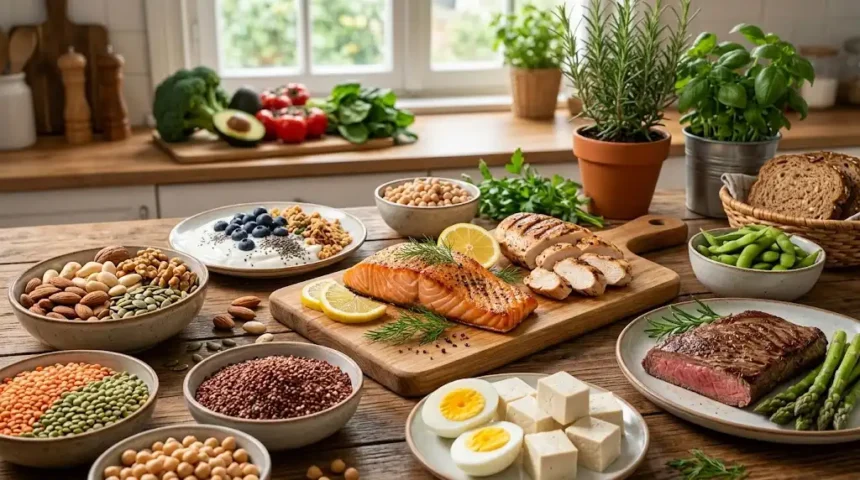
Protein is an essential nutrient that supports muscles, tissues, enzymes, hormones, immune function, and many other processes throughout the body. Eating enough protein can also make meals more satisfying and support recovery after physical activity. Fortunately, you do not need expensive supplements or specialty foods to build a nutritious, protein-rich eating pattern.
The best high-protein foods include both animal and plant-based options, giving you plenty of flexibility based on your preferences, budget, culture, and health needs. Eggs, yogurt, fish, poultry, beans, lentils, tofu, nuts, seeds, and certain whole grains can all contribute meaningful amounts of protein while providing additional nutrients.
This guide explores the best high-protein foods for a healthy diet and explains practical ways to include them throughout the day. Rather than focusing only on protein numbers, it considers overall food quality, fiber, healthy fats, vitamins, and minerals. The goal is to help you build balanced meals that support health without making nutrition unnecessarily complicated.
Why Protein Is Important for a Healthy Diet
Protein is made from amino acids that your body uses to build and repair tissues. Muscles, skin, organs, enzymes, and many hormones rely on these building blocks. Some amino acids can be produced by the body, while essential amino acids need to come from food, making adequate dietary protein important throughout life.
Protein becomes particularly important during periods of growth, recovery, pregnancy, aging, or increased physical activity. Athletes may require additional protein to support training adaptations, while older adults benefit from paying attention to muscle maintenance. However, more protein is not automatically better, and your overall diet still needs carbohydrates, fats, fiber, vitamins, and minerals.
Protein can also contribute to satisfaction after meals because protein-rich foods often take longer to digest than rapidly absorbed carbohydrates alone. Combining protein with fiber-rich foods can create especially filling meals. This may help you maintain steadier eating patterns without needing to depend on rigid calorie counting or constant snacking.
How Much Protein Do You Really Need?
Protein requirements vary depending on age, body size, activity, pregnancy, health status, and individual goals. A commonly used baseline for healthy adults is around 0.8 grams of protein per kilogram of body weight per day. Some active adults, older people, and athletes may benefit from higher intakes depending on their circumstances.
You do not necessarily need to calculate your exact protein intake every day. A practical approach is to include a meaningful protein source at breakfast, lunch, and dinner, then use protein-rich snacks when needed. Spreading protein across the day can be easier and more comfortable than trying to consume most of it in one large meal.
People with kidney disease or certain other medical conditions may need individualized guidance regarding protein intake. Anyone making major dietary changes because of a health condition should consider professional advice. General high-protein recommendations are most useful for otherwise healthy people who want to improve meal balance and dietary quality.
Eggs Are a Convenient High-Protein Choice
Eggs are one of the most practical protein foods because they are quick to prepare, widely available, and versatile. They provide high-quality protein along with nutrients such as choline, selenium, and vitamin B12. Boiled, scrambled, poached, or baked eggs can fit easily into breakfast, lunch, dinner, or snacks.
Eggs also combine well with nutrient-dense ingredients. An omelet with vegetables, eggs with whole-grain toast, or boiled eggs alongside fruit can create a more balanced meal. Pairing protein with fiber-rich foods helps provide additional nutrients and makes breakfast or lunch more satisfying than relying mainly on refined carbohydrates.
You do not need to eat eggs at every meal simply because they are nutritious. Variety remains important, and rotating eggs with yogurt, beans, fish, tofu, poultry, and other protein sources provides a broader range of nutrients. People with specific medical concerns can follow individualized advice regarding their overall dietary pattern.
Greek Yogurt Provides Protein and Calcium
Greek yogurt is a useful high-protein food that requires almost no preparation. It typically contains more protein than many traditional yogurts while also providing calcium and other nutrients. It can work as breakfast, a snack, or a base for sauces and dips, making it one of the easiest protein-rich foods to include regularly.
For a balanced breakfast, combine Greek yogurt with berries, oats, nuts, or seeds. This adds fiber, carbohydrates, healthy fats, and additional micronutrients alongside the protein. Plain varieties allow you to control sweetness yourself, although flavored yogurt can still fit into a healthy eating pattern when enjoyed in reasonable portions.
People who avoid dairy can consider fortified plant-based alternatives, but protein levels vary significantly between products. Soy-based yogurts often provide more protein than some coconut or starch-based options. Checking the label can help you compare protein, calcium, added sugar, and overall nutritional value rather than relying only on marketing claims.
Cottage Cheese Makes an Easy Protein-Rich Meal
Cottage cheese provides a substantial amount of protein while being easy to pair with both sweet and savory ingredients. It can be served with fruit, whole-grain toast, tomatoes, cucumber, herbs, or nuts. This flexibility makes it useful for breakfast, lunch, snacks, or quick meals when you have limited time to cook.
A simple bowl of cottage cheese with berries and seeds can provide protein, fiber, and healthy fats. For a savory version, try pairing it with tomatoes, avocado, pepper, and whole-grain crackers. These combinations create more nutritional balance than eating cottage cheese alone while keeping preparation quick and uncomplicated.
Some cottage cheese varieties can contain significant sodium, so comparing labels may be useful for people who monitor sodium intake. Texture can also be a barrier for some people, and there is no need to force yourself to eat it. Greek yogurt, eggs, tofu, or another protein food can work equally well.
Chicken and Turkey Are Lean Protein Options
Chicken and turkey are popular sources of high-quality protein and can fit into many different cuisines. Skinless breast meat is particularly lean, while darker cuts contain slightly more fat but still provide valuable protein and nutrients. Both can be grilled, roasted, baked, shredded, or added to soups, wraps, curries, and grain bowls.
Preparation method influences the overall nutritional profile of the meal. Grilled chicken with vegetables and brown rice will have a different balance than heavily breaded fried chicken with rich sauces. You do not need to avoid every fried or richer preparation, but choosing simpler cooking methods more often can support a balanced diet.
Meal preparation can make poultry especially convenient. Cooking extra chicken or turkey allows you to use leftovers in salads, sandwiches, wraps, or rice dishes during the week. This can reduce reliance on highly processed protein foods while making it easier to build quick meals when your schedule becomes busy.
Fish Provides Protein Plus Valuable Nutrients
Fish provides high-quality protein along with nutrients such as vitamin B12, selenium, iodine, and healthy fats depending on the species. Salmon, sardines, trout, tuna, mackerel, and white fish can all fit into a nutritious eating pattern. Fatty fish also provide omega-3 fatty acids, which are important components of a balanced diet.
Fish can be prepared simply by baking, grilling, steaming, or adding it to soups and salads. Canned tuna, salmon, and sardines are convenient alternatives when fresh seafood is expensive or unavailable. Keeping canned fish in the pantry can give you a quick protein source for sandwiches, pasta, crackers, or grain bowls.
You do not need to eat fish every day to benefit. Rotating seafood with poultry, eggs, legumes, dairy foods, and plant-based proteins can create greater dietary variety. Pregnant individuals and young children may need to consider mercury levels in certain fish and follow appropriate guidance for seafood choices.
Lean Beef Can Fit Into a Balanced Diet
Lean beef provides protein along with iron, zinc, vitamin B12, and other nutrients. Choosing leaner cuts and reasonable portions can allow beef to fit comfortably into a balanced eating pattern. It can be used in stir-fries, stews, tacos, grain bowls, or vegetable-rich dishes without making meat the only focus of the meal.
Iron from meat is generally absorbed efficiently, which can be particularly useful for people with higher iron needs. However, you do not need beef to obtain enough iron or protein. Legumes, fortified foods, fish, poultry, eggs, and other foods can contribute depending on your dietary preferences and nutritional requirements.
Processed meats and fresh lean meat are not nutritionally identical. Bacon, sausages, and certain deli meats can be higher in sodium and other ingredients, so choosing minimally processed forms more often may improve overall diet quality. Variety remains more important than relying heavily on one animal protein source.
Lentils Deliver Plant Protein and Fiber
Lentils are one of the most practical plant-based protein foods because they provide both protein and substantial fiber. They also contribute iron, folate, potassium, and other nutrients. Red, green, brown, and black lentils can be used in soups, curries, stews, salads, and grain bowls across many different cuisines.
Their combination of protein and fiber can make meals particularly filling. Lentils pair well with rice, whole-grain bread, vegetables, yogurt, or healthy fats depending on the dish. Combining them with grains can also provide a broader amino acid profile across the overall diet without requiring complicated food combinations at every meal.
Dried lentils are inexpensive and store well, making them useful for budget-conscious healthy eating. They also cook faster than many dried beans. If you are not accustomed to eating legumes, increase portions gradually because the higher fiber content can temporarily cause gas or bloating while your digestive system adjusts.
Beans and Chickpeas Are Affordable Protein Foods
Beans and chickpeas provide plant protein, fiber, carbohydrates, iron, potassium, and numerous other nutrients. Black beans, kidney beans, cannellini beans, chickpeas, and pinto beans are easy to include in soups, salads, wraps, curries, dips, and rice dishes. Their affordability makes them particularly valuable for building nutritious meals on a budget.
Canned beans can make preparation much faster because they are already cooked. Rinsing them can reduce some of the sodium when that is relevant to your diet. Dried beans are generally even more economical and can be cooked in larger batches, then refrigerated or frozen for convenient meals later.
Hummus is another simple way to eat chickpeas, although its protein content per serving is lower than a full portion of beans. Pairing hummus with whole-grain bread, vegetables, eggs, or another protein source can create a more satisfying meal. The goal is to use legumes flexibly rather than expecting one food to provide everything.
Tofu and Tempeh Offer Versatile Plant Protein
Tofu and tempeh are soy-based foods that provide useful amounts of protein and can fit into vegetarian, vegan, or mixed diets. Tofu has a relatively mild flavor and absorbs sauces well, while tempeh has a firmer texture and stronger taste. Both can be stir-fried, baked, grilled, or added to soups and bowls.
Tofu can also provide calcium when it is prepared using calcium-containing coagulants, although amounts vary between products. Tempeh offers additional texture and can work well in sandwiches or crumbled into dishes. Using several soy foods across the week can provide protein variety without relying exclusively on meat or dairy.
Some people avoid soy because of misconceptions about hormones, but moderate soy-food consumption can fit into a balanced diet for most people. Those with soy allergies obviously need alternatives. Beans, lentils, seitan, nuts, seeds, eggs, dairy foods, or animal proteins can fill similar roles depending on personal preferences.
Edamame Is a Simple High-Protein Snack
Edamame are young soybeans that provide plant protein, fiber, and several micronutrients. They can be served on their own, added to salads, mixed into rice bowls, or included in stir-fries. Frozen edamame are especially convenient because they cook quickly and can be stored for long periods.
A bowl of edamame can make a more substantial snack than many refined snack foods because it provides both protein and fiber. It also works well alongside vegetables and whole grains as part of a meal. Seasoning with herbs, spices, or a small amount of salt can make the beans more flavorful.
Like other soy foods, edamame does not need to be consumed daily. It simply provides another protein option that can increase variety, especially for people eating fewer animal products. Rotating several protein sources generally makes it easier to obtain a wider range of nutrients and keep meals interesting.
Milk and Kefir Can Increase Daily Protein
Milk provides protein, calcium, vitamin B12, and other nutrients, while fortified varieties may also provide vitamin D. It can be consumed as a drink, added to oatmeal, used in smoothies, or included in cooking. For people who tolerate dairy, it offers an easy way to increase protein without adding another separate meal.
Kefir is a fermented milk drink that also provides protein and can contain live cultures depending on the product. It can be consumed on its own or blended with fruit and oats. Some people find fermented dairy easier to tolerate, although individual responses vary and lactose-free options may be more appropriate for others.
Plant-based milks differ considerably in protein content. Soy milk often provides more protein than almond, rice, or some oat beverages, although formulations vary. If protein is important to you, compare labels rather than assuming every milk alternative provides nutritional values similar to dairy milk.
Nuts and Seeds Add Protein and Healthy Fats
Nuts and seeds provide protein, healthy fats, fiber, magnesium, and other nutrients in relatively small portions. Almonds, peanuts, pistachios, pumpkin seeds, sunflower seeds, chia seeds, and hemp seeds can all contribute. They work well in oatmeal, yogurt, salads, smoothies, toast, or as convenient snacks between meals.
Because nuts and seeds are energy-dense, moderate portions are usually enough. A small handful of nuts or spoonful of seeds can enhance a meal without needing to become its main protein source. Their protein content is useful, but many people will still benefit from combining them with higher-protein foods.
Nut and seed butters are another convenient option. Peanut butter or almond butter can be spread on whole-grain toast, combined with fruit, or blended into smoothies. People with allergies can choose appropriate alternatives, since healthy eating never requires consuming a particular food when another source can meet similar nutritional needs.
Quinoa and Oats Contribute Extra Plant Protein
Whole grains are generally known for carbohydrates and fiber, but some also contribute useful amounts of protein. Quinoa provides more protein than many common grains and can be used in salads, bowls, soups, or as a side dish. Oats also provide protein alongside soluble fiber, making them a practical breakfast staple.
These foods should not necessarily replace dedicated protein sources when your needs are higher. Instead, think of their protein as an additional contribution. Oatmeal prepared with milk and topped with yogurt and nuts, for example, contains protein from several ingredients rather than depending entirely on the oats themselves.
Combining whole grains with beans, lentils, tofu, eggs, dairy, fish, or poultry can create satisfying meals with substantial protein. This layered approach makes it easier to meet nutritional needs without focusing obsessively on protein numbers. It also increases fiber, vitamins, minerals, and overall dietary variety.
Build a High-Protein Breakfast That Fits Your Routine
Breakfast is a useful opportunity to include protein early in the day. Eggs, Greek yogurt, cottage cheese, milk, tofu, beans, nuts, and seeds can all work well in morning meals. Including protein may help create greater satisfaction than breakfasts made mostly from refined carbohydrates and sweetened drinks.
If you need more inspiration, these breakfast ideas show practical ways to combine nutritious foods into satisfying morning meals. You can adapt the ideas by adding eggs, Greek yogurt, cottage cheese, soy milk, nuts, seeds, or other protein sources based on your dietary preferences.
You do not have to eat a huge breakfast to include protein. A yogurt bowl with fruit, eggs with toast, overnight oats made with milk, or a tofu scramble can all work. The best choice is one that fits your appetite, schedule, budget, and ability to prepare food consistently.
Choose High-Protein Snacks When You Need Them
Protein-rich snacks can be useful when meals are separated by long periods or when physical activity increases hunger. Greek yogurt, cottage cheese, boiled eggs, edamame, nuts, milk, roasted chickpeas, or cheese can provide more staying power than snacks containing mainly refined carbohydrates.
You do not need a protein snack every time you eat. If your meals already provide enough nutrition and you are not hungry, additional snacking may be unnecessary. Snacks should serve your appetite and schedule rather than becoming another rule you feel obligated to follow simply because high-protein diets are popular.
Convenience matters when choosing snacks. Keeping yogurt, eggs, nuts, or roasted legumes available can make protein easier to include during busy days. Protein bars can also be useful occasionally, although checking ingredients and added sugar helps you determine whether they fit your needs and preferences.
Build Balanced Meals Around Protein
A high-protein diet should still provide vegetables, fruit, whole grains, healthy fats, and adequate fiber. Building every meal around meat while ignoring plant foods can create an unbalanced eating pattern. Protein works best as one part of a complete meal rather than becoming the only nutrient you pay attention to.
A balanced plate might include grilled fish, brown rice, vegetables, and olive oil, or lentils, whole-grain bread, salad, and yogurt. These combinations provide protein alongside fiber, carbohydrates, vitamins, minerals, and healthy fats. Meals become more nutritionally complete when several food groups contribute rather than one food dominating the plate.
Variety also helps prevent high-protein eating from becoming repetitive. Rotate poultry with fish, eggs, legumes, tofu, yogurt, and other options throughout the week. This creates different flavors and nutrient profiles while making it easier to maintain your eating routine without becoming tired of the same meals.
Conclusion
The best high-protein foods for a healthy diet include eggs, Greek yogurt, cottage cheese, poultry, fish, lean meat, lentils, beans, tofu, edamame, milk, nuts, seeds, quinoa, and other nutrient-rich choices. Using several different sources allows you to obtain protein alongside fiber, healthy fats, vitamins, minerals, and other important nutrients.
You do not need to dramatically increase protein intake or eat enormous portions at every meal. Start by adding a meaningful protein source to breakfast, lunch, and dinner, then use protein-rich snacks when they genuinely fit your hunger and schedule. Simple changes can gradually make your overall diet more balanced and satisfying.
Most importantly, remember that protein is only one part of healthy nutrition. Vegetables, fruit, whole grains, healthy fats, hydration, and dietary variety remain essential. A flexible eating pattern built around nutritious protein sources and balanced meals is generally more sustainable than an extreme high-protein plan that excludes other important foods.
FAQs
What food has the most protein?
Many foods are protein-rich, including poultry, fish, lean meat, Greek yogurt, cottage cheese, eggs, tofu, and legumes. The best choice depends on serving size, overall nutrition, dietary preferences, and individual health needs.
What are the best high-protein foods for weight management?
Eggs, Greek yogurt, fish, chicken, lentils, beans, tofu, and cottage cheese can provide protein and satisfaction. Weight management still depends on overall eating patterns, energy intake, activity, sleep, and individual factors.
What are the best plant-based protein foods?
Lentils, beans, chickpeas, tofu, tempeh, edamame, soy milk, nuts, seeds, and quinoa are useful plant-based protein sources. Combining several options throughout the day can help create a nutritionally varied diet.
Is it healthy to eat high-protein foods every day?
Yes, protein-rich foods can be eaten daily as part of a balanced diet. However, your meals should also include vegetables, fruit, whole grains, healthy fats, and sufficient fiber rather than focusing only on protein.
Do I need protein powder to get enough protein?
Most people do not automatically need protein powder. Eggs, dairy foods, fish, poultry, legumes, tofu, nuts, seeds, and other foods can provide substantial protein, while supplements may simply offer convenience in specific situations.