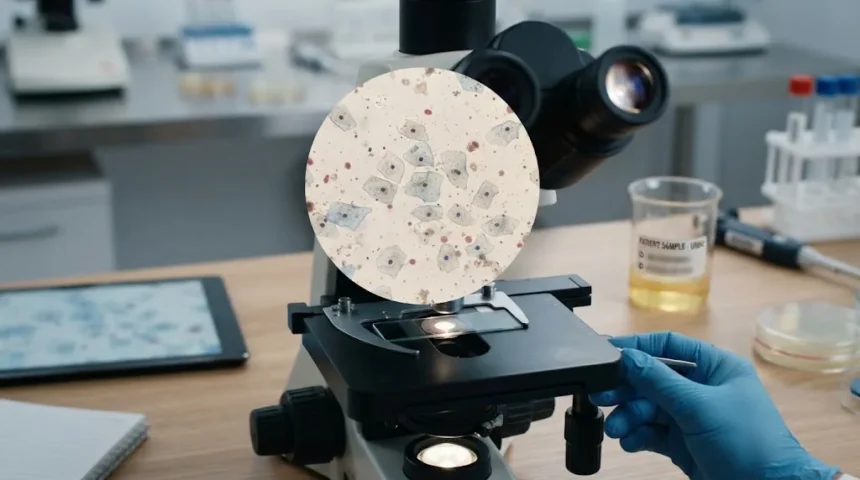
Squamous Epithelial Cells in Urine: What They Mean
Seeing “squamous epithelial cells” on a urine test can sound concerning, especially if you are not familiar with medical laboratory terms. In many cases, however, these cells are simply shed from the skin or the lining around the urinary and genital areas and enter the urine sample during collection. A small number is often expected and may not indicate any health problem at all. When larger amounts appear, the result can sometimes suggest that the urine sample was contaminated and may need to be repeated. Doctors interpret epithelial cells together with bacteria, white blood cells, red blood cells, protein, symptoms, and other urinalysis findings. Understanding that wider context can prevent unnecessary worry about a single laboratory result.
Urinalysis is one of the most commonly used tests for evaluating urinary symptoms, kidney health, hydration, infections, and several other medical concerns. During microscopic examination, laboratory professionals can identify different kinds of epithelial cells, including squamous, transitional, and renal tubular epithelial cells. These cell types do not have the same meaning, which is why simply seeing the word “epithelial” on a report does not provide the whole answer. Squamous epithelial cells are usually the least concerning type, particularly when the person has no urinary symptoms and the rest of the urine test is normal. This guide explains what squamous epithelial cells in urine mean, what can cause them, when they may be considered high, and when follow-up testing may be appropriate.
What Are Squamous Epithelial Cells in Urine?
Squamous epithelial cells are flat, thin cells that normally line surfaces of the body and help protect underlying tissues. In urine samples, they commonly come from the lower urethra, external genital area, or nearby skin rather than from the kidneys themselves. These cells are relatively large and have a characteristic flattened appearance when viewed under a microscope. Because the body naturally sheds surface cells every day, finding a few squamous epithelial cells in urine is generally not unusual. Their presence does not automatically mean that the urinary tract is infected or damaged. Laboratory professionals primarily consider the number of cells and how that finding relates to the rest of the urinalysis.
Epithelial cells are part of the body’s natural protective barriers, and they continuously replace themselves as older cells are shed. This means that some cells can enter urine while it passes through the urethra or while a sample is being collected. Women may be especially likely to have squamous cells in a urine specimen because cells from the vulvar or vaginal area can mix with the sample. Men can also have squamous epithelial cells in urine, although contamination patterns may differ depending on anatomy and collection technique. A small amount is therefore usually considered a routine microscopic finding. The exact interpretation depends on the laboratory’s reporting system, which may describe the cells as rare, few, moderate, many, or by number per microscopic field.
Squamous cells should be distinguished from transitional epithelial cells and renal tubular epithelial cells because these originate from different locations. Transitional cells line structures such as the bladder, ureters, and part of the urethra, while renal tubular epithelial cells originate within the kidney tubules. Large numbers of renal tubular epithelial cells can be more clinically significant because they may indicate injury involving kidney tissue. Squamous epithelial cells, by contrast, are frequently related to sample contamination rather than kidney damage. This distinction explains why doctors do not interpret all epithelial cells in urine in the same way. If a laboratory report lists the cell type, that information helps the clinician determine whether the finding is likely harmless or potentially important.
A urine microscopy test identifies squamous epithelial cells after the urine has been processed and examined under magnification. The laboratory may concentrate the urine sediment so that cells, crystals, bacteria, casts, and other particles can be evaluated more easily. Squamous cells often appear broad and irregular with a relatively small nucleus compared with the overall cell size. Their appearance makes them different from white blood cells, red blood cells, and other structures found in urine sediment. Automated urinalysis machines can also assist with identifying and counting cells, although laboratory methods vary. The final report is then interpreted alongside chemical urine testing and the patient’s symptoms rather than being viewed as an isolated number.
For most people, a small amount of squamous epithelial cells is not a reason for alarm. The finding often simply confirms that the sample collected a few cells while passing through the external urinary or genital area. Concern generally increases when there are many cells, especially if the result makes the sample difficult to interpret for infection or another condition. Even then, the issue may be the quality of the specimen rather than a disease inside the urinary tract. Repeating the urinalysis with careful clean-catch technique can often provide a clearer result. If other abnormalities are present, the healthcare professional may investigate those findings separately instead of assuming the epithelial cells themselves are causing the problem.
What Causes Squamous Epithelial Cells to Appear in Urine?
The most common reason for squamous epithelial cells in a urine sample is contamination during collection. Urine must pass through the urethral opening and nearby skin before reaching the collection cup, making it easy for surface cells to enter the specimen. If the genital area is not cleaned first, or if the first part of the urine stream is collected, more external cells may be present. Touching the inside of the container can also introduce cells or bacteria. None of these situations necessarily reflects a medical disorder. They simply mean that the sample may contain material that did not originate from the bladder, which can sometimes make laboratory results harder to interpret.
Women may have larger numbers of squamous epithelial cells because the urethral opening is close to the vagina and surrounding skin. Vaginal epithelial cells can enter the urine specimen, particularly during menstruation, vaginal discharge, pregnancy, or other situations that increase secretions in the genital area. This does not mean that squamous cells are abnormal simply because the count is higher in a woman. Instead, clinicians consider whether the specimen appears contaminated and whether symptoms support an actual urinary problem. Proper collection technique is particularly useful when testing for a urinary tract infection. A cleaner sample makes it easier to determine whether bacteria and white blood cells truly come from the urinary tract rather than from surrounding tissues.
Inflammation or irritation around the urethra and genital area can also increase shedding of surface cells. Irritation may occur from soaps, personal care products, friction, sexual activity, certain infections, or inflammatory skin conditions. In these situations, increased cell turnover can cause more squamous epithelial cells to appear in collected urine. However, the cells alone cannot tell a clinician exactly what caused the irritation. Symptoms such as burning, itching, discharge, urinary frequency, pelvic discomfort, or visible skin changes help provide additional clues. If symptoms are present, the healthcare professional may evaluate both urinary and genital causes rather than assuming the urine result itself identifies the diagnosis.
Urinary tract infection is sometimes mentioned alongside epithelial cells, but squamous cells are not a reliable marker of a UTI by themselves. A contaminated sample can contain both bacteria and squamous epithelial cells even when the bladder is not infected. For this reason, clinicians often look for white blood cells, leukocyte esterase, nitrites, urinary symptoms, and sometimes a urine culture before diagnosing an infection. If many squamous cells are present, the healthcare professional may question whether the bacteria seen on microscopy came from the urinary tract or from contamination. Repeating the specimen may be preferable to prescribing antibiotics based on an unclear sample, especially when the person has no convincing UTI symptoms.
Less commonly, large numbers of squamous cells may be considered in the context of significant irritation or disease involving the lower urinary tract, but this is not the usual explanation. The type of epithelial cell matters greatly when clinicians are evaluating possible kidney or bladder disorders. Squamous cells generally point more toward the distal urethra or external genital area, whereas other epithelial cell types can provide more direct information about internal urinary structures. A person should therefore avoid interpreting “many epithelial cells” without checking which type was reported. If the laboratory identifies renal tubular cells, abnormal transitional cells, or other unusual findings, the clinical significance can be different and may require additional medical evaluation.
What Does a High Squamous Epithelial Cell Count Mean?
A high squamous epithelial cell count most often means that a urine specimen contains a substantial amount of material from the skin or genital area. In practical terms, this frequently suggests contamination rather than a disease process. The word “high” can vary between laboratories because some facilities report exact numbers while others use categories such as few, moderate, or many. Laboratory reference ranges may also differ depending on the microscope, reporting method, and specimen preparation. That means there is no single number that should be interpreted in isolation everywhere. Your healthcare professional should compare the result with the laboratory’s own reference interval and the other findings reported on the same urinalysis.
When many squamous epithelial cells are present, the accuracy of some other urine findings may become less certain. Bacteria, mucus, and inflammatory cells from the surrounding genital area can enter the specimen at the same time as squamous cells. This can make it difficult to tell whether bacteria detected in the sample represent a true urinary infection. For example, someone without burning, urgency, frequency, or lower abdominal discomfort may have bacteria and many squamous cells simply because the specimen was not collected cleanly. A clinician may therefore recommend repeating the sample before making a diagnosis. Obtaining a better specimen can prevent unnecessary antibiotics and provide more reliable information about what is happening inside the urinary tract.
A high count can be more meaningful when it appears together with symptoms or other abnormal test results. Burning during urination, frequent urination, urinary urgency, lower abdominal pain, fever, or flank pain may increase suspicion for a urinary tract infection or kidney infection. White blood cells, positive leukocyte esterase, nitrites, and a significant bacterial culture can provide stronger evidence than squamous cells themselves. Conversely, many squamous cells with otherwise normal urine findings may simply reflect contamination. This is why laboratory reports should be interpreted as patterns rather than separate isolated measurements. The same squamous epithelial cell count can have different significance in two people depending on their symptoms and accompanying results.
High squamous cells should also be considered differently from elevated renal tubular epithelial cells. Renal tubular cells originate from structures inside the kidneys, so increased numbers can sometimes occur with kidney injury or inflammation. Squamous epithelial cells generally originate much farther down the urinary pathway or from external tissues. Seeing “high epithelial cells” on a patient portal without reading the specific type can therefore create unnecessary anxiety. If the report specifically says squamous epithelial cells, contamination is usually one of the first explanations considered. If other cell types are present, the healthcare professional may examine kidney function tests, medications, symptoms, and additional urine findings more carefully.
Persistent high squamous epithelial cells on repeated properly collected samples may justify further discussion with a healthcare professional. The clinician may review whether vaginal discharge, genital irritation, menstrual bleeding, pregnancy, medications, or urinary symptoms could be contributing. In some situations, they may request another sample collected under more controlled conditions. A catheterized urine specimen can sometimes be used when obtaining an uncontaminated sample is particularly important, although this is not routinely needed for everyone. The goal is to obtain information that accurately reflects the urinary tract. Repeated results do not automatically mean something serious is wrong, but consistent abnormalities combined with symptoms deserve evaluation rather than being dismissed as contamination every time.
Squamous Epithelial Cells and Urinary Tract Infections
Squamous epithelial cells are frequently noticed during testing for urinary tract infections because urinalysis is commonly ordered when someone reports urinary symptoms. However, the cells themselves do not diagnose a UTI. A true urinary infection usually produces a broader pattern involving symptoms and laboratory findings that suggest inflammation or bacterial growth. Common symptoms include burning while urinating, frequent trips to the bathroom, urgency, lower abdominal discomfort, and sometimes cloudy or strong-smelling urine. Fever, chills, nausea, or flank pain may suggest that infection has reached the kidneys. Squamous cells can appear in any of these situations, but their presence does not prove that bacteria are multiplying inside the urinary tract.
White blood cells are generally more closely associated with urinary inflammation than squamous epithelial cells. A urinalysis may report white blood cells microscopically or detect leukocyte esterase, an enzyme associated with these cells. Nitrites can also support the diagnosis because certain bacteria convert naturally occurring urinary nitrates into nitrites. However, not every UTI produces positive nitrites, and not every abnormal urinalysis means an infection is present. Urine culture may be used when diagnostic certainty is important, symptoms are complicated, infections recur, or treatment decisions require identifying the specific organism. Squamous epithelial cells are helpful mainly because large numbers can warn clinicians that the sample may be contaminated and therefore less reliable.
Contamination can create a confusing urine test because bacteria from the genital area may enter the collection cup along with squamous cells. A laboratory might then detect both bacteria and epithelial cells even though the bladder itself is not infected. If someone has no urinary symptoms and the specimen contains many squamous cells, the clinician may prefer to repeat the test rather than immediately diagnose a UTI. This approach helps avoid unnecessary antibiotic use, which can cause side effects and contribute to antibiotic resistance. The decision depends on the individual situation because some people, such as pregnant patients or those with particular medical conditions, may need different evaluation strategies.
A clean-catch midstream urine sample can make UTI testing more reliable. The person typically cleans the genital area, begins urinating into the toilet, and then collects urine from the middle of the stream without touching the inside of the container. The initial urine helps wash away some cells and bacteria near the urethral opening. Collecting the midstream portion reduces the chance that external material will dominate the sample. Instructions can vary slightly between healthcare facilities, so patients should follow the directions provided with the collection kit. Even carefully collected samples can contain some squamous cells, which is why a small amount is generally not considered unusual.
If urinary symptoms continue despite an unclear or contaminated urinalysis, follow-up evaluation can be important. A repeat urine sample, culture, pregnancy test, pelvic examination, or testing for other infections may be considered depending on symptoms and individual risk factors. Burning with urination, for example, can occur with a UTI but may also develop from vaginal irritation, sexually transmitted infections, or other causes. Treating every abnormal urine result as a bacterial UTI can therefore miss the actual problem. A clinician combines the history, physical examination when needed, and laboratory findings before deciding on treatment. Squamous epithelial cells provide useful context, but they are only one small part of that diagnostic process.
Squamous Epithelial Cells During Pregnancy
Squamous epithelial cells may appear in urine during pregnancy for many of the same reasons they appear at other times. Changes in vaginal discharge and increased secretions can make contamination of a urine specimen easier, even when collection instructions are followed carefully. Pregnancy itself does not mean that squamous cells are dangerous or that there is a problem with the kidneys. A few cells may simply reflect normal shedding from the genital or lower urinary tract surfaces. Healthcare professionals become more interested in the rest of the urinalysis, particularly bacteria, white blood cells, protein, glucose, blood, and other findings. Pregnancy changes the importance of some urinary abnormalities, so results are interpreted within that specific medical context.
Urinary tract infections receive extra attention during pregnancy because bacterial infections can sometimes cause complications if they are not properly identified and treated. Some pregnant people may even have significant bacteria in the urine without typical symptoms, which is why urine testing can be included in prenatal care. If a specimen contains many squamous epithelial cells, contamination may make it difficult to determine whether bacteria truly originate from the bladder. A clinician may then request another clean-catch sample or order a urine culture. Accurate diagnosis matters because unnecessary antibiotics should be avoided, while genuine urinary infections during pregnancy should not be overlooked. Squamous cells therefore often influence sample quality rather than serving as evidence of infection themselves.
Protein in the urine can also receive particular attention during pregnancy, especially when it occurs with high blood pressure or other concerning symptoms. Squamous epithelial cells do not cause conditions such as preeclampsia and should not be used to diagnose them. However, contamination can occasionally complicate interpretation of a urine specimen containing vaginal secretions or other material. Healthcare professionals may repeat testing or use more specific methods when an abnormal result needs confirmation. Pregnant patients should avoid drawing conclusions from one isolated value seen on a laboratory portal. The clinician managing the pregnancy can explain whether the overall results are reassuring or whether additional monitoring is necessary.
Pregnancy also increases the importance of discussing urinary symptoms promptly. Burning, urgency, frequency, fever, chills, back pain, or blood in the urine should be reported, particularly when symptoms are new or worsening. Frequent urination can occur normally during pregnancy, so the presence of other symptoms helps distinguish expected changes from possible infection. A urine culture may be especially useful when symptoms and urinalysis findings do not clearly agree. Many squamous cells can suggest that repeating the sample will provide a more dependable answer. Patients should not delay evaluation because they assume an abnormal result is simply contamination, especially when they feel unwell.
The key message is that squamous epithelial cells in pregnancy are often a minor finding, but the overall urine test may still contain important information. A small number of these cells usually does not require treatment. Larger amounts may prompt a repeat specimen because clinicians want the clearest possible assessment of bacteria, protein, and other urinary markers. Treatment is directed at an identified condition rather than at squamous cells themselves. Following collection instructions carefully can improve the reliability of subsequent tests. If you are pregnant and concerned about an abnormal urinalysis, discussing the complete report with your prenatal healthcare provider is more useful than focusing on one microscopic result.
How to Give a Clean Urine Sample and Reduce Contamination
A clean-catch urine sample is designed to reduce contamination from skin, genital secretions, and bacteria outside the urinary tract. Before collecting the sample, wash your hands and follow the cleaning instructions provided by the clinic or laboratory. The genital area is typically cleaned with a supplied wipe or according to specific directions from the healthcare facility. Avoid touching the inside of the sterile collection cup or lid because doing so can introduce additional cells and microorganisms. Proper preparation does not guarantee that every squamous epithelial cell will disappear, but it can substantially improve sample quality. This is especially valuable when the test is being used to diagnose a possible urinary tract infection.
During collection, begin urinating into the toilet rather than directly into the specimen cup. After the first part of the stream has passed, position the container to collect the middle portion of the urine. This is why the process is called a midstream clean-catch sample. The initial urine helps flush away some organisms and cells located around the urethral opening. Once enough urine has been collected, remove the cup before finishing urination. Following this sequence can reduce the number of squamous epithelial cells and external bacteria in the specimen, giving laboratory professionals a sample that better represents conditions inside the bladder.
People with female anatomy may be instructed to separate the labia during cleaning and urine collection to reduce contamination from vaginal and surrounding tissues. Those instructions can feel awkward, but they serve a practical purpose because vaginal epithelial cells can easily enter the urine stream. Men may receive instructions to clean around the tip of the penis, and those who are uncircumcised may be advised to retract the foreskin before cleaning. Specific procedures can vary, particularly in children, older adults, or people who need assistance collecting a specimen. The most reliable approach is to use the instructions given by the testing facility rather than assuming every laboratory follows exactly the same protocol.
Menstruation can make clean urine collection more difficult because menstrual blood and endometrial material may enter the specimen. If the test is routine and not urgent, a healthcare professional may sometimes recommend collecting it after menstruation, depending on the purpose of the test. If testing cannot be delayed, tell the clinician or laboratory staff that you are menstruating so they can interpret the results appropriately. Vaginal discharge can similarly contribute cells and other material to a specimen. These factors do not necessarily invalidate a urine test, but they may explain unexpected findings. Accurate information about collection circumstances helps clinicians decide whether repeating the sample would be useful.
Once collected, the urine specimen should be handled according to the laboratory’s instructions because delays can affect the accuracy of some findings. Bacteria may multiply if urine remains at room temperature too long, while cells and other components can change over time. In a clinic, the sample is usually processed relatively quickly or stored appropriately until analysis. At-home collection kits may include specific instructions about refrigeration and delivery time. Following these directions is as important as using good clean-catch technique. A properly collected and promptly processed sample gives healthcare professionals the best opportunity to distinguish true urinary abnormalities from contamination and reduces the likelihood that you will need to repeat the test.
When Should Squamous Epithelial Cells Be Investigated Further?
Most isolated findings of a few squamous epithelial cells do not require additional investigation. If you feel well, have no urinary symptoms, and the remainder of your urinalysis is normal, the cells are often considered an insignificant finding. Your healthcare professional may not mention them at all because they do not change diagnosis or treatment. Medical concern generally depends on associated abnormalities rather than the simple presence of squamous cells. Large numbers may prompt a repeat test when sample contamination is suspected. The purpose of repeating the test is usually to obtain clearer information, not because squamous epithelial cells themselves are damaging your urinary tract.
Further evaluation becomes more important when urinary symptoms are present. Burning with urination, increased frequency, urgency, lower abdominal discomfort, visible blood in the urine, fever, chills, or flank pain can indicate a urinary tract problem that deserves assessment. A healthcare professional may repeat urinalysis, obtain a urine culture, or order additional tests depending on the symptoms. Many squamous epithelial cells can make an initial sample less dependable, particularly when bacteria are also reported. If symptoms are significant, the clinician will not simply ignore them because contamination is possible. Instead, they may obtain a cleaner specimen so that treatment decisions are based on more reliable evidence.
Abnormal kidney-related findings deserve separate attention because they may point to issues unrelated to squamous epithelial cells. Protein, significant blood, cellular casts, abnormal kidney function tests, or renal tubular epithelial cells can have different clinical meanings. A clinician may evaluate blood pressure, medications, hydration, kidney function, and medical history if these abnormalities are present. Squamous cells should not distract from more important findings on the same report. Conversely, someone should not assume that squamous cells mean kidney disease just because the test involved urine. Their usual source is much closer to the external urinary tract than the kidneys, making their significance very different.
Repeated abnormal urine tests can also justify further assessment, particularly if the same unusual findings continue despite careful collection. A clinician may ask about menstrual timing, vaginal symptoms, recent sexual activity, urinary symptoms, medication use, pregnancy, or prior urinary tract problems. Depending on the situation, pelvic examination, infection testing, urine culture, kidney testing, or imaging may be appropriate. Repeated squamous cells alone may still represent ongoing collection contamination, but persistent symptoms should not be dismissed. The objective is to understand why the broader urine test remains abnormal and whether a treatable condition is present. Medical decisions should therefore focus on the entire clinical pattern rather than one repeated laboratory term.
Seek prompt medical attention if urinary symptoms are accompanied by high fever, severe flank or back pain, vomiting, confusion, marked weakness, or difficulty staying hydrated. These symptoms can occur with more serious urinary infections or other medical conditions and require timely assessment. Visible blood in the urine, inability to urinate, or severe pain also deserves medical evaluation. During pregnancy, urinary symptoms should be discussed with a healthcare professional because management considerations can differ. Squamous epithelial cells themselves are rarely the emergency finding in these situations. They are simply one component of a urine test, while your symptoms and the rest of the laboratory results determine how urgently care may be needed.
How Doctors Interpret Squamous Epithelial Cells With Other Urine Results
Doctors rarely make decisions based on squamous epithelial cells alone because urinalysis provides many different pieces of information. The test may evaluate color, clarity, specific gravity, pH, protein, glucose, ketones, blood, bilirubin, nitrites, and leukocyte esterase. Microscopic examination may add information about red blood cells, white blood cells, bacteria, crystals, casts, and epithelial cells. Each finding can influence how the others are interpreted. For example, many squamous cells with bacteria but few white blood cells may raise concern that the specimen was contaminated. A different pattern involving significant white blood cells, urinary symptoms, and supportive culture results may be more consistent with infection.
White blood cells are particularly important when clinicians are looking for inflammation in the urinary tract. Increased white blood cells, sometimes described as pyuria, can occur with bacterial infection but may also appear in several nonbacterial conditions. Leukocyte esterase on the urine dipstick provides another clue that white blood cells are present. If many squamous epithelial cells accompany these results, the clinician may ask whether vaginal secretions contributed to the specimen. Symptoms and urine culture can help clarify the situation. No single laboratory marker is perfect, which is why interpretation involves combining several findings rather than treating any one result as absolute proof.
Blood in urine is another finding that requires context. A small amount may appear because of menstruation, urinary infection, kidney stones, strenuous exercise, or numerous other causes. Squamous epithelial cells do not explain all cases of blood in urine, although contamination from menstruation can sometimes produce both findings together. Persistent microscopic blood or visible red urine may need additional evaluation depending on age, symptoms, medications, and other risk factors. A repeat clean-catch specimen can help determine whether the blood truly originates from the urinary tract. If it remains present, a healthcare professional may investigate further rather than attributing it to sample contamination.
Protein in urine is interpreted separately as well. Small temporary amounts can occur with dehydration, fever, exercise, or other circumstances, while persistent protein may warrant evaluation for kidney-related conditions. Squamous epithelial cells generally do not indicate kidney disease and should not be used as a substitute for kidney-specific testing. When protein levels are important, clinicians may request a more precise urine protein measurement rather than relying solely on a standard dipstick. Blood tests can also assess kidney filtration and related functions. Looking at these measurements together helps distinguish a minor contaminated specimen from a pattern that actually requires kidney evaluation.
Urine culture can provide particularly useful information when bacterial infection is uncertain. A culture attempts to identify organisms that grow from the urine and can sometimes indicate which antibiotics would work against them. Mixed growth involving several organisms may suggest contamination, especially when many squamous epithelial cells are also present. Growth of a clinically significant organism combined with compatible symptoms can support the diagnosis of a urinary tract infection. Interpretation varies according to the patient’s age, pregnancy status, symptoms, and collection method. The important point is that squamous epithelial cells contribute context about sample quality, while diagnosis comes from the complete combination of clinical information and laboratory evidence.
Frequently Asked Questions About Squamous Epithelial Cells in Urine
Are squamous epithelial cells in urine normal?
Yes, a small number of squamous epithelial cells can be a normal finding because these cells naturally shed from the urethral and genital areas. Their significance depends on how many are present and what the rest of the urinalysis shows.
What does “many squamous epithelial cells” mean?
Many squamous epithelial cells often suggest that the urine specimen was contaminated during collection. Your healthcare professional may request another clean-catch sample if accurate testing for infection or other abnormalities is important.
Do squamous epithelial cells mean I have a UTI?
No. Squamous epithelial cells alone do not diagnose a urinary tract infection. Symptoms, white blood cells, nitrites, leukocyte esterase, bacteria, and sometimes urine culture are more important for determining whether a UTI is present.
Can squamous epithelial cells indicate kidney disease?
Squamous epithelial cells usually come from the lower urethra or external genital area rather than the kidneys. Renal tubular epithelial cells and other kidney-related findings can have different significance and should not be confused with squamous cells.
Why do women often have squamous epithelial cells in urine?
Cells from the vulvar or vaginal area can enter a urine specimen during collection because these tissues are located close to the urethral opening. Vaginal secretions, menstruation, and collection technique can increase the number found in the sample.
Can pregnancy cause squamous epithelial cells in urine?
Pregnant people can have squamous epithelial cells in urine, often because genital secretions make contamination easier. The cells themselves are usually not dangerous, but other urine findings such as bacteria or protein may require appropriate pregnancy-specific evaluation.
What is the normal range for squamous epithelial cells in urine?
Normal ranges vary between laboratories because different facilities use different counting and reporting methods. Some reports use terms such as rare, few, moderate, or many, so results should be interpreted according to the reference range printed on your laboratory report.
How can I reduce squamous epithelial cells in my urine sample?
Using proper clean-catch technique can reduce contamination. Clean the genital area as instructed, begin urinating into the toilet, collect the middle portion of the stream, and avoid touching the inside of the specimen container.
Should I worry if my urine test says epithelial cells are high?
High squamous epithelial cells are often related to contamination rather than a serious health problem. However, symptoms or additional abnormalities such as blood, protein, bacteria, or many white blood cells may require further evaluation.
When should I see a doctor about an abnormal urine test?
Contact a healthcare professional if you have burning urination, fever, flank pain, visible blood, repeated abnormal tests, or worsening urinary symptoms. Seek more urgent care for severe pain, high fever, vomiting, confusion, inability to urinate, or significant illness.