What Is Matcha? Benefits, Caffeine and How to Use It
Matcha has moved far beyond traditional Japanese tea ceremonies and become a popular ingredient in cafés, kitchens, smoothies, desserts, and wellness routines around the world. Unlike ordinary green tea, where leaves are steeped and removed, matcha is made from finely ground tea leaves that are whisked directly into water or another liquid. That means you consume the powdered leaf itself, including its naturally occurring caffeine, catechins, chlorophyll, and amino acids such as L-theanine. Its distinctive bright-green appearance and earthy, slightly sweet flavor have helped make matcha a recognizable alternative to coffee. At the same time, bold health claims surrounding the drink can make it difficult to separate evidence from marketing.
So, what is matcha, and is it actually good for you? Matcha comes from the same Camellia sinensis plant used to produce green tea, black tea, white tea, and oolong tea, but its cultivation and processing are different. Tea plants destined for matcha are shaded before harvest, a practice associated with changes in compounds such as chlorophyll, caffeine, and L-theanine. The leaves are then processed and finely ground into powder. Research confirms that matcha contains catechins, particularly epigallocatechin gallate, commonly called EGCG, along with caffeine and the amino acid L-theanine. These compounds are responsible for much of the scientific interest in matcha’s potential effects on alertness, cardiovascular health, metabolism, and overall dietary antioxidant intake.
What Is Matcha and How Is It Different From Green Tea?
Matcha is a powdered form of green tea traditionally associated with Japan and made from specially cultivated tea leaves. The tea plants are usually shaded for part of the growing period before harvesting, which changes the chemical composition and flavor of the leaves. After harvesting, the leaves are steamed to limit oxidation, dried, and processed before being milled into an extremely fine powder. High-quality traditional matcha has a vivid green appearance and a smooth consistency rather than a coarse, dull texture. Because the entire powdered leaf is consumed, matcha delivers many tea compounds in a more concentrated way than a drink made by briefly steeping and discarding ordinary green tea leaves.
Regular green tea and matcha both come from Camellia sinensis, so they naturally share many compounds. The practical difference is how the tea is grown, processed, prepared, and consumed. When regular green tea is brewed, water extracts some soluble compounds from the leaves before the leaves are removed. With matcha, the powder remains in the beverage and is consumed, so the drink can contain a different concentration of caffeine, catechins, amino acids, and other plant compounds depending on the amount used. This does not automatically mean every cup of matcha is nutritionally superior to every cup of green tea. Powder quantity, growing conditions, processing, storage, water temperature, and product quality can all influence the final beverage.
The shading step is particularly important to matcha’s distinctive character. Reduced sunlight before harvesting can influence chlorophyll production and amino acid composition, helping produce the deep green color and savory flavor commonly described as umami. L-theanine, an amino acid naturally found in tea, contributes to this flavor profile and has also attracted interest for its possible interaction with caffeine. Matcha also contains polyphenols known as catechins, including EGCG, EGC, ECG, and EC. A recent scientific review published in 2026 describes matcha as a concentrated source of polyphenols, amino acids, caffeine, and antioxidants while emphasizing that more well-designed human studies are still needed to determine its long-term health effects.
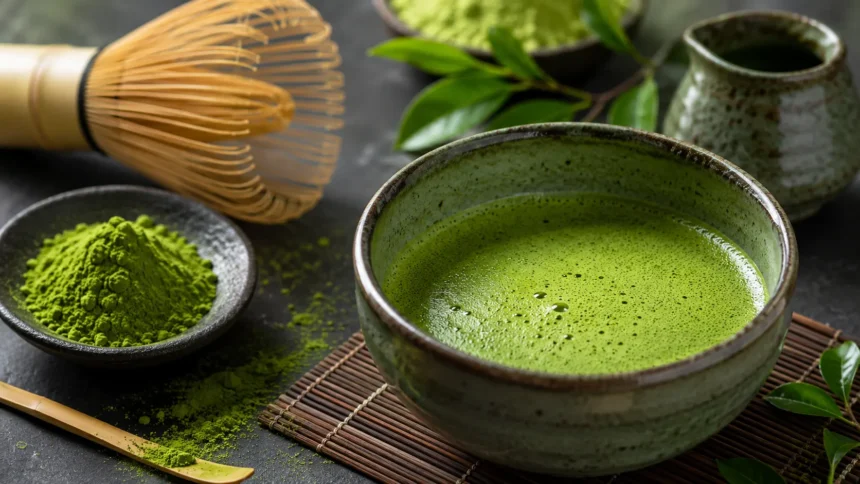
Another difference is texture and preparation. Traditional matcha is mixed with hot water and whisked until the powder is suspended and a light foam forms on top. Because matcha does not truly dissolve like sugar, small particles remain suspended in the liquid and can settle if the drink sits for a long time. Ordinary tea bags or loose-leaf green tea do not require this whisking because the leaves are removed after steeping. Matcha can also be blended with milk to make a matcha latte or incorporated into yogurt, oats, smoothies, and baked goods. These modern uses make matcha versatile, although ingredients added to it can dramatically change the nutritional profile of the final drink.
Not all green tea powder is necessarily traditional matcha, which can create confusion when shopping. True matcha production involves particular cultivation and processing practices, while inexpensive powdered green teas may be grown or processed differently. Color, aroma, freshness, origin, harvest quality, and storage can all influence flavor. A bright green powder with a fresh vegetal aroma generally tastes smoother than stale powder that has turned yellowish or brown. Expensive ceremonial products are not essential for every use, especially when matcha will be combined with milk or baked into food. Understanding how you plan to use the powder can help you choose an appropriate product without assuming the highest price automatically means the greatest health benefit.
What Are the Main Health Benefits of Matcha?
One of the most frequently discussed matcha benefits is its supply of antioxidant plant compounds. Matcha contains catechins, a family of polyphenols found naturally in tea, with EGCG receiving the greatest scientific attention. Antioxidants help participate in the body’s defenses against oxidative processes, although describing them as substances that simply “detox” the body is an oversimplification. Laboratory and observational research has linked green tea compounds with several potentially beneficial biological effects, including antioxidant and anti-inflammatory activity. Matcha may provide meaningful amounts because the powdered tea leaf is consumed rather than discarded. However, antioxidant content varies considerably among products, and higher laboratory antioxidant measurements do not automatically translate into prevention or treatment of specific diseases in humans.
Matcha may also support attention and alertness because it naturally contains caffeine. Caffeine is a well-established stimulant that can temporarily reduce feelings of fatigue and improve alertness in many people. What makes matcha particularly interesting is that it also contains L-theanine, an amino acid studied for potential effects on attention, relaxation, and cognition. Researchers have investigated whether caffeine and L-theanine together may produce a different subjective experience from caffeine alone, although responses vary between individuals. Some people describe matcha as providing smoother or less jittery energy than coffee, but that experience should not be treated as guaranteed. The amount of both compounds varies by serving, so different matcha products may feel noticeably different.
Cardiovascular health is another area where tea consumption has generated scientific interest. Research on green tea more broadly suggests that regular consumption may be associated with favorable effects on certain cardiovascular risk markers, such as blood lipids and blood pressure, although effects are generally modest and cannot replace established medical treatment. Matcha contains many of the same tea catechins studied in conventional green tea, so researchers have proposed similar mechanisms. However, the matcha-specific evidence base remains much smaller than the broader body of green tea research. A recent review describes potentially promising effects on metabolic and cardiovascular parameters but stresses the need for stronger human clinical research. In practical terms, unsweetened matcha can be part of a heart-conscious eating pattern rather than a treatment for cardiovascular disease.
Researchers have also investigated matcha and green tea compounds in relation to blood glucose, body weight, fat oxidation, and metabolic health. Catechins and caffeine may modestly influence energy expenditure or fat metabolism under certain conditions, but this does not make matcha a reliable weight-loss treatment. Drinking matcha while maintaining an overall calorie surplus will not override energy balance, and adding large amounts of sweetener or high-calorie ingredients may eliminate much of the practical advantage of choosing a low-calorie tea. Current evidence is more appropriate for describing matcha as a potentially useful component of a balanced diet rather than a “fat-burning drink.” People managing diabetes or another metabolic condition should continue following evidence-based medical and dietary guidance instead of replacing treatment with matcha.
Another possible benefit is much simpler: matcha can replace beverages that contain more added sugar or calories. Plain matcha prepared with water provides flavor and caffeine without needing soft-drink quantities of sugar, while an unsweetened matcha latte can be customized to fit different dietary preferences. For someone who enjoys it, this can make matcha a sustainable part of a healthy routine. Its value does not depend on treating it as medicine or consuming large quantities. In fact, many of matcha’s practical benefits come from what it replaces, such as highly sweetened drinks or an additional large coffee late in the day. The healthiest way to think about matcha is as a nutrient-rich tea beverage with interesting bioactive compounds, not as a cure-all.
How Much Caffeine Is in Matcha?
Matcha contains caffeine naturally because it comes from the tea plant. The exact matcha caffeine content varies according to the powder, growing conditions, preparation method, and especially how much matcha you use. A typical serving made with roughly 1 to 2 teaspoons can commonly provide somewhere around 40 to 80 milligrams of caffeine, although amounts can fall outside that range. One randomized clinical study using 2.7 grams of matcha reported a daily dose containing approximately 71.5 milligrams of caffeine. This illustrates why serving size matters more than broad statements that matcha contains a fixed amount of caffeine. A heavily prepared café drink may deliver much more caffeine than a lightly whisked traditional serving.
Compared with coffee, matcha usually provides less caffeine per typical serving, but comparisons can be misleading because coffee strength and cup sizes vary dramatically. An espresso, small brewed coffee, large café coffee, and cold brew can contain very different caffeine amounts. Likewise, a matcha drink prepared with half a teaspoon is very different from one made with two or three teaspoons. Someone drinking multiple matcha lattes during the day could therefore consume as much or more caffeine than someone having one modest coffee. Checking the product label when caffeine information is available and measuring the powder consistently can give you a more useful estimate. The word “tea” does not mean a beverage is automatically low in caffeine.
Caffeine sensitivity differs significantly among individuals. One person may drink matcha in the afternoon without noticing any effect on sleep, while another may experience restlessness after a smaller morning serving. The FDA notes that, for most healthy adults, approximately 400 milligrams of caffeine per day is an amount not generally associated with negative effects, but it also emphasizes substantial individual variation. Caffeine from coffee, matcha, tea, energy drinks, chocolate, supplements, and some medications all contributes to that daily total. People who develop anxiety, headaches, tremor, a racing heartbeat, digestive discomfort, or sleep difficulty may benefit from consuming less than the commonly cited upper level.
Matcha’s L-theanine content is often used to explain claims of “calm energy.” L-theanine does not remove caffeine or prevent it from stimulating the nervous system, but the combination has been investigated in cognitive research. Some people find the experience subjectively gentler than coffee, while others are equally sensitive to matcha’s stimulant effects. A 2024 randomized trial providing 2.7 grams of matcha daily found no significant differences between the matcha and control groups in several objective EEG sleep measures, although subjective mental wellbeing was among the outcomes examined. That study does not prove matcha cannot disrupt sleep because timing, caffeine sensitivity, habitual caffeine use, and individual metabolism remain important. Anyone sensitive to caffeine should still be cautious with matcha later in the day.
Pregnancy, breastfeeding, medications, heart rhythm concerns, anxiety disorders, and other individual circumstances can also affect appropriate caffeine intake. General population caffeine limits should therefore not be treated as personalized medical advice. Someone who has been instructed to restrict caffeine should count matcha toward that restriction just as they would coffee or ordinary tea. Children and adolescents are also more vulnerable to excessive caffeine exposure, and highly caffeinated drinks should not be treated as routine hydration. The easiest way to lower caffeine from matcha is to use less powder or drink it less frequently. Decaffeinated green tea exists, but truly caffeine-free matcha is uncommon because caffeine naturally occurs in the tea leaves from which traditional matcha is produced.
Matcha, L-Theanine and Antioxidants Explained
L-theanine is an amino acid found naturally in tea and is especially associated with the savory flavor of shade-grown green teas. Matcha has attracted attention because shading can increase the accumulation of certain compounds, including theanine, before harvest. Scientists have studied L-theanine independently and in combination with caffeine for possible effects on attention, mood, relaxation, and cognitive performance. However, the amount found in a serving of matcha varies, and drinking matcha is not equivalent to taking a standardized L-theanine supplement used in a research trial. The evidence does not justify promising that matcha will eliminate anxiety or dramatically improve concentration. Its caffeine-theanine combination is better viewed as one interesting nutritional characteristic that may influence how the beverage feels to some consumers.
Catechins are another major group of matcha antioxidants. The four commonly discussed tea catechins include epicatechin, epicatechin gallate, epigallocatechin, and epigallocatechin gallate. EGCG is often highlighted because it is abundant in green tea and has been studied extensively in laboratory research. These compounds may influence pathways related to oxidative stress, inflammation, cardiovascular function, and metabolism. Yet biological activity in a test tube does not prove that drinking matcha prevents a particular disease. Human outcomes depend on digestion, absorption, metabolism, dose, genetics, lifestyle, and many other variables. Current reviews describe matcha’s bioactive profile as promising while repeatedly emphasizing that more rigorous clinical research is required before stronger health claims can be made.
Chlorophyll contributes substantially to matcha’s green appearance and becomes particularly associated with shaded cultivation. It is frequently marketed as a “detoxifying” compound, but those claims are often exaggerated beyond available evidence. The human body already has highly specialized systems involving the liver, kidneys, lungs, gastrointestinal tract, and other organs that process and eliminate substances. Drinking matcha does not perform a special detox that replaces those physiological systems. Chlorophyll and other plant compounds can certainly be part of a varied diet, but they do not need extraordinary cleansing claims to make matcha worthwhile. A cup of matcha can simply be appreciated as a plant-based beverage containing naturally occurring phytochemicals.
The concentration of bioactive compounds is not identical across every matcha powder. Tea variety, growing environment, shade conditions, harvest timing, processing, storage, age, and preparation can all affect chemical composition. Exposure to heat, light, oxygen, and moisture can also reduce freshness after a package has been opened. This means research conducted on one matcha product cannot necessarily provide an exact nutritional profile for every product sold online or in supermarkets. Bright color and fresh flavor may indicate better sensory quality, but they do not guarantee a specific amount of EGCG or L-theanine. Consumers interested in particular nutrient quantities should look for reputable brands that provide analytical information rather than relying entirely on marketing language.
It is also possible to have too much of a supposedly beneficial compound. Concentrated green tea extracts can provide far greater catechin doses than a normal cup of tea, and safety concerns have been raised about high supplemental EGCG intake. The European Food Safety Authority concluded that catechins from ordinary green tea infusions are generally safe but found that supplemental EGCG doses of 800 milligrams per day or more may be associated with signs of liver injury. Matcha as a food or drink should not automatically be equated with concentrated green tea extract supplements, because dose and exposure patterns differ significantly. More is therefore not necessarily better, particularly when products contain isolated or highly concentrated extracts.
Can Matcha Help With Weight Loss, Energy and Focus?
Matcha is frequently promoted for weight loss, but the evidence does not support treating it as a stand-alone solution for losing substantial body fat. Green tea catechins and caffeine have been studied for possible effects on thermogenesis, fat oxidation, and energy expenditure, and some research suggests modest effects under certain circumstances. However, these changes are usually much smaller than advertisements for “metabolism boosting” products imply. Sustainable weight management depends much more heavily on overall food intake, physical activity, sleep, health conditions, medications, and long-term habits. Replacing a sugary beverage with unsweetened matcha could reduce calorie intake, but simply adding a sweetened matcha drink to an unchanged diet is unlikely to produce meaningful weight loss.
The energy effect of matcha is easier to explain because caffeine reliably stimulates the central nervous system. After drinking matcha, many people notice greater wakefulness, reduced fatigue, or improved ability to concentrate on a task. The effect typically begins within a relatively short period after consumption and gradually wears off as caffeine is metabolized. Frequent caffeine users may develop some tolerance, meaning the same serving eventually feels less stimulating. Increasing the amount repeatedly to recreate the original effect can lead to unwanted symptoms or greater dependence on caffeine. Using matcha strategically rather than continuously throughout the day may help preserve its usefulness while limiting sleep disruption.
Focus is another reason people replace coffee with matcha. The presence of both caffeine and L-theanine has led researchers to study tea in relation to attention and cognitive performance. Evidence suggests that these compounds can influence aspects of alertness and attention, but matcha should not be expected to transform cognitive ability or compensate for inadequate sleep. Someone who sleeps five hours every night will not restore normal brain function simply by drinking matcha in the morning. Likewise, underlying attention or neurological conditions require appropriate professional assessment rather than self-treatment with caffeinated beverages. Matcha can support temporary alertness, but adequate sleep, nutrition, hydration, physical activity, and stress management remain more fundamental to consistent cognitive performance.
Matcha can also be useful before exercise for people who tolerate caffeine well. Caffeine is widely studied in sports nutrition and may improve certain aspects of exercise performance, although the amount required in research can differ from what is present in one cup of matcha. A matcha drink can provide a modest caffeine dose without requiring a traditional pre-workout supplement. However, adding matcha immediately before intense exercise can cause stomach discomfort in caffeine-sensitive individuals, especially if the drink contains a large volume of milk or sweetener. People exercising late in the evening should also consider whether caffeine could interfere with sleep. The quality of recovery matters as much as the temporary stimulation produced before a workout.
The most realistic way to describe matcha’s effects is to say that it may support alertness and can contribute beneficial plant compounds to the diet, while its impact on weight or long-term cognition is likely to be modest and highly dependent on the person. Claims such as “burns belly fat,” “boosts metabolism all day,” or “gives six hours of perfect concentration” go far beyond what current research can guarantee. A 2026 review of matcha’s bioactive compounds describes promising findings across several metabolic and neurological areas while explicitly calling for better clinical studies. That combination of promise and uncertainty is important. Matcha can be a healthy beverage without needing to perform like a drug.
How to Make Matcha and Use It in Everyday Foods
The simplest way to make traditional-style matcha is to combine a measured amount of powder with hot water and whisk until evenly suspended. Start with approximately half to one teaspoon of matcha if you are new to the flavor or caffeine effect. Sifting the powder first can reduce clumps because finely milled matcha tends to compact during storage. Add a small amount of hot water and whisk briskly using a bamboo whisk or small handheld frother until the surface becomes lightly foamy. More water can then be added depending on how strong you prefer the tea. Boiling water may make some matcha taste more bitter, so moderately hot water is usually more pleasant.
A matcha latte is one of the easiest ways to introduce matcha to someone who finds plain tea too vegetal. Mix the powder with a small amount of hot water first rather than trying to stir dry matcha directly into a full glass of milk. Once smooth, add warmed dairy milk or an unsweetened plant-based alternative such as soy, oat, or almond milk. Sweetener is optional, and using less allows the natural flavor of the tea to remain more noticeable. Café versions can contain surprisingly large amounts of added sugar, flavored syrups, or sweetened milk. Making a latte at home gives you greater control over sweetness, serving size, and the actual amount of matcha used.
Iced matcha is equally simple and can be especially appealing in warm weather. Shake or whisk the matcha with a small quantity of water until there are no obvious dry pockets, then pour it over ice and add cold water or milk. A tightly sealed jar or shaker bottle can create a smooth drink when a whisk is not available. Fruit flavors such as strawberry have become popular additions, although syrups and sweetened purées can turn a relatively low-calorie beverage into a dessert-like drink. For everyday consumption, fresh fruit or a modest amount of sweetener can provide flavor without overwhelming the tea. The same caffeine considerations apply whether matcha is served hot or cold.
Matcha can also be added to foods, including oatmeal, chia pudding, yogurt, smoothies, pancakes, energy bites, and baked goods. Using it in food spreads the earthy flavor throughout the recipe and can make lower-cost culinary matcha a practical choice. Baking exposes matcha to heat, which can affect color, flavor, and some heat-sensitive compounds, so baked matcha should not be assumed to deliver exactly the same chemical profile as freshly prepared tea. Adding matcha to highly sweetened cookies or cakes also does not transform them into health foods. It is better to choose matcha recipes because you enjoy the flavor and variety rather than because the powder is expected to cancel out sugar, butter, or excess calories.
Storage makes a noticeable difference in matcha quality. Keep the powder tightly sealed and protected from heat, moisture, strong odors, and prolonged light exposure. Some people refrigerate opened matcha to preserve freshness, but condensation should be avoided by allowing a sealed container to approach room temperature before opening it. Buying a smaller package that you can use reasonably quickly may provide better flavor than purchasing a large quantity that remains open for months. If matcha develops an unusually stale smell, muddy color, or flat flavor, freshness may have declined. Good preparation begins with using enough powder for flavor and function without automatically assuming that larger servings are healthier.
Is Matcha Safe? Side Effects and Who Should Limit It
For most healthy adults, moderate matcha consumption can fit comfortably into a balanced diet. The main immediate concern is usually caffeine rather than the tea itself. Too much caffeine can produce restlessness, nervousness, insomnia, headache, tremor, digestive upset, or a racing heartbeat. The FDA’s commonly cited benchmark of up to 400 milligrams of caffeine per day applies to total caffeine from all sources, not 400 milligrams from matcha in addition to coffee and other drinks. Because matcha servings vary, people who consume several cups should pay attention to their total caffeine intake. Someone who experiences symptoms at low amounts should use their own tolerance rather than treating a population guideline as a target.
Timing is particularly important for sleep. Caffeine can remain active for hours after consumption, so afternoon or evening matcha may interfere with falling asleep or reduce sleep quality in sensitive individuals. Even people who believe they can “sleep after coffee” may not always recognize subtler changes in sleep depth or continuity. If insomnia or poor sleep is an ongoing problem, moving matcha earlier in the day or reducing serving size is a reasonable experiment. People metabolize caffeine at different rates because of genetics, medications, pregnancy, smoking status, and other factors. There is therefore no universal cutoff time such as “never drink matcha after 2 p.m.” that applies equally to everyone.
Matcha and green tea compounds may also interact with certain medications or medical conditions. Caffeine can be relevant for people with specific heart rhythm problems, uncontrolled anxiety symptoms, or other conditions where stimulants have been restricted. Tea can also influence absorption or metabolism of some medicines, while vitamin K in tea products may be relevant to particular anticoagulant treatment plans depending on intake and product. Anyone taking medication with dietary restrictions should follow guidance from their pharmacist or healthcare professional rather than relying on generalized matcha advice. Consistency can sometimes matter as much as total intake when food-drug interactions are involved. A natural beverage is not automatically interaction-free.
Another consideration is iron absorption. Tea polyphenols can reduce absorption of non-heme iron from plant foods when tea is consumed at the same time as an iron-rich meal. This is particularly relevant for people who already have low iron stores, iron-deficiency anemia, or a diet that relies heavily on plant-based iron. Such individuals may be advised to separate tea consumption from iron-rich meals or supplements rather than eliminating tea entirely. Vitamin C consumed with plant foods can improve non-heme iron absorption. Anyone being treated for iron deficiency should follow individualized recommendations from their clinician because severity, diet, supplements, and underlying causes differ.
Concentrated green tea extract supplements deserve separate caution from ordinary matcha beverages. EFSA concluded that catechins from typical brewed green tea beverages are generally safe but raised liver-safety concerns for supplemental EGCG intake around 800 milligrams per day or more. This does not mean a normal cup of matcha causes liver injury, and rare adverse reactions cannot be predicted solely from a general dose estimate. It does mean that consumers should not assume concentrated “matcha,” “fat burner,” or green tea extract capsules are equivalent to drinking tea. If symptoms such as persistent nausea, unusual fatigue, abdominal pain, dark urine, or yellowing of the skin occur while taking concentrated supplements, medical evaluation is appropriate.
How to Choose Good Matcha Without Falling for Marketing
Color is one of the first characteristics people notice when buying matcha. Fresh, higher-quality matcha is often vivid green because of chlorophyll and careful production and storage, whereas stale or lower-quality powder may look dull, yellowish, or brown-green. Color alone is not a perfect indicator because lighting, photography, and packaging can make products look greener online than they really are. Still, an unusually brown powder may signal age, oxidation, or lower-grade material. Aroma also matters: fresh matcha generally smells vegetal, grassy, slightly sweet, or savory rather than dusty and flat. Once prepared, it should have noticeable bitterness balanced by freshness and umami rather than tasting only harsh.
Terms such as ceremonial grade matcha and culinary grade matcha are widely used in marketing, but shoppers should understand that these labels do not function like one globally enforced quality standard. In general usage, ceremonial matcha refers to powder intended to taste pleasant when whisked with water, while culinary matcha tends to be more robust and is designed for lattes, cooking, or baking. A high-quality culinary product can therefore be an excellent choice for someone who almost always adds milk. Paying substantially more for a premium powder only to cover its delicate flavor with syrup may provide little practical benefit. Choose according to taste, use, freshness, sourcing, and budget rather than label prestige alone.
Origin can provide useful context but should not be treated as the only quality marker. Matcha is strongly associated with Japanese tea production, and regions such as Uji and Nishio are well known for tea cultivation. Nevertheless, the producer’s farming practices, harvest selection, processing, storage, and quality control matter alongside geography. Reputable sellers should provide reasonably clear information about origin and ideally about harvest or production. Extremely cheap products accompanied by extravagant health claims deserve caution. Matcha is labor-intensive to produce, particularly when quality cultivation and fine milling are involved, so very low prices may reflect different raw materials or production standards.
Testing and contaminant control are also worth considering because matcha involves consuming the powdered leaf. Tea plants can potentially be exposed to environmental contaminants, agricultural residues, or metals depending on where and how they are grown. Reputable manufacturers may conduct testing for contaminants and provide quality-control information, although consumers should be cautious about assuming that every vague “lab tested” claim represents comprehensive independent testing. Buying from established suppliers with transparent sourcing is generally more useful than choosing products based solely on social-media popularity. Organic certification may address certain agricultural practices but does not automatically guarantee superior nutrient content or zero contamination. Quality is multidimensional rather than captured by one label.
Finally, avoid choosing matcha based on unrealistic medical promises. A product claiming to cure cancer, reverse diabetes, detox the liver, eliminate belly fat, or replace medication should immediately raise skepticism. The scientific literature supports describing matcha as a source of caffeine, L-theanine, catechins, and other bioactive compounds with potentially useful biological effects. It does not support presenting one powdered tea as a universal treatment. The most credible brands usually focus on tea origin, taste, processing, preparation, and transparent testing rather than promising dramatic health transformations. Good matcha should earn a place in your routine because you enjoy it and because it fits your overall dietary pattern, not because advertising makes you afraid to live without it.
The Bottom Line: Is Matcha Good for You?
For most healthy adults, matcha can be a nutritious and enjoyable beverage when consumed in reasonable amounts. It provides plant polyphenols, particularly catechins such as EGCG, along with caffeine and L-theanine. These compounds have been studied for antioxidant, metabolic, cardiovascular, and cognitive effects, and the overall research is promising enough to justify continued scientific interest. However, many matcha-specific claims remain stronger in marketing than in high-quality human clinical evidence. A 2026 scientific review similarly concludes that matcha contains a broad range of potentially beneficial bioactive compounds while emphasizing the need for more well-designed clinical trials on bioavailability and long-term effects. Matcha is therefore best described as a healthful tea rather than a proven treatment.
Matcha’s caffeine content can be both a benefit and a drawback. A moderate serving may improve alertness and make matcha a practical coffee alternative, particularly for someone who prefers a smaller caffeine dose. At the same time, consuming several strong servings can cause the same caffeine-related problems associated with other stimulant beverages. Anxiety, insomnia, palpitations, headache, and digestive symptoms are signs that your intake may exceed your individual tolerance. Remember to count matcha alongside coffee, conventional tea, energy drinks, chocolate, and caffeine-containing supplements. The FDA’s approximately 400-milligram daily benchmark for most adults is a general upper reference, not an amount everyone should attempt to consume.
Preparation also determines whether matcha supports or undermines your nutritional goals. Plain matcha with water contains very little energy, while a lightly sweetened homemade latte can still fit into many balanced eating patterns. A large café matcha drink made with several pumps of syrup and sweetened milk may contain far more added sugar and calories than people associate with “healthy green tea.” The powder itself cannot neutralize those ingredients. Similarly, matcha desserts remain desserts even though they contain antioxidants. Using matcha in a way that suits your preferences while keeping added sugar reasonable allows you to enjoy the tea without turning nutrition into a rigid set of rules.
People with particular health considerations should take a more individualized approach. Pregnancy, breastfeeding, caffeine sensitivity, iron deficiency, some medications, certain heart conditions, and anxiety symptoms may affect how much matcha is appropriate or when it should be consumed. Concentrated green tea extract supplements should also not be assumed to have the same safety profile as a normal cup of matcha. Very high supplemental catechin doses have raised liver-safety concerns, which is another reason to avoid the idea that greater quantities always produce greater benefits. When a health condition or medication is involved, professional guidance should take priority over wellness marketing or generalized serving recommendations.
Ultimately, the answer to “what is matcha?” is simpler than many wellness claims suggest. Matcha is finely powdered shade-grown green tea with a distinctive flavor, natural caffeine, L-theanine, catechins, and a long cultural history. It can provide a useful source of plant compounds and an enjoyable alternative to coffee, particularly when prepared without excessive sugar. Current science suggests several potentially beneficial effects but does not support treating matcha as a miracle food, detox treatment, or guaranteed weight-loss aid. One moderate serving per day can be perfectly reasonable for many adults, while others may prefer less depending on caffeine sensitivity. The best matcha routine is one that you enjoy, tolerate well, and can fit comfortably into an overall balanced lifestyle.
Frequently Asked Questions
Is it okay to drink matcha every day?
For most healthy adults, moderate daily matcha consumption can fit into a balanced diet. Pay attention to your total caffeine intake and reduce the amount if you experience insomnia, anxiety, palpitations, headaches, or digestive discomfort.
Does matcha have more caffeine than coffee?
Matcha usually contains less caffeine than a typical cup of brewed coffee, although serving sizes vary considerably. A matcha serving may contain roughly 40–80 milligrams of caffeine, while strong preparations can contain more.
Is matcha actually healthier than green tea?
Both matcha and regular green tea contain beneficial tea compounds. Because matcha involves consuming the powdered leaf, it can provide a more concentrated amount of some compounds, but that does not mean it is automatically healthier for every person or in every serving.
Does matcha help you lose weight?
Matcha is not a proven stand-alone weight-loss treatment. Its caffeine and catechins may have modest effects on energy expenditure or fat metabolism, but lasting weight management depends primarily on overall diet, activity, sleep, health, and long-term habits.
What is the best time to drink matcha?
Morning or early afternoon works well for many people because matcha contains caffeine and can promote alertness. If caffeine affects your sleep, avoid drinking matcha during the hours leading up to bedtime.