Vibration Plate Benefits: What Science Really Says
Vibration plates have become increasingly popular in home gyms, rehabilitation settings, fitness studios, and social-media workout routines. The machines create rapid mechanical vibrations that travel through the feet and legs while you stand, squat, stretch, or perform exercises on the platform. Supporters claim that these vibrations can strengthen muscles, improve circulation, increase bone density, help with weight loss, reduce cellulite, improve balance, and even replace conventional exercise. Some of those claims have a scientific basis, while others stretch the available evidence considerably. Research on vibration plate benefits, more formally called whole-body vibration training, suggests that the technology can be useful in specific circumstances but should not be viewed as a shortcut to complete physical fitness.
Whole-body vibration has been investigated in healthy adults, athletes, older adults, postmenopausal women, and people with conditions affecting strength or mobility. A 2024 umbrella review examining systematic reviews and meta-analyses found potentially beneficial effects on several components of physical fitness, but it also highlighted a major limitation in the research: vibration protocols vary dramatically between studies. Frequency, amplitude, acceleration, body position, session duration, and exercises performed on the plate are not standardized, making direct comparisons difficult. This explains why one study may show impressive improvements while another shows little difference. The most accurate conclusion is therefore not that vibration plates “work” or “do not work,” but that their effects depend on how they are used and who is using them.
What Is a Vibration Plate and How Does It Work?
A vibration plate is an exercise platform powered by a motor that creates repeated mechanical oscillations. When you stand on the machine, these vibrations travel upward through the body and cause rapid changes in muscle length and tension. Your nervous system responds by activating muscles repeatedly in an effort to maintain posture and stability. This process is sometimes described as the tonic vibration reflex, although human responses are more complicated than one simple reflex. Depending on the device, the platform may move primarily up and down, alternate from side to side, or produce multidirectional vibration. These different movement patterns can create noticeably different exercise experiences and may influence the type and intensity of muscular response.
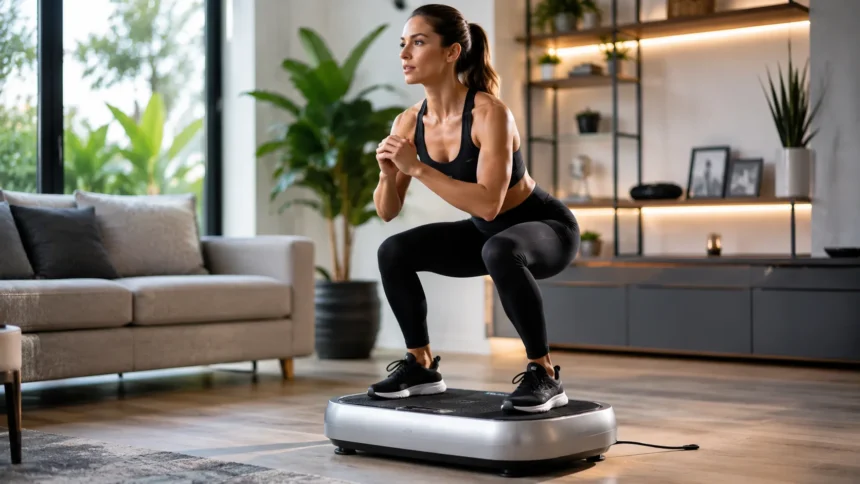
Whole-body vibration is different from simply receiving a massage from a vibrating device. During whole-body vibration training, a person generally stands or exercises on the vibrating platform while maintaining muscle tension. Squats, calf raises, lunges, push-ups with the hands on the platform, and static positions are commonly used. Research suggests that adding active exercise to the plate can create a stronger training stimulus than simply standing passively. This makes sense because muscle activation comes from both the voluntary exercise and the body’s response to vibration. A vibration plate should therefore be considered a training tool rather than a machine that automatically exercises the body while the user does nothing.
The main settings are frequency, amplitude, and acceleration. Frequency describes how many vibration cycles occur each second and is measured in hertz, while amplitude describes how far the platform moves during each cycle. Greater frequency or amplitude does not automatically mean a better workout because excessive vibration may become uncomfortable or inappropriate for a particular individual. The 2024 umbrella review found substantial variation in protocols across research studies, which is one reason scientists have not established one universal vibration setting for fitness. Some studies use frequencies around 20 to 40 Hz, while others investigate different ranges depending on the population and goal.
Your body position also changes how much vibration reaches different areas. Bending the knees slightly can allow muscles in the legs to absorb more vibration and reduce transmission toward the head. Locking the knees while standing stiffly may allow more vibration to travel upward, potentially producing discomfort. Exercises that increase muscular effort, such as squats or lunges, can also change the training stimulus significantly. Consequently, two people standing on the same machine may not receive the same functional workout if one simply stands while the other performs controlled resistance movements. Proper positioning is therefore more important than turning the machine to the strongest possible setting.
Vibration plates were initially used heavily in sports science, rehabilitation, and research rather than being marketed primarily as effortless weight-loss devices. Scientists became interested in whether mechanical vibration could improve neuromuscular activation and provide exercise benefits for people who could not tolerate conventional high-load training. This remains one of the most promising applications. Older adults, individuals undergoing supervised rehabilitation, and people with limited exercise capacity may sometimes benefit from an additional training stimulus that places relatively little external weight on the body. For healthy adults, however, whole-body vibration is generally better viewed as a supplement to strength, aerobic, balance, and mobility training rather than a substitute for all of them.
Do Vibration Plates Really Strengthen Muscles?
Muscle strength is one of the better-supported potential vibration plate benefits. Mechanical vibration causes the neuromuscular system to make repeated adjustments to maintain stability, and these contractions can increase muscle activation while a person stands or exercises on the plate. Systematic reviews have reported improvements in strength measures in several populations, particularly when vibration training is performed consistently for weeks rather than used only once. A 2024 umbrella review concluded that whole-body vibration appears capable of improving several physical-fitness outcomes, although the authors emphasized substantial differences in protocols and study quality. This means vibration training can provide a muscular stimulus, but the magnitude of benefit is not identical across devices or programs.
Older adults may have particular reason to consider whole-body vibration because age-related muscle loss can make traditional resistance training more difficult. Research involving older people with sarcopenia has examined vibration training alongside resistance and mixed exercise programs. A systematic review and meta-analysis found that whole-body vibration training could improve measures of muscular strength and physical performance in some older adults with sarcopenia. However, traditional resistance training remains an important evidence-based approach for maintaining or rebuilding muscle. Vibration should therefore be seen as another possible exercise modality rather than proof that lifting weights is unnecessary.
For younger and healthier adults, improvements may be smaller because conventional strength training already provides a powerful stimulus for adaptation. Someone who regularly performs progressively heavier squats, deadlifts, lunges, and other resistance exercises is unlikely to suddenly double their strength simply by adding ten minutes on a vibration platform. However, vibration may add neuromuscular demand to exercises such as bodyweight squats or calf raises. This can make relatively simple movements feel more challenging without adding substantial external weight. People training at home may therefore find a vibration plate useful as an accessory, particularly if they enjoy the exercise enough to use it consistently.
Vibration training should not be expected to maximize muscle growth by itself. Hypertrophy generally responds to sufficient mechanical tension, adequate training volume, progressive overload, dietary protein, calories, and recovery. A vibration plate may increase activation during certain exercises, but simply standing on one does not reproduce the mechanical demands of a well-designed resistance-training program. Claims suggesting that ten minutes of passive vibration equals an hour of weightlifting are not supported by strong evidence. For someone whose goal is visibly larger muscles, conventional progressive resistance training should remain the foundation.
The most practical approach is to combine vibration with active movement. A person might perform slow squats, split squats, calf raises, glute bridges, or modified push-ups while using the platform at a tolerable setting. This creates a traditional muscular challenge while adding a vibration stimulus. Beginners should keep movements controlled and use support when necessary because vibration can initially make balance more difficult. Over time, exercise difficulty should progress through better technique, additional resistance, range of motion, or training volume rather than relying entirely on higher vibration settings. This turns the machine into a useful training accessory instead of an expensive platform for passive standing.
Can Vibration Plates Improve Balance and Mobility?
Balance is another area where whole-body vibration research is relatively encouraging. Standing on a moving platform forces the nervous system to continuously adjust posture and muscle activity, potentially training sensory and motor systems involved in stability. This may be especially relevant for older adults, who can experience declining balance, muscle strength, and reaction speed with age. Improved balance could theoretically reduce fall risk, although demonstrating fewer actual falls is more difficult than improving a balance test in a research setting. Many studies therefore measure outcomes such as standing stability, walking speed, chair-rise ability, or timed mobility tests rather than fall numbers alone.
Whole-body vibration may provide a particularly useful balance challenge when combined with carefully selected positions and movements. For example, standing with slightly bent knees, shifting weight, or performing supported squats requires greater postural control than passive standing. Over repeated sessions, the nervous system may become better at coordinating muscular responses to instability. The 2024 umbrella review of whole-body vibration research identified balance and other physical-fitness outcomes among areas showing potential improvement, while still emphasizing that vibration protocols are highly inconsistent. This suggests real promise without supporting the idea that every commercial vibration plate will provide identical results.
Older adults with reduced mobility may benefit because vibration exercises can sometimes be performed while holding a stable support. This may provide an option for people who are not ready for more challenging balance drills. However, anyone at significant risk of falling should use the machine under professional supervision rather than experimenting alone with unstable positions. A moving platform can increase instability before it improves it. Footwear, machine speed, hand support, and the surrounding environment should all be considered when safety is a concern. The goal is controlled stimulation, not deliberately creating a situation where falling becomes likely.
Mobility improvements reported in studies may partly result from better lower-body strength rather than balance changes alone. Stronger quadriceps, calves, hips, and gluteal muscles can make standing from a chair, climbing steps, and walking easier. Research on older people with sarcopenia has found that whole-body vibration can contribute to improvements in some measures of physical performance. Similar findings have encouraged its use in rehabilitation research, although responses differ according to health status and program design.
For healthy younger adults, traditional balance activities may be equally or more practical. Single-leg exercises, yoga, tai chi, agility training, sports, and strength exercises provide balance challenges without requiring specialized equipment. A vibration plate can add variety, but it should not create the impression that balance is impossible to train without one. Its potential value is greater when someone enjoys it, needs a low-impact training option, or is working within a professionally designed rehabilitation program. In that setting, the plate can add a controlled sensory challenge that complements rather than replaces established exercise methods.
Are Vibration Plates Good for Bone Density?
Bone health is one of the most frequently promoted reasons to buy a vibration plate, particularly for postmenopausal women and older adults concerned about osteoporosis. Bone responds to mechanical loading, which is why weight-bearing activity and resistance exercise are important for maintaining skeletal strength. Mechanical vibrations also create small repeated forces through the skeleton, leading researchers to investigate whether whole-body vibration might stimulate bone remodeling. Some trials and meta-analyses have reported modest improvements in bone mineral density in selected populations. However, results are mixed, and benefits appear to depend on vibration settings, training duration, age, baseline bone health, and body region measured.
Postmenopausal women have received particular research attention because declining estrogen after menopause accelerates bone loss. Whole-body vibration may provide a low-impact mechanical stimulus for women who have difficulty performing more demanding exercise. Research reviews suggest there may be beneficial effects on bone mineral density in some protocols, particularly when vibration is used over extended periods. Nevertheless, evidence is not strong enough to recommend replacing conventional osteoporosis prevention or treatment with a vibration plate. Resistance training, impact exercise when medically appropriate, adequate calcium and vitamin D, and prescribed osteoporosis medication remain important components of evidence-based care.
Bone adaptation also takes much longer than many advertisements imply. Someone should not expect a few weeks of vibration sessions to produce visibly stronger bones. Bone-remodeling changes are generally assessed over months, often using dual-energy X-ray absorptiometry or similar objective measurements. A person cannot feel their bone density improving during a workout, so claims based solely on sensation or temporary muscle activation are misleading. Studies that demonstrate meaningful skeletal changes require carefully controlled protocols and long follow-up periods.
The type of vibration may matter considerably. Different frequencies, amplitudes, accelerations, and body positions generate different mechanical forces through the skeleton. The 2024 umbrella review emphasized precisely this problem: whole-body vibration studies use widely different protocols, preventing researchers from defining one universally proven approach. This makes consumer advice difficult because a low-powered home platform may not reproduce the same stimulus used in a successful clinical study.
People who already have osteoporosis, spinal compression fractures, recent fractures, or a high fracture risk should not assume vibration is automatically safe simply because it is described as low impact. Medical advice is appropriate before introducing unfamiliar mechanical loading. A physical therapist or physician can determine whether vibration fits into an individual’s exercise plan and whether certain positions should be avoided. For many people, the most sensible use of whole-body vibration for bone health is as a possible adjunct to established strength and weight-bearing exercise rather than as a stand-alone osteoporosis treatment.
Do Vibration Plates Help With Weight Loss or Belly Fat?
Weight loss is one of the most exaggerated areas of vibration plate marketing. Standing on a vibrating platform does require some muscular activity and therefore uses energy, but the calorie expenditure is generally far lower than many advertisements imply. Significant fat loss occurs when energy expenditure exceeds energy intake consistently over time. Vibration does not change that fundamental physiology. A person who uses a plate for ten minutes while maintaining an overall calorie surplus will not automatically lose weight because their muscles are contracting rapidly.
Adding exercises to the platform can increase calorie expenditure because the person is actually performing physical work. Squats, lunges, push-ups, and other movements demand energy regardless of whether they are performed on a vibrating surface. The vibration may increase muscular activation or make certain positions more demanding, but it does not transform a short workout into hours of conventional exercise. Claims that passive vibration can “melt fat” or burn hundreds of calories in only a few minutes should therefore be treated skeptically.
Some studies have reported modest changes in body composition when whole-body vibration is combined with diet or exercise programs. The challenge is separating the effect of vibration from the effect of calorie restriction and active training. A 2025 systematic review examining strength-training and nutritional strategies in postmenopausal women found that groups using calorie restriction alongside strength-oriented interventions achieved greater reductions in body weight, BMI, waist circumference, fat mass, and body-fat percentage than exercise-only groups. Whole-body vibration was included among the exercise modes represented in that literature, illustrating that dietary energy balance remains a major driver of fat loss.
There is also no evidence that vibration can selectively remove belly fat. Spot reduction is a persistent fitness myth. Working or vibrating one body area does not instruct the body to take stored fat specifically from that location. Genetics, hormones, age, sex, and overall energy balance influence where fat is stored and lost. Abdominal muscles may become stronger through exercise, but strengthening them is different from eliminating the fat covering them. A vibration plate can be part of a calorie-burning exercise routine but cannot independently choose where fat disappears.
People interested in weight management should therefore treat a vibration plate as one possible way to make movement more engaging. It may encourage someone who dislikes traditional workouts to perform squats, calf raises, or other exercises consistently. That behavioral value can be meaningful because an exercise method someone actually uses is better than equipment that gathers dust. Still, nutrition, total activity, resistance training, aerobic exercise, sleep, and long-term adherence will have a much larger effect on body weight than whether a workout includes vibration.
Can Vibration Plates Improve Circulation and Cardiovascular Health?
Vibration causes muscles and blood vessels to respond to repeated mechanical stimulation, which has led researchers to investigate effects on blood circulation. Acute studies often show temporary increases in blood flow to the legs after vibration exposure. Muscle contractions can assist venous return, while local vascular responses may increase skin and muscle perfusion. This helps explain why some users describe a feeling of warmth or tingling in the legs after a session. However, temporarily increasing local circulation is not equivalent to treating cardiovascular disease.
Research has also explored blood pressure and arterial stiffness. A 2026 systematic review and meta-analysis of 20 randomized controlled trials involving 846 young adults reported reductions in systolic blood pressure, diastolic blood pressure, resting heart rate, and arterial stiffness after whole-body vibration interventions compared with controls. The authors found an average reduction of about 7 mmHg in systolic blood pressure, although the included studies had generally moderate risk of bias and differed in their protocols. These findings are promising but need confirmation in larger, longer-term trials and more diverse populations.
The cardiovascular effects may partly result from repeated muscle contractions and vascular stimulation. When muscles contract, they require increased oxygen and blood supply, which places demands on the circulatory system. Even though vibration exercise may not elevate heart rate as much as running or cycling, it can still create physiological activity beyond quiet standing. This makes it potentially useful for some people with limited exercise tolerance, particularly when incorporated into supervised programs. However, the cardiovascular stimulus from most vibration sessions is unlikely to provide all the benefits associated with regular moderate-to-vigorous aerobic exercise.
Walking, cycling, swimming, jogging, and other aerobic activities train the heart, lungs, blood vessels, and metabolic systems in ways vibration alone does not fully reproduce. Regular aerobic exercise has extensive evidence for reducing cardiovascular disease risk, improving fitness, supporting glucose regulation, and increasing endurance. Vibration plates should therefore complement rather than replace recommended aerobic activity whenever a person is physically able to exercise conventionally. Someone who uses a vibration plate but otherwise remains sedentary may miss many of the health benefits associated with sustained cardiovascular activity.
People with known cardiovascular disease should also avoid assuming that a vibration plate is automatically harmless. Someone with unstable heart disease, recent surgery, serious vascular problems, or medical restrictions on exercise should speak with their clinician before beginning a vibration program. Temporary circulatory changes may be beneficial in some circumstances but inappropriate in others. A device capable of generating meaningful physiological responses deserves the same thoughtful consideration given to other forms of exercise, particularly when significant medical conditions are present.
Do Vibration Plates Help With Recovery, Soreness and Flexibility?
Vibration is often used before or after workouts because it may influence muscle stiffness, circulation, and sensory perception. Some athletes use whole-body vibration during warm-ups in the hope of improving muscle activation before explosive movements. Others use lower-intensity settings after exercise because the sensation feels relaxing and may temporarily reduce stiffness. Research has shown that vibration can influence neuromuscular activity, although the exact performance and recovery benefits depend on timing and protocol. The 2024 umbrella review found that whole-body vibration can affect several areas of physical fitness but also emphasized that inconsistent study methods make it difficult to define the ideal approach.
Flexibility may improve temporarily after vibration exposure in some people. One explanation is that vibration alters sensory feedback and muscle tone, allowing a greater range of movement for a short period. Increased local blood flow and warmth may also make muscles feel less stiff. This can potentially make vibration useful as one component of a warm-up before mobility work or resistance exercise. However, temporary flexibility gains should not be confused with permanent changes in joint structure or muscle length.
Delayed-onset muscle soreness, commonly called DOMS, has also been studied. Some small studies suggest that vibration before or after strenuous exercise may reduce perceived soreness or certain markers of muscle damage. Results are inconsistent, and the effect is generally not large enough to make recovery practices such as sleep and proper nutrition unnecessary. Muscle soreness naturally declines over several days as tissue adapts and repairs. A vibration plate may make someone feel temporarily better, but the sensation should not encourage them to ignore a genuine injury.
Recovery claims become particularly questionable when manufacturers describe vibration as a method for removing “toxins” or flushing lactic acid from muscles. Lactate is not a toxic waste product that remains trapped for days after exercise, and it is usually cleared or reused relatively quickly. Delayed soreness that appears one or two days after training is not caused by lactate accumulation. Therefore, describing vibration plates as a way to “detox muscles” misunderstands basic exercise physiology. Any recovery benefit is more plausibly related to circulation, sensory input, muscle activation, and perceived stiffness.
A vibration plate can still be pleasant as part of an active-recovery routine. Gentle standing, calf raises, or mobility exercises may help someone move after a difficult workout without creating substantial additional fatigue. The most important rule is that recovery sessions should feel restorative rather than punishing. If vibration increases pain, numbness, dizziness, or unusual discomfort, stopping is more sensible than assuming stronger vibration creates faster recovery. Injury rehabilitation should be guided by a qualified professional rather than by generic recovery protocols from social media.
How to Use a Vibration Plate Safely and Effectively
Beginners should start conservatively rather than immediately selecting the highest frequency or intensity. Spend a short amount of time becoming comfortable with the movement before adding complicated exercises. Slightly bending the knees can help absorb vibration and reduce transmission toward the head and upper body. Holding a stable rail or nearby support is reasonable for anyone who feels unsteady. The objective during early sessions is to learn how the machine affects your balance and muscles, not to tolerate the strongest setting possible.
Short sessions can still provide a meaningful training stimulus, particularly when active exercises are included. Depending on the device and goal, a beginner might perform several short intervals of standing, squatting, calf raises, or other controlled movements with rest between them. Research protocols vary widely, so there is no scientifically established rule saying every person must use a vibration plate for exactly 10, 15, or 20 minutes. The 2024 review of whole-body vibration protocols specifically highlighted this lack of standardization.
Technique matters during exercise. Knees should generally track comfortably with the feet during squats, while the spine should remain controlled rather than collapsing under vibration. Exercises requiring balance should be introduced gradually, particularly for older adults. Unsupported single-leg exercises on a rapidly vibrating surface may be unnecessarily risky for someone new to the equipment. Adding resistance such as dumbbells should come only after basic positioning feels stable.
Frequency of use depends on training intensity and recovery. Using a vibration plate every day is not automatically better than using it several times per week. If sessions involve demanding squats, lunges, and strength work, muscles may require recovery just as they would after ordinary resistance training. Light mobility or balance work might be performed more often, but volume should still increase gradually. Persistent muscle or joint pain is a reason to reduce intensity or seek professional advice rather than continue adding sessions.
The strongest results are likely to come from integrating vibration into a broader fitness program. A complete routine should include resistance training for major muscle groups, aerobic activity, mobility work, and balance exercises where appropriate. A vibration plate can modify some of those exercises or provide another option on lower-impact training days. It does not remove the need to walk, lift, move through a full range of motion, or develop cardiovascular endurance. Using the machine as a tool rather than treating it as an entire fitness program creates much more realistic expectations.
Who Should Avoid a Vibration Plate or Ask a Doctor First?
Most healthy adults can probably tolerate appropriately used whole-body vibration, but certain medical situations require additional caution. Pregnancy is commonly listed among situations where elective whole-body vibration should be avoided unless specifically approved by a healthcare professional. Research establishing safe recreational vibration settings during pregnancy is limited, and there is little reason to introduce unnecessary mechanical exposure when safer exercise options are available. Pregnant individuals should follow activity guidance from their obstetric care team rather than relying on manufacturer claims.
People with recent fractures, recent surgery, severe osteoporosis, unstable joint injuries, or implanted orthopedic hardware should also seek professional advice. Vibration places repeated mechanical forces through bones and joints, which may not be appropriate during early healing. Someone recovering from hip, knee, spine, or other surgery may eventually use vibration as part of rehabilitation, but timing and intensity should be determined by the treating clinician or physical therapist. A low-impact appearance does not mean the device creates zero mechanical stress.
Serious cardiovascular or vascular conditions can warrant caution as well. People with recent cardiovascular events, unstable heart disease, significant circulation disorders, or a history of blood clots should not begin aggressive vibration exercise without medical guidance. Mechanical vibration can influence blood flow, muscle contraction, and cardiovascular responses. Those changes may be useful in healthy populations but could complicate certain medical situations. Individual risk is more important than generic statements that vibration is either universally safe or universally dangerous.
People with neurological conditions, significant balance disorders, recurrent dizziness, or seizure disorders should also discuss vibration training with an appropriate clinician. A rapidly moving surface creates unusual sensory information that can increase instability in some people. Someone who already has difficulty standing safely may need supervision or may be better suited to a different rehabilitation method. The presence of a medical condition does not automatically prohibit whole-body vibration, but it makes individualized assessment more important.
Stop using a vibration plate and seek appropriate medical advice if sessions cause chest pain, severe dizziness, fainting, unusual shortness of breath, persistent numbness, severe headache, or significant joint pain. Mild muscular fatigue can be a normal response to exercise, but concerning neurological or cardiovascular symptoms are not something to “push through.” People with ongoing health conditions should discuss their planned program before purchasing expensive equipment. Safety should come before trying to reproduce a workout seen online.
Are Vibration Plates Worth It?
Whether a vibration plate is worth buying depends largely on what you expect from it. If the expectation is effortless weight loss while standing still for ten minutes a day, the machine is unlikely to deliver satisfying results. If the goal is to add variety to squats, balance exercises, mobility work, or low-impact training, it may be much more useful. Research supports potential benefits for neuromuscular function, strength, balance, and certain other fitness outcomes, especially in particular populations. The strongest conclusions, however, are tempered by the wide variation in training protocols used across studies.
Older adults and people with limited exercise capacity may have more to gain than highly trained athletes. A vibration plate can provide muscular and balance stimulation without requiring heavy external loads. That can make it attractive in supervised rehabilitation or fall-prevention programs. Athletes may also use vibration for warm-ups, power training, or accessory work, but gains are likely to be relatively small compared with the effects of well-designed sport-specific training. The more advanced a person’s fitness, the less likely a simple vibration stimulus is to create dramatic improvements.
Home users should also consider whether the machine will actually increase their physical activity. A moderately effective device that motivates someone to perform regular squats and mobility exercises can be more valuable than sophisticated equipment they never use. Conversely, buying a vibration plate may add little if someone already has access to resistance equipment and enjoys conventional training. Cost, storage, noise, maximum user weight, platform size, vibration pattern, and ease of adjusting settings all matter when choosing equipment.
Marketing language should be a major part of the evaluation. Claims that a machine can burn huge numbers of calories, remove cellulite permanently, eliminate belly fat, replace weightlifting, cure osteoporosis, or provide the equivalent of a long workout in minutes should create skepticism. Scientific research supports much narrower conclusions. Whole-body vibration can influence muscles and physical performance, but it does not override the fundamental principles of exercise physiology. A trustworthy product does not need impossible promises to be useful.
For many people, a vibration plate is best understood as optional exercise equipment rather than an essential health device. You can build excellent strength, balance, cardiovascular fitness, bone health, and mobility without owning one. If you enjoy vibration training or need a lower-impact option, however, it can complement a broader exercise routine. The question is therefore less “Do vibration plates work?” and more “Will this particular tool help you train consistently toward your particular goal?”
The Bottom Line: What Science Says About Vibration Plate Benefits
Scientific evidence suggests that vibration plates can provide genuine physiological effects, particularly involving muscle activation and neuromuscular function. Systematic reviews have reported potential improvements in strength, balance, mobility, and other components of physical fitness. The 2024 umbrella review of whole-body vibration research concluded that it appears to be a potentially efficient exercise modality but also highlighted major inconsistencies in frequency, amplitude, acceleration, training mode, and session design. This lack of standardization prevents researchers from declaring one ideal vibration protocol for everyone.
Evidence may be particularly relevant for older adults, people with reduced strength, and individuals participating in carefully supervised rehabilitation. Whole-body vibration can create a training stimulus without requiring heavy weights or high-impact movement. Studies involving older people with sarcopenia have reported improvements in strength and physical-performance measures. However, conventional resistance, walking, and balance training remain highly valuable and should not automatically be replaced.
Bone and cardiovascular research is promising but less definitive. Vibration may provide mechanical stimulation that contributes to bone health in certain populations, and emerging research has reported improvements in blood pressure and arterial stiffness. A 2026 meta-analysis involving 20 randomized trials and 846 young adults found statistically significant improvements in several cardiovascular measures, although the researchers called for longer and larger studies.
Weight-loss claims deserve much greater skepticism. A vibration plate cannot selectively burn belly fat or create major calorie deficits while someone stands passively. Active exercises performed on the machine can certainly contribute to physical activity and energy expenditure, but nutrition and total exercise remain much larger determinants of fat loss. The plate works best when it makes conventional movements more challenging or encourages someone to exercise consistently.
Ultimately, vibration plate benefits are real but much more modest than many advertisements suggest. Whole-body vibration can be useful for strength, balance, mobility, and certain rehabilitation or fitness goals, but it is not a replacement for resistance training, aerobic exercise, good nutrition, sleep, or medically necessary treatment. Choose realistic settings, perform active exercises when appropriate, and increase intensity gradually. People with significant medical conditions should seek professional advice before starting. Used intelligently, a vibration plate can be a worthwhile addition to an exercise routine rather than a miracle machine expected to do the entire workout for you.
Frequently Asked Questions
What are the main benefits of a vibration plate?
Potential vibration plate benefits include improved muscle activation, strength, balance, mobility, and possibly some aspects of circulation and bone health. Results vary depending on the training program, vibration settings, age, and health of the person using it.
Do vibration plates help you lose weight?
Vibration plates may contribute to exercise and calorie expenditure when combined with active movements, but they do not produce major weight loss by themselves. Sustainable fat loss still depends primarily on overall calorie balance, nutrition, and regular physical activity.
How long should you stand on a vibration plate?
There is no universally proven session length because research protocols vary considerably. Beginners should usually start with short sessions at comfortable settings and gradually increase training according to their response and the manufacturer’s safety guidance.
Do vibration plates really tone your body?
A vibration plate can increase muscle activation, particularly when exercises such as squats, lunges, and calf raises are performed on it. However, visible muscle definition also depends on progressive resistance training, muscle size, and body-fat levels.
Can you use a vibration plate every day?
Light sessions may be tolerable for some healthy adults, but demanding vibration workouts can require recovery just like other forms of exercise. Daily use is not automatically more effective, and anyone experiencing persistent pain, dizziness, or unusual symptoms should stop and seek appropriate advice.