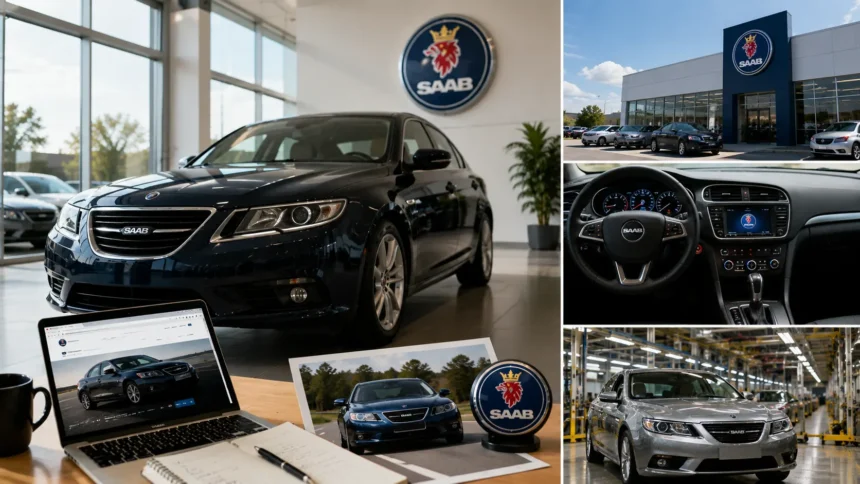
Is Saab Still in Business?
If you are wondering is Saab still in business, the answer is yes—but there is an important distinction. Saab AB, the Swedish company behind the famous name, is still very much in business and operates as a major aerospace, defense, and security company. What no longer exists as an active automaker is Saab Automobile, the company that produced the distinctive Swedish cars many drivers still associate with the brand.
This difference causes considerable confusion because Saab cars remain visible on roads around the world. Models such as the Saab 900, Saab 9-3, Saab 9-5, and Saab 9000 built a passionate following, and many are still maintained by enthusiasts. Seeing those vehicles today can naturally make people wonder whether new Saab cars are still being manufactured.
Saab Automobile stopped operating as the familiar automaker after severe financial problems led to bankruptcy in December 2011. The automotive assets later changed hands, but the traditional Saab passenger-car business never returned as a continuing producer of new Saab-branded vehicles. The Saab name today is primarily associated with Saab AB’s defense, aviation, radar, surveillance, naval, and security operations.
In fact, Saab AB remains an active international company in 2026, with continuing orders, investment, technology development, and global operations. So the short answer is simple: Saab is still in business, but Saab no longer makes cars. Understanding how the automotive and defense businesses became separate explains why both statements can be true at the same time.
Is Saab Still in Business in 2026?
Yes, Saab AB remains an active Swedish company in 2026. It develops and supplies advanced systems for defense, aerospace, surveillance, naval operations, command and control, sensors, and other security applications. Its customers include governments, defense organizations, public authorities, and organizations operating in security-sensitive industries.
The company is not merely surviving under an old brand name. Saab continues developing new technology, increasing production capacity, entering international partnerships, receiving major orders, and investing in future defense capabilities. Recent company reporting has reflected significant demand for its defense and security portfolio.
This activity is very different from the passenger-car business people remember. If you visit Saab’s current corporate presence, you will see fighter aircraft, radar systems, submarines, weapons, sensors, and defense technology rather than family sedans, convertibles, or hatchbacks.
Therefore, when someone asks whether Saab went out of business, the most accurate response depends on which Saab they mean. Saab Automobile is no longer an active car manufacturer, while Saab AB remains an active and growing defense and aerospace company.
Does Saab Still Make Cars?
No, Saab does not currently manufacture new passenger cars. The traditional Saab car company ceased production after Saab Automobile’s financial collapse, and the familiar lineup of Swedish passenger vehicles disappeared from new-car showrooms.
This means you cannot visit a current Saab automobile dealership and order a newly manufactured Saab 9-3 or Saab 9-5 in the way customers once could. The cars available today are used vehicles produced before or around the end of the original automaker’s operations.
Saab AB itself has made the distinction clear over the years: although people continue to associate the name strongly with automobiles, its present business is defense and security. The connection between the Saab name and automobiles is historical rather than part of Saab AB’s current passenger-car production.
That said, the large number of surviving vehicles and enthusiastic owners keeps the automotive name visible. Saab clubs, specialist garages, parts suppliers, restoration businesses, and online communities have helped preserve interest in the cars long after new Saab automobile production ended.
What Happened to Saab Cars?
Saab’s automobile story began as part of a Swedish company with deep roots in aircraft manufacturing. The original engineering culture influenced the design and marketing of Saab cars, which became known for unusual styling, safety features, turbocharged engines, and unconventional engineering decisions.
Over several decades, Saab developed a distinctive identity in the global automotive market. Cars such as the Saab 96, 99, 900, 9000, 9-3, and 9-5 helped create a loyal customer base, especially among drivers who wanted something different from mainstream luxury or family cars.
However, building distinctive cars did not guarantee financial stability. Saab Automobile struggled with profitability, scale, development costs, changing ownership, and the competitive pressures of the global automotive industry. Its relatively modest production volumes made it difficult to compete financially with much larger automakers.
The company’s problems eventually became severe enough that production stopped and Saab Automobile entered bankruptcy proceedings in 2011. That ended the original continuous story of Saab as a major passenger-car manufacturer, even though attempts were later made to use some of its assets and technology.
When Did Saab Stop Making Cars?
The critical year was 2011. Saab Automobile experienced serious financial difficulties, production interruptions, supplier problems, and an inability to secure the funding necessary to continue normal operations.
On December 19, 2011, Saab Automobile was declared bankrupt in Sweden. The bankruptcy represented the end of the company that enthusiasts generally think of when discussing the disappearance of Saab cars.
There were later attempts to restart vehicle production using assets associated with the former Saab operation. This sometimes creates confusion about exactly when Saab “ended,” because limited automotive activity occurred after the original bankruptcy under different ownership arrangements.
For ordinary consumers asking when Saab stopped being the familiar car manufacturer, however, 2011 remains the defining point. It was the year the original Saab Automobile business collapsed and its normal production operation effectively came to an end.
Why Did Saab Go Out of Business as a Car Company?
Saab Automobile’s collapse cannot be explained by one bad car or one unsuccessful year. The company faced a combination of financial, strategic, ownership, production, and market challenges that accumulated over time.
One of the basic difficulties was scale. Developing modern automobiles is extremely expensive because manufacturers must invest in engineering, safety, emissions compliance, manufacturing equipment, technology, marketing, and distribution. Saab was relatively small compared with the largest global automotive companies.
Ownership changes also shaped the company’s direction. Saab Automobile spent years under General Motors before being sold to Dutch sports-car company Spyker. By the time Saab became independent from GM ownership, the company still faced major financial and operational challenges.
Ultimately, Saab Automobile could not generate sufficient financial stability to continue production. Suppliers, funding, ownership negotiations, and proposed investments became part of an increasingly complicated struggle until bankruptcy became unavoidable.
Did General Motors Own Saab?
Yes. General Motors played a major role in the history of Saab Automobile. GM initially acquired a significant ownership interest and later took full control of the automobile company.
The GM years influenced Saab vehicle platforms, engines, components, development strategies, and manufacturing economics. Some enthusiasts believe GM ownership helped provide technology and financial resources, while others argue that increased platform sharing weakened some of Saab’s distinctive identity.
Both perspectives reflect the difficulty of keeping a relatively small premium automaker competitive. Sharing components could reduce costs, but customers who loved Saab often valued the brand specifically because its vehicles felt different from conventional cars.
General Motors eventually decided to move away from Saab during a period when GM itself was restructuring. Saab Automobile was subsequently sold to Spyker, beginning another short and financially difficult chapter in the company’s history.
Who Bought Saab From General Motors?
Dutch sports-car manufacturer Spyker acquired Saab Automobile from General Motors in 2010. The transaction initially created optimism among enthusiasts who hoped independence could restore Saab’s distinctive character.
Spyker faced an extremely difficult challenge, however. Operating a global automaker requires enormous amounts of capital, and Saab needed both ongoing operating funding and investment in future vehicles.
The company experienced difficulties paying suppliers, which contributed to disruptions in production. Attempts were made to secure new investment and establish partnerships that could provide the capital necessary to keep the company alive.
Those efforts ultimately failed to create a sustainable solution. By the end of 2011, Saab Automobile entered bankruptcy, bringing the Spyker-controlled period to an abrupt end.
What Happened After Saab Automobile Went Bankrupt?
Following the bankruptcy, Saab Automobile’s assets attracted interest because the company still possessed manufacturing facilities, engineering knowledge, intellectual property, and an internationally recognized automotive history.
National Electric Vehicle Sweden, commonly known as NEVS, acquired significant assets associated with the bankrupt Saab Automobile operation in 2012. The new owner initially pursued plans related to electric vehicles and briefly used the Saab name under a licensing arrangement.
However, ownership of automotive assets did not mean complete ownership of the Saab brand itself. The Saab name had complicated rights and connections extending beyond the bankrupt automobile operation.
Eventually, vehicles associated with the post-bankruptcy effort stopped being marketed as Saab cars. This is one reason a true revival of the traditional Saab automobile brand never developed into a lasting new-car business.
What Is NEVS and How Is It Connected to Saab?
NEVS stands for National Electric Vehicle Sweden. It became closely associated with the Saab story when it acquired important assets from the bankrupt automobile company.
NEVS was interested in developing electric vehicles and initially intended to build on parts of the former Saab automotive operation. This created excitement among some enthusiasts who hoped Swedish car production could be revived.
A limited number of vehicles based on Saab technology were produced during the post-bankruptcy period. However, the relationship between NEVS and the Saab brand did not eventually result in a sustainable revival of Saab as a mainstream automotive marque.
Therefore, NEVS should not be confused with the original Saab Automobile or with today’s Saab AB. These are different corporate stories connected through assets, facilities, technology, and historical developments rather than one uninterrupted automobile company.
Is Saab AB the Same Company That Made Saab Cars?
Saab AB and Saab Automobile share common historical roots, but they should not be treated as the same modern operating business. Saab originally emerged as a Swedish aircraft manufacturer, and automobile production developed from that engineering organization.
Over time, corporate restructuring changed the relationship between the automotive and aerospace operations. The passenger-car business eventually became a separate corporate operation and went through its own ownership changes.
This separation explains what happened after Saab Automobile disappeared. The failure of the automotive business did not mean the entire Saab organization disappeared because Saab AB’s defense and aerospace operations continued separately.
Today, Saab AB represents the continuing Saab company most people encounter in business and financial news. Its activities center on defense, aerospace, sensors, weapons, naval technologies, and security rather than consumer automobiles.
What Does Saab Make Today?
Modern Saab produces advanced defense and security technologies. Its portfolio includes aircraft, radar and sensor systems, electronic warfare technologies, weapons, command-and-control solutions, naval systems, and other equipment used by military and government customers.
One of its most recognizable products is the Gripen fighter aircraft. The Gripen family demonstrates Saab’s continued connection with aviation, which actually reaches further back in Saab history than passenger automobiles.
Saab is also prominent in radar and surveillance technology. Its sensor solutions can support air surveillance, maritime awareness, ground operations, threat detection, and military decision-making.
Naval technology represents another major area of business. Saab’s capabilities include submarines, underwater systems, naval combat technologies, and solutions designed for complex maritime defense environments.
Does Saab Still Make Airplanes?
Yes. Aircraft remain an important part of Saab’s modern identity, although today’s aviation work is largely connected with military and specialized aerospace applications rather than consumer transportation.
The Saab JAS 39 Gripen is the company’s best-known contemporary fighter aircraft. Different Gripen variants have been developed to provide modern combat capabilities while emphasizing operational flexibility and efficiency.
Saab also works with airborne surveillance and other aerospace technologies. These systems integrate aircraft, sensors, communications, and mission capabilities for defense customers.
This makes the disappearance of Saab cars somewhat ironic from a historical perspective. Saab began with aviation, expanded into automobiles, and after the automotive division disappeared, aerospace remained one of the company’s defining strengths.
What Does the Name Saab Mean?
The name Saab originated from Svenska Aeroplan Aktiebolaget, reflecting the company’s Swedish aircraft-manufacturing roots. The company was founded in Sweden in 1937.
Its original purpose was centered on aircraft production rather than automobiles. Passenger cars emerged later as the company explored opportunities beyond wartime aircraft manufacturing.
That aviation background became central to Saab’s car marketing and brand identity. Automotive advertising frequently highlighted connections between the company’s aircraft engineering heritage and its unconventional vehicle design.
Today, the name has effectively returned to an identity much closer to its original purpose. Modern Saab is again most strongly associated with aircraft, defense technology, advanced engineering, and national security.
Why Were Saab Cars So Different?
Saab cars developed a reputation for unconventional engineering and design. Rather than simply copying larger European manufacturers, the company frequently adopted ideas that gave its vehicles a recognizable personality.
Turbocharging became particularly closely associated with Saab. While Saab did not invent the turbocharger, it helped make turbocharged engines a defining feature of practical passenger vehicles and built significant marketing identity around turbo performance.
The cars were also known for features that enthusiasts considered characteristically Saab, including distinctive dashboards, unusual ignition placement on several models, strong safety engineering, wraparound windshields, and functional Scandinavian interiors.
These characteristics helped Saab develop an unusually loyal audience relative to its market size. That loyalty explains why people continue searching for information about Saab more than a decade after the original automaker disappeared.
What Were the Most Famous Saab Cars?
The Saab 900 is probably the model most strongly associated with the brand. Its distinctive shape, practical hatchback design, turbocharged versions, and unconventional interior made it immediately recognizable.
The Saab 9000 represented a larger and more conventional-looking model while retaining much of the company’s personality. It provided Saab with an executive-class offering that competed with other European premium vehicles.
Later, the Saab 9-3 became one of the company’s most important models. Available in several body styles over its lifetime, it introduced many newer customers to Saab during the GM ownership era.
The Saab 9-5 served as the company’s larger executive model and developed a strong following of its own. Today, all of these models remain common topics within Saab owner clubs, online communities, restoration projects, and used-car discussions.
Can You Still Buy a Saab Car?
Yes, but only as a used vehicle. Because new Saab automobiles are no longer being manufactured, anyone wanting one today needs to shop within the secondhand market.
Availability varies significantly by country. Markets where Saab historically sold substantial numbers of cars—including Sweden, the United Kingdom, parts of Europe, and the United States—generally have more surviving examples.
Condition matters considerably. Some Saab cars have now been on the road for decades, so maintenance history can be more important than mileage alone. A carefully maintained higher-mileage example may be preferable to a neglected car showing a smaller number on the odometer.
Buyers should also consider local specialist support before purchasing. Having access to a mechanic familiar with older Saabs can make ownership significantly easier, especially when diagnosing model-specific electrical, mechanical, or electronic problems.
Can You Still Get Parts for Saab Cars?
Many Saab parts remain available despite the end of new-car production. The large installed base of vehicles created continuing demand for maintenance and replacement components.
Availability depends on the specific model and component. Routine service items may be relatively straightforward to source, while rare trim, body parts, electronics, or model-specific components can require more searching.
Specialist Saab parts businesses and enthusiast networks play an important role in keeping older vehicles operational. Used parts, remanufactured components, and compatible replacement parts can also extend vehicle life.
Parts availability should still be considered before buying an older Saab. Enthusiasts may enjoy sourcing unusual components, but someone seeking completely effortless daily transportation may find maintaining an aging discontinued brand less convenient than owning a current mainstream vehicle.
Can Saab Cars Still Be Serviced?
Yes. Saab cars can still be serviced by independent mechanics, automotive repair shops, and specialists familiar with the brand. There is no requirement that an automobile manufacturer remain active for existing vehicles to receive maintenance.
Specialist knowledge can be particularly valuable because older Saabs have engineering details that mechanics unfamiliar with the brand may not immediately recognize. Experienced Saab technicians often know common problems and appropriate diagnostic procedures.
Basic maintenance such as brakes, tires, fluids, batteries, and many suspension components can often be handled without unusual difficulty. More specialized electronic or model-specific repairs may require additional expertise.
Owners should therefore research local repair support. A good specialist can make the difference between enjoyable Saab ownership and a frustrating search for someone willing to diagnose an unfamiliar older vehicle.
Are Saab Cars Reliable?
Saab reliability depends heavily on model, engine, age, and maintenance history. It is difficult to make a meaningful statement that every Saab is either reliable or unreliable.
Well-maintained examples can continue operating for high mileages, which is one reason many older Saabs remain on the road. However, age itself introduces risks involving rubber components, electronics, cooling systems, suspension, corrosion, and other wear-related issues.
Maintenance history becomes especially important because neglected turbocharged engines or other complex systems can become expensive to repair. Buyers should ideally inspect service records instead of judging a car solely by cosmetic appearance.
A pre-purchase inspection by someone familiar with Saab vehicles can be valuable. An attractive purchase price can quickly become irrelevant if the vehicle immediately requires significant mechanical work.
Are Saab Cars Becoming Collectible?
Certain Saab vehicles have increasingly attracted enthusiast and collector attention because the brand is no longer producing cars and many models have distinctive historical appeal.
Classic Saab 900 Turbo models are particularly recognizable collectibles. Well-preserved convertibles, performance variants, unusual specifications, and exceptionally original cars can generate significant interest among enthusiasts.
Earlier vehicles such as the Saab 96 also appeal to collectors interested in the company’s unusual automotive history. Rarity can increase as poor examples disappear and surviving vehicles become concentrated among dedicated owners.
That does not mean every old Saab will become extremely valuable. Collectibility depends on condition, specification, rarity, historical importance, originality, market demand, and ownership costs.
Why Do Saab Cars Still Have Such Loyal Fans?
Saab attracted customers who often valued individuality. For many owners, buying a Saab was partly a decision not to buy the more obvious alternatives from larger European brands.
Engineering contributed to this identity. Turbocharged engines, safety-focused development, practical interiors, distinctive styling, and unusual design features made the cars feel noticeably different.
The brand also developed strong associations with Scandinavian design and intellectual independence. Marketing often reinforced the idea that Saab was made for drivers who thought differently from mainstream consumers.
When production stopped, that identity did not disappear. In some ways, discontinuation strengthened enthusiasm because every surviving Saab became part of a finite automotive heritage that could no longer be replaced with a new model.
Could Saab Ever Start Making Cars Again?
A return of new Saab-branded automobiles would require considerably more than reopening an old factory. Brand rights, technology, engineering, safety regulations, manufacturing investment, supply chains, software, distribution, and enormous amounts of capital would all need to align.
The modern automotive industry is also dramatically different from the one Saab left. Electric vehicles, advanced driver assistance, connected software, battery technology, emissions requirements, and new competitors have transformed vehicle development.
Saab AB itself is focused on defense and security and has not positioned modern passenger-car production as its business. Its current growth opportunities are strongly connected with defense demand and aerospace technology.
For these reasons, enthusiasts should not assume a Saab automotive return is planned simply because the name remains active. Unless an official future announcement says otherwise, Saab should be considered an active defense company rather than a returning passenger-car manufacturer.
Is Saab a Swedish Company Today?
Yes. Saab AB remains a Swedish company with deep historical connections to Sweden’s aerospace and industrial sectors.
The company traces its origins to 1937, when it was established during a period in which Sweden was strengthening domestic aircraft-manufacturing capabilities.
Although Saab is Swedish, its modern operations are international. It works with customers, governments, suppliers, manufacturing partners, and technology organizations in numerous countries.
This global presence is important because defense programs frequently involve international partnerships, local manufacturing arrangements, technology cooperation, and long-term government relationships.
Where Is Saab Based?
Saab’s corporate operations remain centered in Sweden, while the company maintains facilities, employees, partnerships, and market operations internationally.
Linköping has particularly strong historical importance to Saab’s aviation activities and remains closely associated with the company’s aircraft development and manufacturing heritage.
Other Swedish locations support naval systems, sensors, weapons, research, production, and corporate activities. Saab also maintains operations outside Sweden in important international markets.
Therefore, today’s Saab is best understood as a Swedish-headquartered global defense and technology business rather than a regional company operating only within Scandinavia.
Is Saab Still Operating in the United States?
Yes. Saab maintains a significant presence in the United States through its defense and security activities.
Its U.S. operations support areas including engineering, manufacturing, program management, defense technology, and business development. The American market is strategically important because of the scale of U.S. defense spending and its extensive international security partnerships.
This is another area where consumers can become confused. Seeing Saab recruitment, corporate offices, or projects in America does not mean Saab automobiles have returned to the U.S. market.
The current American Saab presence relates to Saab defense and security operations, not a network selling newly manufactured Swedish passenger vehicles.
How Is Saab Doing Financially Today?
Saab AB has entered the middle of the 2020s from a substantially different position than the automobile company experienced before its failure. Defense demand has increased across many markets, creating significant opportunities for companies supplying advanced military technology.
Saab described 2025 as a record year, including strong order activity and business performance. The company continued reporting strong demand and order bookings during 2026 while investing in additional capacity.
Its current market conditions reflect governments increasing attention to defense readiness, military modernization, surveillance, air defense, naval capability, and long-term security requirements.
This financial picture reinforces the central answer to is Saab still in business. The Saab company operating today is not merely maintaining a legacy name; it remains an active major industrial enterprise within the international defense sector.
Why Is Saab Growing Again?
The geopolitical environment has increased demand for defense equipment across Europe and other regions. Governments are strengthening military capabilities, replacing older equipment, rebuilding inventories, and investing in long-term defense modernization.
Saab operates in several areas benefiting from that demand, including combat aircraft, surveillance systems, weapons, radar, naval technologies, and electronic warfare.
The company has also expanded capacity and pursued international partnerships to meet increased requirements. Modern defense programs frequently require cooperation between manufacturers and countries rather than purely domestic production.
This creates a striking contrast with the Saab Automobile story. The passenger-car business struggled because it lacked the scale and financial stability needed for global automotive competition, while the defense company now operates in markets where its specialized engineering capabilities are strategically valuable.
What Is Saab’s Gripen Fighter Jet?
The Saab JAS 39 Gripen is a multirole combat aircraft developed in Sweden and one of Saab’s most internationally recognizable products.
The aircraft is designed for missions including air defense, interception, ground attack, and reconnaissance depending on configuration and operational requirements.
Modern Gripen variants incorporate advanced avionics, sensors, electronic warfare capabilities, weapons integration, and networking technologies.
For anyone who knew Saab primarily because of cars, Gripen provides the clearest illustration of what Saab actually represents today: advanced aerospace and defense engineering rather than consumer automotive manufacturing.
What Other Defense Products Does Saab Make?
Saab’s activities extend far beyond fighter aircraft. Radar and sensor technology represents one of its most important areas of expertise.
The company develops systems used for surveillance, detection, situational awareness, electronic warfare, and military decision-making across air, land, and maritime environments.
Saab also produces weapons and ground-combat technologies. Its portfolio includes systems designed to address different military threats and operational situations.
Naval operations form another major business area, including submarines and advanced maritime systems. This broad portfolio reduces dependence on any single defense product and gives Saab exposure to several areas of military modernization.
Saab Cars vs Saab AB: What Is the Difference?
Saab Automobile was the passenger-car manufacturer responsible for models such as the Saab 900, 9-3, and 9-5. That company went bankrupt in 2011 and no longer exists as an active producer of new Saab cars.
Saab AB is the Swedish defense, aerospace, and security company that continues operating today. It develops fighter aircraft, sensors, weapons, naval technologies, and other advanced systems.
Both companies share historical roots, which is why the identical name creates confusion. Saab automobiles originally emerged from the same Swedish aviation-oriented industrial history.
The easiest way to remember the difference is simple: the Saab car business is gone, but the Saab defense company is still operating and growing.
Why Do People Think Saab Completely Went Out of Business?
For many consumers, the automobile was the only Saab product they ever encountered. When dealership signs disappeared and new Saab cars stopped appearing, it naturally looked as though the entire company had vanished.
Defense products are less visible in everyday life. Most people do not regularly purchase fighter jets, military radar, submarines, or electronic warfare equipment, so Saab AB’s continued operations may remain outside ordinary consumer awareness.
Automotive news also heavily covered Saab Automobile’s financial problems and bankruptcy. Headlines frequently used the word “Saab” without repeatedly explaining the distinction between the automotive business and the wider historical company.
As a result, the idea that “Saab went bankrupt” became common shorthand. More precisely, Saab Automobile went bankrupt, while Saab AB’s separate defense and aerospace operations continued.
Should You Buy a Used Saab Today?
Buying a used Saab can make sense for an enthusiast who appreciates the brand and understands the realities of owning a discontinued vehicle.
Purchase condition should matter more than finding the lowest price. Look for service records, evidence of regular maintenance, appropriate repairs, and signs that previous owners understood the vehicle.
A specialist inspection is especially useful for older models. Mechanical problems that appear minor to an inexperienced buyer can sometimes involve expensive components or significant labor.
Someone who wants maximum convenience and access to a nearby franchised dealer network may prefer a current brand. Someone who enjoys distinctive engineering and enthusiast ownership may find a well-maintained Saab unusually rewarding.
What Should You Check Before Buying a Used Saab?
Begin with the service history. Regular oil changes and documented maintenance are particularly important for older turbocharged vehicles.
Check the engine, transmission, cooling system, suspension, brakes, electrical systems, air conditioning, warning lights, and evidence of leaks or corrosion.
Electronic functions should also be tested carefully because aging modules, displays, switches, sensors, and other components can become troublesome on older vehicles.
Finally, investigate parts and specialist support for the exact model in your area. Buying the car is only the beginning; being able to maintain it economically determines whether ownership remains enjoyable.
Does Saab Have Dealerships Today?
There is no current worldwide network of conventional Saab new-car dealerships because new Saab passenger cars are not being produced.
Some former dealers transformed into independent repair businesses or began representing other automobile manufacturers after Saab Automobile disappeared.
Specialist workshops continue supporting Saab owners in many markets, and some independent businesses focus heavily or entirely on Saab repairs and parts.
When searching online for a “Saab dealer,” therefore, check whether the business sells used vehicles, specializes in repairs, supplies parts, or represents another brand rather than assuming it sells new Saab automobiles.
Are Saab Spare Parts Still Being Made?
Replacement components continue to exist through a combination of specialist suppliers, aftermarket manufacturers, remaining original-style parts channels, used components, and remanufacturing.
Common maintenance items often remain reasonably accessible because many components are shared with established automotive supply chains.
Rare interior trim, bodywork, electronic modules, and model-specific parts can be more challenging, especially for older or low-production vehicles.
Enthusiast demand provides an economic reason for specialized suppliers to continue supporting the cars. As long as enough owners want to maintain their vehicles, a niche Saab parts market can remain viable.
What Is the Future of Saab?
The future of Saab AB appears centered on defense technology rather than automobiles. Aerospace, sensors, weapons, naval systems, electronic warfare, command systems, and security solutions continue to define the business.
International demand for defense products is currently creating substantial opportunities, and Saab has been investing in production capacity and partnerships to respond.
Technological development will also remain important. Modern defense increasingly involves software, artificial intelligence, networking, autonomous systems, advanced sensors, and integration across multiple military domains.
For automotive fans, the future is therefore largely about preserving the cars that already exist. For Saab AB, the future is about advanced defense and security technology rather than reviving the passenger-car business of the past.
Is Saab Still in Business? The Simple Answer
Yes, Saab is still in business in 2026. Saab AB remains an active Swedish aerospace, defense, and security company with international operations.
No, Saab does not currently make new passenger cars. Saab Automobile, the company that produced the vehicles most consumers remember, entered bankruptcy in 2011.
Used Saab cars remain widely owned and supported by enthusiast communities, specialist garages, and parts businesses, which helps keep the automotive legacy visible.
So if you hear someone say “Saab went out of business,” the more accurate statement is: Saab stopped being an active automobile manufacturer, but Saab AB continues as a major defense and aerospace company.
Final Thoughts
The answer to is Saab still in business depends on which part of Saab’s history you have in mind. If you mean the company producing Saab passenger cars, then no—the traditional Saab Automobile operation is no longer in business and new Saab cars are not currently manufactured.
If you mean Saab AB, however, the answer is clearly yes. The Swedish company remains active in 2026 and operates internationally across defense, aviation, radar, surveillance, weapons, naval technology, and security.
This distinction explains why the Saab website and company name still appear regularly even though no modern Saab 9-3 or 9-5 is arriving at dealerships. The automobile and defense businesses followed very different paths after their historical connection became separated.
Saab’s automotive story may have ended as an active manufacturing business, but its influence has not disappeared. Enthusiasts continue preserving Saab cars, while the company behind the broader Saab heritage continues developing sophisticated technologies for air, land, sea, and security applications.
Frequently Asked Questions
Is Saab still in business today?
Yes. Saab AB is still in business and operates as a Swedish defense, aerospace, and security company. Saab Automobile, however, no longer produces passenger cars.
Does Saab still make cars in 2026?
No. New Saab-branded passenger cars are not currently being manufactured. Cars such as the Saab 9-3, 9-5, and 900 are now available only through the used and collector markets.
Why did Saab stop making cars?
Saab Automobile suffered from long-term financial pressures, limited scale, ownership changes, supplier difficulties, and insufficient funding. The company ultimately entered bankruptcy in December 2011.
What does Saab make now?
Modern Saab develops defense and security technologies, including Gripen fighter aircraft, radar and surveillance systems, weapons, electronic warfare technology, naval systems, and submarines.
Can you still get parts for Saab cars?
Yes, many Saab parts remain available through specialist suppliers, aftermarket manufacturers, used-parts businesses, and enthusiast networks. Availability varies depending on the model and specific component.