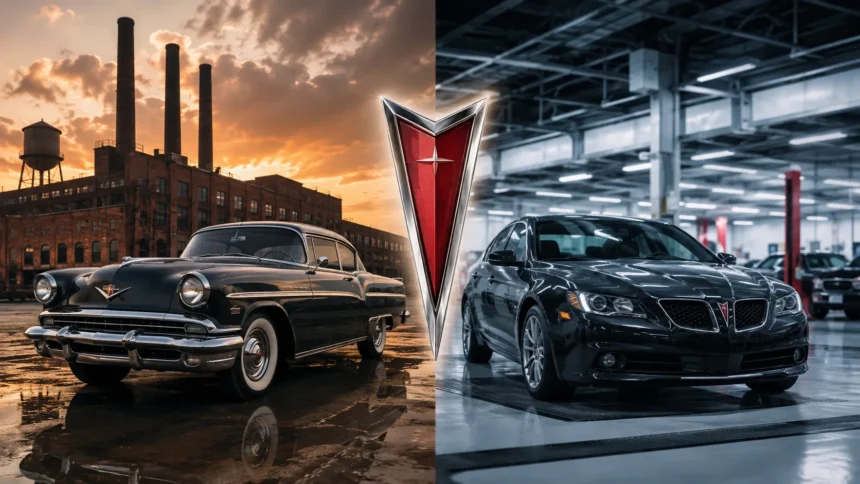
Is Pontiac Still in Business? What Happened to the Iconic Car Brand?
If you grew up seeing Pontiac Firebirds, Grand Prix models, or the famous Pontiac GTO on American roads, you may wonder, is Pontiac still in business? The simple answer is no. Pontiac is no longer an active automobile brand, and General Motors stopped producing Pontiac vehicles more than a decade ago.
Pontiac was once one of General Motors’ best-known divisions and developed a reputation for sporty styling, performance-oriented cars, and affordable vehicles aimed at younger drivers. Models such as the GTO, Firebird, Trans Am, Grand Prix, Bonneville, and Solstice helped Pontiac build a loyal following that continues today.
The brand’s disappearance was not caused by one failed car or one bad year. Pontiac’s closure resulted from changing consumer preferences, overlapping GM brands, financial difficulties, declining sales, and General Motors’ larger restructuring during the global financial crisis. GM ultimately decided it needed fewer brands and a more focused product lineup.
Even though Pontiac dealerships and new Pontiac vehicles are gone, millions of people still remember the brand fondly. Used Pontiacs remain on the road, enthusiast communities continue restoring classic models, and certain performance cars have become increasingly desirable among collectors. Here is what happened to Pontiac and what its legacy looks like today.
Is Pontiac Still in Business Today?
No, Pontiac is not currently operating as an active automobile manufacturer or General Motors vehicle division. General Motors officially discontinued the Pontiac brand after deciding to reduce the number of automotive brands it supported during a major corporate restructuring.
Pontiac production ended in 2009, while the remaining dealer agreements and brand operations were phased out afterward. By 2010, Pontiac had effectively disappeared from the new-car marketplace, bringing an end to a name that had been part of the American automotive industry for more than eight decades.
You therefore cannot visit a Pontiac dealership and purchase a newly manufactured Pontiac vehicle today. Cars carrying the Pontiac badge are now used vehicles, classics, collector cars, or existing models that have remained on the road since production ended.
General Motors still exists and continues operating brands such as Chevrolet, GMC, Buick, and Cadillac. Pontiac itself, however, has not been returned to regular production, meaning drivers searching for a modern Pontiac will have to look at used or collectible vehicles.
When Did Pontiac Go Out of Business?
Pontiac’s decline became official during General Motors’ restructuring in 2009. GM announced that it would phase out the Pontiac division as part of a broader strategy designed to reduce costs, simplify its portfolio, and concentrate resources on fewer automotive brands.
Production of Pontiac vehicles stopped during 2009, although unsold vehicles continued appearing at dealerships afterward. Pontiac dealer agreements were eventually allowed to expire, and by the end of 2010 the brand was no longer functioning as an active GM automotive division.
The timing sometimes creates confusion because people may see both 2009 and 2010 mentioned when researching when Pontiac shut down. In practical terms, 2009 marked the end of vehicle production, while 2010 represented the completion of Pontiac’s phaseout from General Motors’ active business.
That means Pontiac did not suddenly disappear overnight. GM gradually ended production, sold remaining inventory, and wound down dealership relationships. This controlled phaseout allowed existing customers to continue receiving service while General Motors redirected resources toward its surviving brands.
Why Did Pontiac Go Out of Business?
Pontiac disappeared because General Motors faced serious financial pressure and needed to simplify its business. During the late 2000s, the American auto industry was experiencing major challenges, while GM itself faced mounting losses, declining vehicle demand, and an expensive brand structure.
Maintaining many separate brands required significant spending on vehicle development, advertising, dealerships, management, and manufacturing. GM had Chevrolet, Pontiac, Buick, Cadillac, GMC, Saturn, Hummer, Saab, and other operations competing for corporate resources at different points in its history.
Pontiac also struggled with an increasingly unclear position in the GM lineup. Although it had historically been promoted as a performance-oriented division, some later Pontiac models shared platforms, engines, and other components with vehicles sold under different General Motors badges.
When GM restructured, management decided the company would be stronger by focusing its investments on a smaller group of core brands. Pontiac was therefore selected for discontinuation despite its history, loyal customer base, and several memorable performance vehicles.
General Motors’ Financial Crisis Played a Major Role
To understand why Pontiac disappeared, it helps to understand what was happening at General Motors during the 2008-2009 financial crisis. Vehicle sales had fallen sharply, credit markets were under enormous pressure, and GM was dealing with financial problems that had accumulated over many years.
The company ultimately entered bankruptcy restructuring in 2009. As part of building a smaller and financially healthier organization, GM needed to reduce unnecessary costs and demonstrate that it could operate with a more focused collection of brands and vehicle programs.
Pontiac became one of the casualties of this strategy. Although enthusiasts often focus on whether Pontiac itself could have survived, General Motors was making decisions based on the future of the overall company rather than simply determining which individual vehicles had loyal fans.
The restructuring transformed GM significantly. Several brands were discontinued or sold, factories were reorganized, vehicle programs were changed, and investment became concentrated around fewer divisions. Pontiac’s closure therefore needs to be viewed as part of a much larger corporate transformation.
Pontiac Had Lost Some of Its Original Identity
Pontiac’s earlier identity was closely associated with performance, excitement, and youthful styling. During its strongest periods, the division offered cars that felt noticeably different from more conservative General Motors vehicles and appealed to drivers looking for affordable performance.
Over time, however, differences between GM brands became less obvious. Many vehicles were built from shared platforms and sometimes offered similar engines, interiors, dimensions, and features. Although platform sharing lowers manufacturing costs, excessive similarity can make it difficult for customers to understand why one brand exists separately from another.
Pontiac still introduced interesting vehicles during its final years, but its overall lineup did not always communicate one consistent identity. Some models were sporty, while others primarily served mainstream transportation needs and competed directly against vehicles available from Chevrolet and other manufacturers.
When companies manage several brands, each one generally needs a clear reason for customers to choose it. Pontiac’s increasingly blurred positioning made it harder for GM to justify continued investment when corporate resources became limited and difficult decisions had to be made.
Did Poor Sales Cause Pontiac to Shut Down?
Weakening sales contributed to Pontiac’s problems, but it would be inaccurate to say sales alone caused the brand to disappear. Pontiac still sold a meaningful number of vehicles near the end of its life and maintained strong recognition among American consumers.
The larger problem was profitability and strategic overlap. Producing vehicles for several brands can create extra engineering, marketing, distribution, and dealership expenses even when those brands generate respectable sales. General Motors needed to determine where its limited resources would produce the strongest future returns.
Pontiac also operated in increasingly competitive market segments. Japanese, European, Korean, and domestic manufacturers were offering better quality, stronger fuel efficiency, appealing designs, and increasingly sophisticated technology, giving consumers far more alternatives than they had during Pontiac’s peak years.
Combined with GM’s financial crisis, these pressures made Pontiac difficult to preserve. The company ultimately concluded that Chevrolet, Buick, GMC, and Cadillac provided a clearer long-term structure for its North American business.
What Was the Last Pontiac Ever Made?
The final Pontiac vehicles were produced during 2009 as General Motors completed the brand’s phaseout. One of the last Pontiac cars produced was a white G6 sedan assembled at GM’s Orion Township facility in Michigan.
The Pontiac G6 had become an important mainstream vehicle during the company’s later years. Available in different body styles during its production run, it represented the more practical side of Pontiac rather than the high-performance image associated with cars such as the GTO or Firebird.
For automotive enthusiasts, the final production cars carry symbolic significance because they marked the end of a company name that had appeared on American automobiles since the 1920s. Pontiac had survived wars, economic downturns, fuel crises, major technology changes, and dramatic shifts in consumer preferences.
Today, information about the last Pontiac vehicles remains interesting to collectors because it represents a clear endpoint in American automotive history. Although Pontiac itself disappeared, interest in the brand’s final vehicles has helped preserve awareness of its story.
What Happened to Pontiac Dealerships?
Pontiac dealers did not necessarily disappear when the brand closed because many Pontiac franchises also sold other General Motors vehicles. Combined Buick-GMC-Pontiac dealerships, for example, could continue operating after removing Pontiac from their available new-car lineup.
General Motors worked through dealership agreements as part of the brand’s planned phaseout. Remaining new Pontiacs continued being sold while inventory lasted, and existing owners retained access to service and warranty support through authorized GM facilities.
Over time, dealership signs and showrooms were updated, and Pontiac branding gradually disappeared from new-vehicle retail locations. Some former Pontiac dealerships transitioned to other GM brands, while others changed ownership, joined different franchises, or eventually closed.
For Pontiac owners today, dealership availability is less important because most routine servicing can be performed by independent repair shops or suitable General Motors service centers. Parts availability varies considerably depending on the age and rarity of the specific Pontiac model.
Can You Still Buy a Pontiac Today?
You can still buy a Pontiac, but only on the used or collector vehicle market. Thousands of Pontiac cars remain available through private sellers, used-car dealerships, automotive marketplaces, auctions, and specialist classic-car businesses.
Prices depend heavily on the model, condition, mileage, originality, maintenance history, and rarity. Mainstream vehicles such as certain G6 and Grand Prix models may remain relatively affordable, while desirable versions of the GTO, Firebird, Trans Am, and other performance cars can command considerably higher prices.
Anyone purchasing an older Pontiac should arrange a proper pre-purchase inspection. Even reliable vehicles develop age-related problems, including worn suspension components, deteriorated seals, electrical issues, corrosion, and deferred maintenance that may not be obvious during a short test drive.
Parts availability should also be researched before buying uncommon models. Cars sharing components with other GM vehicles may be easier and less expensive to maintain, whereas rare performance models or Pontiac-specific body and interior pieces can be more difficult to replace.
Can Pontiac Cars Still Be Serviced?
Yes, Pontiac vehicles can still be serviced even though the company no longer produces new cars. Independent mechanics regularly work on Pontiac models, and many mechanical components are shared with Chevrolet, Buick, Cadillac, or other General Motors vehicles from similar periods.
Routine maintenance items such as filters, brakes, batteries, belts, tires, spark plugs, and many engine components remain reasonably accessible for common Pontiac models. Aftermarket manufacturers also continue producing replacement parts for vehicles with enough demand.
The situation becomes more complicated with unusual or low-production Pontiacs. Body panels, trim pieces, interior components, electronic modules, and model-specific performance parts may become increasingly difficult or expensive to locate as the vehicles grow older.
Owners who intend to preserve a Pontiac for many years can benefit from joining enthusiast clubs and online communities. These groups often provide maintenance knowledge, parts sources, restoration guidance, and connections with specialists familiar with particular Pontiac models.
Who Owns the Pontiac Brand?
Pontiac was a division of General Motors, and the name remains associated with GM even though Pontiac is no longer operating as an active automotive division. Discontinuing vehicle production did not mean Pontiac suddenly became an independent company available for another automaker to operate.
General Motors built Pontiac into one of its most recognizable American marques over many decades. Its vehicles typically shared corporate technologies with other GM divisions while receiving their own styling, marketing, equipment, and performance characteristics.
Because Pontiac remains strongly connected with General Motors’ history, rumors about possible revivals frequently attract attention from automotive enthusiasts. Concept images, unofficial renderings, modified vehicles, and speculative online stories sometimes create the impression that GM has already revived Pontiac.
Consumers should distinguish between enthusiast-created concepts and actual manufacturer announcements. Unless General Motors formally launches a vehicle under the Pontiac name, online images of supposed new Firebirds, GTOs, or Trans Ams should not be treated as evidence that Pontiac has returned.
Could Pontiac Ever Come Back?
Technically, General Motors could choose to revive a dormant brand if executives believed there were strong financial and strategic reasons for doing so. Automotive companies have occasionally revived historic nameplates, so enthusiasts understandably wonder whether Pontiac could eventually receive similar treatment.
However, bringing back a complete automotive brand would require far more than placing a Pontiac badge on an existing vehicle. GM would need to determine the brand’s position, develop products, create marketing campaigns, establish sales strategies, provide support, and justify those investments against its existing brands.
Pontiac would also need a clear modern identity. The performance-car market has changed dramatically, while electric vehicles, advanced driver assistance systems, software, SUVs, crossovers, and changing environmental requirements are shaping future automotive strategies.
For now, Pontiac is best understood as a discontinued historic General Motors brand rather than a company preparing an announced comeback. Fans may continue imagining new GTOs and Firebirds, but nostalgia alone does not guarantee that a full Pontiac revival would make financial sense.
Why Are There Rumors About Pontiac Returning?
Pontiac comeback rumors often spread because the brand still has an unusually passionate following. Classic GTOs, Firebirds, Trans Ams, Grand Prix models, and other performance vehicles remain highly recognizable, keeping the Pontiac name active in automotive culture long after production stopped.
Modern digital design tools have also made it easy for artists and enthusiasts to create extremely realistic concepts showing what a new Pontiac might look like. These images frequently circulate through social media, video platforms, forums, and automotive websites without clear explanations that they are unofficial.
Another source of confusion is the continued use of Pontiac-inspired styling on modified vehicles. Aftermarket businesses have transformed modern Chevrolet Camaros and other cars into vehicles resembling updated Trans Ams, which can lead casual viewers to assume Pontiac itself has resumed production.
Whenever you encounter claims that Pontiac is returning, look for an official General Motors announcement rather than relying solely on images or social media posts. Genuine automotive launches typically involve manufacturer information, production details, dealership plans, and extensive industry coverage.
What Were Pontiac’s Most Famous Cars?
The Pontiac GTO is one of the company’s most important performance cars and is frequently associated with the rise of the American muscle-car era. Its combination of powerful engines, accessible pricing, and aggressive personality helped establish Pontiac as a serious performance brand.
The Firebird and Trans Am later became major parts of Pontiac’s identity. Their dramatic styling, V8 performance, and prominent appearances in American popular culture created generations of enthusiasts who still restore, modify, collect, and celebrate these cars.
Pontiac also produced several notable mainstream models, including the Bonneville and Grand Prix. These vehicles helped the company reach customers who wanted a combination of comfort, performance-inspired styling, and affordability without necessarily purchasing a dedicated sports car.
Later products such as the Solstice, G8, and revived GTO showed that Pontiac could still produce interesting enthusiast-focused vehicles near the end of its existence. Some of these final models now receive considerable attention because they represent what Pontiac might have become if the brand had continued.
Why Is the Pontiac GTO So Important?
The Pontiac GTO occupies a special place in American performance-car history because it helped popularize the idea of installing a powerful engine into a relatively accessible midsize vehicle. The concept appealed strongly to younger buyers seeking straight-line performance without paying for an exotic sports car.
During the 1960s, the GTO became closely connected with Pontiac’s performance image. Its success encouraged competitors to introduce their own muscle cars, contributing to one of the most celebrated periods in American automotive history.
Pontiac later revived the GTO name in the 2000s using a performance coupe based on an Australian Holden platform. While its understated styling divided opinion, its V8 power and rear-wheel-drive layout have helped the modern GTO develop a dedicated enthusiast following.
Today, both classic and modern GTO models help keep Pontiac relevant among collectors. They remind enthusiasts that the brand was once willing to build vehicles emphasizing performance, personality, and driving excitement rather than focusing exclusively on practical transportation.
Why Was the Pontiac Firebird Discontinued?
The Pontiac Firebird disappeared several years before the Pontiac brand itself. Production ended after the 2002 model year, alongside its corporate relative, the Chevrolet Camaro of that generation.
Sports coupe demand had changed, and maintaining dedicated performance models became increasingly difficult to justify. The Firebird also faced changing consumer tastes as buyers increasingly moved toward trucks, SUVs, crossovers, and other vehicle categories.
The discontinuation disappointed enthusiasts because the Firebird and Trans Am had become among Pontiac’s strongest visual and performance symbols. Their aggressive styling and powerful engines represented exactly the type of excitement many customers associated with the brand.
Although Chevrolet eventually brought the Camaro back, Pontiac never received another production Firebird before its own closure. This is one reason modern interpretations of the Trans Am remain so popular among enthusiasts imagining what Pontiac could look like today.
Is Pontiac Considered a Classic Car Brand Now?
Pontiac as a whole is increasingly becoming associated with classic and collector vehicles because no new Pontiacs have been produced for many years. However, not every Pontiac automatically becomes valuable simply because the brand has disappeared.
Collector value depends on factors including rarity, performance specifications, historical importance, originality, condition, documentation, and cultural significance. A rare high-performance Trans Am, GTO, or limited-production model may attract considerably more collector interest than a common commuter car.
Some later Pontiac models are also beginning to receive enthusiast attention. Vehicles such as the G8 GXP, Solstice GXP, and certain GTO versions are notable because they combined strong performance with relatively limited production near the end of the company’s life.
As surviving examples become older and clean vehicles become harder to find, particular models could become increasingly desirable. Anyone buying purely as an investment, however, should remember that collectible vehicle values can fluctuate and ownership also involves storage, insurance, maintenance, and restoration expenses.
Are Pontiac Cars Reliable?
Pontiac reliability varies considerably because the company produced many different vehicles over many decades. Some models used proven General Motors engines and transmissions that can accumulate substantial mileage when properly maintained, while others developed model-specific mechanical or electrical problems.
The condition of an individual used Pontiac is now often more important than the brand’s general reliability reputation. Even an originally dependable model may become expensive to own if previous owners neglected fluid changes, ignored warning lights, or delayed suspension and cooling-system repairs.
Before buying one, research the exact model year, engine, transmission, and common problems rather than relying on broad statements about Pontiac reliability. Two vehicles carrying the same Pontiac badge can have very different maintenance requirements and ownership experiences.
A professional inspection remains one of the smartest steps for buyers. Maintenance records, rust condition, fluid leaks, electrical operation, tires, suspension, and diagnostic trouble codes can reveal much more about an older vehicle’s future reliability than appearance alone.
Are Pontiac Parts Still Available?
Parts remain available for many Pontiac vehicles because General Motors frequently shared engines, transmissions, suspension components, and other mechanical systems across several brands. This makes common maintenance and repair items relatively easy to find for numerous models.
Aftermarket suppliers also continue supporting popular Pontiac vehicles. Brake components, suspension parts, cooling-system equipment, engine service parts, filters, sensors, and restoration products may be available through automotive retailers and specialty suppliers.
Finding cosmetic and model-specific components can be harder. Original dashboards, seats, trim panels, headlights, body panels, wheels, badges, and electronic modules may become scarce, particularly for uncommon models or vehicles with short production runs.
Classic Pontiac owners often rely on restoration specialists, salvage yards, enthusiast forums, reproduction-parts companies, and online marketplaces. Researching parts availability before buying a rare Pontiac can help prevent an affordable project car from becoming an unexpectedly difficult restoration.
What Pontiac Models May Interest Collectors?
Classic GTO models remain among the most recognizable collector Pontiacs because of their connection with American muscle-car history. High-performance configurations, desirable options, documented originality, and excellent condition can make certain examples especially attractive to serious enthusiasts.
Firebirds and Trans Ams also have strong collector communities, particularly desirable V8 versions and special editions. Their styling, performance reputation, motorsport associations, and appearances in popular culture have helped preserve demand across several generations.
Several late-production vehicles have developed their own following as well. The Pontiac G8, Solstice GXP, and modern GTO represent some of the brand’s final performance-oriented products and provide enthusiasts with relatively modern driving experiences while carrying a discontinued badge.
Collectors should still evaluate each vehicle individually. Production numbers, mechanical condition, accident history, modifications, originality, documentation, and market demand can significantly affect desirability, regardless of how famous the model name may be.
Pontiac’s Legacy in American Automotive History
Pontiac’s legacy reaches far beyond the circumstances surrounding its closure. For decades, the division helped shape American performance culture by combining mass-market accessibility with vehicles designed to feel more exciting than ordinary transportation.
The company’s strongest years demonstrated the importance of creating a clear brand personality. Pontiac differentiated itself through styling, motorsports, powerful engines, memorable advertising, and models aimed at buyers who wanted performance without entering the luxury-car market.
Even Pontiac’s later years produced vehicles that enthusiasts continue discussing. The G8 performance sedan, Solstice roadster, and modern GTO demonstrated that the company could still offer distinctive driving experiences despite broader challenges within GM.
That enduring enthusiasm explains why people continue asking is Pontiac still in business years after production stopped. Pontiac may no longer manufacture vehicles, but its cars, history, enthusiast communities, and influence remain firmly embedded in American automotive culture.
What Pontiac’s Closure Teaches About Automotive Brands
Pontiac’s disappearance demonstrates that brand recognition alone does not guarantee survival. Companies must continually provide customers with a clear reason to choose their products, particularly when several brands owned by the same corporation compete in similar segments.
The story also shows how corporate strategy can determine the future of even famous brands. GM’s restructuring required difficult choices, and Pontiac’s historical importance could not overcome the company’s need to reduce complexity and concentrate limited investment.
At the same time, Pontiac illustrates how powerful brand identity can survive beyond a company’s active operations. Enthusiasts still recognize its arrowhead logo, performance models, and famous nameplates despite the absence of new vehicles from showrooms.
For consumers, this enduring recognition explains why discontinued car brands can remain relevant for decades. A manufacturer may stop producing vehicles, but memorable products and meaningful customer experiences can preserve its cultural value long afterward.
Final Thoughts: Is Pontiac Still in Business?
So, is Pontiac still in business? No. Pontiac is no longer an active automotive brand, and General Motors stopped producing Pontiac vehicles in 2009 before completing the brand’s phaseout in 2010.
Pontiac was discontinued primarily because General Motors needed to restructure its business, reduce costs, eliminate overlapping brands, and focus investment on fewer divisions. Its closure occurred during one of the most difficult financial periods in GM’s history rather than because customers suddenly stopped caring about Pontiac.
Used Pontiac cars remain widely owned, serviced, restored, modified, and collected. Models such as the GTO, Firebird, Trans Am, Grand Prix, G8, and Solstice continue attracting enthusiasts who appreciate the company’s distinctive contribution to American automotive history.
While rumors about a Pontiac revival appear regularly, the brand remains discontinued. Unless General Motors announces an official return, Pontiac’s future will continue to exist primarily through surviving cars, collector communities, automotive history, and the lasting enthusiasm of its fans.
Frequently Asked Questions
Is Pontiac still making cars?
No. Pontiac stopped producing vehicles in 2009, and General Motors completed the brand’s phaseout in 2010. Any Pontiac available today is a used, classic, or collector vehicle.
Why did GM get rid of Pontiac?
GM discontinued Pontiac during its financial restructuring to reduce costs and focus on fewer core brands. Brand overlap, financial pressure, changing consumer demand, and strategic priorities all contributed.
Can you still get parts for Pontiac cars?
Yes, many mechanical and maintenance parts remain available, especially for Pontiac models sharing components with other GM vehicles. Rare trim, body, and model-specific parts can be harder to find.
Will Pontiac ever come back?
General Motors could theoretically revive the name, but Pontiac currently remains discontinued. Online concepts and comeback rumors should not be confused with an official GM announcement.
What was Pontiac’s most famous car?
The Pontiac GTO and Firebird/Trans Am are among its most famous vehicles. They played major roles in establishing Pontiac’s reputation for American performance and muscle cars.