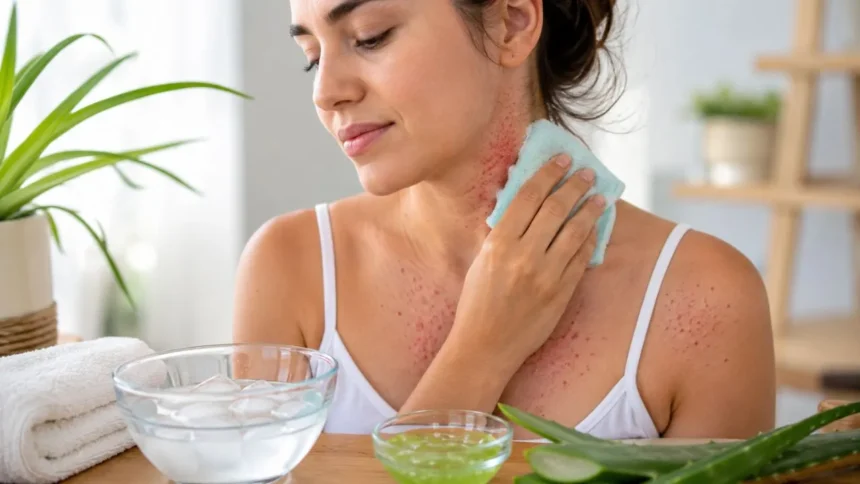
Heat rash can turn an ordinary hot day into an uncomfortable one. The small bumps may itch, sting, or feel prickly whenever clothing touches them. The quickest relief usually comes from cooling the skin, stopping further sweating, and keeping the affected area dry.
Also called prickly heat, sweat rash, or miliaria, heat rash develops when sweat becomes trapped beneath the skin. It commonly appears during hot and humid weather, especially on the neck, chest, back, groin, under the breasts, and inside skin folds.
Most mild cases improve on their own within a few days once the skin stays cool. Strong medicines are rarely the first answer. Cool air, loose clothing, gentle washing, cold compresses, and reduced physical activity are usually more useful than thick creams or homemade treatments.
This guide explains how to get rid of heat rash quickly in adults, children, and babies. It also covers safe itch relief, common treatment mistakes, prevention methods, possible skin infections, and the warning signs of heat exhaustion or heatstroke that need urgent attention.
What Is Heat Rash?
Heat rash is a skin irritation caused by excessive sweating, usually in hot or humid conditions. Sweat ducts become blocked, preventing sweat from reaching the skin’s surface normally. The trapped moisture then causes small raised spots, tiny blisters, mild swelling, itching, or a prickling sensation.
The condition is medically known as miliaria. Miliaria crystallina causes clear, delicate blisters, while miliaria rubra is the familiar itchy and inflamed form often called prickly heat. The appearance can vary depending on how deeply the sweat is trapped beneath the skin.
Heat rash often develops where clothing rubs against sweaty skin or where air cannot circulate easily. Common locations include the upper chest, neck, back, armpits, groin, elbow creases, waistline, under the breasts, and beneath tight sports equipment.
Although the rash may look alarming, an uncomplicated case is usually harmless and is not contagious. Adults and children can develop similar symptoms. The main treatment goal is to stop the sweating that is blocking the ducts and allow the irritated skin to recover.
The Fastest Way to Get Rid of Heat Rash
The quickest treatment is to leave the heat and enter a cooler, less humid environment. Move indoors, find shade, use air conditioning, or sit near a fan. Continued sweating keeps the ducts blocked and can make the itching, bumps, and inflammation last longer.
Remove unnecessary clothing and change out of damp garments. Wear a loose cotton shirt, lightweight shorts, or another breathable outfit that does not press against the rash. Exposing the affected skin to gentle airflow helps moisture evaporate and reduces further friction.
Take a cool shower or bath to wash away sweat and lower the skin temperature. Use plain water or a mild fragrance-free cleanser if needed. Avoid hot water, vigorous scrubbing, exfoliating gloves, and heavily scented shower products because they may increase stinging and irritation.
After washing, pat the skin dry with a clean towel instead of rubbing it. Remain in a cool place and avoid exercise until the prickling feeling settles. Current CDC guidance updated in March 2026 continues to prioritize cooling, lower humidity, and keeping the area dry.
Try This 15-Minute Heat Rash Relief Routine
For the first five minutes, stop all physical activity and move somewhere cool. Remove jackets, tight clothing, protective equipment, or sweaty fabrics covering the affected area. Sit comfortably near a fan or air conditioner so that your body temperature and sweating can begin to decrease.
During the next five minutes, rinse the area with cool water or take a brief cool shower. Do not use ice-cold water if it feels painful or causes shivering. The goal is comfortable cooling, not shocking the skin or lowering the body temperature excessively.
For the final five minutes, pat the rash dry and apply a cool damp cloth. Keep the compress in place without pressing or rubbing. NHS guidance allows a wrapped cold pack or damp cloth for up to 20 minutes to calm itching and prickling.
Finish by putting on loose, dry cotton clothing and resting in the coolest available room. Repeat the cool compress later if needed. Improvement may begin quickly, but the visible bumps usually require more time to disappear completely as the blocked sweat ducts recover.
Use Cool Compresses Correctly
A cool compress can reduce the prickly sensation and provide fast temporary relief. Soak a clean, soft cloth in cool water, squeeze out the extra liquid, and place it gently over the rash. The cloth should feel refreshing rather than painfully cold.
Leave the compress in place for up to 20 minutes, then remove it and let the area dry. You can repeat this process several times during the day. Use a freshly cleaned cloth each time, especially if the skin is scratched, broken, or blistered.
An ice pack may also be used, but it must be wrapped in a towel or cloth. Never place ice directly against the skin because prolonged direct contact may damage tissue. Stop immediately if the area becomes numb, painful, unusually pale, or increasingly irritated.
Do not cover the cooled area with plastic wrap, a tight bandage, or heavy clothing afterward. Trapping moisture and heat can work against the treatment. Allow airflow around the rash and gently pat away any sweat that develops rather than wiping the skin repeatedly.
Take Cool Showers Without Irritating the Skin
A cool shower removes sweat, salt, sunscreen, and other substances that may irritate blocked sweat ducts. Keep the shower brief and comfortable. Let the water flow gently over the affected area rather than directing a powerful stream at inflamed bumps or blisters.
Use a mild, fragrance-free cleanser only when necessary. Perfumed body washes, deodorant soaps, essential oils, and heavily scented bath products may sting sensitive skin. NHS guidance specifically advises avoiding perfumed shower gels and creams while heat rash is irritated.
Skip body scrubs, loofahs, exfoliating brushes, and rough washcloths. Heat rash is not caused by dirty skin, and scrubbing will not open the sweat ducts more quickly. Friction may break the bumps, increase inflammation, and create openings through which bacteria can enter.
After showering, pat the area dry and stand near a fan if comfortable. Do not immediately apply thick body butter or petroleum-based ointment. The CDC advises against ointments and heavy creams because they can trap heat and further block sweat ducts.
Wear Clothing That Lets the Rash Breathe
Choose light, loose-fitting clothing made from breathable fabric. Cotton is often comfortable because it absorbs moisture and does not cling tightly to irritated skin. Loose clothing also reduces rubbing around the chest, waist, thighs, underarms, and other common heat rash locations.
Change clothing whenever it becomes damp with sweat. Remaining in a wet shirt, sports bra, uniform, or workout outfit keeps moisture close to the skin. Carrying a spare shirt can be useful for outdoor work, travel, exercise, or long days in hot environments.
At night, use lightweight bedding and keep the bedroom cool. A heavy blanket may cause sweating even when the room initially feels comfortable. Position a fan so that air circulates without creating uncomfortable dryness or blowing strongly into your face throughout the night.
Avoid tight waistbands, compression garments, shapewear, synthetic underwear, and straps that press directly on the rash. Athletes may need a short break from helmets, pads, tight cycling clothes, or backpacks until the affected skin becomes less sensitive.
Keep the Rash Dry Without Overwashing
Keeping heat rash dry helps the blocked sweat ducts recover, but this does not mean repeatedly washing the skin. Too much cleansing may remove protective oils and create dryness, burning, or irritation. One gentle shower after sweating is usually enough.
Blot new sweat with a clean cloth instead of wiping it back and forth. Dermatologists advise blotting because repeated rubbing can irritate sweaty skin. Use a separate clean towel for the rash and wash damp clothing before wearing it again.
Allow skin folds to dry fully after bathing. Areas under the breasts, between the thighs, beneath the abdomen, or around the groin may remain damp longer than exposed skin. Gentle airflow from a fan can help without creating the friction caused by constant towel drying.
Some current workplace guidance mentions drying powder for adult comfort, but powders are not suitable for every person or body area. Avoid inhaling loose powder, placing it on broken skin, or using it on babies without professional advice.
How to Stop Heat Rash Itching
Try tapping or gently patting the affected area instead of scratching it. Scratching may provide a moment of relief, but it can break the skin, increase swelling, and prolong irritation. Keeping fingernails short may reduce accidental damage, especially during sleep.
Use a cool compress whenever the itching becomes distracting. A fan, cool room, or short shower may also help by reducing the heat that triggers sweating. Avoid sitting in direct sunlight or returning to exercise while the rash still feels hot and prickly.
A pharmacist may suggest calamine lotion for itching. Apply only a light layer and stop if it stings or causes dryness. Avoid coating large areas repeatedly, and do not use any lotion on broken, infected, or severely blistered skin without medical advice.
Oral antihistamines may be appropriate for some people, but they do not remove the blocked sweat ducts. Ask a pharmacist before taking one, particularly if you use other medicines, are pregnant, have a medical condition, or need to drive because some products cause drowsiness.
Can Hydrocortisone Help Heat Rash?
A pharmacist may recommend a mild hydrocortisone cream when inflammation and itching are difficult to control. It should be used only as directed and for a short period. More cream does not produce faster healing and may increase the risk of unwanted skin effects.
Hydrocortisone is not suitable for every body area or every person. Avoid applying it to broken skin, infected-looking bumps, or sensitive areas unless a healthcare professional advises you. Do not place it close to the eyes or inside the mouth, vagina, or anus.
Children require extra care. NHS guidance states that hydrocortisone should not be used for heat rash in children under ten without advice from a doctor. Babies should not receive medicated creams unless a doctor, pharmacist, or qualified pediatric professional recommends them.
Remember that thick or greasy products can block sweat ducts further. When hydrocortisone is recommended, apply only the advised amount rather than covering it with an ointment, heavy moisturizer, plastic dressing, or tight clothing that traps heat against the skin.
Products and Home Remedies to Avoid
Avoid petroleum jelly, heavy body butter, thick ointments, greasy oils, and other products that form an airtight layer over the skin. Although they may feel soothing initially, they can trap warmth and sweat. Current CDC guidance advises avoiding ointments and creams for heat rash.
Do not apply lemon juice, apple cider vinegar, toothpaste, baking soda paste, rubbing alcohol, or undiluted essential oils. These substances are not proven to clear blocked sweat ducts and may cause burning, dryness, allergic reactions, or irritant contact dermatitis.
Avoid perfumed powders, fragranced lotions, body sprays, deodorants, and strong soaps on the affected area. Heat-damaged skin may react to products that normally cause no problem. A simple cooling routine is usually safer than layering several different treatments.
Do not pop or squeeze the bumps. Opening a blister does not release a deeply blocked sweat duct and may introduce bacteria. Let the skin heal naturally while controlling heat and sweating. Seek medical advice if the bumps become painful, filled with pus, or surrounded by spreading redness.
How to Treat Heat Rash in Babies
Move the baby to a cool room and remove unnecessary layers of clothing. Dress the child in lightweight, soft cotton fabric that does not fit tightly. Babies are more likely to develop heat rash because they cannot regulate body temperature as effectively as older children and adults.
A fan may help when air conditioning is unavailable, but it should create only a gentle breeze. Place it far enough away that the baby does not become cold. Check the neck, back, and chest for sweating rather than judging temperature only by the hands or feet.
Give the baby a cool or lukewarm bath, then pat the skin dry. Leave the affected area uncovered when practical and safe. Avoid heavy blankets, tight nappies, thick sleepwear, and oily products that keep warmth and moisture trapped against the skin.
Do not use baby powder, thick cream, ointment, hydrocortisone, or antihistamine without professional guidance. MedlinePlus notes that baby powders do not improve heat rash and that creams and ointments may keep the skin warmer. Contact a clinician whenever you are uncertain about a baby’s rash.
How to Treat Heat Rash in Children
Take the child away from outdoor heat, sports, or a warm indoor space. Encourage quiet play in a cool room until sweating stops. Replace damp clothing with a loose cotton outfit and remove tight straps, protective pads, or costumes pressing against the affected skin.
Use a cool bath or shower and pat the skin dry. A wrapped cool pack or damp cloth may reduce prickling for up to 20 minutes. Teach the child to pat rather than scratch, and keep fingernails short if itching continues overnight.
Offer regular drinks, especially after outdoor activity, because children can lose fluid through sweating. Hydration does not directly unblock the sweat ducts, but it supports the body during hot weather and reduces the risk of dehydration.
Seek medical advice when the rash does not improve after a few cool days, keeps returning, appears infected, or is accompanied by fever or illness. A pharmacist or doctor should approve medicated creams and antihistamines, particularly for younger children.
Heat Rash After Exercise or Outdoor Work
Stop exercising or working as soon as the prickling rash appears. Continuing to run, lift, cycle, garden, or work in protective clothing produces more sweat and friction. Move to shade or an air-conditioned place and remove unnecessary equipment as soon as it is safe.
Change out of damp sportswear, uniforms, gloves, socks, or safety clothing. Shower in cool water and dry the skin carefully. Clean sweaty towels, hats, headbands, and clothing before using them again because reused damp gear can continue irritating the skin.
Do not return to intense activity simply because a cool shower temporarily reduces itching. Wait until the skin remains comfortable in normal conditions. When activity resumes, choose the coolest part of the day or move the workout indoors with air conditioning.
People who must wear protective equipment should take permitted cooling breaks and change damp base layers when possible. Current NIOSH guidance recommends a cooler, less humid work environment and keeping the rash area dry to support recovery.
How Heat Rash Looks on Different Skin Tones
On lighter skin, heat rash may look red or pink. On brown or black skin, redness can be less obvious, and the bumps may appear grey, white, purple, or similar to the surrounding skin. Good lighting can make texture changes easier to notice.
Do not rely only on colour when checking the rash. Look for small raised spots, tiny fluid-filled bumps, mild swelling, clusters in sweaty areas, and an itchy or prickly feeling. Running a clean finger lightly over nearby unaffected skin may help reveal textural differences.
The rash can be difficult to identify in photographs because lighting, camera exposure, and skin tone affect colour. A rash that appears pale in one image may look darker in another. Symptoms, location, heat exposure, and recent sweating provide useful additional clues.
Seek professional assessment when the rash is painful, rapidly spreading, or difficult to identify. Skin infections, folliculitis, allergic reactions, eczema, fungal infections, and medication rashes can appear differently across skin tones and may require another form of treatment.
How Long Does Heat Rash Last?
Mild heat rash usually begins improving after the person stops sweating and keeps the skin cool. The itching or prickling may settle before the bumps disappear. NHS guidance states that uncomplicated heat rash generally improves by itself after a few days.
The exact healing time depends on the severity of the blockage and whether heat exposure continues. A rash may return each day when someone cools down temporarily but then returns to tight clothing, strenuous activity, heavy bedding, or a humid environment.
Avoid measuring progress only by the number of visible bumps. Less itching, reduced swelling, and longer periods without prickling are also signs of recovery. Continue cooling measures for another day after symptoms improve if hot weather or heavy sweating remains likely.
Contact a healthcare professional when the rash fails to improve after several days in cooler conditions. A persistent rash may be a deeper form of miliaria or an entirely different skin problem. A correct diagnosis is more useful than repeatedly trying stronger home remedies.
Could the Rash Be Something Else?
Folliculitis can look like heat rash because it produces pimple-like bumps in sweaty areas. However, folliculitis involves inflamed or infected hair follicles and may feel tender. Tight workout clothing and poorly maintained hot tubs are common summer triggers.
Contact dermatitis may develop after using a new sunscreen, detergent, fragrance, fabric, or skin product. It can cause redness, itching, burning, dryness, or blisters. The rash may follow the exact shape of the item or substance that touched the skin.
Fungal rashes often develop in warm skin folds and may resemble prickly heat. They can form a defined border, remain moist, or continue spreading despite cooling. Antifungal medicine treats fungal overgrowth, while ordinary heat rash mainly requires cooling and sweat reduction.
Sunburn, hives, insect bites, eczema, viral infections, and medication reactions may also be mistaken for sweat rash. Seek an examination if the cause is uncertain, the rash affects a large area, or additional symptoms make a straightforward heat rash unlikely.
Signs the Heat Rash May Be Infected
Scratching can break the skin and allow bacteria to enter. Possible signs of infection include increasing pain, warmth, swelling, pus, yellow crusting, or redness that spreads beyond the original bumps. The rash may also become more tender instead of simply itchy.
Fever, chills, swollen lymph nodes, or feeling generally unwell are not expected features of mild prickly heat. These symptoms need medical assessment, especially in babies, older adults, or people with diabetes, poor circulation, or a weakened immune system.
Do not cover an infected-looking rash with heavy ointment or attempt to drain the bumps yourself. Keep the area clean and dry, stop scratching, and arrange professional care. Antibiotic treatment may be required if a clinician confirms a bacterial skin infection.
Take clear photographs in good lighting if the appearance is changing quickly. These images may help a clinician understand how the rash developed. However, do not delay urgent care when redness is spreading rapidly, pain is severe, or the person is becoming unwell.
When Heat Symptoms Are an Emergency
Heat rash itself is usually mild, but it can appear alongside more serious heat-related illness. Headache, nausea, dizziness, weakness, intense thirst, heavy sweating, reduced urination, and an elevated temperature may indicate heat exhaustion rather than an isolated skin problem.
Move the person to a cool area, remove unnecessary clothing, and begin cooling. Offer frequent sips of cool water when the person is awake and able to drink safely. Medical evaluation is appropriate because untreated heat exhaustion can progress to heatstroke.
Confusion, slurred speech, seizures, fainting, loss of consciousness, very high body temperature, or hot skin with either heavy sweating or little sweating may signal heatstroke. Heatstroke is a medical emergency that can cause permanent disability or death without rapid treatment.
Call your local emergency service immediately and start cooling while help is coming. Move the person out of the heat, remove outer clothing, wet the skin, use cold damp cloths, and circulate air. Do not wait for a skin rash to improve before seeking help.
How to Prevent Heat Rash From Returning
Wear lightweight, loose-fitting clothes during hot and humid weather. Cotton and breathable fabrics help air move around the skin. Avoid unnecessary layers and change damp clothing quickly, particularly after exercise, outdoor work, commuting, or sleeping in a warm room.
Plan strenuous activity for the coolest part of the day. Exercise indoors when outdoor heat and humidity are high, and take regular cooling breaks. A fan, air conditioner, cool shower, or shaded rest area can reduce prolonged sweating.
Keep sleeping areas cool and use lightweight sheets. Babies and young children should not be overdressed or covered with heavy bedding. Check areas beneath nappies, neck folds, and clothing for trapped moisture during warm conditions.
Avoid thick, greasy products before activities that cause heavy sweating. Wash sweat away gently afterward and dry skin folds carefully. People who experience repeated heat rash should review their clothing, work conditions, exercise schedule, bedding, and skin products to identify the main trigger.
Final Thoughts
The fastest way to get rid of heat rash is to stop sweating and cool the affected skin. Move into a cooler environment, remove damp clothing, take a cool shower, pat the skin dry, and allow gentle airflow around the rash.
A cool compress can relieve itching, while loose cotton clothing reduces friction and trapped moisture. Calamine, antihistamines, or mild hydrocortisone may help selected people, but a pharmacist or doctor should guide their use, especially for babies and young children.
Avoid thick ointments, greasy oils, perfumed products, harsh household remedies, and repeated scratching. Heat rash is caused by blocked sweat ducts, so covering the skin with heavy products may delay recovery rather than make the bumps disappear more quickly.
Most cases clear within a few days. Seek medical advice when the rash persists, becomes painful, looks infected, or occurs with fever or illness. Confusion, fainting, seizures, or a very high temperature require emergency help because they may indicate heatstroke.
Frequently Asked Questions
What gets rid of heat rash the fastest?
Move to a cool place, stop sweating, remove damp clothing, take a cool shower, and keep the rash dry. A wrapped cool compress may reduce itching for up to 20 minutes.
Can heat rash disappear overnight?
A mild rash may feel much better after one cool night, but the bumps often need several days to disappear. Continued heat, sweating, tight clothing, or heavy creams may delay healing.
Is calamine lotion good for heat rash?
Calamine lotion may reduce itching for some people. Apply a light layer and ask a pharmacist first when treating a baby, young child, broken skin, or a large affected area.
Should I use hydrocortisone on heat rash?
A pharmacist may recommend mild hydrocortisone for short-term itching. Children under ten need medical advice first, and it should not be placed on infected or broken skin without guidance.
When should I see a doctor for heat rash?
Seek care if the rash does not improve after a few days, becomes painful or infected, or occurs with fever. Get emergency help for confusion, fainting, seizures, or very high temperature.