Tight trapezius muscles can make your neck, shoulders, and upper back feel stiff, heavy, or uncomfortable. Long hours at a desk, repetitive lifting, stress, poor movement habits, and intense workouts can all contribute to tension in this large muscle group. Gentle trapezius stretches may help restore comfortable movement and reduce the feeling of muscular tightness.
The trapezius extends from the base of the skull across the shoulders and down the upper back, so different stretches may target different sections of the muscle. Stretching works best when combined with regular movement, strengthening, and sensible posture habits. Learning proper technique helps you gain the benefits without pulling aggressively on sensitive neck structures.
What Is the Trapezius Muscle?
The trapezius is a large, triangular muscle covering much of the upper back and extending toward the neck and shoulders. It is commonly divided into upper, middle, and lower sections. These fibers work together to move and stabilize the shoulder blades while also contributing to neck and upper-back movement.
The upper trapezius helps elevate and rotate the shoulder blade while also assisting with certain neck movements. The middle fibers mainly help retract the shoulder blades, bringing them toward the spine. The lower trapezius contributes to downward movement and upward rotation of the scapula, which is important during overhead arm movement.
Because the trapezius performs several jobs, tension can appear in different locations. Upper trapezius tightness is often felt between the neck and shoulder, while middle trapezius discomfort may appear between the shoulder blades. Understanding where you feel tension can help you choose stretches and exercises that match the area more appropriately.
Why Do Trapezius Muscles Become Tight?
Prolonged sitting is a common contributor to trapezius tension. Working on a laptop, looking down at a phone, or reaching forward toward a keyboard can keep the neck and shoulder muscles active for long periods. Even relatively low muscle tension can become uncomfortable when it continues for several hours without movement.
Stress may also increase muscle tension around the shoulders and neck. Some people unconsciously shrug their shoulders or brace their upper body when they feel anxious or under pressure. Repeating this pattern can make the trapezius feel tired and stiff, particularly when stress is combined with poor sleep or limited physical activity.
Training and physical work can create tightness as well. Heavy carries, rows, overhead exercises, repetitive lifting, or sudden increases in workout volume may fatigue the trapezius. Mild post-exercise soreness can be normal, but sharp pain, significant weakness, or symptoms following an injury should not automatically be treated as simple muscle tightness.
How to Stretch the Upper Trapezius
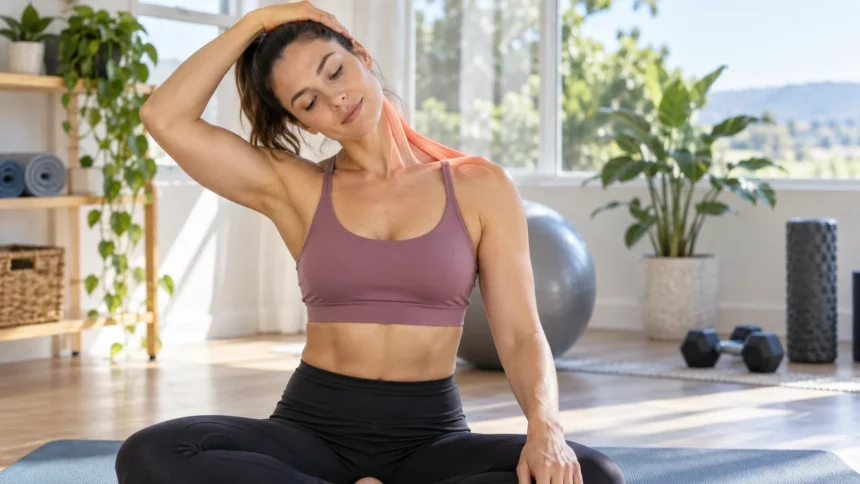
Sit or stand tall with your shoulders relaxed. Slowly tilt your head toward one shoulder, bringing your ear in that direction without raising the shoulder to meet it. You should feel a gentle stretch along the opposite side of the neck and upper shoulder rather than a sharp pulling sensation.
For a slightly deeper stretch, place the hand on the side you are leaning toward gently over the top of your head. Apply only light pressure rather than pulling forcefully. Keep the opposite shoulder relaxed and avoid rotating your head unless you are intentionally targeting another part of the neck.
Hold the stretch for around 15 to 30 seconds while breathing comfortably, then return slowly to the starting position. Repeat on the opposite side. One to three comfortable rounds can be enough for many people, particularly when the goal is reducing stiffness after desk work rather than aggressively increasing flexibility.
How to Stretch the Middle Trapezius
The middle trapezius sits across the upper back between the shoulder blades. One simple stretch involves reaching both arms forward and gently rounding through the upper back. Imagine moving your shoulder blades away from each other while keeping the movement controlled and avoiding excessive rounding through the lower spine.
You can perform the same movement while holding your hands together in front of your chest. Push your hands forward slightly as you allow the upper back to widen. You may feel a comfortable stretch between the shoulder blades, particularly if those muscles have been working during rows, lifting, or prolonged upright sitting.
Avoid forcing your shoulders as far forward as possible. The stretch should feel mild and controlled rather than painful. If you experience sharp pain around the spine or shoulder blades, reduce the range of motion and consider professional assessment if the discomfort continues or appears without an obvious muscular cause.
Best Lower Trapezius Stretch and Mobility Exercises
The lower trapezius is not always stretched as directly as the upper fibers because its role is closely connected with shoulder blade movement. Gentle overhead reaching can create movement through this region. Raise your arms comfortably while keeping your ribs controlled and avoid forcing the shoulders into a painful range.
A child’s-pose-style reach may also create a comfortable stretch through the upper back and shoulders. From a supported position, reach your hands forward while allowing your chest to lower gradually. People with knee, shoulder, or back limitations can modify the position or use a table instead of lowering toward the floor.
Thoracic mobility can complement lower trapezius stretching because the shoulder blades move over the rib cage. Gentle upper-back rotations and supported overhead movements may improve comfort during reaching. Mobility exercises should remain controlled, especially if overhead movement produces shoulder pinching, weakness, or pain that does not improve with adjustment.
Key Benefits of Trapezius Stretches
Trapezius stretches can help reduce the sensation of temporary muscle tightness after prolonged sitting or activity. Moving gently through a comfortable range gives the neck and shoulders a break from static positions. This can be particularly helpful for office workers who spend much of the day looking at monitors or laptops.
Stretching can also support comfortable neck and shoulder mobility. When the surrounding muscles feel less restricted, turning the head or moving the arms may become easier. However, flexibility is only one part of healthy movement, and stretching cannot correct every source of neck or upper-back pain by itself.
Another benefit is increased body awareness. Taking a moment to stretch may help you notice when you are shrugging your shoulders, leaning forward, or holding unnecessary tension. Recognizing these habits makes it easier to change positions, adjust your workstation, and use movement breaks before tightness becomes more uncomfortable.
Trapezius Stretches for Desk Workers
Desk workers often benefit from brief stretching sessions rather than one long routine at the end of the day. Every hour or two, move your neck gently, roll your shoulders, stand up, and walk for a few minutes. Frequent changes in position can reduce the continuous muscular load that contributes to upper-back stiffness.
Combine upper trapezius stretches with chest opening and shoulder blade movement. A doorway chest stretch can counter the prolonged forward position created by keyboards and screens, while gentle scapular retraction activates upper-back muscles. This creates a more balanced routine than repeatedly stretching the same tight area without changing the positions that caused it.
Your workstation matters as much as the stretches themselves. Position your monitor at a comfortable viewing height, keep frequently used items within easy reach, and avoid leaning toward the screen. No posture needs to be maintained perfectly all day; regular movement and comfortable variety are generally more useful than rigid sitting.
Stretching vs Strengthening the Trapezius
A muscle that feels tight is not always a muscle that needs more stretching. Sometimes the trapezius feels tense because it is weak, fatigued, or working harder than surrounding muscles. In those situations, stretching may provide temporary relief, but strengthening can be important for improving long-term muscular endurance and control.
Rows, band pull-aparts, wall slides, and controlled shoulder blade exercises can help strengthen the middle and lower trapezius. Loaded carries and appropriately programmed pulling exercises can also build upper-back strength. Start with manageable resistance and concentrate on smooth shoulder blade movement rather than using excessive weight or momentum.
A balanced routine often includes both mobility and strength work. Stretching can improve comfort and movement, while resistance training increases the muscles’ ability to tolerate daily workloads. If the same area repeatedly becomes tight despite regular stretching, adding appropriate strengthening may be more useful than simply increasing stretch duration.
How Lifestyle and Recovery Support Muscle Health
Stretching works best when the rest of your recovery habits are supportive. Adequate sleep, regular physical activity, hydration, and sufficient nutrition all contribute to normal muscle function. If you constantly train hard, sleep poorly, or remain inactive for long periods, stretching alone is unlikely to prevent every episode of muscular tension.
Eating a varied diet provides protein, carbohydrates, vitamins, minerals, and other nutrients needed for general health and exercise recovery. Fruit can be one useful part of that pattern, and learning about foods such as dragon fruit nutrition can help you add variety. No single food, however, specifically releases a tight trapezius or replaces appropriate movement.
Stress management is another important part of recovery because emotional tension can influence how the shoulders and neck feel. Regular walks, slow breathing, enjoyable exercise, and breaks from prolonged work may help reduce unnecessary muscle guarding. Treat stretching as one tool within a broader approach rather than the only strategy for upper-body comfort.
Common Mistakes When Stretching the Trapezius
Pulling the head aggressively is one of the most common mistakes during upper trapezius stretches. The neck contains sensitive joints, nerves, and other structures, so more force does not necessarily produce a better stretch. Use your hand only for gentle guidance and stop if you experience dizziness, tingling, numbness, or sharp pain.
Another mistake is allowing the shoulder to rise toward the ear on the side being stretched. This shortens the upper trapezius and reduces the effect of the movement. Keep the shoulder comfortably relaxed while tilting the head away, but avoid forcing the shoulder downward or holding it rigidly.
People may also stretch repeatedly while ignoring activities that continue causing irritation. If every day involves hours of unsupported sitting or excessive training volume, stretching may only provide short-lived relief. Adjusting the contributing activity, improving strength, and taking movement breaks usually provides a more complete approach to recurring trapezius tension.
When Trapezius Pain Needs Medical Attention
Mild muscle tightness often improves with movement, stretching, rest, and changes to aggravating activities. However, severe pain should not automatically be assumed to come from a tight trapezius. Neck, shoulder, joint, nerve, or spinal conditions can sometimes create symptoms in the same general area.
Seek professional assessment if pain follows a significant fall, collision, or lifting injury. Weakness, numbness, tingling, severe headaches, balance problems, or pain spreading strongly into the arm also deserve attention. These symptoms may indicate something more than routine muscular tightness and should not be repeatedly stretched without understanding the cause.
Urgent medical care may be needed when upper-back or shoulder pain occurs with chest pain, difficulty breathing, fainting, or sudden severe symptoms. Persistent discomfort that does not improve after several weeks should also be evaluated. A healthcare professional or physical therapist can help determine whether stretching, strengthening, or another treatment is most appropriate.
Conclusion
Trapezius stretches can be a simple way to reduce temporary neck, shoulder, and upper-back stiffness. Upper, middle, and lower sections of the trapezius perform different functions, so using several gentle movements may provide better overall mobility than repeatedly stretching one spot. Proper technique should always prioritize comfort and control.
Stretching becomes more effective when combined with regular movement, appropriate strength training, workstation adjustments, and good recovery habits. A tight-feeling muscle is not always shortened, and sometimes weakness or fatigue contributes to the sensation. Balanced training helps improve both flexibility and the ability to tolerate everyday physical demands.
If trapezius discomfort is persistent, severe, or accompanied by weakness, numbness, chest symptoms, or symptoms following an injury, seek professional guidance. Stretching should make movement feel more comfortable rather than produce sharp pain. With sensible technique and consistent movement habits, trapezius stretches can be a useful part of a healthy upper-body routine.
FAQs
How do you stretch a tight trapezius?
Gently tilt your head toward one shoulder while keeping the opposite shoulder relaxed. Hold the position for about 15 to 30 seconds without pulling forcefully or creating sharp pain.
How often should you stretch your trapezius?
Gentle trapezius stretches can usually be performed daily or during movement breaks. One to three comfortable rounds may be enough, depending on your activity level and how your muscles feel.
Why does my trapezius always feel tight?
Common reasons include prolonged sitting, stress, repetitive lifting, muscle fatigue, poor workstation setup, and exercise. Recurring tightness may also indicate that strengthening or movement changes are needed alongside stretching.
Can trapezius stretches help neck pain?
They may help when neck discomfort is related to temporary muscle tension or prolonged positioning. Persistent, severe, or nerve-related symptoms should be evaluated rather than treated only with stretching.
Should trapezius stretching hurt?
No. A gentle pulling sensation is normal, but sharp pain, numbness, tingling, dizziness, or worsening symptoms are signs to stop. Reduce the stretch intensity and seek guidance if concerning symptoms continue.