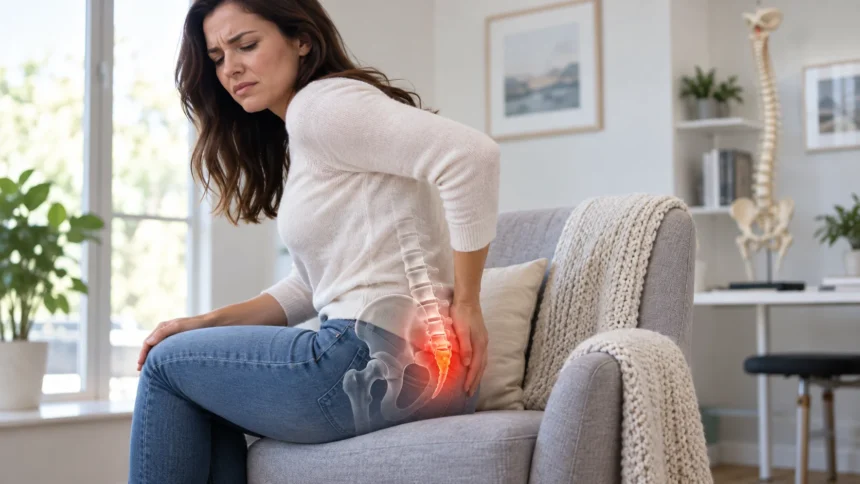
Tailbone pain can make simple activities such as sitting, standing up, driving, exercising, or using the bathroom surprisingly uncomfortable. The pain usually develops around the coccyx, the small group of bones at the very bottom of the spine. Some people notice a dull ache, while others experience sharp tenderness that becomes worse when pressure is placed directly on the area.
A painful tailbone can develop after a fall, prolonged sitting, childbirth, repetitive strain, or irritation of nearby muscles and joints. Sometimes there is no obvious injury at all. Because several structures around the lower spine, pelvis, and pelvic floor can produce similar symptoms, understanding where the discomfort comes from is not always straightforward.
Most cases improve with activity modification and appropriate self-care, but persistent or severe pain deserves attention. Symptoms involving numbness, bowel or bladder changes, fever, unexplained weight loss, or significant trauma require more careful evaluation. This guide explains common tailbone pain causes, relief options, and signs that may indicate you should seek medical care.
What Is Tailbone Pain?
Tailbone pain is discomfort centered around the coccyx, which sits below the sacrum at the base of the spine. The medical term for pain in this area is coccydynia. Symptoms are often most noticeable when sitting on a firm surface, leaning backward, or moving from a seated position to standing.
The coccyx is small, but several muscles, ligaments, and connective tissues attach around it. This means irritation does not always come directly from the bone itself. Nearby pelvic floor muscles, gluteal tissues, ligaments, or joints can contribute to tenderness and make the entire region feel sensitive.
Some people can point directly to one tender spot over the tailbone, while others experience a broader ache across the lower pelvis. Pain may remain localized or occasionally feel as though it spreads toward the buttocks or pelvic floor. The pattern can offer clues, but symptoms alone cannot always identify the exact cause.
Common Causes of Tailbone Pain
A fall directly onto the buttocks is one of the most recognizable causes of tailbone pain. The impact may bruise the surrounding tissues, irritate the coccyx, or occasionally cause a fracture or displacement. Pain can develop immediately after the fall or become more noticeable as inflammation and sensitivity increase over the following hours.
Prolonged sitting can also irritate the area, especially on hard surfaces or when posture places significant pressure directly on the coccyx. Long drives, desk work, cycling, or activities involving repeated seated pressure may make symptoms worse. People sometimes change their posture to avoid discomfort, which can create additional tension around the hips and lower back.
Childbirth, pelvic muscle tension, degenerative changes, and previous injury may also contribute. Less commonly, infections, inflammatory conditions, or other medical problems can cause pain near the coccyx. Persistent symptoms should therefore not automatically be assumed to come from sitting posture or a minor bruise.
Tailbone Pain After a Fall or Injury
Falling backward onto a hard surface can create substantial force through the coccyx. A minor injury may cause bruising and tenderness without structural damage, while a more significant impact can irritate the joints or surrounding ligaments. Sitting, bending, or standing up from a chair often becomes especially uncomfortable after this type of injury.
During the first few days, reducing direct pressure may help the irritated tissues settle. Sitting on a supportive cushion and changing positions frequently can make everyday activities easier. Some people also find short periods of cold or warmth comfortable, although you should avoid placing extreme temperatures directly against the skin.
Seek medical evaluation if the injury was severe, pain is intense, or you cannot sit or move normally. New numbness, weakness, bowel or bladder changes, or significant swelling also deserve prompt attention. These symptoms may indicate that the problem involves more than a simple tailbone bruise.
Can Sitting Too Long Cause Tailbone Pain?
Sitting places direct pressure through the lower pelvis, and poor positioning can increase pressure around the coccyx. People who spend many hours working at a desk, driving, gaming, or studying may notice soreness that gradually increases throughout the day. Hard chairs and leaning backward can make this pressure more noticeable.
Frequently changing position can be more useful than trying to maintain one supposedly perfect posture all day. Stand up periodically, take brief walks, and adjust your chair so your hips feel supported. A coccyx cushion with a cutout near the back may reduce direct pressure for some people during longer periods of sitting.
Avoid shifting all your weight dramatically to one side in an attempt to protect the tailbone. This may temporarily reduce pressure but can create uneven loading through the hips and lower back. Aim for comfortable support, regular movement, and gradually increasing sitting tolerance rather than forcing yourself to remain seated through worsening pain.
Pelvic Floor Tension and Tailbone Pain
The pelvic floor muscles attach around structures near the coccyx and help support the pelvis, bladder, and bowel. When these muscles become overactive or difficult to relax, tension may contribute to discomfort around the tailbone. Some people notice associated pelvic pressure, painful bowel movements, urinary symptoms, or discomfort during sexual activity.
Muscle guarding can also develop after an injury. If sitting becomes painful, the body may automatically tighten surrounding muscles to protect the area, and that protective tension can sometimes continue even after the original injury improves. This is one reason chronic tailbone pain may involve more than the coccyx itself.
Gentle breathing, mobility, and appropriately selected pelvic floor stretches may be useful when muscle tension is contributing to symptoms. However, stretching should remain comfortable and should not be forced through sharp pain. A pelvic floor physical therapist can assess whether excessive muscle tension is actually present.
Tailbone Pain During Pregnancy or After Childbirth
Pregnancy changes posture, pelvic loading, and the way muscles around the hips and pelvic floor work. As the body adapts, some people may experience discomfort around the coccyx or lower pelvis. Sitting for extended periods can make the area feel particularly sensitive, especially later in pregnancy when additional pressure is present.
Childbirth can also affect the coccyx because the baby passes through the pelvis near this region. The tailbone can become irritated, bruised, or strained during delivery, particularly after a difficult or prolonged labor. Pelvic floor muscles may also remain tense or sensitive afterward, contributing to pain during sitting or bowel movements.
Postpartum tailbone pain that gradually improves may respond to positioning changes and appropriate rehabilitation. However, significant pain that continues or interferes with normal recovery should be discussed with a healthcare professional. Pelvic floor physical therapy may be helpful when muscle coordination, scar sensitivity, or pelvic tension contributes to persistent symptoms.
How to Relieve Tailbone Pain at Home
Reducing direct pressure is often one of the simplest ways to make tailbone pain more manageable. Use a supportive chair and consider a coccyx cushion that leaves space around the painful area. Avoid sitting for long uninterrupted periods, and change between sitting, standing, and gentle movement throughout the day.
Comfortable heat or cold may provide temporary relief depending on what feels better for you. Cold can feel soothing soon after a minor injury, while warmth may help muscles around the lower back and pelvis relax. Use a protective layer between the temperature source and your skin and avoid excessively long applications.
Gentle walking can help prevent stiffness when movement does not worsen symptoms. Avoid repeatedly testing painful movements or forcing stretches simply because the area feels tight. Self-care should gradually make daily activities more comfortable; if pain becomes worse or remains unchanged for an extended period, further assessment is reasonable.
Best Sitting Positions for Tailbone Pain
Sitting slightly forward rather than leaning backward can reduce direct pressure on the coccyx for some people. Keep both feet supported and allow your weight to be distributed through your sitting bones rather than directly onto the tailbone. A chair with appropriate cushioning can make this position easier to maintain.
A wedge-shaped or coccyx cutout cushion may provide additional comfort when prolonged sitting cannot be avoided. The goal is to reduce pressure around the tender area rather than create an extremely soft surface that allows your pelvis to sink deeply. Try different supportive positions because the most comfortable setup varies from person to person.
Even a well-designed chair cannot completely compensate for sitting without breaks. Stand, walk, or gently change position every so often rather than waiting until the area becomes intensely painful. Gradually building tolerance is often more effective than alternating between extremely long sitting periods and complete avoidance.
Gentle Exercises for Tailbone Discomfort
Gentle movement may help when pain is related partly to stiffness or muscle guarding. Short walks, relaxed diaphragmatic breathing, and comfortable hip mobility exercises can encourage movement without placing direct pressure on the coccyx. The goal is to stay active within a range that does not significantly increase symptoms.
Exercises for the hips and glutes may eventually be useful because these muscles contribute to pelvic support and movement. However, strengthening should be introduced gradually, particularly after a recent injury. Activities such as deep squats, cycling, rowing, or floor exercises may feel uncomfortable initially because they can increase pressure around the painful area.
Avoid assuming that every tailbone problem needs aggressive stretching. Some conditions feel worse with repeated bending, deep hip positions, or direct pressure. A physical therapist can help identify which movements improve symptoms and develop a program that addresses strength, mobility, and sitting tolerance without unnecessarily irritating the coccyx.
When Tailbone Pain May Come From Another Area
Pain near the coccyx does not always originate from the tailbone itself. Problems involving the lower back, sacroiliac joints, pelvic floor muscles, hips, or surrounding soft tissues can sometimes produce discomfort in a similar location. This overlap can make self-diagnosis difficult when symptoms persist.
Pain that travels down the leg, causes tingling or numbness, or changes significantly with lower-back movement may indicate that nerves or spinal structures need consideration. Likewise, pelvic pressure, urinary symptoms, bowel problems, or pain during sexual activity may suggest that the pelvic floor or another pelvic structure is involved.
A clinician can evaluate where the pain is most tender, how your spine and hips move, and which activities reproduce symptoms. Imaging is not necessary for every case, but it may be considered when significant trauma, unusual symptoms, or persistent pain creates concern about structural or medical causes.
How Long Does Tailbone Pain Usually Last?
Recovery time depends on what caused the pain and how irritated the area has become. A mild bruise may gradually improve over days or weeks, while more significant injuries can remain uncomfortable for longer. Persistent muscle guarding or repeated pressure from sitting can also slow improvement even after the original irritation begins to settle.
Progress is not always perfectly steady. You may have comfortable days followed by increased soreness after a long drive, workout, or period of sitting. Looking at the overall trend is often more useful than judging recovery based on one difficult day.
If symptoms are not gradually improving, or if they continue interfering with work, sleep, exercise, or normal daily activities, consider professional evaluation. Persistent coccydynia may benefit from targeted physical therapy or other treatment based on the underlying cause rather than repeatedly relying on cushions and temporary symptom relief.
When Should You Worry About Tailbone Pain?
Tailbone pain deserves medical evaluation when it is severe, persistent, or steadily getting worse without an obvious explanation. Significant trauma, inability to sit comfortably, or pain that does not improve with reasonable activity modification may require assessment. A clinician can determine whether additional examination or imaging is appropriate.
Seek prompt medical attention if pain is accompanied by new bowel or bladder control problems, numbness around the groin, significant leg weakness, fever, or rapidly worsening neurological symptoms. These are not typical features of simple coccyx irritation and should not be managed only with home stretching or cushions.
Unexplained weight loss, a growing lump, persistent night pain, drainage near the tailbone, or signs of infection also deserve evaluation. These problems are less common than mechanical tailbone pain, but identifying unusual symptoms early is important. When something about the pain feels distinctly different from ordinary soreness, getting medical guidance is appropriate.
Conclusion
Tailbone pain can develop after a fall, prolonged sitting, childbirth, muscle tension, or irritation of the tissues surrounding the coccyx. Symptoms are often worse when sitting or moving from sitting to standing. Because several pelvic and lower-back structures can cause similar discomfort, the exact source is not always obvious.
Simple strategies such as reducing direct pressure, changing positions frequently, using supportive cushions, and maintaining gentle movement may help many minor cases. Pelvic floor rehabilitation can also be valuable when excessive muscle tension contributes to symptoms. Avoid forcing stretches or exercises that consistently make the pain worse.
Most importantly, pay attention to how symptoms change over time. Severe trauma, neurological changes, fever, unusual swelling, or persistent worsening pain should be professionally evaluated. Identifying the underlying cause allows treatment to address the actual problem rather than simply trying to tolerate ongoing tailbone discomfort.
FAQs
Why does my tailbone hurt when I sit?
Sitting can place direct pressure on the coccyx, especially on hard surfaces or when leaning backward. Previous injury, prolonged sitting, pelvic floor tension, and surrounding tissue irritation can make this pressure painful.
Can pelvic floor muscles cause tailbone pain?
Yes. Pelvic floor muscles attach around structures near the coccyx, and excessive tension or guarding may contribute to tailbone discomfort. A pelvic floor physical therapist can assess whether muscle tightness is involved.
How do you relieve tailbone pain quickly?
Reducing direct sitting pressure, changing positions, using a coccyx cushion, and trying gentle movement may help. Relief depends on the cause, and severe or persistent symptoms should be evaluated professionally.
Can tailbone pain go away on its own?
Mild tailbone pain from temporary irritation or bruising may gradually improve with time and activity modification. Recovery can take longer when repeated pressure, significant injury, or persistent pelvic muscle tension is present.
When should I see a doctor for tailbone pain?
Seek evaluation if pain is severe, worsening, persistent, or follows significant trauma. Fever, bowel or bladder changes, numbness, weakness, unexplained weight loss, or a growing lump require more prompt medical attention.