Pelvic floor stretches can help improve awareness, mobility, and relaxation around the muscles that support the pelvis. These muscles work alongside the hips, abdomen, diaphragm, and lower back during everyday activities such as walking, breathing, lifting, and using the bathroom. When the pelvic floor feels tight or difficult to relax, gentle stretching and breathing may help reduce unnecessary tension.
Unlike strengthening exercises, pelvic floor stretching focuses more on lengthening and relaxing the muscles rather than repeatedly contracting them. This can be especially relevant for people who feel tightness through the hips, inner thighs, lower abdomen, or pelvic region. However, pelvic discomfort can have many causes, so stretches should be comfortable and never forced through sharp or worsening pain.
The most effective approach usually combines gentle movement, slow breathing, and good body awareness. You do not need extreme flexibility or complicated equipment to begin. A few simple positions performed consistently can help you explore how your hips and pelvic area respond while gradually improving mobility and control.
What Are Pelvic Floor Stretches?
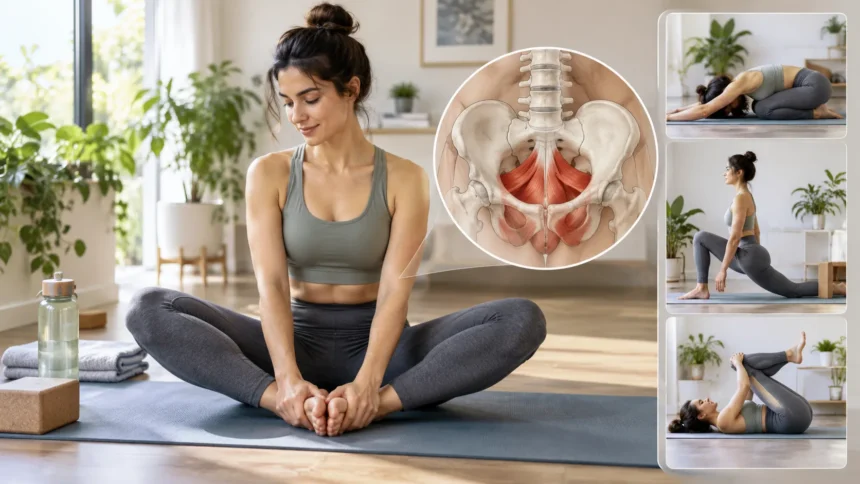
Pelvic floor stretches are movements and positions intended to encourage relaxation and gentle lengthening around the pelvic muscles. The pelvic floor forms a supportive muscular layer at the base of the pelvis, working with surrounding muscles to manage pressure and movement. Stretching typically targets the hips, inner thighs, glutes, lower back, and deep pelvic region rather than isolating one muscle completely.
These stretches are different from Kegel exercises, which involve intentionally contracting the pelvic floor. While strengthening can be useful in some situations, not everyone needs more contraction. If the muscles already feel overactive or difficult to relax, focusing only on repeated tightening may not address the underlying movement pattern or tension.
Pelvic floor stretching often includes slow diaphragmatic breathing because the diaphragm and pelvic floor move together during respiration. As you inhale, the pelvic floor can naturally lengthen and descend slightly, while exhalation supports a gentle return. Combining breathing with comfortable positions may make it easier to notice and reduce unnecessary gripping through the pelvis.
What Are the Benefits of Pelvic Floor Stretches?
One potential benefit is improved relaxation around the hips and pelvis. People who spend long periods sitting, train intensely, or habitually brace their abdomen may develop a sense of tightness in surrounding muscles. Gentle stretching can provide an opportunity to reduce muscular guarding and explore a more comfortable range of motion without aggressively forcing flexibility.
Pelvic floor stretches may also support better hip mobility. Many positions used for pelvic relaxation involve the adductors, glutes, hip rotators, and lower back, which all influence movement around the pelvis. Improving comfort in these areas can make everyday activities such as squatting, sitting, walking, and changing positions feel smoother.
Stretching can also increase body awareness. Learning to recognize when you are clenching your glutes, holding your breath, or tightening your abdomen unnecessarily can be valuable. The goal is not simply to become more flexible, but to develop better coordination between breathing, movement, and pelvic relaxation during daily activities and exercise.
How to Breathe During Pelvic Floor Stretches
Breathing is an important part of pelvic floor relaxation because the diaphragm and pelvic floor respond together as pressure changes in the trunk. During a slow inhale, allow your ribs and abdomen to expand naturally instead of pulling your stomach inward. Think of the breath moving downward through your torso without intentionally pushing or bearing down.
As you exhale, allow your ribs and abdomen to return without aggressively tightening your pelvic floor. The movement should feel smooth rather than forced. If you notice yourself holding your breath during a stretch, reduce the intensity or adjust your position until you can breathe normally again.
Try breathing slowly for several cycles while staying in a comfortable stretch. A longer, relaxed exhale may help reduce overall muscular tension, especially if you tend to brace your body. Avoid deliberately pushing downward into the pelvis, because relaxation should come from reducing unnecessary tension rather than creating excessive pressure.
Child’s Pose for Pelvic Floor Relaxation
Child’s pose is a gentle yoga position that can encourage relaxation through the hips, lower back, and pelvic area. Start on your hands and knees, then slowly move your hips back toward your heels while keeping your knees comfortably apart. Reach your arms forward or rest them closer to your body, depending on what feels easiest.
Once you are comfortable, focus on slow breathing rather than trying to push your hips farther back. Let your abdomen soften between your thighs as you inhale and notice whether the muscles around your pelvis feel less guarded. Hold the position for several relaxed breaths while keeping your jaw, shoulders, and glutes loose.
If your knees or hips feel uncomfortable, place a pillow or folded towel beneath your body for support. You can also keep your hips higher instead of forcing them toward your heels. The stretch should create a sense of ease and gentle opening, not pressure, pinching, or pain in the joints.
Happy Baby Stretch for the Hips and Pelvis
Happy baby is commonly used to open the hips and gently stretch the inner thighs. Lie on your back, bring your knees toward your chest, and allow them to move apart comfortably. Hold behind your thighs, around your shins, or near the outside of your feet depending on your flexibility and comfort.
Keep your lower back relaxed against the floor without forcing your tailbone upward. Breathe slowly and allow your hips to soften rather than pulling strongly on your legs. Some people gently rock from side to side, but the movement should remain controlled and should not create discomfort in the groin or lower back.
You do not need to achieve the deepest version of the stretch for it to be useful. If reaching your feet causes strain, holding behind the thighs is completely acceptable. Focus on steady breathing and gradual relaxation through the inner thighs, glutes, and pelvic region instead of measuring progress by how far your knees move toward the floor.
Deep Squat Stretch for Pelvic Mobility
A supported deep squat can gently open the hips, ankles, and inner thighs while encouraging awareness of the pelvic floor. Stand with your feet slightly wider than hip width and turn your toes outward naturally. Slowly lower your hips while keeping your feet planted and stop at a depth where you can remain relaxed and balanced.
If your heels lift or you struggle to stay comfortable, hold onto a stable surface or place support beneath your heels. You can also sit on a yoga block or low support rather than hovering in the squat. The purpose is to create a sustainable position where you can breathe, not to force maximum depth.
Stay upright enough that you can breathe freely and keep your abdomen relaxed. As you inhale, notice expansion through your lower ribs, abdomen, and pelvic area. If the squat causes knee, hip, groin, or pelvic pain, choose a different stretch rather than trying to push through the position.
Butterfly Stretch for the Inner Thighs
The butterfly stretch targets the inner thighs and can also create a gentle sense of opening around the hips and pelvis. Sit comfortably with the soles of your feet together and allow your knees to fall outward. Keep your spine tall without rigidly arching your lower back or forcing your knees toward the floor.
Place pillows or yoga blocks beneath your knees if the stretch feels too intense. Supporting the legs can help your body relax instead of resisting the position. Breathe slowly and notice whether the inner thighs soften after several breaths rather than pressing down on your knees with your hands.
This stretch can be especially useful for people who feel stiff through the adductors after long periods of sitting. However, more stretch is not always better. Stay within a comfortable range and allow mobility to improve gradually rather than bouncing, forcing the knees downward, or holding the position through sharp discomfort.
Figure-Four Stretch for the Glutes and Hips
The figure-four stretch targets the glutes and external hip rotators, which can influence movement around the pelvis. Lie on your back with both knees bent, then cross one ankle over the opposite thigh. Keep the crossed foot relaxed but supported while allowing the hip to open naturally.
For a stronger stretch, gently draw the uncrossed thigh toward your chest while keeping your shoulders and head relaxed. You should feel the stretch mainly through the outer hip or glute rather than directly in the knee. Breathe slowly and reduce the pull if you start clenching your jaw, abdomen, or pelvic floor.
Hip tension and pelvic tension can sometimes occur together because these regions share movement and stabilization demands. Including gentle hip mobility alongside other flexibility work can create a more balanced routine. For additional mobility ideas, these ab stretches can complement a broader program focused on comfortable trunk and pelvic movement.
Kneeling Hip Flexor Stretch for Pelvic Mobility
Tightness at the front of the hips can influence how you position your pelvis during standing and movement. A kneeling hip flexor stretch can help improve comfort through this area without requiring complicated equipment. Begin in a half-kneeling position with one knee on the floor and the opposite foot placed in front.
Gently shift your weight forward while keeping your ribs stacked over your pelvis. Avoid strongly arching your lower back because that can reduce the stretch through the hip flexors. You should feel a mild stretch near the front of the hip on the kneeling side rather than discomfort in the knee or lower back.
Keep your breathing slow and allow your glutes and abdomen to remain relaxed enough to avoid excessive bracing. A cushion beneath the kneeling knee can improve comfort. Switch sides after several breaths and compare how each hip feels, since one side may naturally have more mobility or tension than the other.
Reclined Knee-to-Chest Stretch
The knee-to-chest stretch can gently mobilize the hips and lower back while allowing the rest of your body to remain supported by the floor. Lie on your back, bend one knee, and slowly guide it toward your chest. Keep the opposite leg bent or extended depending on what feels most comfortable.
Hold behind the thigh or over the shin without pulling aggressively. Your lower back may gently round, but the position should remain easy enough that you can breathe normally. Focus on allowing the hip crease, glutes, and lower abdomen to soften as you stay in the position.
You can also bring both knees toward the chest if that feels comfortable. Some people gently rock from side to side to create mild movement through the lower back and pelvis. Avoid compressing the hips excessively or continuing if the position produces sharp groin pain, numbness, or increasing pelvic discomfort.
How Often Should You Do Pelvic Floor Stretches?
Gentle pelvic floor stretches can often be practiced regularly because they are intended to encourage relaxation rather than intense muscular fatigue. A short routine lasting five to ten minutes may be enough for many people. The frequency should depend on how your body responds rather than following a rigid schedule that causes soreness or irritation.
You might begin with three or four stretches and hold each position for several slow breaths. Over time, you can adjust the duration or add other mobility exercises if the routine continues to feel comfortable. Consistency is generally more useful than forcing long stretching sessions only once or twice each month.
Pay attention to how you feel afterward. A good stretching session should leave you feeling similar or more comfortable rather than significantly more painful. If symptoms consistently increase after stretching, reduce the intensity, shorten the session, or seek professional guidance to determine whether a different approach would be more appropriate.
Common Pelvic Floor Stretching Mistakes
One common mistake is forcing a stretch because you believe deeper movement automatically produces better results. Pelvic floor relaxation depends on reducing unnecessary tension, and aggressive stretching can cause the body to guard more strongly. Move only into a range where you can maintain slow breathing and feel reasonably comfortable throughout the position.
Holding your breath is another frequent problem. People sometimes brace their abdomen and stop breathing when they reach an intense stretch, which can increase tension throughout the trunk and pelvis. If you cannot breathe smoothly, come out of the position slightly until your body feels more supported and relaxed.
It is also a mistake to assume every pelvic symptom is caused by tight muscles. Weakness, coordination difficulties, joint problems, nerve irritation, digestive issues, and other medical conditions can produce overlapping symptoms. Persistent pain, urinary changes, bowel problems, sexual pain, or unexplained pelvic symptoms deserve individualized assessment rather than relying solely on stretching.
Tips for Making Pelvic Floor Stretches More Effective
Create a calm environment where you can move without rushing. A yoga mat, pillow, folded towel, or yoga block can make positions more comfortable and reduce the temptation to force your body into an idealized posture. Support is useful when it allows you to relax and breathe more naturally.
Pair stretching with awareness of everyday habits. Notice whether you regularly clench your glutes, grip your abdomen, hold your breath, or sit in one position for several hours. Changing these patterns can sometimes be just as important as spending a few minutes performing dedicated pelvic mobility exercises.
Progress gradually and treat discomfort as information rather than something to overcome. Gentle stretching should create mild tension or a sense of opening, not sharp pain or worsening pressure. If you are unsure which movements are suitable for your symptoms, a pelvic health physical therapist or other qualified clinician can provide more individualized guidance.
Conclusion
Pelvic floor stretches can be a useful part of a mobility routine when the goal is to promote relaxation, improve hip movement, and increase awareness of the muscles around the pelvis. Positions such as child’s pose, happy baby, butterfly stretch, deep squat, figure four, and hip flexor stretches can gently target connected muscle groups.
Form matters more than how deeply you stretch. Move slowly, use support when needed, and keep breathing throughout each position. A comfortable stretch that allows your body to relax is generally more useful than forcing yourself into a deeper range while clenching your muscles or holding your breath.
Remember that pelvic discomfort is not always caused by tightness. Stretching may help some people, but persistent pain, bladder or bowel changes, numbness, or ongoing pelvic symptoms should be assessed appropriately. A personalized approach can help determine whether relaxation, strengthening, mobility work, or another form of treatment best matches your needs.
FAQs
What are the best stretches for relaxing the pelvic floor?
Child’s pose, happy baby, butterfly stretch, supported deep squats, and gentle hip-opening positions are commonly used. The best choice is one that allows comfortable breathing without producing sharp or worsening pelvic pain.
How long should I hold a pelvic floor stretch?
Many people start with several slow breaths or around 20–60 seconds per position. You do not need to hold a stretch longer if your body begins tightening, shaking, or feeling uncomfortable.
Can tight hips affect the pelvic floor?
Hip muscles and pelvic floor muscles work together during movement and stabilization. Limited hip mobility or persistent muscular tension may influence how the pelvis feels, although pelvic symptoms can have several different causes.
Should I do Kegels if my pelvic floor feels tight?
Not automatically. Kegels strengthen pelvic floor contractions, while some people with excessive tension may need more relaxation and coordination work. Individual assessment can help determine whether strengthening or relaxation is more appropriate.
When should I stop pelvic floor stretching?
Stop if a stretch causes sharp pain, numbness, increased pelvic pressure, or worsening symptoms. Persistent pelvic pain or bladder, bowel, or sexual symptoms should be discussed with an appropriate healthcare professional.