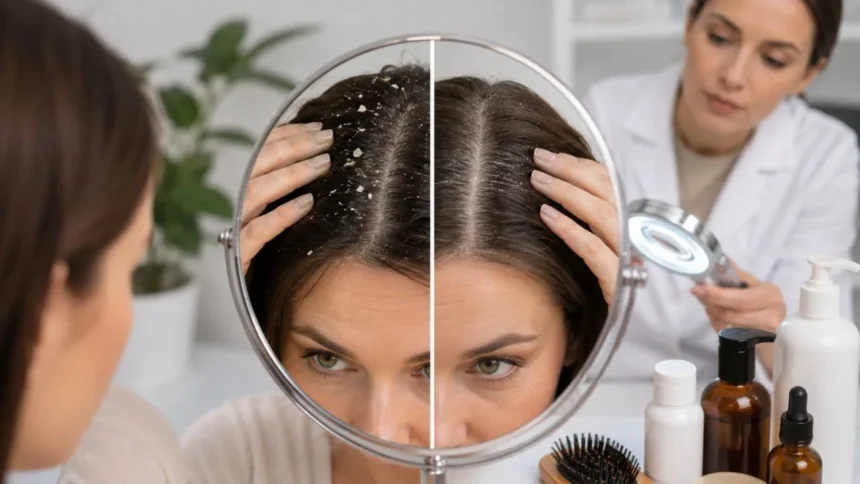
Dandruff vs Dry Scalp: Key Differences and Treatments
White flakes on your hair or clothing may immediately make you think of dandruff. However, flaking can also happen when your scalp loses moisture and becomes dry or irritated. Because both problems may cause itching and visible flakes, telling them apart is not always easy.
Dandruff and dry scalp are not exactly the same condition. Dandruff is commonly associated with increased oil, faster skin-cell shedding, and sensitivity to microorganisms that naturally live on the scalp. A dry scalp develops when the skin does not retain enough moisture or its protective barrier becomes irritated.
Recognizing the difference matters because the wrong treatment may make your discomfort worse. A strong dandruff shampoo can feel too drying on a moisture-depleted scalp, while applying heavy oils to dandruff-prone skin may increase greasiness and buildup for some people.
This guide explains the dandruff vs dry scalp debate in simple language. You will learn how the flakes differ, what causes each condition, which treatments may help, and when an itchy or flaky scalp should be examined by a healthcare professional.
Medical note: This article provides general educational information and does not replace an individual diagnosis. Persistent, painful, spreading, or severe scalp symptoms should be evaluated by a qualified healthcare professional.
Dandruff vs Dry Scalp at a Glance
Dandruff commonly produces noticeable white or yellowish flakes that may appear oily, waxy, or attached to the scalp. The skin can feel itchy, and there may be areas of mild redness or irritation. Symptoms often return because dandruff can be a recurring scalp condition.
A dry scalp usually produces smaller, lighter, and drier-looking flakes. The scalp may feel tight, rough, or uncomfortable, especially after washing. People with a dry scalp may also notice dryness on the face, arms, legs, or other areas of the body.
Oil level provides another useful clue. A person with dandruff may have greasy roots even while flakes are present, whereas a person with dry scalp often notices reduced moisture and tightness. However, these patterns can overlap, so oiliness alone cannot confirm a diagnosis.
Treatment response can also reveal useful information. Dandruff often improves with appropriately used medicated shampoo, while a genuinely dry scalp may respond better to gentle cleansing and reduced exposure to irritating products. If neither approach works, another scalp condition may be responsible.
What Is Dandruff?
Dandruff is a common scalp problem that causes visible shedding of skin cells. It is generally considered a mild form or presentation within the seborrheic dermatitis spectrum. Unlike more noticeable seborrheic dermatitis, uncomplicated dandruff may occur without significant inflammation.
The scalp naturally replaces old skin cells with new ones. When this process becomes faster or the shed cells stick together with oil, the flakes become easier to see. They may collect around the hair roots or fall onto dark clothing.
Dandruff is not caused simply by being unclean, and it is not contagious. Irregular washing may allow oil and loose scales to accumulate, making symptoms more noticeable, but dandruff can affect people who wash their hair regularly and maintain good hygiene.
The condition often improves with treatment but may return later. Some people experience occasional flare-ups, while others require an ongoing maintenance routine. Weather, stress, oil production, individual skin sensitivity, and hair-care habits may influence symptom severity.
What Is a Dry Scalp?
A dry scalp develops when the skin on the head lacks sufficient moisture or its protective barrier becomes disturbed. This can create tightness, irritation, itching, and fine flaking. The scalp may feel uncomfortable even when there are only a few visible flakes.
Dryness can occur after exposure to cold air, low humidity, harsh cleansers, frequent hot showers, or irritating hair products. Washing too often with a strong shampoo may remove protective oils faster than the scalp can replace them.
Some people naturally have dry or sensitive skin, making their scalp more likely to lose moisture. Conditions such as eczema or contact dermatitis may also create dryness and flaking, although these problems require different treatment from ordinary moisture loss.
A dry scalp is therefore a symptom rather than one single disease. Mild cases may improve after changing the hair-care routine, but persistent dryness can indicate an underlying skin condition. Correct identification is especially important when redness, pain, sores, or hair loss appears.
What Do Dandruff Flakes Look Like?
Dandruff flakes may be white, off-white, or slightly yellow. They are often larger and more noticeable than flakes caused by simple dryness. Oil from the scalp can make them stick together or attach to the skin and hair.
Some flakes appear loose and powdery, so appearance alone does not provide a definite answer. Dandruff can look different depending on its severity, a person’s hair type, washing routine, and the amount of oil present on the scalp.
The surrounding scalp may look normal, slightly oily, pink, or irritated. More obvious redness, greasy scaling, or patches extending around the eyebrows, ears, nose, or beard area may point toward seborrheic dermatitis rather than mild dandruff alone.
Scratching can loosen more flakes and create temporary shedding. It can also damage the scalp surface, leading to tenderness or scabs. Avoid picking at scales because this may increase inflammation without addressing the underlying cause.
What Do Dry Scalp Flakes Look Like?
Dry scalp flakes are commonly small, light, and powder-like. They may fall easily from the hair and become visible on the shoulders. The scalp beneath them can appear dull, rough, or mildly irritated rather than greasy.
The flakes may become more noticeable immediately after shampooing if the cleanser is too harsh. They may also worsen during cold weather or after spending long periods in heated or air-conditioned rooms with low humidity.
A person with dry scalp may notice tightness in addition to itching. The discomfort can feel similar to dry facial skin after using a strong cleanser. Hair strands may also feel rough if the entire hair-care routine removes too much natural oil.
However, small white flakes are not proof of simple dryness. Early dandruff, product residue, eczema, psoriasis, or contact dermatitis can produce a similar appearance. Persistent symptoms should not be diagnosed only by looking at the flakes.
Key Differences Between Dandruff and Dry Scalp
The main difference involves what is happening within the scalp. Dandruff is often connected with oil, accelerated skin-cell turnover, and an inflammatory response. Dry scalp is more directly related to moisture loss, barrier damage, or irritation.
Dandruff flakes may look larger, heavier, or oilier, while dry scalp flakes are often fine and powdery. Dandruff can occur with greasy roots, whereas dry scalp is more likely to feel tight. These are useful patterns but not strict rules.
The surrounding skin may also provide clues. Dandruff can involve recurring itch and mild irritation, while dry scalp may be accompanied by dryness elsewhere on the body. Significant redness or thick scaling suggests that another inflammatory condition may be involved.
Their treatments are different as well. Dandruff may require an antifungal, scale-removing, or oil-controlling shampoo. Dry scalp treatment usually focuses on gentle cleansing, moisture protection, and avoiding ingredients or routines that trigger irritation.
Common Symptoms of Dandruff
Visible flakes are the most recognizable dandruff symptom. They may collect around the hairline, stick to the roots, or fall onto clothing. The amount can range from a few occasional flakes to more widespread scaling across the scalp.
Itching is also common, although its intensity varies. Some people experience only mild irritation, while others repeatedly scratch the scalp. Scratching may temporarily relieve the sensation but can increase soreness and visible inflammation.
The roots may feel oily soon after washing. This combination of oiliness and flaking often confuses people who assume all flakes mean the scalp needs more oil. Adding heavy products without understanding the cause may contribute to residue.
Symptoms may become more noticeable during stressful periods or colder, drier seasons. Dandruff can improve and return repeatedly, which does not necessarily mean treatment has permanently failed. Many people need a maintenance routine after the initial flare settles.
Common Symptoms of Dry Scalp
A tight or stretched sensation is a common sign of dry scalp. It may be particularly noticeable after shampooing or exposure to hot water. The scalp can feel uncomfortable before visible flakes begin to appear.
Fine white flakes may spread through the hair and fall onto clothing. They are generally dry rather than oily, although hair products can change their appearance. The scalp itself may feel rough or sensitive when touched.
Mild itching can occur because dry skin is easily irritated. Scratching may damage the weakened skin barrier and make dryness more uncomfortable. Small scratches can also cause burning when shampoo or styling products are applied.
Dryness may affect other body areas at the same time. Chapped facial skin, dry hands, or rough patches on the arms and legs can support the possibility of general skin dryness. This pattern is helpful but does not rule out dandruff.
What Causes Dandruff?
Dandruff does not have one simple cause. It is thought to involve interactions between scalp oil, individual sensitivity, skin-cell turnover, and Malassezia, a type of yeast that naturally lives on the skin of many healthy people.
The presence of Malassezia does not mean the scalp is dirty or infected in the usual sense. Problems may develop when a person’s skin reacts to the yeast or to substances produced as it interacts with scalp oils.
Naturally oily skin can create an environment in which dandruff becomes more noticeable. Infrequent shampooing may allow oil and flakes to accumulate, while overusing harsh products may increase irritation. The ideal washing schedule therefore varies between individuals.
Stress, hormonal changes, weather, neurological conditions, immune-system problems, and certain illnesses may influence seborrheic dermatitis in some people. Most ordinary dandruff is harmless, but persistent or severe inflammation deserves professional assessment.
What Causes a Dry Scalp?
Low humidity is a frequent cause of dry scalp. Cold outdoor air and indoor heating can reduce moisture in the skin, especially during winter. Air conditioning may create similar dryness in hot climates when exposure is continuous.
Hot showers and frequent washing can remove protective lipids from the scalp. Strong clarifying shampoos, fragranced products, hair dyes, and chemical treatments may also disturb the skin barrier or trigger irritation in sensitive individuals.
Product residue can sometimes create itching that feels like dryness. Dry shampoo, hairspray, gel, oils, or conditioners may build up when they are not washed away properly. In other cases, a person may develop contact dermatitis after reacting to an ingredient.
Eczema, psoriasis, fungal infections, and other skin disorders can produce a dry or scaly scalp. For this reason, ongoing flaking should not automatically be blamed on weather or shampoo. Symptoms that spread, worsen, or resist basic care require closer evaluation.
Can You Have Dandruff and Dry Scalp Together?
A scalp can show features of both oiliness and dryness at the same time. Different areas may behave differently, or a person may have dandruff while also using products that strip moisture from the skin and hair.
Treatment can create another overlap. Frequent use of a strong medicated shampoo may control dandruff but leave the scalp feeling tight or sensitive. This does not necessarily mean the original diagnosis was incorrect; the routine may simply need adjustment.
People with combination skin may have oily roots and dry lengths. Applying conditioner only to the middle and ends of the hair may help protect the strands without adding unnecessary residue directly to a dandruff-prone scalp.
When symptoms overlap, avoid repeatedly switching between extreme treatments. A dermatologist can examine the scalp, identify inflammation, and recommend a routine that controls scaling while limiting dryness. Professional guidance is especially useful for textured, chemically treated, or fragile hair.
How to Tell What Is Causing Your Flaky Scalp
Begin by observing when the symptoms appear. Dryness that develops after changing shampoo, coloring the hair, increasing wash frequency, or entering a colder climate may suggest irritation or moisture loss. Recurrent greasy flakes may lean more toward dandruff.
Look at the scalp rather than examining only the fallen flakes. Notice whether the skin appears oily, tight, red, swollen, crusted, or covered with thick patches. Also check whether scaling extends beyond the scalp to the eyebrows, ears, nose, or beard.
Consider other symptoms and body areas. Dry skin elsewhere may support general moisture loss, while well-defined plaques on the elbows, knees, or scalp may need assessment for psoriasis. Patchy hair loss or broken hairs can suggest a fungal infection.
You can make one careful routine change and monitor the response. Constantly introducing several shampoos, oils, and home remedies makes it difficult to identify what helps. Stop any product that causes significant burning, swelling, blistering, or worsening irritation.
How Dandruff Is Treated
Mild dandruff may improve with regular washing using a gentle shampoo. Cleansing removes excess oil and loose skin cells before they build up. The best frequency depends on scalp oiliness, hair texture, styling practices, and product tolerance.
If gentle shampoo is not enough, a medicated anti-dandruff shampoo may help. Common active ingredients include ketoconazole, selenium sulfide, salicylic acid, coal tar, and zinc-based anti-dandruff compounds where available.
Different ingredients work in different ways. Antifungal products reduce yeast activity, while salicylic acid helps loosen and remove scales. Some formulas control skin-cell turnover, oil, inflammation, or a combination of these factors.
Always follow the product label because application instructions and recommended frequency vary. Some shampoos need contact time on the scalp before rinsing. Excessive use can cause dryness or irritation, so using more product does not necessarily produce faster results.
How to Use Dandruff Shampoo Correctly
Apply the shampoo mainly to the scalp rather than concentrating on the hair lengths. Gently massage it across affected areas using the fingertips. Avoid scratching with the nails because broken skin can burn and become more inflamed.
Allow the shampoo to remain on the scalp for the time stated on its label. Rinsing it off immediately may prevent the active ingredient from working effectively. Do not leave it on for longer than directed in an attempt to increase its strength.
Treatment frequency should reflect the formula and your hair type. Some people can use medicated shampoo several times a week, while those with curly, coiled, dry, colored, or chemically treated hair may need a less frequent schedule.
Once symptoms improve, occasional maintenance use may help prevent recurrence. If one active ingredient stops helping, a clinician may suggest alternating products or changing treatment. Do not combine multiple strong products without considering the risk of irritation.
How Dry Scalp Is Treated
Treatment begins by removing or reducing likely irritants. Switch from strongly fragranced, clarifying, or medicated products to a mild shampoo designed for sensitive or dry skin. Use lukewarm rather than very hot water when washing.
Reduce unnecessary washing if your current schedule leaves the scalp tight. However, do not avoid cleansing for long periods when oil, sweat, and styling products are building up. The goal is a balanced routine rather than washing as little as possible.
A lightweight scalp moisturizer or a product designed specifically for dry skin may help. Apply only a small amount initially and stop if itching or flakes worsen. Heavy oils are not suitable for every scalp and may complicate dandruff or seborrheic dermatitis.
Protecting the surrounding environment can also improve dryness. A humidifier may be useful in very dry indoor conditions, and limiting direct heat from hair dryers can reduce moisture loss. Persistent dryness may require treatment for eczema or another underlying condition.
Should You Put Oil on a Flaky Scalp?
Oil can temporarily soften dry flakes and reduce a tight feeling for some people. However, it does not treat every cause of scalp flaking. The result depends on whether the problem is moisture loss, irritation, dandruff, psoriasis, or another condition.
Applying a large amount of oil to dandruff-prone skin may create buildup and make flakes appear heavier. Oils do not automatically eliminate the yeast and inflammation associated with seborrheic dermatitis. Some fragranced or essential oils can also irritate sensitive skin.
People who choose to try an oil should use a small amount and monitor the scalp carefully. Stop using it if redness, burning, greasiness, itching, or scaling increases. Avoid applying unapproved essential oils directly to the scalp.
A formulated scalp product is often easier to use safely than a homemade mixture. If flakes are recurring or the diagnosis is uncertain, identifying the cause is more important than repeatedly covering the scalp with oil.
Ingredients Commonly Found in Dandruff Shampoos
Ketoconazole is an antifungal ingredient used to control yeast-related scalp symptoms. It can be found in certain nonprescription or prescription products, depending on the strength and country. It may be useful when dandruff is linked with seborrheic dermatitis.
Selenium sulfide helps reduce yeast and slow excessive shedding of scalp cells. It should be used according to the label and rinsed thoroughly. Some formulas may affect the appearance of light, dyed, or chemically treated hair.
Salicylic acid helps loosen thick flakes and scalp buildup. Because it removes scale, it can make treatment ingredients reach the skin more effectively. However, it may also leave some scalps feeling dry when used too frequently.
Coal tar and zinc-based ingredients may appear in other anti-dandruff formulas. Availability and approved uses differ between regions. People with allergies, pregnancy concerns, underlying conditions, or complex hair treatments should seek professional advice before choosing a product.
Hair-Care Habits That Can Improve Scalp Comfort
Wash the scalp thoroughly enough to remove sweat, excess oil, and product residue. Concentrate shampoo at the roots and rinse carefully. Incomplete rinsing may leave material behind that contributes to itching or visible particles.
Use conditioner according to your hair’s needs. People with oily or dandruff-prone scalps may prefer applying it mainly to the lengths and ends. Those with very dry hair may require richer conditioning while still keeping the scalp treatment separate.
Limit scratching, picking, and aggressive brushing. These actions can damage the skin and worsen inflammation. A cool compress may provide temporary comfort when itching is difficult to resist.
Clean combs, brushes, hats, pillowcases, and frequently used hair accessories. This does not cure dandruff, but it reduces oil and product accumulation around the scalp. Avoid sharing personal hair tools when infection or head lice is possible.
Lifestyle Factors That May Affect Scalp Flaking
Stress does not directly explain every flaky scalp, but it may worsen dandruff or inflammatory skin conditions in some people. Stress can also change sleep, washing habits, diet, and scratching behavior, making symptoms harder to control.
Cold weather and dry indoor air may increase both visible dandruff and ordinary dryness. Adjusting the scalp-care routine by season can therefore be useful. A product that works in humid weather may feel too harsh during winter.
Sweat, hats, helmets, and frequent workouts can increase moisture, heat, and buildup on the scalp. Cleanse after heavy sweating according to your hair type, and allow tight headwear to dry before using it again.
A balanced diet supports general skin health, but no single food reliably cures dandruff. Be cautious with restrictive diets or supplements promoted as guaranteed scalp treatments. Seek medical advice before taking supplements for a suspected deficiency.
Conditions That Can Look Like Dandruff or Dry Scalp
Seborrheic dermatitis can cause greasy or dry-looking scales with redness and itching. It may affect the scalp as well as oily areas around the eyebrows, ears, nose, beard, and upper chest. Treatment may require medicated shampoo or prescription products.
Scalp psoriasis often creates thicker, more clearly defined scales or plaques. The affected areas may extend beyond the hairline, and similar patches may appear elsewhere on the body. Scratching can cause cracking, bleeding, and temporary hair shedding.
Eczema and contact dermatitis can cause dryness, redness, intense itching, or burning. Hair dye, fragrance, preservatives, adhesives, shampoos, and styling products may trigger a reaction. Symptoms may continue until the responsible ingredient is identified and avoided.
Tinea capitis, or scalp ringworm, may cause scaling with broken hairs, tenderness, swelling, or patchy hair loss. It usually requires prescription antifungal medicine rather than dandruff shampoo. It is particularly important to seek medical care when a child develops these symptoms.
When to See a Dermatologist
Arrange an evaluation when over-the-counter treatment does not improve symptoms after consistent, label-directed use. A clinician can determine whether the problem is dandruff, dry scalp, psoriasis, eczema, infection, allergy, or another condition.
Seek care sooner if the scalp becomes very red, painful, swollen, warm, or covered with open sores. Pus, spreading crusts, fever, or severe tenderness may indicate infection and should not be managed only with cosmetic products.
Patchy hair loss, broken hairs, thick plaques, bleeding, or scaling that spreads beyond the scalp also deserves attention. These signs are not typical of simple moisture loss and may require prescription treatment.
Professional advice is also helpful when symptoms affect sleep, concentration, confidence, or daily activities. You do not need to wait until the condition becomes severe. Earlier diagnosis may prevent months of trial-and-error product use.
How to Prevent Dandruff Flare-Ups
Use the treatment schedule that successfully controls your symptoms. Stopping all treatment immediately after the flakes disappear may allow them to return. Some people benefit from occasional maintenance shampooing.
Avoid allowing oil, sweat, and styling products to build up for long periods. Choose a washing frequency that keeps the scalp comfortable without excessively drying the hair. The ideal schedule will not be the same for everyone.
Introduce new hair products individually whenever possible. If irritation develops, you will have a better chance of identifying the cause. Patch testing may be appropriate for certain dyes or chemical products according to their instructions.
Pay attention to patterns involving weather, stress, products, or wash frequency. A simple symptom record can help you understand what tends to trigger flare-ups. Consistent care is usually more effective than repeatedly changing the entire routine.
How to Prevent Dry Scalp
Use warm or lukewarm water instead of very hot water. Keep showers and hair-washing sessions reasonably short, especially in dry weather. Prolonged heat can remove protective oils and increase tightness.
Choose gentle products that match your skin sensitivity and hair type. Strong fragrance, frequent clarifying treatments, and multiple active ingredients may be unnecessary when ordinary dryness is the main concern.
Limit direct heat styling at the roots. Hold hair dryers away from the scalp and use a comfortable temperature. Protect the skin during chemical straightening, coloring, bleaching, or other treatments.
Adjust your routine as environmental conditions change. You may need gentler cleansing during winter or after moving to a low-humidity climate. Seek advice when dryness continues despite appropriate changes, as an underlying skin condition may need treatment.
Common Mistakes to Avoid
Do not assume every white flake is dandruff. Repeatedly using a powerful medicated shampoo on a dry or allergic scalp may increase irritation. Observe the complete symptom pattern before choosing treatment.
Avoid applying several remedies at the same time. Mixing acids, medicated shampoos, essential oils, scrubs, and strong cleansers can damage the skin barrier. It also becomes impossible to know which product caused improvement or worsening.
Do not scratch flakes away with fingernails, sharp combs, or abrasive scalp tools. Removing visible scale may provide temporary satisfaction but can create wounds. Gentle loosening during washing is safer than aggressive scraping.
Finally, do not ignore persistent symptoms because they seem cosmetic. Scalp psoriasis, eczema, fungal infection, and allergic reactions can resemble ordinary dandruff. Correct treatment begins with understanding what is causing the flakes.
Final Thoughts on Dandruff vs Dry Scalp
Dandruff and dry scalp can both produce itching and flakes, but their underlying patterns differ. Dandruff is often associated with oil, rapid shedding, yeast activity, and recurring inflammation, while dry scalp is more closely connected with moisture loss and irritation.
The appearance of the flakes can provide clues but cannot always confirm the cause. Larger or oily flakes may suggest dandruff, while fine powdery flakes and tightness may suggest dryness. Redness, thick patches, or hair loss can indicate another condition.
Choose treatment carefully and give the routine enough time to work as directed. Medicated shampoo may help control dandruff, while gentle cleansing and moisture protection may improve ordinary dryness. Stop any product that causes a significant reaction.
When symptoms persist or become severe, consult a healthcare professional rather than continuing to experiment. A proper diagnosis can save time, prevent additional irritation, and help you develop a scalp-care routine suited to your skin and hair.
Frequently Asked Questions
How can I tell if I have dandruff or a dry scalp?
Dandruff often involves larger or oilier flakes with recurring itch, while dry scalp commonly feels tight and produces fine, powdery flakes. Because symptoms overlap, persistent flaking may require a professional diagnosis.
Can a dry scalp cause dandruff?
Dry scalp does not directly become dandruff because they have different underlying causes. However, a person can experience dryness and dandruff at the same time, especially when treatment products irritate the scalp.
Should I wash my hair more often if I have dandruff?
Regular washing may help remove excess oil and loose scales, but the ideal frequency depends on your hair type and scalp condition. Follow medicated shampoo directions and avoid a schedule that causes significant dryness.
Does coconut oil cure dandruff?
Coconut oil may soften dry skin, but it is not a reliable cure for dandruff or seborrheic dermatitis. Heavy oiling can worsen buildup for some people, so stop if flakes, greasiness, or itching increase.
When should I worry about a flaky scalp?
Seek medical advice for severe redness, pain, sores, pus, thick plaques, spreading rash, broken hairs, or patchy hair loss. You should also get help when appropriate over-the-counter care does not improve the symptoms.