Yoga stretches can help improve flexibility, mobility, balance, body awareness, and relaxation when practiced with comfortable technique. Unlike aggressive stretching, yoga usually combines controlled positions with steady breathing and gradual movement. This makes it accessible to many beginners who want to loosen tight muscles, move more comfortably, or add gentle mobility work to their existing fitness routine.
The best yoga stretches target several areas of the body without requiring advanced flexibility. Poses for the hips, hamstrings, back, shoulders, calves, and chest can be combined into a simple full-body routine. Proper form matters more than reaching the deepest position, so every stretch should feel controlled rather than painful or forced.
Why Yoga Stretches Are Good for Your Body
Yoga stretching can help maintain or gradually improve flexibility by taking muscles and joints through comfortable ranges of motion. Regular practice may make everyday movements such as bending, reaching, walking, and sitting feel less restricted. The benefits usually develop gradually, which is why consistent practice matters more than trying to achieve dramatic flexibility in a single session.
Many yoga poses also involve active muscle control rather than passive stretching alone. Your core, hips, shoulders, and legs may work to stabilize the body while other tissues lengthen. This combination can improve body awareness and help you recognize when you are unnecessarily tensing certain muscles during movement.
Yoga can also provide a slower form of movement that encourages controlled breathing and relaxation. Some people find this useful after long periods of sitting or demanding workouts. While stretching cannot fix every source of pain or tightness, regular comfortable mobility work can become a useful part of an overall exercise program.
1. Downward-Facing Dog
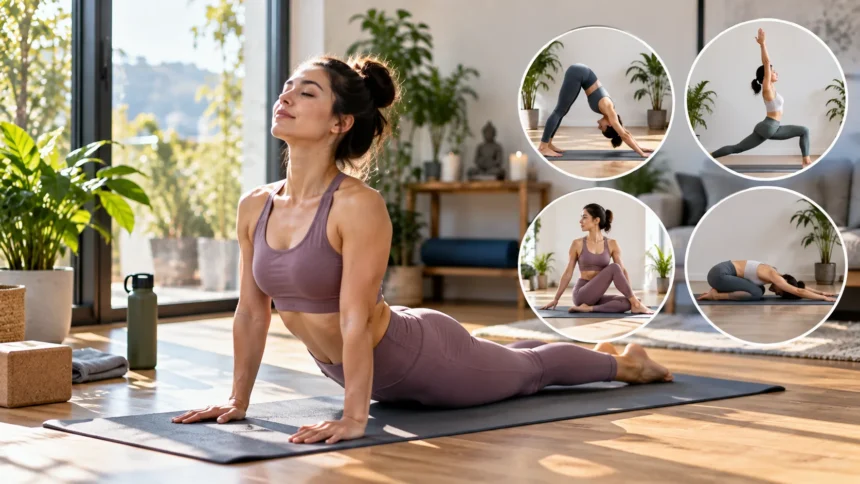
Downward-facing dog stretches several areas at once, including the calves, hamstrings, shoulders, and upper back. Begin on your hands and knees, place your hands firmly on the floor, and lift your hips upward and backward. Your body should form an inverted V shape without forcing your heels to reach the floor.
Keep your spine comfortably long and allow a slight bend in the knees if your hamstrings feel tight. Press gently through your hands while moving your chest toward your thighs without collapsing your shoulders. Your heels can remain lifted because reaching the ground is not necessary for the pose to provide a useful stretch.
This pose can work well as part of a warm-up or full-body mobility routine. You may gently alternate bending one knee and then the other to explore the calves and hamstrings. Stop if you feel sharp wrist, shoulder, back, or nerve-related pain rather than ordinary muscular stretching.
2. Child’s Pose
Child’s pose is a gentle position commonly used to stretch the lower back, hips, and shoulders while allowing the body to relax. Start on your knees and move your hips backward toward your heels. Extend your arms in front of you while lowering your torso toward the floor within a comfortable range.
Your knees can remain close together or move wider depending on what feels more natural for your hips. Resting your forehead on the floor, a yoga block, or a folded towel can reduce unnecessary neck tension. Avoid forcing your hips toward your heels if your knees or ankles feel uncomfortable.
The pose can be especially useful between more demanding yoga movements because it provides an opportunity to slow your breathing. However, people with certain knee conditions may find deep knee bending uncomfortable. Modify the position or choose another stretch rather than pushing through joint pain.
3. Cat-Cow Stretch
Cat-cow is a dynamic yoga stretch that gently moves the spine between flexion and extension. Begin on your hands and knees with your wrists under your shoulders and knees below your hips. Move slowly instead of trying to create the largest possible curve through your back.
During cow position, gently allow your abdomen to lower while lifting your chest and tailbone without compressing your lower back. During cat position, press through your hands and round your spine while allowing your head to follow naturally. Coordinate the movement with slow breathing to keep the exercise controlled.
Cat-cow can help reduce stiffness after prolonged sitting because it encourages movement through several areas of the spine. The goal is mobility rather than aggressive stretching, so stay within a pain-free range. People with existing spinal conditions should follow any movement restrictions provided by their healthcare professional.
4. Low Lunge
The low lunge is useful for stretching the front of the hip, particularly after long periods of sitting. Begin from a kneeling position and step one foot forward so the front knee remains roughly over the ankle. Allow the opposite knee to rest on a padded surface behind you.
Keep your torso upright and gently shift your pelvis forward until you feel a stretch through the front of the rear hip. Avoid excessively arching your lower back in an attempt to make the stretch stronger. Lightly engaging your abdominal and glute muscles can help keep the movement focused around the hip.
You can keep your hands on the front thigh or place them on yoga blocks for additional support. Raising the arms overhead increases the challenge but is not necessary for an effective stretch. Use padding under the rear knee if pressure from the floor makes the pose uncomfortable.
5. Seated Forward Fold
The seated forward fold primarily targets the hamstrings and may also create a gentle stretch through the back. Sit with your legs extended in front of you and keep your spine comfortably tall. If your hamstrings are tight, slightly bend your knees instead of forcing them completely straight.
Begin hinging forward from your hips rather than immediately rounding your entire back. Reach toward your legs only as far as you can while maintaining a controlled position. There is no requirement to touch your toes, and trying to force your chest onto your thighs can create unnecessary strain.
Hold the position while breathing naturally and allow the stretch to develop gradually. If you feel tingling, burning, or sharp discomfort traveling down the leg, reduce the range instead of continuing deeper. Stretching sensations should remain within the muscles rather than feeling like irritated nerves.
6. Figure-Four Stretch
The figure-four stretch targets the glutes and muscles around the back and side of the hip. Lie on your back with both knees bent, then place one ankle across the opposite thigh. Keep the ankle positioned above the knee rather than pressing directly onto the kneecap.
To increase the stretch, gently draw the supporting thigh toward your chest while keeping your head and shoulders relaxed. You should feel the sensation mainly through the glute of the crossed leg. Avoid pressing aggressively on the crossed knee because the goal is comfortable hip movement rather than forcing the joint downward.
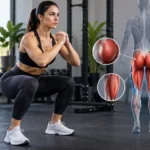
This stretch can be useful after lower-body workouts or long periods of sitting. Hip mobility also influences exercises such as lunges and squats, so combining mobility work with strength training can create a more balanced routine. Understanding the muscles worked by squats can also help you see how hip flexibility and lower-body strength work together.
7. Cobra Pose
Cobra pose gently extends the spine while opening the chest and front of the torso. Lie face down with your hands placed near your ribs and your legs extended behind you. Press lightly through your hands while lifting your chest only as high as feels comfortable.
Try to create length through your spine rather than simply pushing yourself upward with the arms. Keep your shoulders away from your ears and allow your elbows to remain slightly bent. Your lower body should stay relaxed and supported by the floor while your back muscles contribute to the movement.
People with sensitive lower backs should use a smaller range or try sphinx pose instead, which places the forearms on the floor. Extension should not produce sharp pain or symptoms traveling into the legs. Comfortable movement matters more than achieving the deepest possible backbend.
8. Standing Forward Fold
A standing forward fold stretches the hamstrings, calves, and back while encouraging relaxation through the upper body. Stand with your feet comfortably apart, bend your knees slightly, and hinge forward from your hips. Allow your head and arms to hang naturally rather than pulling yourself aggressively toward the floor.
Keeping a small bend in the knees can make the movement more comfortable and reduce excessive tension through the hamstrings. You can place your hands on blocks, a chair, or your thighs if the floor is difficult to reach. Flexibility is not measured by whether your fingertips touch the ground.
Rise slowly from the position, particularly if you are prone to dizziness. Bend the knees and return to standing gradually rather than snapping upright. If forward bending aggravates a known back condition or produces radiating symptoms, use a different stretch and consider professional guidance.
9. Thread the Needle
Thread the needle is a gentle upper-back and shoulder stretch performed from an all-fours position. Begin with your hands below your shoulders and knees below your hips. Slide one arm underneath the opposite arm while allowing the shoulder and side of the head to move toward the floor.
Keep the hips relatively centered instead of allowing your entire body to collapse sideways. You should feel a mild stretch around the back of the shoulder and upper spine. A folded towel or yoga block can support your head if reaching the floor creates unnecessary neck tension.
Return to the starting position slowly and repeat on the opposite side. This movement can be helpful for people who spend long hours working at a computer because the upper back often remains in similar positions throughout the day. Avoid forcing rotation if you experience sharp shoulder or spinal discomfort.
10. Legs-Up-the-Wall Pose
Legs-up-the-wall is a restorative yoga position that requires very little flexibility. Sit beside a wall, gently turn onto your back, and extend your legs upward so they rest against the wall. Adjust your distance from the wall until your hips and hamstrings feel comfortable rather than tightly stretched.
Allow your arms to relax beside your body and breathe slowly. Some people enjoy this position after spending long periods standing because it requires minimal muscular effort. It can also serve as a calm ending to a yoga or mobility routine when you want to gradually reduce activity.
You do not need to position your hips directly against the wall. Move farther away if your hamstrings feel tight or your lower back becomes uncomfortable. If you have a medical condition that affects circulation, blood pressure, or your ability to safely tolerate inverted positions, ask a healthcare professional whether this pose is suitable.
Tips for Getting More From Yoga Stretches
Warm muscles usually move more comfortably than completely cold muscles, so consider several minutes of easy walking or gentle movement before deeper stretching. Move into each position gradually and pay attention to how your body responds. Stretching should create manageable tension rather than sharp, burning, or electrical pain.
Use yoga blocks, straps, cushions, and folded towels whenever they make a pose more comfortable. Props are not only for beginners; they allow people with different body proportions and mobility levels to perform movements with better control. Changing the pose to fit your body is more useful than forcing your body to match an ideal photograph.
Breathing can also help you avoid unnecessary tension. Instead of holding your breath while trying to move deeper, breathe naturally and allow the position to become more comfortable over time. Consistent short sessions are usually more practical than occasional aggressive stretching sessions that leave you sore afterward.
Conclusion
The best yoga stretches are movements that help you explore flexibility and mobility without forcing your joints or muscles beyond a comfortable range. Downward-facing dog, child’s pose, cat-cow, low lunge, figure-four, and forward folds can collectively target the hips, legs, back, shoulders, and chest.
Good form should always come before depth. Bend your knees, use blocks, shorten the range, or choose easier variations when necessary. Yoga is adaptable, and modifying a position to match your current flexibility is usually more productive than struggling to reproduce an advanced version.
Practice regularly and pay attention to your body’s feedback. Mild muscular tension can be expected, but sharp pain, numbness, tingling, or worsening joint symptoms are reasons to stop. A comfortable combination of mobility, strength training, walking, and recovery can support better movement over the long term.
FAQs About Yoga Stretches
What are the best yoga stretches for beginners?
Child’s pose, cat-cow, low lunge, figure-four, and modified downward-facing dog are accessible options for many beginners. Use comfortable ranges and props when needed rather than forcing deeper positions.
How long should I hold a yoga stretch?
Many comfortable static stretches can be held for roughly 20 to 30 seconds initially, although yoga practices vary. Focus on relaxed breathing and release the position earlier if discomfort becomes sharp or intense.
Can I do yoga stretches every day?
Gentle mobility and stretching can often be practiced regularly if your body tolerates them well. More demanding sessions may require recovery, particularly when poses involve significant strength, deep ranges, or prolonged holds.
Should yoga stretches hurt?
No. A mild stretching sensation can be normal, but sharp pain, burning, numbness, or tingling should not be ignored. Reduce the range or stop the stretch if concerning symptoms appear.
Is yoga stretching enough for overall fitness?
Yoga can support flexibility, balance, mobility, and some strength, but a balanced fitness routine may also include cardiovascular exercise and progressive resistance training. The ideal combination depends on your goals and abilities.