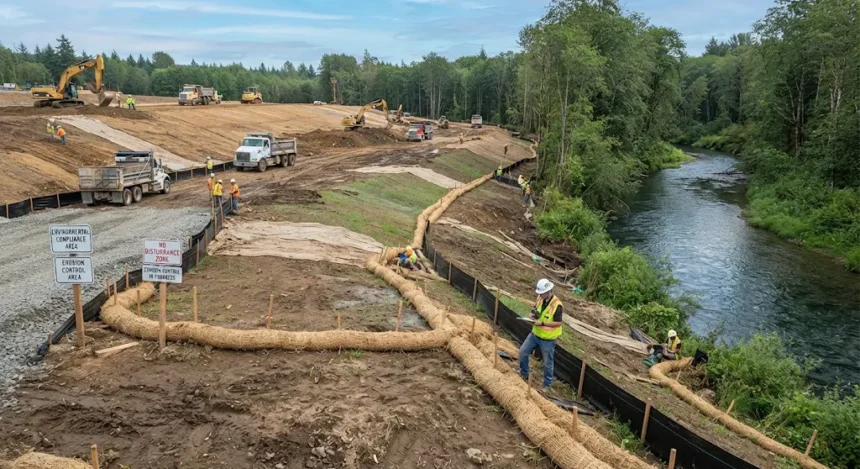
Construction projects often involve extensive land disturbance, excavation, grading, and soil movement. While these activities are necessary for development, they can also increase the risk of soil erosion, sediment runoff, and water pollution. Implementing a well-designed stormwater pollution prevention plan is an important step in controlling these risks and ensuring construction activities meet environmental regulations. Companies like Syman provide comprehensive site stabilization solutions, including SWPPP design, best management practices (BMP) installation, site inspections, hydroseeding, and regulatory compliance consulting. Their expertise helps contractors meet federal and state environmental standards while protecting surrounding land and water resources.
Why Erosion Control Matters in Construction
Erosion control is an essential part of responsible construction site management. When vegetation is removed and soil is exposed, rainfall and wind can carry loose sediment into nearby drainage systems, rivers, lakes, and other sensitive areas. This can damage natural habitats, reduce water quality, and create additional environmental challenges.
Effective erosion control measures help minimize these risks by stabilizing exposed soil and managing the movement of stormwater. Depending on the project, contractors may use erosion control blankets, silt fences, sediment barriers, temporary drainage channels, and vegetation establishment techniques.
Taking these precautions early can also prevent costly project delays, reduce cleanup expenses, and help construction companies avoid regulatory penalties.
Understanding Stormwater Pollution Prevention Plans
A Stormwater Pollution Prevention Plan (SWPPP) is a documented strategy designed to control stormwater runoff and prevent pollutants from leaving a construction site. Many construction projects that disturb land are required to develop and implement a SWPPP under applicable environmental regulations.
A comprehensive plan typically identifies potential pollution sources, evaluates site conditions, and establishes appropriate control measures. It also outlines inspection procedures, maintenance requirements, and responsibilities for keeping the site compliant.
Common elements of a SWPPP include:
- Site assessment: Identifying drainage patterns, soil conditions, nearby water bodies, and areas vulnerable to erosion.
- Best Management Practices: Selecting appropriate measures to control sediment, runoff, and construction-related pollutants.
- Inspection schedules: Establishing regular site inspections to identify problems and verify that control measures remain effective.
- Maintenance procedures: Ensuring erosion and sediment control systems are repaired or replaced when necessary.
- Documentation: Maintaining inspection reports, corrective action records, and other required environmental documentation.
A properly implemented SWPPP helps contractors manage environmental responsibilities throughout the construction process rather than addressing problems after they occur.
The Role of Environmental Installation Services
Planning is only one part of successful environmental management. Construction sites also require practical solutions that can be installed, monitored, and maintained according to project-specific conditions.
Professional environmental installation services help bridge the gap between environmental planning and on-site implementation. These services may include installing sediment barriers, erosion control blankets, inlet protection, temporary stabilization systems, and other BMPs designed to manage stormwater runoff.
The selection of appropriate installation methods depends on several factors, including site size, soil composition, weather conditions, drainage patterns, and construction schedules.
Experienced environmental service providers understand how to coordinate installation activities with construction operations. This ensures that protective measures are in place when needed without unnecessarily disrupting project progress.
Hydroseeding and Long-Term Site Stabilization
Hydroseeding is another widely used technique for controlling erosion and restoring disturbed land. The process involves applying a mixture of grass seed, water, mulch, fertilizer, and other materials to exposed soil. Once established, vegetation helps hold soil in place and reduces the amount of sediment carried away by rainfall.
It is particularly useful for stabilizing slopes, roadside areas, construction sites, and large disturbed surfaces where traditional seeding methods may be less practical.
Successful hydroseeding requires proper preparation and an understanding of local growing conditions. Soil quality, seed selection, seasonal timing, and moisture availability can all influence results.
Combining hydroseeding with other erosion control methods provides a more comprehensive approach to site stabilization and helps support long-term environmental protection.
Environmental Inspections and Regulatory Compliance
Construction companies must understand and follow applicable environmental regulations throughout their projects. In the United States, stormwater management requirements are influenced by federal Environmental Protection Agency (EPA) regulations, state-level permitting programs, and local environmental requirements.
Regular site inspections are essential for identifying compliance issues before they develop into more serious problems. Inspectors evaluate whether installed BMPs are functioning properly, check for signs of erosion or sediment discharge, and identify areas requiring corrective action.
Professional compliance consulting can also help contractors understand permit conditions, maintain accurate documentation, and address regulatory requirements throughout different construction phases.
Working with experienced environmental specialists makes it easier to manage these responsibilities while keeping construction activities organized and on schedule.
Choosing the Right Erosion Control Partner
Selecting a reliable erosion control provider can significantly influence the success of a construction project. Contractors should look for companies with practical field experience, knowledge of environmental regulations, and the ability to deliver solutions tailored to individual site conditions.
A dependable provider should offer more than basic installation work. Comprehensive support may include initial site assessments, SWPPP development, BMP selection and installation, routine inspections, hydroseeding, maintenance recommendations, and compliance guidance.
Communication is equally important. Construction teams need clear instructions, timely inspection reports, and practical recommendations to address potential environmental concerns.
Working with a qualified partner helps ensure that environmental protection measures remain effective as the project progresses.
Building Responsibly Through Effective Environmental Management
Erosion control and environmental compliance are essential responsibilities for modern construction projects. From developing a stormwater management strategy to installing BMPs and establishing permanent vegetation, every stage plays a role in reducing environmental impact.
By combining professional planning, environmental installation services, regular inspections, and regulatory guidance, contractors can protect surrounding ecosystems while maintaining efficient construction operations.
Companies such as Syman demonstrate the value of comprehensive site stabilization support by helping construction teams manage erosion risks, meet environmental requirements, and implement practical solutions suited to their projects. Investing in professional environmental services is not simply about meeting regulatory obligations; it is about building responsibly and protecting natural resources for the future.