What Is an Upper Trap Stretch?
An upper trap stretch is a simple mobility exercise that targets the upper portion of the trapezius muscle. This large muscle runs from the upper back and shoulders toward the neck and base of the skull. Stretching it gently may help reduce temporary tightness and improve comfort when the neck and shoulders feel stiff after work, exercise, or prolonged sitting.
The upper trapezius helps control shoulder movement, neck positioning, and head stability during everyday activities. It becomes active when you shrug your shoulders, carry bags, work at a computer, or hold your head in one position for a long time. Because it works frequently, this area can sometimes feel tense, tired, or sensitive.
An upper trap stretch does not need to be forceful to feel effective. Small changes in head position can create a noticeable stretch along the side of the neck and top of the shoulder. The goal is controlled, comfortable tension rather than pulling aggressively or forcing your neck into a position that causes pain.
What Does the Upper Trapezius Muscle Do?
The trapezius is a broad muscle divided into upper, middle, and lower portions. The upper fibers help elevate the shoulder blade and contribute to movements of the neck. They also work with other muscles to stabilize the shoulder girdle while you reach, carry objects, or perform upper-body exercises.
These muscles are involved in posture as well. Holding your head forward while using a laptop or phone can increase the workload placed on muscles around the neck and shoulders. Over time, some people notice tightness or fatigue in the upper trapezius, particularly when movement breaks are limited throughout the day.
The upper traps are not necessarily problematic just because they feel tight. Muscle tension can develop from workload, stress, exercise, posture, or reduced movement, and several structures may contribute to discomfort in the same area. Stretching can be useful, but strengthening and changing daily habits may also be important.
Benefits of an Upper Trap Stretch
One potential benefit of upper trap stretching is temporary relief from the feeling of neck and shoulder tightness. Gentle stretching may help the area feel less restricted after sitting or working for a long period. It can also encourage you to move the neck through a comfortable range instead of keeping it fixed in one position.
Stretching may support neck mobility by helping you become more comfortable with controlled side bending. This can be useful for people who spend much of the day looking straight ahead at a screen. Regular movement breaks combined with gentle stretches may make it easier to prevent temporary stiffness from building throughout the workday.
An upper trap stretch can also be part of a broader mobility routine for the shoulders and upper back. Since the neck, shoulder blades, and thoracic spine work together, focusing on only one muscle may not address every source of stiffness. Combining several appropriate movements often creates a more balanced approach to upper-body mobility.
How to Do the Upper Trap Stretch Correctly
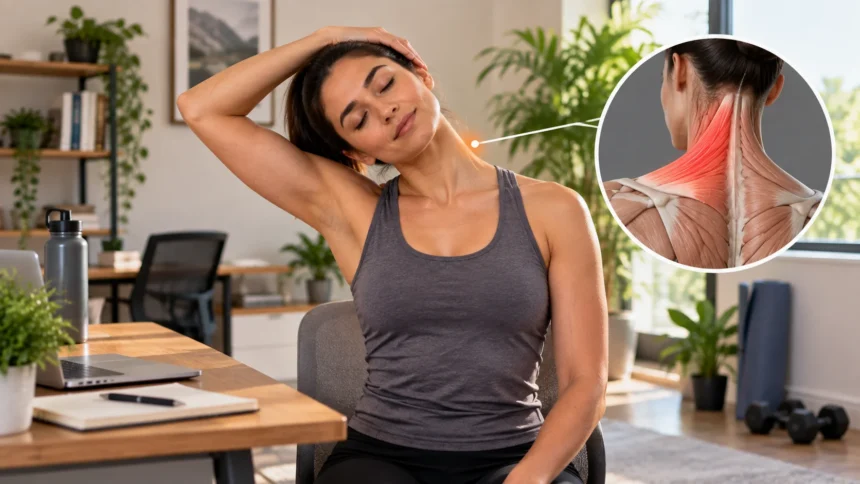
Sit upright in a stable chair with your shoulders relaxed and both feet supported. Keep your chest comfortable rather than forcing an exaggerated posture. To stretch the right upper trapezius, gently tilt your head toward your left shoulder until you feel mild tension along the right side of your neck and upper shoulder.
You can place your left hand lightly over the right side of your head for guidance, but avoid pulling aggressively. Your hand should add only gentle pressure if needed. Keep the right shoulder relaxed and down instead of allowing it to rise toward your ear, because shrugging can reduce the effectiveness of the stretch.
Hold the position while breathing slowly and comfortably. Return your head to the center before repeating the movement on the opposite side. If the stretch causes sharp pain, numbness, tingling, dizziness, or discomfort traveling into the arm, stop and avoid forcing the neck farther.
Seated vs Standing Upper Trap Stretch
The seated variation is often easiest because the chair gives you a stable base. Sitting also allows you to hold the edge of the seat with one hand, which can help keep the shoulder from lifting during the stretch. This makes it easier to focus on controlled neck movement instead of balancing the rest of your body.
A standing upper trap stretch works in a similar way. Stand tall with your feet comfortably apart, relax your arms, and slowly tilt your head toward one shoulder. You may place the opposite hand behind your back or keep it resting by your side if that helps prevent the shoulder from shrugging upward.
Neither version is automatically better. The seated option may feel more controlled at a desk, while standing can be convenient during movement breaks or warm-ups. Choose the position that allows you to keep your shoulders relaxed and maintain gentle tension without twisting, leaning, or forcing your neck.
Common Upper Trap Stretch Mistakes
One common mistake is pulling too hard on the head. The neck contains sensitive joints, muscles, and nerves, so stronger pressure does not necessarily create a better stretch. Use your hand only for light guidance and let the weight of your head provide most of the movement whenever possible.
Another mistake is lifting the shoulder on the side being stretched. If the shoulder moves toward the ear, the upper trapezius shortens and the stretch may become less effective. Keep the shoulder relaxed and imagine it gently moving downward while the head tilts in the opposite direction.
People also sometimes rotate or bend the neck too far in an attempt to feel a stronger sensation. A complicated position is not required for a basic upper trap stretch. Begin with simple side bending, move slowly, and stop when you notice comfortable tension rather than trying to reach the largest possible range.
How Long Should You Hold an Upper Trap Stretch?
Many people find that holding a gentle upper trap stretch for around 20 to 30 seconds feels comfortable. The exact duration is less important than maintaining good form and avoiding pain. A shorter stretch performed consistently can be more useful than holding an uncomfortable position simply to reach a particular time target.
You can repeat the stretch two or three times on each side if the area continues to feel tight. Between repetitions, return your head to a neutral position and relax for a moment. This gives you an opportunity to notice whether movement feels easier before repeating the stretch again.
Long stretches are not always necessary. If your neck becomes more uncomfortable or irritated afterward, reduce the duration, pressure, or frequency. Stretching should generally leave the area feeling the same or more comfortable rather than causing increasing soreness that lasts for hours.
Upper Trap Stretch for Desk Workers
People who work at a desk may spend several hours with the head, shoulders, and arms in similar positions. This can make the upper traps feel tired, particularly when the screen is too low or the shoulders remain raised while typing. Short mobility breaks can help interrupt prolonged static positioning.
Every 30 to 60 minutes, consider changing position, standing briefly, or moving your shoulders and neck through a comfortable range. A gentle upper trap stretch can be included during these breaks. The purpose is not to correct posture perfectly but to give your muscles regular opportunities to change position and reduce prolonged loading.
Workstation setup matters as well. Place frequently used equipment where you can reach it without repeatedly shrugging or twisting. Keep your screen at a comfortable viewing height and support your arms when possible, since constantly holding the shoulders elevated may contribute to upper-neck and shoulder fatigue.
Combine Upper Trap Stretching With Upper-Back Mobility
The upper traps do not work alone, so upper-back movement can be useful alongside neck stretching. Gentle thoracic rotation, shoulder blade movements, and chest-opening exercises can complement an upper trap stretch. These movements help address mobility in areas that influence how the neck and shoulders move during daily activities.
A useful option is the thread the needle stretch, which focuses on upper-back rotation and shoulder mobility. Combining this type of movement with gentle neck stretching can create a more complete routine. Keep each exercise controlled rather than chasing an intense stretch through the shoulders or spine.
You can also include slow shoulder rolls and controlled arm movements. These exercises encourage the shoulder blades to move rather than keeping the upper body fixed. A few minutes of varied movement can sometimes feel more helpful than repeatedly stretching the same muscle in exactly the same direction.
Strengthening Alongside Upper Trap Stretching
Stretching alone may not address every cause of recurring neck and shoulder tightness. Muscles around the shoulder blades, upper back, and neck also need enough strength and endurance to handle daily workloads. A balanced routine can include both mobility work and gradual strengthening rather than relying only on passive stretching.
Exercises such as rows, wall slides, controlled shoulder blade squeezes, and appropriate resistance-band movements can strengthen the upper back. The exact exercises should match your current ability and symptoms. Good technique matters because repeatedly shrugging during strengthening may increase upper trap fatigue instead of improving overall shoulder control.
Progress strengthening slowly, especially if your shoulders have been inactive or uncomfortable for a long time. Begin with light resistance and focus on controlled movement. Over time, improved strength and endurance may make sitting, carrying, reaching, and exercising feel easier while reducing how quickly the upper shoulders become fatigued.
Upper Trap Stretch Before and After Exercise
Before exercise, gentle dynamic neck and shoulder movements may be more appropriate than immediately holding a long stretch. Shoulder circles, controlled head turns, arm movements, and light upper-back mobility can prepare the area for activity. If you include an upper trap stretch, keep it brief and comfortable rather than forcing a deep position.
After training, a gentle static stretch may feel relaxing if your upper shoulders are tight. Hold the position while allowing your breathing and heart rate to settle. Stretching can be part of a cooldown, but it should not replace appropriate recovery, hydration, sleep, and workload management.
People who perform overhead lifting, carrying, rowing, or other upper-body exercises may notice upper trap fatigue. This does not automatically mean the muscle needs aggressive stretching. Consider how much training volume you are doing and whether your technique, recovery, and supporting muscle strength are appropriate.
How Often Should You Stretch Your Upper Traps?
You can include gentle upper trap stretching several times throughout the week, depending on how your neck and shoulders respond. People who sit for long periods may prefer short daily mobility breaks. Others may use the stretch mainly after workouts or whenever temporary stiffness develops.
More stretching is not automatically better. Repeatedly pulling on the neck throughout the day can irritate sensitive tissues if you use too much pressure. A few comfortable repetitions combined with regular movement are usually more sensible than constantly stretching because the area feels slightly tense.
Pay attention to how your body responds over time. If the stretch consistently improves comfort and movement, it may be worth keeping in your routine. If symptoms worsen or return immediately despite frequent stretching, another factor such as workload, strength, posture, or an underlying condition may need attention.
When Neck and Shoulder Tightness Needs Attention
Occasional muscle tightness after work or exercise is common, but persistent pain deserves more attention. Seek professional advice if your symptoms continue for weeks, progressively worsen, or significantly limit your ability to move your neck or shoulder. A healthcare professional can assess whether the discomfort is muscular or related to another structure.
Numbness, tingling, weakness, or pain traveling into the arm should not be ignored. These symptoms may suggest nerve involvement rather than simple muscle tightness. Stretching aggressively in this situation may not help and could make symptoms more uncomfortable, so individualized evaluation may be more appropriate.
You should also seek timely care for severe neck pain after a significant injury, unexplained dizziness, major headache, fever, loss of coordination, or other concerning symptoms. A simple upper trap stretch is intended for ordinary mobility work, not for treating serious or unexplained medical problems.
Tips for Better Neck and Shoulder Mobility
Change positions regularly rather than trying to maintain one “perfect” posture all day. Even a well-aligned position can become tiring when held for several hours without movement. Standing, walking, shoulder rolls, and gentle neck movements can give your muscles a break from repetitive loading.
Pay attention to activities that repeatedly make your shoulders rise toward your ears. Heavy bags, poorly adjusted desks, stress, and certain exercises may contribute to unnecessary upper trap tension. Adjusting these activities can sometimes be more helpful than simply adding more stretching afterward.
Build a routine that includes neck mobility, upper-back movement, shoulder strength, and general physical activity. The body usually responds better to varied movement than to one isolated stretch. Consistency and comfortable progression are more important than trying to achieve extreme flexibility as quickly as possible.
Conclusion
The upper trap stretch is a simple movement that can help address temporary neck and shoulder tightness while supporting comfortable mobility. Proper technique involves gently tilting the head to one side while keeping the opposite shoulder relaxed. The stretch should feel controlled rather than painful or aggressive.
For better results, combine upper trap stretching with regular movement, upper-back mobility, and appropriate strengthening. Desk habits, exercise volume, shoulder positioning, and overall activity can all influence how tight your upper traps feel. Addressing these factors can make your mobility routine more balanced.
Stop stretching if you experience sharp pain, numbness, tingling, significant weakness, dizziness, or worsening symptoms. Persistent neck and shoulder discomfort may need professional evaluation rather than more stretching. The goal is to improve comfortable movement while respecting signals that suggest something more than ordinary muscle tension.
FAQs
What does the upper trap stretch target?
The upper trap stretch primarily targets the upper portion of the trapezius muscle along the neck and shoulder. It may help reduce temporary tightness and support comfortable side-to-side neck mobility.
How long should I hold an upper trap stretch?
A comfortable hold of around 20 to 30 seconds works well for many people. Focus on gentle tension and relaxed breathing rather than pulling harder or trying to hold the stretch for as long as possible.
Can I do an upper trap stretch every day?
Gentle stretching can be performed regularly if it feels comfortable and does not increase symptoms. Daily movement breaks may be especially helpful for people who spend long hours working at a desk.
Why do my upper traps always feel tight?
Upper trap tightness may be related to prolonged sitting, stress, repetitive activity, exercise, or limited movement. Persistent tightness may also involve other muscles or structures, so stretching is not always the complete solution.
Should an upper trap stretch hurt?
No. You should feel gentle tension rather than sharp pain. Stop if you experience numbness, tingling, dizziness, arm weakness, or worsening neck pain, and seek professional advice if those symptoms persist.