Constipation can make you feel bloated, uncomfortable, and frustrated, especially when bowel movements become difficult or less frequent than usual. While stretching is not a guaranteed treatment for constipation, gentle movement may help some people feel more relaxed, reduce abdominal tension, and support normal digestive activity. Certain positions may also make it easier to relax the pelvic floor during a bowel movement.
Stretches that involve the hips, trunk, and abdomen can be particularly helpful when constipation is linked with prolonged sitting, inactivity, or general body stiffness. Walking, hydration, adequate fiber, and regular bathroom habits remain important as well. Stretching works best as one part of a broader routine rather than as a quick fix for every type of constipation.
The following stretches to help you poop are simple enough for many beginners and require little or no equipment. Move gently, breathe normally, and never force yourself into painful positions. If constipation is persistent, severe, or accompanied by significant pain, vomiting, blood in the stool, or unexplained weight loss, seek medical advice rather than relying only on home exercises.
How Can Stretching Help With Constipation?
Gentle stretching encourages movement throughout the trunk, hips, and abdomen, which may help some people feel less stiff and more comfortable. Physical activity in general can support normal bowel function by encouraging movement through the digestive tract. Even light mobility sessions may be useful for people who spend much of the day sitting.
Stretching can also promote relaxation, which matters because bowel movements depend partly on the ability to relax the pelvic floor and abdominal area. If you are tense or straining heavily, passing stool can become more difficult. Slow breathing combined with gentle positions may help reduce unnecessary tension and create a more comfortable bathroom routine.
However, stretching does not directly remove every cause of constipation. Low fiber intake, dehydration, certain medications, changes in routine, medical conditions, and pelvic floor problems can all contribute. If your symptoms keep returning, consider the bigger picture rather than assuming that increasing exercise alone will solve the problem.
Knee-to-Chest Stretch
Lie on your back with both legs extended or with your knees comfortably bent. Bring one knee toward your chest and hold it gently with both hands, keeping your shoulders relaxed against the floor. Hold the position for about 20 to 30 seconds while breathing slowly, then switch sides.
You can also bring both knees toward your chest if that feels comfortable. This position gently bends the hips and lower back and can create mild pressure around the abdominal area. Some people find the posture relaxing when they feel bloated, although you should avoid pulling aggressively or compressing the abdomen if it causes discomfort.
Perform one to three rounds on each side and move slowly between repetitions. The purpose is not to force digestive movement but to reduce stiffness and encourage comfortable mobility. Stop if you experience sharp abdominal pain, worsening back pain, numbness, or any symptom that feels different from ordinary stretching tension.
Supine Spinal Twist
Begin by lying on your back with your knees bent and feet resting on the floor. Slowly allow both knees to move toward one side while keeping your shoulders as relaxed as possible. Turn your head in the opposite direction only if doing so feels comfortable for your neck.
A gentle spinal twist can stretch the lower back, hips, and side of the abdomen. The rotation may feel particularly helpful after long periods of sitting because it encourages movement through areas that can become stiff. Breathe deeply into your abdomen rather than trying to push your knees aggressively toward the floor.
Hold the twist for approximately 20 to 30 seconds before returning to the center and changing sides. Keep the movement comfortable and avoid forcing a deeper rotation. People with recent spinal injuries, significant back pain, or pregnancy may need modified positions or professional guidance before attempting deeper twisting exercises.
Child’s Pose
Start on your hands and knees, then slowly move your hips backward toward your heels while reaching your arms forward. Let your forehead rest on a mat, pillow, or folded towel if needed. Keep your knees closer together or spread them slightly apart depending on which position feels more comfortable around your abdomen.
Child’s pose gently stretches the lower back, hips, and surrounding muscles while encouraging slower breathing. The position can be useful when constipation is accompanied by general abdominal tension or stress. Relaxing the abdomen instead of holding it tightly may help you become more aware of how tension affects your breathing and pelvic floor.
Stay in the position for about 30 seconds to one minute while breathing comfortably. You should not feel strong pressure in your knees, hips, or abdomen. If sitting back toward your heels is uncomfortable, place a cushion between your hips and heels or choose another gentle stretch instead.
Cat-Cow Stretch
Begin on your hands and knees with your wrists beneath your shoulders and knees beneath your hips. As you inhale, gently lift your chest and tailbone while allowing your abdomen to move downward. As you exhale, round your back slowly and let your head move naturally without forcing your neck.
Cat-cow creates gentle movement through the spine and surrounding trunk muscles. Alternating between the two positions also changes abdominal tension slightly, which some people find soothing when they feel stiff or bloated. The exercise is easy to control because you decide how much spinal movement feels appropriate.
Perform approximately 8 to 12 slow repetitions while coordinating each movement with your breath. Avoid rushing or trying to create the largest possible arch. If the position creates wrist discomfort, you can place your hands on elevated blocks or try a seated version of spinal flexion and extension.
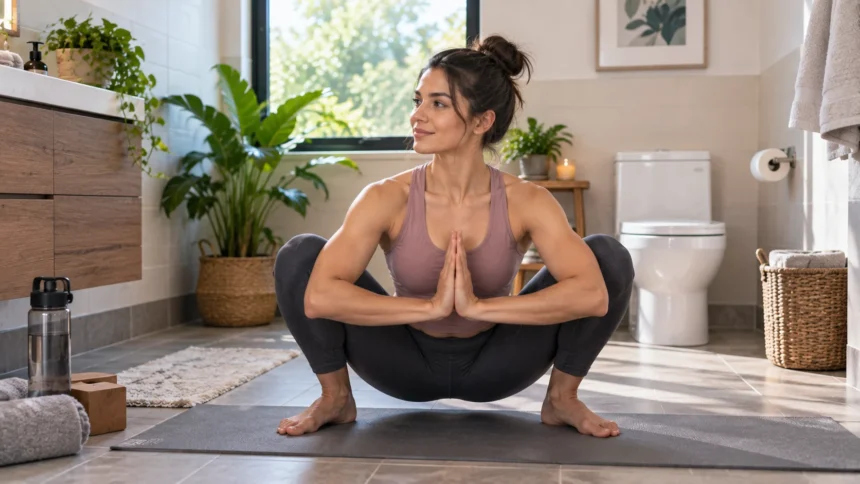
Deep Squat Hold
Stand with your feet slightly wider than hip-width apart and turn your toes outward comfortably. Slowly lower your hips toward the floor as far as you can while keeping your feet supported. Hold onto a sturdy surface if balance is difficult, and place a rolled towel beneath your heels if necessary.
A deep squat places the hips in a position similar to the posture created when using a footstool during a bowel movement. This may help some people become more comfortable with hip and pelvic floor relaxation. However, you do not need to squat deeply if your ankle, hip, or knee mobility does not allow it.
Hold the position for around 15 to 30 seconds and breathe slowly without straining. Keep your abdomen relaxed instead of bracing strongly. If squatting causes knee, hip, or back pain, skip this exercise and use a supported toilet footstool rather than forcing your body into a difficult position.
Seated Forward Fold
Sit on the floor with your legs extended in front of you, or keep your knees slightly bent if your hamstrings feel tight. Hinge gently forward from your hips while keeping your spine comfortable. Rest your hands on your thighs, shins, or the floor instead of reaching aggressively toward your feet.
The seated forward fold can stretch the back of the legs, lower back, and surrounding tissues. People who sit for long periods may find this movement helpful for general mobility. The position may also encourage calm breathing, which can be useful when you are trying to reduce unnecessary abdominal and pelvic tension.
Hold the stretch for 20 to 30 seconds and avoid bouncing. There is no benefit to forcing your chest toward your knees if the position feels uncomfortable. A small, relaxed forward lean is enough, especially if your primary goal is gentle mobility rather than improving flexibility.
Hip Flexor Stretch
Kneel with one knee on a padded surface and place the opposite foot in front of you. Keep your torso upright and gently shift your pelvis forward until you feel a mild stretch at the front of the hip on the kneeling side. Avoid excessively arching your lower back to create more range.
Tightness around the front of the hips is common in people who spend long periods sitting. Improving comfort around the hips can make movements such as squatting, walking, and sitting on the toilet feel easier. Better hip mobility does not directly cure constipation, but it may support more comfortable positioning and regular movement throughout the day.
Hold each side for 20 to 30 seconds and repeat one or two times. Use a wall or chair for balance if necessary. If kneeling causes discomfort, perform a standing hip flexor stretch instead so you can work on mobility without putting unnecessary pressure on the knees.
Pelvic Tilts
Lie on your back with your knees bent and feet resting comfortably on the floor. Gently flatten your lower back toward the floor by slightly tilting your pelvis, then return to a neutral position. The movement should be small and controlled rather than a forceful abdominal exercise.
Pelvic tilts help you become more aware of how the pelvis and lower back move together. They can be useful when stiffness around the lumbar region makes lying, sitting, or bathroom positioning uncomfortable. Slow pelvic motion combined with relaxed breathing may also help reduce unnecessary gripping through the abdominal muscles.
Perform 8 to 15 repetitions at an easy pace. Do not press your lower back aggressively into the floor or hold your breath. If pelvic or tailbone discomfort is part of your symptoms, learning more about tailbone pain may help you understand why certain seated or lying positions feel uncomfortable.
Use Walking Alongside Stretching
Stretching can be useful, but walking is one of the simplest forms of movement to include when constipation is related to inactivity. A short walk after meals or during the day can increase overall physical activity without requiring complicated exercises. Even 10 to 20 minutes may be easier to maintain consistently than a long workout.
Walking also moves the hips, trunk, and abdominal area repeatedly, making it a practical complement to static stretching. You do not need to walk at a very fast pace for movement to be worthwhile. Choose a comfortable speed that allows you to breathe normally and continue without pain or excessive fatigue.
Try combining a short walk with two or three gentle stretches rather than performing a long mobility routine once in a while. Regular movement tends to be more useful than occasional intense sessions. If walking worsens abdominal pain or you feel significantly unwell, stop and consider whether your symptoms need medical evaluation.
Improve Your Toilet Position and Breathing
Toilet position can affect how easily some people pass stool. Placing your feet on a small stool so your knees sit slightly higher than your hips may create a more squat-like position. Lean forward gently with your elbows resting on your thighs and keep your abdomen relaxed instead of sitting rigidly upright.
Try slow abdominal breathing rather than holding your breath and pushing aggressively. Breathe in gently, allowing the abdomen and lower ribs to expand, then exhale slowly while keeping the pelvic area relaxed. Excessive straining can increase pressure and may contribute to hemorrhoids or other problems over time.
Give yourself enough time without sitting and straining for long periods. If nothing happens after several minutes, get up, move around, and try again later when you feel a stronger natural urge. Responding to bowel signals rather than repeatedly forcing a bowel movement can make your routine more comfortable.
Other Habits That Can Support Regular Bowel Movements
Stretching works best alongside everyday habits that support normal digestion. Adequate fluid intake helps keep stool from becoming excessively hard, while fiber adds bulk and can support regularity. Fruits, vegetables, whole grains, beans, and other plant foods can contribute fiber when introduced gradually and tolerated well.
Try to maintain regular meals and avoid repeatedly ignoring the urge to use the bathroom. Some people notice a stronger bowel movement urge after breakfast or another meal because eating naturally stimulates digestive activity. Creating enough time in your schedule to respond to that urge may be more effective than trying to go at random times.
Sleep, stress management, and overall movement can also influence bowel habits. A sudden routine change, travel, reduced activity, or new medication may contribute to constipation. Look for patterns in your symptoms so you can identify possible triggers instead of relying on one stretch or exercise as the entire solution.
Conclusion
Stretches to help you poop may provide gentle support when constipation is associated with inactivity, stiffness, or difficulty relaxing. Movements such as knee-to-chest stretches, spinal twists, child’s pose, cat-cow, pelvic tilts, and supported squats can improve general mobility and help you feel more comfortable.
The best results usually come from combining stretching with walking, adequate fluids, fiber-rich foods, and a comfortable toilet position. Move slowly, breathe normally, and avoid forcing stretches or bowel movements. Consistency is more useful than trying an aggressive mobility routine only when constipation becomes uncomfortable.
Remember that persistent constipation can have many causes that stretching cannot address. Seek medical advice if symptoms continue, become severe, or occur with vomiting, blood in the stool, unexplained weight loss, fever, or significant abdominal pain. A healthcare professional can help identify the cause and recommend appropriate treatment.
FAQs
What stretch can help you poop quickly?
There is no stretch guaranteed to cause an immediate bowel movement. Knee-to-chest stretches, gentle twists, squats, and walking may help some people relax and support normal digestive movement.
Does twisting your body help constipation?
Gentle spinal twists may improve trunk mobility and feel comfortable when you are bloated or stiff. However, twisting is not a proven cure for constipation and should be combined with other healthy bowel habits.
How long should I hold stretches for constipation?
Most gentle stretches can be held for approximately 20 to 30 seconds, while relaxing positions such as child’s pose may be held longer. Stop sooner if the position causes pain or worsening symptoms.
Is walking better than stretching for constipation?
Both can be useful, but regular walking may provide broader benefits because it increases overall physical activity. Combining short walks with gentle mobility exercises can be a practical approach for many people.
When should constipation be checked by a doctor?
Seek medical advice for persistent or severe constipation, especially with significant abdominal pain, vomiting, blood in the stool, unexplained weight loss, fever, or sudden changes in bowel habits.