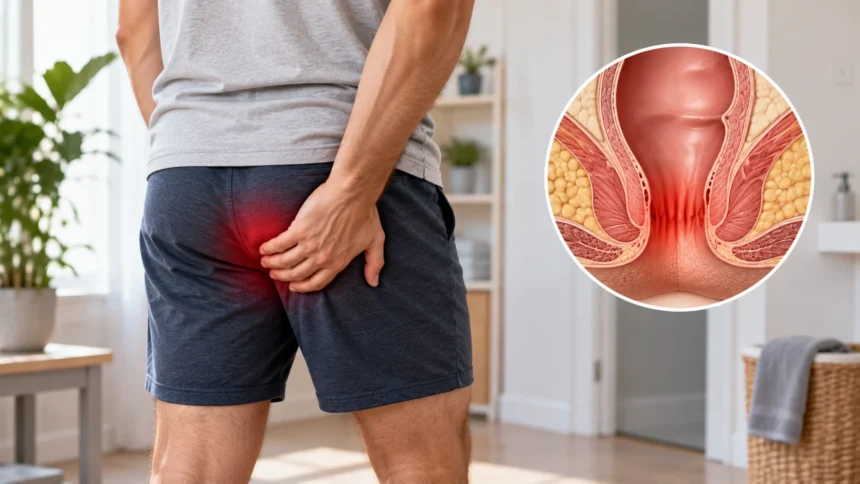
Butthole cramps, more medically described as anal or rectal spasms, can feel like sudden tightening, pressure, aching, or sharp pain around the anus or inside the rectum. The discomfort may last only seconds or continue for several minutes. Although the sensation can be alarming, many episodes are linked to temporary muscle spasms or digestive changes rather than a serious condition.
Several problems can produce similar symptoms, including pelvic floor muscle tension, proctalgia fugax, constipation, anal fissures, bowel conditions, and menstrual or pelvic disorders. The best relief depends on what is causing the pain. Occasional mild cramps may respond to warmth, relaxation, and bowel habit changes, while persistent or severe symptoms should be medically evaluated.
What Are Butthole Cramps?
Butthole cramps usually refer to involuntary tightening or spasming around the anus, rectum, or pelvic floor muscles. People may describe the sensation as stabbing, squeezing, throbbing, pressure, or a deep ache. The discomfort can appear suddenly without warning and sometimes disappears almost as quickly as it started.
The muscles surrounding the rectum and anus play important roles in bowel movements and continence. Pelvic floor muscles also support the bladder, bowel, and reproductive organs. When these muscles tighten unexpectedly or remain overly tense, they can create pain that feels as though it comes directly from inside or around the anus.
Not every painful sensation in this area is technically a muscle cramp. Anal fissures, hemorrhoids, infections, inflammation, and other conditions can produce pain that feels similar. Looking at timing, bowel symptoms, bleeding, and other accompanying signs can help a healthcare professional determine what is actually causing the discomfort.
Proctalgia Fugax Can Cause Sudden Anal Cramps
Proctalgia fugax is a condition associated with brief episodes of sudden rectal or anal pain. The pain often appears unexpectedly and may feel sharp, stabbing, or cramp-like. Episodes commonly last from a few seconds to several minutes and may disappear completely between attacks.
The exact cause is not always clear, but temporary spasms in muscles around the anus or pelvic floor are thought to play a role. Some people notice episodes after bowel movements, sexual activity, stress, or menstruation, while others cannot identify any clear trigger. Symptoms can occur during the day or even wake someone from sleep.
Because attacks are usually short, treatment often focuses on reassurance and reducing possible triggers. Warm baths, relaxation, and controlled breathing may help during an episode. Frequent or severe attacks should still be discussed with a healthcare provider so other conditions causing rectal pain can be ruled out.
Levator Ani Syndrome and Pelvic Floor Spasms
Levator ani syndrome involves discomfort linked to tension or spasm within the pelvic floor muscles. Unlike the very brief pain of proctalgia fugax, this condition often causes a dull ache, pressure, or deep rectal discomfort that can last much longer. Sitting for extended periods may make symptoms more noticeable.
Some people describe the sensation as feeling like pressure or a ball inside the rectum. The pain may improve when standing or lying down and become worse after prolonged sitting. Pelvic floor tension can also occur alongside constipation, urinary symptoms, painful intercourse, or other forms of pelvic discomfort.
Treatment may involve pelvic floor physical therapy, relaxation techniques, breathing exercises, and changes to bowel habits. The goal is often to reduce excessive muscle tension rather than strengthen muscles that are already overactive. A healthcare professional can help determine whether pelvic floor dysfunction is actually responsible for the symptoms.
Constipation and Straining Can Trigger Rectal Pain
Constipation can contribute to rectal cramping because hard stool requires more effort to pass. Repeated straining increases pressure around the anus and pelvic floor, while stool remaining in the rectum may create fullness and discomfort. Some people experience cramping before, during, or shortly after attempting a bowel movement.
Hard stools can also irritate the anal canal and contribute to small tears called fissures. Trying to force a bowel movement when stool is dry may cause the anal muscles to tighten defensively. This can create a cycle where pain causes more muscle guarding, making future bowel movements even more uncomfortable.
Drinking adequate fluids, eating sufficient fiber, staying physically active, and responding to the urge to have a bowel movement can support regularity. If constipation is persistent or severe, a healthcare professional may recommend an appropriate stool softener or laxative rather than repeated straining or unproven home remedies.
Anal Fissures May Cause Muscle Spasms
An anal fissure is a small tear in the lining of the anal canal, often caused by passing hard or large stool. The typical symptom is sharp or burning pain during a bowel movement. Pain may continue afterward because the internal anal sphincter can tighten or spasm around the injured area.
Bright red blood may sometimes appear on toilet paper or on the surface of the stool. The amount is often small, but any unexplained rectal bleeding deserves appropriate attention. Chronic fissures may repeatedly reopen when constipation continues, extending pain and making people reluctant to use the bathroom.
Treatment often focuses on keeping stool soft and reducing strain while the tissue heals. Warm sitz baths can provide temporary comfort and may help the muscles relax. Persistent fissures sometimes require prescription medications or other treatment, so ongoing pain should not be repeatedly managed at home without evaluation.
Can Hemorrhoids Cause Butthole Cramps?
Hemorrhoids are swollen veins in or around the anus and rectum. They more commonly cause itching, swelling, bleeding, or discomfort than true muscle cramps. However, irritation around the anal area can make the muscles tense, and a painful external hemorrhoid may create pressure that people describe as cramping.
Internal hemorrhoids may cause painless bleeding, while external hemorrhoids can become tender or swollen. A thrombosed external hemorrhoid, where a blood clot forms inside the vein, can cause sudden and significant pain. The discomfort is often constant rather than appearing only as brief spasms.
Avoid assuming every episode of anal pain is caused by hemorrhoids. Fissures, abscesses, pelvic floor disorders, and other conditions can produce similar symptoms. A medical examination is particularly helpful when pain is severe, there is repeated bleeding, or a new lump around the anus does not improve.
IBS and Digestive Problems Can Contribute
Irritable bowel syndrome can cause abdominal cramping, constipation, diarrhea, bloating, and changes in bowel habits. Frequent bowel movements or repeated straining can irritate the rectal area and increase pelvic floor tension. Some people therefore experience rectal pressure or spasms during periods when their digestive symptoms are especially active.
Diarrhea can irritate the anal canal because of frequent wiping and repeated bowel movements. Constipation, on the other hand, can increase straining and muscle guarding. Alternating between the two may place additional stress on the pelvic floor and make anal discomfort feel unpredictable.
Managing the underlying bowel pattern is often more useful than focusing only on the cramp itself. Keeping track of food triggers, bowel habits, stress, and symptom timing may reveal useful patterns. Persistent bowel changes, unexplained weight loss, bleeding, or nighttime symptoms should be discussed with a healthcare professional.
Menstruation and Pelvic Conditions May Cause Rectal Cramps
Some people experience rectal pain or cramps around the time of menstruation. Hormonal changes and uterine contractions can affect nearby pelvic structures, and the uterus and rectum share close anatomical space. This can make cramping feel as though it is coming from the rectum or anus even when the original source is elsewhere.
Endometriosis can also cause pain during bowel movements, particularly around menstruation. Tissue similar to the uterine lining may affect structures near the rectum or elsewhere in the pelvis. Symptoms can include severe period pain, pelvic pain, painful sex, and bowel-related discomfort that follows a recurring monthly pattern.
Frequent or severe rectal pain during periods should not automatically be dismissed as normal cramping. A gynecological evaluation may help identify whether endometriosis or another pelvic condition is contributing. Tracking the timing of symptoms across several menstrual cycles can provide useful information during the assessment.
Stress and Anxiety Can Increase Pelvic Muscle Tension
Stress can cause muscles throughout the body to tighten without conscious effort. Some people clench their jaw or shoulders, while others maintain tension through the abdomen and pelvic floor. If the pelvic muscles remain guarded for long periods, rectal aching or cramp-like sensations may become more noticeable.
Slow breathing and relaxation exercises can help some people recognize and release unnecessary muscle tension. The goal is not to suggest that the symptoms are imaginary. Stress can create genuine physical changes in muscle activity, just as it can contribute to tension in the neck, shoulders, or other body areas.
General mobility can also support relaxation when prolonged sitting is contributing to muscular stiffness. Stretching routines for other frequently tight areas, such as forearm stretches, illustrate the same broader principle of using gentle movement rather than forceful stretching. Pelvic floor symptoms, however, require exercises specific to that region rather than unrelated stretches.
How to Relieve Mild Butthole Cramps at Home
A warm sitz bath is one of the simplest ways to ease temporary anal muscle tension. Sitting in comfortably warm water for around 10 to 20 minutes may help relax the pelvic floor and anal sphincter. Avoid water that is excessively hot because sensitive skin in this area can be easily irritated.
Slow abdominal breathing may also help during a spasm. Breathe gently into the lower ribs and abdomen while allowing the pelvic area to soften rather than intentionally squeezing it. Trying to forcefully stretch or contract the anus can sometimes increase guarding, especially when the muscles are already tense.
If constipation appears to trigger the problem, focus on making bowel movements easier. Adequate hydration, gradual fiber intake, regular walking, and avoiding prolonged straining may help. Recurrent symptoms should still be assessed rather than relying indefinitely on home treatment without understanding the underlying cause.
Pelvic Floor Relaxation May Help
Pelvic floor relaxation is different from doing repeated Kegel exercises. Kegels intentionally tighten the pelvic floor and may be inappropriate when pain is caused by muscles that are already overactive. In those situations, the goal is usually to improve coordination and help the muscles release rather than strengthen them further.
Diaphragmatic breathing can support this process. As you inhale, allow the abdomen and lower ribs to expand gently and imagine the pelvic floor relaxing. During exhalation, avoid forcefully pulling the pelvic floor upward unless a trained clinician has specifically recommended that type of exercise for your condition.
A pelvic floor physical therapist can assess whether the muscles are actually tight, weak, poorly coordinated, or functioning normally. This matters because similar symptoms can require very different exercises. Personalized treatment is usually more effective than randomly performing Kegels or stretches based solely on where the discomfort is felt.
What to Avoid When You Have Anal Cramps
Avoid prolonged straining during bowel movements. Holding your breath and pushing hard increases pressure through the rectum and pelvic floor, which may worsen pain. If stool is difficult to pass, addressing constipation is generally more useful than remaining on the toilet and repeatedly forcing a bowel movement.
Do not repeatedly insert objects, apply strong pressure, or use aggressive massage in an attempt to release a muscle spasm. The anal canal contains sensitive tissue that can become irritated or injured. Any internal treatment should be recommended by an appropriate healthcare professional, especially when the cause of pain is unknown.
Avoid assuming that recurring symptoms are harmless simply because previous episodes disappeared on their own. Frequent anal pain can have several causes, some of which benefit from specific treatment. Keep track of timing, bowel habits, bleeding, and other symptoms so you can provide useful information if medical evaluation becomes necessary.
When Anal Pain Could Be an Infection or Abscess
An anal or perirectal abscess is a collection of infected fluid near the anus or rectum. Unlike brief muscle spasms, an abscess often causes persistent, worsening pain. The area may become swollen, red, warm, or extremely tender, and sitting can become increasingly difficult.
Fever, chills, drainage, or feeling generally unwell can occur when infection is present. Some abscesses are visible externally, while deeper infections may produce severe rectal pain without an obvious lump. These conditions require medical treatment and should not be managed only with warm baths or pain medication.
Seek prompt medical care if anal pain becomes intense and constant, particularly when fever or swelling is present. An untreated abscess can worsen or form an abnormal connection called a fistula. Early assessment allows appropriate drainage or other treatment to be provided when necessary.
When Should You See a Doctor?
Make an appointment if anal cramps are frequent, persistent, or interfering with bowel movements and everyday activities. Medical evaluation is also appropriate when pain repeatedly occurs without a clear trigger. A healthcare professional may assess bowel habits, pelvic floor function, and other symptoms before deciding whether an examination or further testing is necessary.
Seek medical attention for rectal bleeding that is unexplained, recurrent, or substantial. Although small amounts of bright blood can occur with fissures or hemorrhoids, bleeding can have other causes. Black stools, significant blood loss, dizziness, or weakness require more urgent evaluation rather than routine home care.
Urgent assessment is also important for severe constant pain, fever, major swelling, vomiting, inability to pass stool or gas, or new neurological symptoms. These signs are not typical of simple anal muscle spasms. When symptoms feel unusually intense or different from previous episodes, it is safer to seek medical advice.
Conclusion
Butthole cramps can describe several types of anal or rectal discomfort, including brief muscle spasms, pelvic floor tension, or pain related to bowel movements. Proctalgia fugax and levator ani syndrome are possible muscle-related explanations, while constipation, fissures, digestive problems, and pelvic conditions can produce similar sensations.
Mild episodes may improve with warm sitz baths, relaxation, adequate hydration, and better bowel habits. Avoid excessive straining or aggressively trying to release the muscles yourself. When pelvic floor tension is involved, targeted relaxation and professional physical therapy may be more appropriate than strengthening exercises such as repeated Kegels.
Frequent or severe anal pain deserves proper evaluation, especially when it occurs with bleeding, fever, swelling, significant bowel changes, or other unusual symptoms. Because several conditions can feel similar, identifying the underlying cause is the most reliable way to choose effective treatment and prevent recurring discomfort.
FAQs
Why do I suddenly get cramps in my anus?
Sudden anal cramps can occur with conditions such as proctalgia fugax or pelvic floor muscle spasms. Constipation, stress, bowel movements, or menstruation may also trigger discomfort in some people.
How do you stop a butthole cramp?
A warm sitz bath, relaxed breathing, and changing position may help mild temporary spasms. Frequent, severe, or long-lasting pain should be medically evaluated to identify its actual cause.
Can constipation cause anal cramps?
Yes. Hard stools and repeated straining can increase pressure and muscle tension around the anus. Constipation can also contribute to anal fissures, which may trigger painful sphincter spasms.
Are anal cramps during a period normal?
Some people experience rectal cramps during menstruation because pelvic structures are closely connected. Severe or recurring pain, especially with painful bowel movements, may warrant evaluation for conditions such as endometriosis.
When should I worry about anal cramps?
Seek medical care for severe or persistent pain, fever, swelling, significant bleeding, black stools, vomiting, or major bowel changes. These symptoms may indicate something more than a temporary muscle spasm.