IPL Treatment: Benefits, Uses, Cost and Side Effects
Intense pulsed light, commonly called IPL treatment, is a noninvasive cosmetic procedure used to improve several skin concerns and reduce unwanted hair. It works by delivering controlled pulses of broad-spectrum light into the skin, where specific colors or structures absorb the energy. Depending on the settings and treatment goal, IPL can target brown pigmentation, redness, visible blood vessels, or pigment inside hair follicles. Unlike a traditional laser, IPL does not use just one highly specific wavelength of light. This flexibility allows practitioners to treat several concerns with the same technology, although it also means proper settings and patient selection are essential. IPL is frequently performed on the face, neck, chest, hands, arms, legs, and other suitable areas.
People commonly consider IPL for sun spots, age spots, freckles, uneven pigmentation, rosacea-related redness, broken capillaries, and unwanted hair. It is sometimes called a photofacial when it is used primarily for cosmetic skin rejuvenation. IPL can improve visible signs of sun damage without removing the entire surface layer of skin, which generally means less downtime than more aggressive resurfacing treatments. However, it is not appropriate for every skin tone or every type of pigmentation. Darker skin and recently tanned skin can absorb more of the light energy, increasing the risk of burns and pigment changes. A qualified dermatologist or experienced medical professional should therefore evaluate the skin before treatment rather than choosing IPL simply because before-and-after photographs look appealing.
What Is IPL Treatment and How Does It Work?
IPL stands for intense pulsed light, a technology that delivers short bursts of broad-spectrum visible and near-infrared light through the skin. Traditional medical lasers generally produce a narrower and more specific wavelength, while IPL devices can use filters to select ranges of wavelengths for different treatment targets. These targets are known as chromophores, which are structures that absorb particular forms of light energy. Melanin is the main target when IPL is being used for brown pigmentation or hair reduction, while hemoglobin in blood vessels can absorb energy during treatment for redness. Once absorbed, the light is converted into heat, which selectively damages the intended target while attempting to preserve surrounding tissue.
When IPL is used for pigmentation, concentrated melanin in freckles, sun spots, and certain other superficial brown lesions absorbs the light energy. The targeted pigment may initially become darker following treatment rather than disappearing immediately. Over the following days, some treated spots can develop a pepper-like or crusted appearance before gradually flaking and fading. Cleveland Clinic notes that laser and intense pulsed light therapies can target melanin-containing areas when treating age spots. The surrounding skin is usually left intact because IPL does not work by removing an entire surface layer in the way an ablative resurfacing procedure does. This generally allows people to resume normal activities relatively quickly, although temporary redness and sensitivity can occur.
When IPL is used for redness or visible blood vessels, hemoglobin absorbs some of the light energy. Heat damages targeted small vessels, after which the body gradually clears the treated structures. Dermatologists may use light-based therapies for conditions involving facial redness, broken capillaries, and rosacea. The American Academy of Dermatology notes that IPL can reduce flushing and improve skin texture in people with rosacea, although more sessions may be needed than with certain laser treatments. Results typically develop over time instead of appearing completely after one appointment. Larger or deeper blood vessels may respond better to specialized vascular lasers, so IPL is not automatically the best treatment for every form of facial redness.
For hair reduction, the target is melanin inside the hair shaft and follicle. Light absorbed by the pigmented hair is converted into heat, which damages structures responsible for future hair growth. Because hair grows in cycles and IPL works best when follicles are in an active growth phase, multiple treatments are normally necessary. Dark, coarse hair generally provides a stronger light target than very light, gray, white, or red hair because those colors contain less appropriate melanin. IPL hair treatment should also not be confused with permanent removal of every hair forever. Long-term hair reduction is a more realistic goal, and occasional maintenance treatments may be needed when some follicles recover or new hormonal influences affect growth.
The IPL device, wavelength filters, pulse duration, fluence, cooling system, and provider’s technique all influence treatment effectiveness and safety. Settings that are appropriate for a fair-skinned person with freckles may be unsafe for someone with deeply pigmented or recently tanned skin. This is why IPL should not be thought of as a standardized treatment where every patient receives the same settings. A good consultation examines natural skin color, tanning history, medications, treatment goals, previous pigment changes, and the exact concern being targeted. The AAD stresses that darker skin can be more vulnerable to burns and dark marks following some light and laser procedures, making expertise with diverse skin tones especially important.
IPL Treatment Benefits for Skin and Appearance
One of the main benefits of IPL treatment is its ability to address multiple visible signs of sun damage during the same treatment series. People frequently seek IPL for freckles, age spots, uneven pigmentation, redness, and small visible vessels rather than one isolated concern. Because several wavelengths are available, the practitioner may be able to target both brown and red discoloration when appropriate. This can create a more even-looking complexion without the recovery period associated with aggressive skin resurfacing. The treatment is particularly popular on frequently sun-exposed areas such as the face, neck, upper chest, and hands. However, IPL improves selected signs of photodamage rather than reversing all biological effects of years of ultraviolet exposure.
IPL can be particularly useful for sun spots and age spots, sometimes called solar lentigines. These flat areas of increased pigment commonly develop after years of ultraviolet exposure and become more noticeable with age. When the pigment absorbs IPL energy, the spot may temporarily darken before gradually fading. Cleveland Clinic lists intense pulsed light among procedures capable of targeting pigment associated with age spots without intentionally damaging the entire skin surface. Results vary depending on how deep the pigment is, the number of lesions, skin tone, and whether additional sun exposure continues after treatment. Consistent sunscreen use remains essential because IPL cannot prevent new sun spots from developing.
Another important benefit is the reduction of diffuse facial redness and some visible superficial blood vessels. Rosacea can produce persistent redness, flushing, and enlarged facial vessels even when inflammatory bumps are controlled with medication. The AAD states that intense pulsed light can reduce flushing and improve skin texture in people with rosacea. IPL does not cure rosacea because the underlying inflammatory condition can continue to flare, but it can reduce some visible vascular changes. Maintenance treatments may eventually be needed as redness returns or new vessels appear. Combining light treatment with gentle skin care, sun protection, trigger management, and medication when appropriate usually creates a more complete rosacea treatment strategy.
IPL is sometimes promoted for skin rejuvenation and texture improvement because heating within the skin may stimulate remodeling processes and modest collagen production. Some patients notice smoother-looking skin and subtle improvement in fine textural irregularities after a series of sessions. However, IPL is generally stronger for pigment and redness than for deep wrinkles, substantial skin laxity, or severe acne scarring. Those concerns may respond better to fractional lasers, radiofrequency microneedling, ablative resurfacing, or other procedures depending on the person. Expecting IPL to produce the same result as a facelift or aggressive resurfacing laser will usually lead to disappointment. Realistic treatment planning focuses on what IPL does particularly well rather than treating it as a universal anti-aging procedure.
Minimal downtime is another reason people choose IPL instead of more aggressive cosmetic procedures. Many people can return to work and ordinary activities shortly after a photofacial, although makeup and skin-care recommendations depend on how the skin responds. Temporary redness, mild swelling, warmth, and darkening of pigmented spots are common short-term changes. Because the skin surface is not intentionally removed, extensive open wounds are not expected with standard IPL settings. Still, low downtime does not mean zero risk, and burns or significant pigment changes can occur if settings are inappropriate. The best balance between convenience and results comes from conservative treatment planning by an experienced professional rather than using the strongest possible setting.
What Can IPL Treatment Be Used For?
IPL photofacial treatment is most commonly used for uneven skin tone caused by sun exposure. Freckles, superficial brown spots, and certain types of age-related pigmentation may respond because melanin absorbs the treatment energy. Some people undergo IPL after noticing increasing discoloration on the cheeks, forehead, nose, chest, or backs of the hands. Not every brown spot should be treated cosmetically before diagnosis, however. A dermatologist should examine lesions that are new, changing, irregular, bleeding, unusually dark, or otherwise suspicious because IPL can alter the appearance of pigment without diagnosing the cause. Cosmetic light treatment should never replace appropriate evaluation of a lesion that might represent skin cancer.
Redness is another major indication. IPL may be used for persistent rosacea-related redness, flushing, telangiectasia, and certain small facial vessels. Light absorbed by blood can heat unwanted vessels so that they gradually become less noticeable. The AAD describes laser and light therapy as effective options for reducing rosacea-related redness and enlarged blood vessels. Some vessels respond quickly while diffuse redness may require a series of treatments. IPL is generally not intended to cure the tendency to flush, so triggers such as heat, alcohol, spicy foods, ultraviolet exposure, and temperature changes can still cause symptoms. Treatment plans often work best when the visible vessels and the underlying rosacea are managed together.
IPL may also help improve poikiloderma of Civatte, a pattern of sun-related brown and red discoloration commonly found on the sides of the neck and upper chest. Cleveland Clinic lists IPL among the light-based therapies used to reduce brown pigmentation and visible red vessels associated with this condition. Because ultraviolet exposure contributes heavily to poikiloderma, sun protection is essential after treatment or discoloration can gradually return. The neck and chest can also react differently from facial skin, so settings may need adjustment. Patients should expect improvement rather than complete elimination of every color change. Maintenance may be necessary over time as natural aging and additional environmental exposure continue.
IPL hair removal, more accurately described as IPL hair reduction, represents another major use of the technology. Treatment can be performed on areas such as the legs, underarms, bikini region, chest, back, and face when appropriate. Dark hair typically responds better because the light needs enough pigment to distinguish the hair follicle from surrounding skin. Gray, white, very blonde, and some red hair may respond poorly because those hairs lack sufficient melanin. People with darker complexions require greater caution because melanin in the skin can compete with melanin in the hair for light absorption. Specialized lasers may sometimes provide a safer or more effective hair-removal option for darker skin tones.
IPL is occasionally used in combination with other medical approaches, including photodynamic therapy, in which a photosensitizing medication is applied before exposure to an appropriate light source. This is a distinct treatment protocol and should not be confused with an ordinary cosmetic photofacial. Photodynamic therapy can be used for certain precancerous skin lesions and other medical indications under professional supervision. Cleveland Clinic explains that photodynamic therapy combines a light-sensitive medication with controlled light exposure and can cause more significant redness, crusting, swelling, or photosensitivity than standard cosmetic IPL. Someone undergoing treatment for a medical skin condition should therefore follow the exact protocol provided by their dermatologist rather than relying on general photofacial aftercare advice.
How Much Does IPL Treatment Cost?
The cost of IPL treatment depends greatly on location, treatment area, provider experience, equipment, and the number of sessions needed. Current U.S. pricing guides in 2026 generally place many IPL photofacial sessions somewhere around $200 to $600 per session, while practices in expensive metropolitan areas may charge more. Recent U.S. market data from MedSpa Scout lists typical photofacial pricing at approximately $200 to $600 per session, with face-only treatments commonly falling around $200 to $500. Face, neck, and chest combinations generally cost more because a substantially larger area must be treated. These figures should be viewed as current market estimates rather than guaranteed prices at any specific dermatology practice.
A complete treatment series costs considerably more than one appointment. Many people require approximately three to five IPL photofacial sessions to achieve their intended improvement, although the exact number varies by concern and response. A 2026 medically reviewed pricing analysis estimates a typical initial IPL treatment plan at roughly $900 to $3,000, with individual sessions around $300 to $600. Some practices offer packages that reduce the effective price per appointment when several sessions are purchased together. However, buying a large package before determining that your skin responds safely and appropriately may not always be ideal. A consultation and sometimes a test spot can be more important than immediately choosing the cheapest package.
Treatment area strongly affects pricing because larger surfaces require more pulses, more practitioner time, and sometimes different device settings. MedSpa Scout’s 2026 pricing data places face-only sessions around $200 to $500, face and neck treatment around $300 to $650, and face, neck, and chest sessions around $400 to $800. Hands may cost approximately $200 to $400 per session in many markets. Prices in New York, California, Washington, D.C., and other high-cost regions can be higher than those in smaller cities. Provider type also matters, with dermatologist-led medical practices sometimes charging more than high-volume cosmetic clinics. Higher price does not automatically guarantee better treatment, but expertise and appropriate medical oversight have meaningful value when light-based procedures can cause burns or pigmentation complications.
IPL hair-reduction pricing follows a different structure because cost generally depends on the size of the body area. Small areas such as the upper lip or underarms usually cost less per session than full legs, back, or chest. Multiple sessions are necessary because only a proportion of hairs are in the appropriate growth phase during each visit. Maintenance sessions may also be needed over time, so consumers should compare the cost of an entire treatment course rather than one promotional appointment. At-home IPL devices have a higher upfront purchase price but can theoretically be used for repeated sessions without paying a clinic each time. However, professional devices, supervision, settings, and safety assessment are different from those offered by consumer devices.
Insurance generally does not cover IPL when the treatment is performed solely for cosmetic improvement, such as reducing sun spots or unwanted hair. Patients therefore commonly pay out of pocket, and consultation charges may be separate from the procedure price. Some medically necessary light treatments can have different coverage rules, but ordinary cosmetic IPL should not be assumed to qualify simply because it is performed in a dermatology office. Ask for a written estimate that explains the cost per session, recommended number of sessions, included treatment area, package terms, and expected maintenance. Comparing only the advertised promotional price can be misleading if one clinic treats the full face while another limits treatment to a smaller number of individual spots.
What Happens During an IPL Treatment Session?
A proper IPL experience should begin with a consultation rather than immediate treatment. The practitioner needs to determine whether the target concern can actually respond to IPL and whether the person’s skin characteristics make the procedure reasonably safe. Medical history, medications, photosensitizing drugs, cold sore history, tanning, previous pigment problems, and recent cosmetic procedures can influence the treatment plan. The AAD recommends discussing medications and supplements because certain substances can increase sensitivity to light-based treatments. The provider should also examine any pigmented lesions before treating them cosmetically. A consultation is especially important for darker complexions, where inappropriate settings may carry a higher risk of post-inflammatory hyperpigmentation, hypopigmentation, or burns.
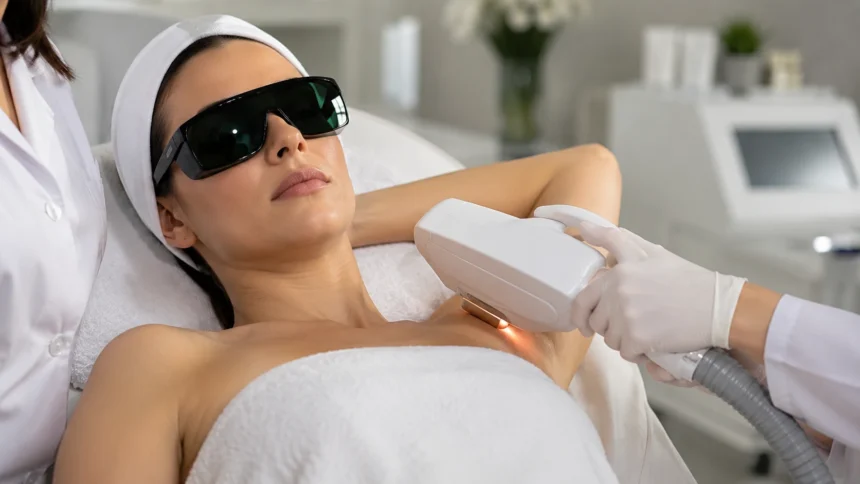
Before treatment, the skin is usually cleaned and eye protection is provided because the bright pulses can potentially injure the eyes. Depending on the IPL system, a cooling gel may be applied to improve light transmission and protect the skin surface. The handpiece is then placed against the skin and delivers a rapid pulse of light. People often describe the sensation as warmth, a brief snapping feeling, or something similar to a small elastic band hitting the skin. Discomfort depends on the treatment area, device, energy level, and individual sensitivity. Cooling built into modern devices can make sessions easier to tolerate without requiring substantial anesthesia.
A session may take roughly 15 to 60 minutes depending on how much skin is being treated. A small facial area is naturally faster than treating the face, neck, and chest or a large body area for hair reduction. Immediately afterward, the skin may look pink or red and feel warm, similar to mild sun exposure. Brown spots can become darker, which can worry first-time patients who expect them to vanish immediately. This darkening is often part of the normal response as targeted pigment moves toward the surface and gradually sheds. Visible vessels may also appear temporarily different before the body clears them over subsequent days or weeks.
Most photofacial patients require several sessions because a single treatment cannot necessarily address every pigment cluster, blood vessel, or degree of photodamage safely. Sessions are commonly spaced several weeks apart so the skin has time to recover and the practitioner can evaluate results before additional exposure. Hair-reduction treatment also requires repeated appointments because hair follicles cycle through different stages of growth. A follicle that was not actively producing an appropriate pigmented hair during one treatment may respond during a later session. Treatment schedules therefore depend on the biological target rather than a clinic simply trying to sell more visits. Stopping after one appointment may still provide some improvement, but the result is often less complete.
Photographs are often taken before treatment so results can be evaluated more objectively. Lighting, makeup, camera exposure, and natural skin fluctuations can otherwise make subtle improvement difficult to judge. Cleveland Clinic recommends pre- and post-treatment photographs as part of preparation for certain laser and light-based procedures. Good clinical photography is particularly helpful when IPL is being used for diffuse redness or multiple small sun spots rather than one easily measured lesion. Patients should still evaluate results based on natural appearance and symptoms rather than heavily edited marketing images. Treatment success means meaningful improvement at an acceptable level of risk, not perfectly airbrushed skin.
IPL Treatment Side Effects and Possible Risks
Common IPL side effects are usually temporary and relatively mild when treatment is performed correctly on an appropriate candidate. Redness, warmth, sensitivity, mild swelling, and tenderness can occur for several hours or occasionally longer. Pigmented spots frequently darken before fading, creating a temporary speckled appearance that may last several days. Some people experience mild dryness or superficial flaking as treated pigment works its way outward. These effects usually do not prevent normal daily activities, which is why IPL is often marketed as a low-downtime treatment. However, individual reactions vary, and larger treatment areas or stronger settings can produce more noticeable recovery.
Burns and blisters are more serious complications. They can occur when excessive energy is delivered, the skin contains more melanin than expected, cooling is inadequate, or the area has been recently tanned. The AAD specifically cautions that darker skin can be more prone to burns and dark marks after certain laser and light treatments. This does not mean everyone with darker skin must avoid all light-based procedures, but IPL requires careful patient selection and device expertise. Some specialized lasers may be safer alternatives depending on the concern and skin tone. Blistering, severe pain, marked swelling, or worsening redness after IPL warrants prompt communication with the treating professional.
Changes in pigmentation are among the most important cosmetic risks. Post-inflammatory hyperpigmentation causes treated areas to become darker, while hypopigmentation causes patches to become lighter than surrounding skin. Either outcome can persist for weeks or months and, rarely, may be long-lasting. The risk is greater when treatment is performed on tanned skin or when settings do not appropriately account for natural skin pigmentation. Sun exposure immediately before or after treatment can also complicate healing. This is why providers commonly require strict sun avoidance and daily broad-spectrum sunscreen. Treating unwanted pigmentation only to create a more difficult pigmentation problem is one of the main reasons inexperienced IPL use should be avoided.
Scarring and infection are uncommon but possible, particularly following a significant burn or blister. Picking at crusting, using irritating skin-care products too early, or exposing damaged skin to contamination could interfere with normal healing. People prone to abnormal scarring should mention that history during consultation. Reactivation of herpes simplex can occasionally occur when light or laser procedures are performed around areas where cold sores develop, so patients should disclose previous outbreaks. A clinician may recommend preventive antiviral medication in selected cases. The AAD advises informing the dermatologist about a history of keloids, herpes outbreaks, recent tanning, and relevant medications before light or laser treatment.
Eye injury is a preventable but potentially serious risk because IPL produces extremely bright pulses of light. Appropriate protective eyewear should be worn by the patient and operator throughout treatment. Special caution is necessary when treating areas near the eyes, and cosmetic treatment should never be performed directly over inappropriate ocular structures simply to address pigmentation. Another risk is treating a pigmented lesion that has not been medically evaluated. IPL can change its visible appearance without determining whether it is benign. Any lesion with concerning characteristics should be assessed before cosmetic treatment. Safety depends as much on correct diagnosis and professional judgment as it does on the technology itself.
Who Is a Good Candidate for IPL and Who Should Avoid It?
The traditional ideal candidate for an IPL photofacial has lighter, untanned skin with clearly defined brown or red concerns that can absorb light differently from surrounding tissue. Freckles, superficial sun spots, diffuse redness, and small blood vessels are common examples. Cleveland Clinic notes that people with fair to light-brown skin are often suitable candidates for certain laser and light-based facial treatments while darker skin can carry a higher hyperpigmentation risk. Modern technology and experienced providers can expand treatment options, but an individualized evaluation remains essential. A patient’s natural skin tone, tanning behavior, ethnicity, pigment history, and exact target all influence whether IPL or another device provides the safest choice.
People with a recent tan should usually postpone IPL. Tanned skin contains increased melanin, which can absorb treatment energy intended for a spot, vessel, or hair follicle. This increases the possibility of overheating the surrounding skin and causing burns or unwanted pigmentation changes. The AAD recommends avoiding tanning and protecting treated skin with broad-spectrum, water-resistant SPF 30 or higher before certain laser procedures. Sunless tanning products can also interfere with accurate assessment of skin color and may need to be discontinued beforehand according to the provider’s instructions. A tan should never be hidden from the practitioner simply to keep an appointment because it directly affects safety.
Certain medications and skin-care products may increase photosensitivity or irritation. Patients should provide a complete list of prescriptions, over-the-counter drugs, supplements, topical retinoids, acne treatments, and recently used cosmetic procedures. The AAD notes that medications and supplements can affect sensitivity to laser light wavelengths. A clinician may recommend temporarily changing selected topical products before treatment, but prescription medication should never be stopped solely for a cosmetic procedure without approval from the prescribing healthcare professional. Active infection, open wounds, significant dermatitis, or severe inflammation in the treatment area can also be reasons to delay IPL until the skin has recovered.
Pregnancy is commonly considered a reason to postpone elective cosmetic IPL because there is little reason to expose a pregnant person to an unnecessary cosmetic procedure when adequate safety evidence is limited. Hormonal changes during pregnancy can also alter pigmentation and make treatment results less predictable. Melasma, for example, can change considerably with hormonal status and ultraviolet exposure. Someone experiencing new pregnancy-related pigment changes may be better served by sun protection and later dermatologic reassessment. Breastfeeding recommendations vary according to treatment location and clinic policy, so professional guidance is appropriate. Postponing a purely cosmetic procedure is usually simpler than accepting avoidable uncertainty.
People with deeply pigmented skin should not assume they cannot receive any treatment for pigmentation, redness, or unwanted hair. Instead, they may need a different device, wavelength, or treatment strategy selected by someone experienced with their skin type. The AAD notes that appropriately selected lasers can be used across skin types, while also warning that darker skin has a greater tendency to develop burns or dark marks after some treatments. For hair removal, specific laser systems may provide better safety and effectiveness than broad-spectrum IPL in darker complexions. A provider who does not discuss skin tone, tanning, pigment risk, or alternative devices before treatment may not be offering the level of individualized assessment the procedure requires.
IPL Recovery, Aftercare and How Long Results Last
Immediately after IPL, mild redness and warmth are common. The skin may feel similar to a mild sunburn, and slight swelling can occur, particularly around sensitive facial areas. Cool compresses may be recommended if they are appropriate for the particular treatment. Harsh scrubs, aggressive exfoliating acids, or other irritating products are usually avoided temporarily while the skin settles. The provider should give individualized aftercare because recommendations can vary according to settings and treatment area. Makeup may be permitted relatively quickly when the skin surface is intact, but applying cosmetic products over blistered, raw, or significantly irritated skin is not appropriate.
Sun protection is one of the most important parts of IPL aftercare. Recently treated skin can be more vulnerable to ultraviolet exposure and pigment changes, while continued sun exposure also encourages development of new freckles and age spots. The AAD recommends broad-spectrum, water-resistant sunscreen with SPF 30 or higher around many laser and light procedures. Shade, hats, protective clothing, and avoiding intentional tanning provide additional protection. Sunscreen should remain part of the routine even after the skin appears completely healed because IPL does not make someone immune to new photodamage. Long-term sun protection may also help results remain visible for longer.
Pigmented lesions often look temporarily worse before they look better. Brown spots may darken during the first several days and then gradually flake away or become less visible. Scrubbing or picking at these areas can irritate the skin and should generally be avoided. Redness and small blood vessels may improve more gradually over the following weeks rather than shedding in the same way pigment does. Patients should therefore resist judging the final result only a few days after treatment. Taking standardized photographs several weeks apart provides a better comparison than checking the mirror repeatedly under different lighting conditions.
IPL results are not necessarily permanent. Successfully treated pigment or vessels may remain less visible, but the biological processes that created them can continue. Additional ultraviolet exposure can produce new sun spots, rosacea can generate new visible vessels, and natural aging continues after cosmetic treatment. Some people undergo maintenance IPL periodically after completing an initial series. The frequency depends on treatment goals, sun exposure, rosacea activity, and individual response. Hair reduction can also require occasional maintenance because hormonal changes or recovery of partially damaged follicles may produce renewed growth. Describing IPL as a permanent cure for pigmentation, redness, or unwanted hair would therefore be misleading.
Contact the treating provider if recovery seems significantly more severe than expected. Intense or worsening pain, large blisters, extensive crusting, signs of infection, marked swelling, or unexpectedly dark or pale patches deserve professional evaluation. Cleveland Clinic advises contacting a healthcare provider when burning following light-based treatment persists or when concerning systemic symptoms occur, although different forms of phototherapy have different recovery patterns. Early attention to a burn or other complication may improve management and reduce the risk of lasting discoloration or scarring. Cosmetic treatment should never mean a patient must simply tolerate a concerning reaction without medical guidance.
IPL vs. Laser Treatment: Which Is Better?
IPL and laser treatments are often discussed as though they are interchangeable, but the technologies are different. IPL uses a broad range of wavelengths, while a laser typically produces a more specific wavelength or narrow wavelength range. This can make lasers highly targeted for a particular pigment, vessel, hair follicle, scar, or resurfacing depth. IPL’s broad output makes it versatile for treating several superficial color concerns during the same session. Neither technology is universally better; the best choice depends on the treatment target, natural skin color, depth of the problem, available device, and provider’s expertise. A consultation should determine which technology matches the concern rather than beginning with a preference based on marketing.
For diffuse sun damage containing both freckles and redness, IPL can be especially practical because it can address multiple chromophores across a broad area. A patient with scattered facial discoloration may therefore prefer a photofacial instead of having each spot treated individually. For one specific deep vascular lesion or resistant pigment problem, a dedicated laser wavelength may offer more precision. The AAD notes that laser and light treatments are used for redness, vessels, sun damage, scars, age spots, and other concerns, with the exact technology selected according to the condition. Experienced dermatologists frequently use several devices because no single machine is ideal for every patient.
For darker skin tones, laser selection can become particularly important. Broad-spectrum IPL may interact with epidermal melanin more strongly, increasing the challenge of safely delivering enough energy to the intended target. Some specialized lasers can target deeper structures while better protecting melanin-rich skin when used correctly. The AAD specifically notes that laser hair removal can be performed across skin colors with appropriate technology and expertise while also emphasizing the importance of choosing a dermatologist experienced with the patient’s skin coloring. A person with darker skin should therefore ask specifically how many similar patients the provider has treated and why the chosen device is considered appropriate.
For deep wrinkles, significant texture problems, and pronounced acne scarring, IPL is often less powerful than resurfacing technologies. Fractional or ablative lasers can create controlled injury at specific depths, stimulating substantial remodeling that ordinary IPL is not designed to reproduce. This stronger effect usually comes with greater discomfort and downtime, so treatment choice becomes a balance between improvement and recovery. Cleveland Clinic explains that laser skin resurfacing can target scars, uneven pigmentation, sun-damaged skin, and wrinkles by removing or heating specific skin layers. Someone primarily bothered by deep acne scars may therefore benefit more from discussing resurfacing, microneedling, or other scar-specific strategies rather than repeatedly purchasing IPL photofacials.
Cost does not necessarily determine which technology provides better value. A less expensive IPL session may become costly if many treatments are required for a problem that a specialized laser could treat more efficiently. Conversely, paying for an aggressive laser may be unnecessary when the goal is modest improvement in widespread superficial sun spots and redness. The best financial comparison considers total treatment course, maintenance, downtime, complication risk, and expected degree of improvement. Ask the provider why IPL is being recommended, what alternative technology could be used, and what outcome each option realistically offers. A trustworthy professional should be willing to explain when IPL is not the best tool rather than recommending it for every cosmetic concern.
The Bottom Line on IPL Treatment
IPL treatment can be an effective option for improving sun damage, age spots, freckles, facial redness, visible blood vessels, and unwanted hair when the procedure is matched appropriately to the patient’s skin. Its broad-spectrum light can target melanin and hemoglobin without intentionally removing the whole skin surface, resulting in relatively limited downtime for many people. The ability to address both brown and red discoloration makes IPL particularly appealing for photodamaged facial, neck, chest, and hand skin. The AAD recognizes intense pulsed light as an option for conditions including rosacea-related redness and sun-related changes. Still, improvement rather than perfect skin should be the goal.
Most people need more than one treatment. A typical photofacial plan may contain approximately three to five sessions, while IPL hair reduction usually requires a treatment series because hair follicles grow in cycles. Results develop gradually as pigmented material sheds, targeted blood vessels fade, or treated hairs stop growing. Maintenance may eventually be needed because ultraviolet damage, rosacea, aging, hormones, and hair growth continue throughout life. This means the total commitment should be considered before beginning treatment. Someone choosing IPL should understand not only what the first session costs but also the likely number of appointments required to reach and maintain the desired result.
Current U.S. pricing in 2026 generally places IPL photofacial cost around $200 to $600 per session, although major metropolitan practices and larger treatment areas can cost substantially more. Complete treatment plans often reach approximately $900 to $3,000 when several sessions are required. Cosmetic IPL is typically an out-of-pocket expense rather than an insured medical benefit. Location, provider credentials, equipment, body area, and package pricing all influence the final figure. Price matters, but choosing the lowest-cost provider solely to save money can be risky when incorrect light settings may cause burns, scarring, or long-lasting pigmentation changes.
Side effects are usually temporary but deserve serious consideration. Redness, mild swelling, warmth, sensitivity, and temporary darkening of spots are common, while burns, blisters, pigment changes, infection, and scarring are less common but more significant risks. Recently tanned and darker skin can require particularly careful assessment because additional melanin may absorb treatment energy. The AAD emphasizes the importance of choosing experienced dermatologic care for laser and light procedures, especially for people with darker complexions. Avoiding tanning, reviewing medications, using sunscreen, and following appropriate aftercare can help reduce preventable complications.
Ultimately, IPL is best viewed as a versatile cosmetic technology rather than a universal solution for every skin concern. The procedure can offer meaningful improvements when the problem, device, skin tone, and practitioner are well matched. It is less appropriate for deep wrinkles, major skin laxity, some forms of melasma, severe acne scarring, suspicious pigmented lesions, and situations where another laser provides greater precision or safety. A qualified dermatologist or experienced medical professional can determine whether IPL fits your particular goals and explain realistic alternatives. Good results come from accurate diagnosis, thoughtful device selection, conservative treatment settings, and consistent sun protection rather than from simply choosing the strongest or cheapest IPL package available.
Frequently Asked Questions
What does IPL treatment do?
IPL uses broad-spectrum pulses of light to target pigment, superficial blood vessels, or hair follicles. It is commonly used for sun spots, freckles, rosacea-related redness, broken capillaries, uneven skin tone, and unwanted hair.
How much does IPL treatment cost?
In the United States, IPL photofacials commonly cost about $200 to $600 per session in 2026, although location and treatment area can raise the price. A three-to-five-session treatment series may cost roughly $900 to $3,000.
How many IPL sessions do you need?
Many cosmetic concerns require around three to five sessions, although some spots improve sooner and others need additional treatment. Hair reduction also requires multiple sessions because follicles must be treated during appropriate phases of the hair-growth cycle.
What are the most common IPL side effects?
Temporary redness, warmth, swelling, sensitivity, and darkening of treated brown spots are common. Less common but more serious complications include burns, blisters, hyperpigmentation, hypopigmentation, infection, and scarring.
Is IPL safe for darker skin?
IPL can carry greater burn and pigmentation risk in darker skin because melanin in surrounding skin may absorb the light energy. Treatment should be performed only after careful evaluation by a provider experienced with darker skin tones, and another laser or treatment may sometimes be safer.