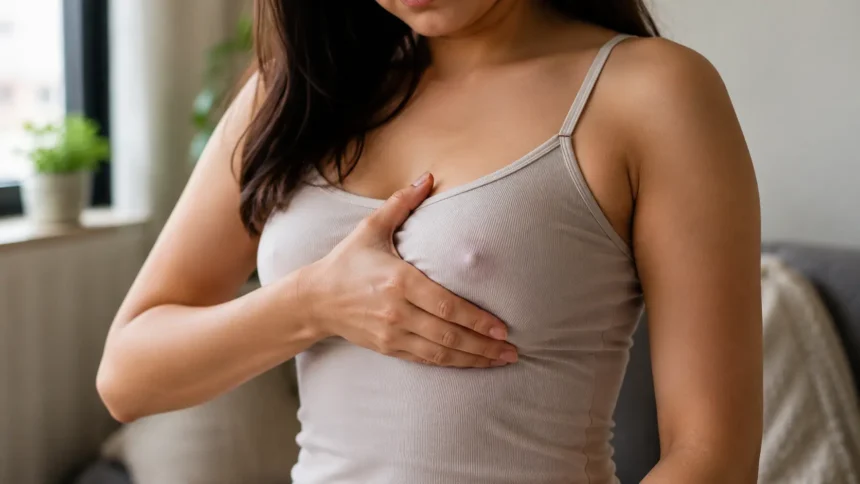
Hard Nipples: Common Causes & When to Be Concerned
Noticing that your nipples suddenly feel hard or stand out more than usual can be surprising, particularly when there is no obvious reason. In most situations, hard nipples are simply the result of a normal physical response to temperature, touch, hormones, or stimulation. The nipple contains specialized tissue that can contract and become temporarily erect when the body responds to different triggers.
Cold weather is perhaps the most familiar example, but nipples can also become firm during exercise, sexual arousal, breastfeeding, or everyday friction from clothing. Hormonal changes associated with the menstrual cycle and pregnancy can make the breasts and nipples more sensitive as well. Because these changes are usually temporary and affect both sides similarly, they rarely indicate something serious on their own.
What matters more is whether nipple firmness appears with additional changes. Persistent pain, a new lump, unusual nipple discharge, newly inverted nipples, crusting, bleeding, or an ongoing rash should not simply be dismissed as normal sensitivity. Some benign conditions can produce these symptoms, but professional evaluation is worthwhile because certain breast diseases can create similar changes.
This guide explains the most common causes of hard nipples, why they become erect, how hormones and pregnancy influence them, and when a change deserves medical attention. The goal is not to make a normal body response sound alarming, but to help you distinguish ordinary temporary firmness from a persistent nipple change that should be checked.
What Does It Mean When Your Nipples Are Hard?
A hard nipple generally means that the nipple has temporarily become erect or more prominent. Nipples contain smooth muscle fibers along with a dense network of sensory nerves. When certain stimuli activate these tissues, smooth muscle contraction can make the nipple tighten, protrude, and feel firmer than it did moments earlier.
This reaction is similar in some ways to goosebumps, although the nipple is a specialized structure with its own sensory and physiological functions. Exposure to cold, touching the area, sexual stimulation, and breastfeeding can all trigger nipple erection. The response may happen quickly and disappear once the original stimulus is gone.
Normal nipples also vary considerably between people. Some naturally project outward, while others are flatter or point inward, and appearance can change temporarily during stimulation. The areola—the darker area around the nipple—also differs widely in size, shape, texture, and pigmentation without necessarily indicating a health problem.
For that reason, nipple firmness itself is usually less important than a new change from your normal pattern. If both nipples have always become hard in cold conditions and then soften again, that is very different from one nipple suddenly becoming persistently abnormal, painful, crusted, inverted, or associated with a breast lump.
1. Cold Temperatures Are a Common Cause of Hard Nipples
Cold is one of the simplest explanations for suddenly erect nipples. When exposed to cooler air, water, or clothing, the body’s nervous system can trigger contraction of the smooth muscle within the nipple. This creates the familiar firm, raised appearance that may occur even when the rest of your body does not feel particularly cold.
You might notice the response after stepping outside during winter, leaving a warm shower, entering an air-conditioned room, or swimming in cold water. It can also happen when cool fabric suddenly touches the skin. Both nipples commonly respond at approximately the same time, although natural differences between breasts can make one appear slightly more prominent.
This type of nipple hardness is temporary. Once your skin warms and the triggering stimulus disappears, the nipple generally returns toward its usual appearance. There should not be persistent discharge, worsening swelling, an ongoing skin lesion, or a new underlying breast lump simply because you were exposed to cold.
If your nipples remain unusually firm long after the temperature has changed, another explanation may be involved. Even then, persistent firmness alone does not diagnose a disease. Look at the complete picture, including pain, skin changes, discharge, breast tenderness, medication use, hormonal changes, and whether the change affects one or both sides.
2. Touch and Sexual Arousal Can Make Nipples Erect
The nipples contain many sensory nerve endings, so physical contact can trigger an erection response. This may occur during sexual activity, but sexual intent is not required. A towel, clothing, accidental touch, massage, or other mechanical stimulation may sometimes be enough to make the nipples temporarily hard.
Sexual arousal can strengthen this response because stimulation activates neurological and vascular changes throughout the body. Nipple erection is therefore a normal part of sexual physiology for many people, although individuals differ considerably in how strongly or consistently their nipples respond.
Not experiencing hard nipples during sexual stimulation does not necessarily indicate a problem either. Bodies respond differently, and nipple appearance can depend on temperature, anatomy, hormones, sensitivity, previous surgery, neurological factors, and the type of stimulation involved. There is no requirement for nipples to become erect during every episode of arousal.
Temporary firmness caused by stimulation typically fades afterward. It becomes more useful to seek medical advice when the nipple develops persistent unexplained pain, bleeding, discharge, a new lump, or a lasting change in shape or skin texture rather than when erection occurs predictably with touch.
3. Hormonal Changes Can Affect Nipple Firmness and Sensitivity
Hormones can change how breast and nipple tissue feels throughout life. Puberty, menstrual cycles, pregnancy, breastfeeding, and menopause can all influence breast tenderness and nipple sensitivity. Some people notice that their nipples become firmer, more sensitive, swollen, or uncomfortable during particular phases of their menstrual cycle.
Changes in estrogen and progesterone can influence breast tissue before menstruation, which may create temporary soreness or fullness. Nipple sensitivity may occur at the same time. Symptoms generally improve as hormone levels shift again, although the exact timing and intensity differ significantly from one person to another.
Hormonal contraception and other medicines that affect hormones may also change breast tenderness or sensitivity in some people. That does not mean nipple firmness itself can identify a particular hormone imbalance. Many breast sensations overlap between normal hormonal variation and other conditions, making additional symptoms and timing important.
Tracking when symptoms appear can sometimes reveal a pattern. If nipple firmness or tenderness reliably occurs around the same stage of your menstrual cycle and then resolves, hormones may be contributing. Persistent one-sided changes or symptoms that become progressively worse deserve a different level of attention.
4. Pregnancy Can Change How Your Nipples Look and Feel
Pregnancy causes extensive changes throughout the breasts as the body prepares for lactation. Rising hormones stimulate breast tissue, and many people notice increased tenderness or sensitivity early in pregnancy. The nipples and areolas may become larger or darker as pregnancy progresses, while small Montgomery glands on the areola can become more visible.
These changes can make the nipples seem firmer or more prominent than they did before pregnancy. Some people become much more aware of clothing brushing across their nipples because the area is unusually sensitive. Others may notice surprisingly little nipple discomfort despite other breast changes.
Hard nipples alone are not a reliable pregnancy test. The same change can occur because of cold, stimulation, menstrual hormones, friction, or normal anatomical variation. If pregnancy is possible, an appropriate pregnancy test provides much more useful information than attempting to interpret breast or nipple symptoms alone.
Breast changes during pregnancy are usually normal, but unusual symptoms can still occur. Significant redness, increasing pain, fever, a new suspicious lump, or bloody discharge should be discussed with a healthcare professional rather than automatically attributed to pregnancy.
5. Breastfeeding and Pumping Can Make Nipples Feel Firm
Breastfeeding frequently stimulates the nipples because sucking triggers a coordinated hormonal and neurological response involved in milk release. Touch and breastfeeding are both recognized triggers of nipple erection, so nipples may naturally become harder during feeding or pumping sessions.
Frequent feeding can also make the skin more sensitive, especially during the early weeks while both parent and baby are learning positioning and latch. Pumping equipment that does not fit correctly may create additional friction or pressure. Tenderness therefore does not always mean infection, although persistent pain should not simply be accepted as inevitable.
Cracks, bleeding, significant swelling, worsening pain, or symptoms of infection deserve attention. Breastfeeding difficulties can often be improved by reviewing positioning, latch, pumping technique, or flange size with an appropriate healthcare or lactation professional rather than continuing through severe discomfort.
Breastfeeding-related nipple problems should also be considered alongside breast symptoms. A painful, hot, swollen area of the breast accompanied by fever or feeling unwell may require medical evaluation. Firm nipples by themselves, however, are commonly part of the normal stimulation involved in feeding.
6. Exercise and Clothing Friction Can Irritate the Nipples
Exercise can expose nipples to repeated friction, particularly during running and other activities involving constant movement beneath clothing. A shirt or sports bra repeatedly rubbing the same area can make the nipple feel sore, sensitive, irritated, or unusually noticeable. Friction is a recognized cause of nipple discomfort.
Sweat can compound the irritation because damp fabric may rub differently against the skin. Long-distance runners sometimes experience significant chafing, particularly during warm weather or prolonged training sessions. Depending on severity, irritated nipple skin can become red, raw, cracked, or occasionally bleed.
Properly fitting exercise clothing may help reduce movement and rubbing. Soft, moisture-managing fabrics and protective coverings can also be useful for people who repeatedly experience nipple chafing during longer workouts. The best solution depends on whether irritation comes from garment fit, fabric texture, moisture, or repetitive movement.
If a supposed friction rash continues despite removing the trigger, consider another cause. Persistent scaling, crusting, one-sided nipple changes, or a rash that repeatedly returns deserves medical assessment rather than indefinite treatment as simple exercise irritation.
7. Dry Skin, Eczema and Contact Irritation Can Affect Nipples
The nipple and areola are covered by skin, which means they can develop many of the same dermatological problems as skin elsewhere on the body. Eczema can cause dryness, redness or discoloration, inflammation, itching, blistering, or weeping around the breast and nipple.
Soaps, detergents, fragrances, body lotions, adhesives, fabrics, or other products contacting the chest may irritate sensitive skin. When the area becomes inflamed, the nipple can feel unusually firm, tender, itchy, or painful. Scratching then increases irritation and can damage the protective skin barrier further.
Gentle skin care may help uncomplicated irritation, particularly when the trigger can be identified and avoided. Fragrance-free products and comfortable clothing are often easier on sensitive skin. Persistent or significant rashes should be properly diagnosed because eczema, fungal problems, bacterial infection, and other conditions may require different treatments.
A particularly important distinction is a persistent eczema-like change affecting one nipple. Paget disease of the breast is rare, but it can produce crusting, scaling, redness or discoloration, itching, burning, discharge, and changes in nipple shape. A lasting one-sided nipple rash therefore deserves medical evaluation rather than repeated self-treatment.
Are Hard Nipples a Sign of Pregnancy?
Nipple and breast changes can certainly happen during pregnancy. Hormonal changes cause breast tissue to prepare for milk production, while nipples may become more sensitive and the areolas may become larger and darker. Montgomery glands around the nipple can also become increasingly visible.
However, nipple hardness is highly nonspecific. Cold air, touch, exercise, sexual arousal, menstrual-cycle changes, and clothing friction can all produce similar sensations. Even when someone is pregnant, nipple firmness may come and go rather than remain constant throughout pregnancy.
If your period is late or you have another reason to suspect pregnancy, use a pregnancy test at an appropriate time rather than relying on hard nipples as evidence. Early pregnancy symptoms overlap with premenstrual changes and many everyday physical sensations, which makes symptoms alone unreliable.
Once pregnancy has been confirmed, mention unusual breast changes during routine prenatal care. A new lump, persistent focal pain, bloody nipple discharge, significant inflammation, or another concerning symptom can still require assessment during pregnancy and should not automatically be explained by hormones.
Are Hard Nipples Normal During a Period?
For some people, breast and nipple sensitivity changes noticeably during the menstrual cycle. Hormonal fluctuations can make the breasts feel fuller, tender, swollen, or uncomfortable before menstruation. The nipples may also feel more sensitive or appear firmer at certain times.
These symptoms are more reassuring when they follow a familiar pattern and settle as the menstrual cycle progresses. Keeping a brief symptom record across two or three cycles can help determine whether firmness, tenderness, or sensitivity repeatedly appears at approximately the same time.
Not every breast symptom occurring before a period is automatically hormonal, however. A persistent lump, one-sided skin change, spontaneous bloody discharge, or new nipple inversion should not be ignored simply because menstruation is approaching. Changes that do not behave like your usual cycle-related symptoms deserve assessment.
For routine cyclical discomfort, a supportive bra and avoiding known sources of irritation may improve comfort. If breast or nipple pain significantly interferes with normal life, continues throughout the cycle, or repeatedly worsens, discussing it with a healthcare professional can help identify the cause.
Can Medications Cause Nipple or Breast Changes?
Some medicines can affect hormones or breast tissue and may lead to breast tenderness, swelling, or nipple-related changes. Medications influencing estrogen, progesterone, prolactin, or other hormonal pathways can be particularly relevant. The specific effects depend on the medicine, dose, individual biology, and underlying reason it is being taken.
Elevated prolactin, for example, can influence breast tissue and milk production. Several medical conditions and medications can affect prolactin levels, although hard nipples alone would not be enough to identify elevated prolactin. Symptoms such as unexpected milk-like discharge may provide more reason for investigation.
Never stop a prescription medicine solely because you notice nipple firmness. Suddenly discontinuing certain medications can create greater risks than the symptom itself. Instead, review when the change began and whether it appeared after starting, stopping, or changing the dose of a medication.
A doctor or pharmacist can determine whether a medication could reasonably contribute to your symptoms. They can also help separate medication effects from pregnancy, hormonal conditions, irritation, breast disease, or other causes without relying on guesswork.
Hard Nipples With Pain: What Could It Mean?
Tender or painful nipples have many possible causes, and most are not cancer. Hormonal changes, friction, skin irritation, breastfeeding, pumping, infection, and trauma are all recognized causes of nipple soreness.
The character and timing of pain provide useful clues. Brief sensitivity after running in rough clothing suggests something different from steadily increasing pain accompanied by redness, warmth, swelling, and fever. Similarly, predictable tenderness before menstruation differs from a new persistent symptom affecting only one breast.
Look carefully at the skin as well. Dryness and itching may suggest dermatitis, while cracks can develop from friction or breastfeeding. Significant warmth, spreading redness or discoloration, pus, or systemic illness can indicate an infection and deserves appropriate medical assessment.
Pain by itself is usually less specific than a combination of persistent symptoms. If discomfort remains unexplained, becomes severe, occurs with a lump, or appears alongside discharge or significant nipple changes, arrange an examination rather than repeatedly trying home remedies.
Hard Nipples With Discharge: When Should You Pay Attention?
Nipple discharge can occur for many reasons. Lactation, hormonal changes, and stimulation can sometimes produce discharge, while infection, benign breast growths, medication effects, and other conditions can also be responsible. What the discharge looks like and whether it occurs spontaneously can affect how it is evaluated.
Discharge that appears only when both nipples are repeatedly squeezed can represent a different situation from fluid that appears spontaneously from one breast. Continuing to squeeze the nipple to “check” it can actually keep some forms of discharge going, so repeated self-testing may make the situation harder to interpret.
Clear or bloody discharge from one nipple deserves medical attention, particularly when it occurs spontaneously or with a lump. Benign intraductal papillomas can cause clear or bloody discharge, but breast cancer and other conditions can sometimes produce nipple discharge as well.
Paget disease can also cause bloody or yellow nipple fluid along with crusting, scaling, burning, itching, flattening, or inversion of the nipple. These findings do not mean someone definitely has cancer, but they are enough to justify proper examination rather than assuming nipple hardness is the entire problem.
When Are Hard Nipples a Sign You Should See a Doctor?
Hard nipples that develop with cold or stimulation and then return to normal are usually very different from persistent structural changes. The more important warning signs are generally new changes in the breast or nipple that remain present, continue progressing, or occur on only one side.
Arrange medical assessment if you develop a new breast or underarm lump, persistent nipple or breast skin changes, spontaneous discharge, bleeding, or a nipple that newly turns inward. A nipple that has always been naturally flat or inverted is different from one that suddenly retracts after previously pointing outward.
A persistent scaly, crusted, raw, itchy, or burning nipple also deserves attention, particularly when only one side is affected. These symptoms frequently have noncancerous explanations, but Paget disease of the breast can resemble eczema and commonly begins around the nipple.
Seek care promptly for significant breast redness, warmth, swelling, fever, rapidly worsening pain, or feeling generally unwell because infection may need treatment. The purpose of evaluation is not to assume the worst; it is to determine the cause when a symptom no longer fits the pattern of ordinary temporary nipple erection.
Can Hard Nipples Be a Sign of Breast Cancer?
Hard or erect nipples alone are not a typical way to identify breast cancer. Normal nipple tissue naturally becomes erect in response to cold, stimulation, and other triggers. If firmness is temporary and there are no other unusual changes, there is usually a much simpler explanation.
Breast cancer concerns become more relevant when there are additional persistent changes. Recognized warning signs can include a new breast or underarm lump, changes in breast shape or skin, abnormal nipple discharge, and a nipple that newly retracts or changes appearance. Many noncancerous conditions can cause similar symptoms, so evaluation is needed to determine the cause.
Paget disease deserves specific awareness because it begins around the nipple and can initially resemble dermatitis. It may cause red or discolored, crusty, scaly skin, itching, burning, fluid or blood from the nipple, and flattening or inversion. It usually affects one breast.
The practical message is not to panic whenever your nipples become firm. Instead, learn what is normal for your body and pay attention to persistent changes. Early assessment of an unusual breast or nipple change provides a clearer answer than trying to determine from appearance alone whether something is benign or serious.
How Can You Reduce Nipple Irritation and Discomfort?
First, identify whether there is an obvious physical trigger. If your nipples become uncomfortable after running, changing clothing or reducing friction may help. If irritation appears after introducing a new soap, fragrance, lotion, detergent, or adhesive, temporarily removing the suspected trigger can provide useful information.
Choose comfortable clothing that does not repeatedly rub sensitive skin. During exercise, properly fitting supportive garments and moisture-managing fabrics may reduce chafing. Some athletes also use protective nipple coverings when repetitive rubbing is predictable during long runs or similar endurance activities.
For dry or sensitive skin, gentle fragrance-free skin care is generally preferable to repeatedly applying harsh products. Avoid aggressive scrubbing or scratching. If the area is cracked, weeping, infected-looking, or persistently inflamed, professional evaluation can help determine whether you are dealing with eczema, contact dermatitis, infection, or another skin condition.
If symptoms are related to breastfeeding or pumping, correcting latch, positioning, or pump fit may be more useful than simply trying to numb the discomfort. Persistent nipple pain is something you can ask for help with rather than assuming it is an unavoidable part of feeding.
How to Tell Normal Hard Nipples From a Concerning Change
Start with duration. Normal nipple erection caused by temperature or stimulation usually comes and goes. A nipple that stays noticeably different for days or weeks without an obvious trigger deserves more consideration, particularly if the change is new for you.
Next consider symmetry. Normal responses to cold commonly affect both nipples, although they do not have to look perfectly identical. A persistent new change affecting only one nipple is generally more useful to investigate than temporary symmetrical firmness.
Then look for additional symptoms. A lump, spontaneous bloody discharge, new inversion, persistent scaling, crusting, bleeding, significant redness or discoloration, swelling, or progressive pain carries more medical significance than erection alone.
Finally, compare the change with your personal baseline rather than photographs online. Normal breasts, nipples, and areolas come in many shapes, colors, and sizes. Knowing what is usual for you makes it easier to recognize when something genuinely new has developed.
The Bottom Line on Hard Nipples
In most cases, hard nipples are a normal body response. Cold temperature, touch, sexual stimulation, hormonal changes, pregnancy, breastfeeding, exercise, and friction can all make nipples feel firmer or become more prominent. Temporary firmness that disappears when the trigger passes is usually not concerning.
Hormones can also explain why nipple sensitivity changes from week to week or during different stages of life. Menstruation, pregnancy, breastfeeding, and menopause can influence how breast tissue feels. Pregnancy in particular can make nipples and areolas larger, darker, and more noticeable.
Pay closer attention when nipple firmness is accompanied by something new and persistent. A lump, spontaneous or bloody discharge, new nipple inversion, unexplained one-sided changes, significant pain, or a lasting scaly or crusted nipple should be evaluated rather than simply monitored indefinitely.
Your nipples do not need to look or behave exactly like anyone else’s to be healthy. What matters is understanding your normal appearance and recognizing meaningful changes. If something looks or feels substantially different and you cannot explain why, a healthcare professional can provide a much more reliable answer than comparing symptoms with photographs online.
Frequently Asked Questions
Why are my nipples hard for no reason?
Cold air, subtle friction, hormonal changes, or stimulation can make nipples erect even when you do not notice an obvious trigger. Temporary firmness without other symptoms is commonly normal.
Are hard nipples an early sign of pregnancy?
They can occur alongside pregnancy-related breast sensitivity, but hard nipples are not a reliable pregnancy indicator. If pregnancy is possible, use an appropriate pregnancy test rather than relying on nipple changes.
Why are my nipples hard and sore?
Hormonal fluctuations, friction, exercise, breastfeeding, pumping, skin irritation, or infection can cause soreness. Persistent or worsening pain, especially with another breast change, should be evaluated.
Should I worry if only one nipple stays hard?
Not necessarily, but a persistent new one-sided change deserves more attention. Seek medical advice if it occurs with inversion, discharge, a lump, bleeding, crusting, scaling, or significant pain.
Can breast cancer cause nipple changes?
Yes, breast cancer can sometimes cause nipple inversion, discharge, skin changes, or other abnormalities, although these symptoms often have benign causes. Any persistent new nipple or breast change should be medically assessed.