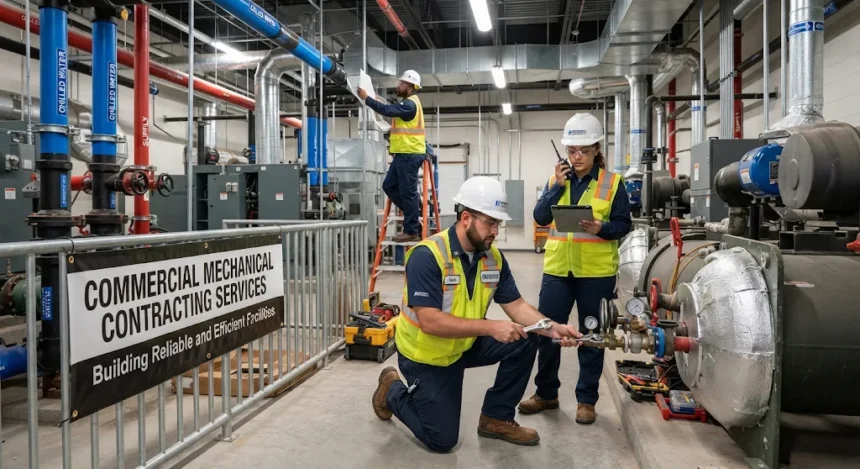
Commercial mechanical contracting plays a vital role in keeping modern businesses, industrial facilities, and commercial properties operating efficiently. From designing complex HVAC systems to managing plumbing infrastructure and large-scale construction projects, professional contractors ensure that buildings meet demanding performance and safety requirements. Companies such as Binsky Mechanical demonstrate how experienced engineering teams, virtual construction technologies, and skilled workmanship can bring complex mechanical projects to life. Through commercial HVAC, plumbing, emergency services, and comprehensive construction solutions, they help businesses develop dependable building systems while maintaining project timelines and budgets.
Understanding Commercial Mechanical Contracting
Commercial mechanical contracting involves the planning, installation, maintenance, and repair of mechanical systems within commercial and industrial buildings. These systems include heating, ventilation, air conditioning, plumbing, piping, and other essential infrastructure that supports daily operations.
Unlike residential projects, commercial installations often involve larger equipment, more complicated building layouts, and specialized engineering requirements. Hospitals, office buildings, manufacturing plants, educational institutions, and retail facilities all depend on properly designed mechanical systems.
Professional mechanical contractors coordinate different aspects of a project to ensure that every system operates together efficiently. Their involvement begins during the planning and design stages and continues through installation, testing, commissioning, and ongoing maintenance.
Commercial HVAC Systems and Building Performance
Heating, ventilation, and air conditioning systems are among the most important components of commercial properties. They regulate indoor temperatures, manage humidity, improve air circulation, and contribute to a comfortable working environment.
Commercial HVAC installations require careful equipment selection, system sizing, ductwork planning, and airflow calculations. An improperly designed system can increase energy consumption, create uneven temperatures, and lead to frequent equipment failures.
Experienced mechanical contractors help businesses select and install appropriate HVAC equipment based on building size, occupancy, operational requirements, and energy efficiency goals. They also provide preventive maintenance, equipment upgrades, emergency repairs, and system replacements.
Regular servicing is particularly important for facilities that operate around the clock. Routine inspections can identify developing problems before they result in expensive breakdowns or interruptions to business operations.
The Role of Virtual Construction in Modern Projects
Technology has significantly changed how commercial mechanical projects are designed and delivered. One important development is virtual construction, which allows engineering and construction teams to develop detailed digital representations of building systems before physical installation begins.
Using Building Information Modeling (BIM), contractors can coordinate mechanical, electrical, plumbing, and structural components within a shared digital environment. This approach makes it easier to identify potential conflicts, review installation requirements, and improve communication between different project teams.
Virtual construction provides several important advantages:
- Improved coordination: Engineering teams can identify conflicts between pipes, ducts, structural elements, and electrical systems before construction progresses.
- Greater accuracy: Detailed digital models help contractors plan equipment placement, measurements, and installation routes.
- Reduced project delays: Identifying design problems early can minimize unexpected changes during construction.
- Better cost management: More accurate planning helps reduce material waste, rework, and unnecessary labor expenses.
- Efficient collaboration: Architects, engineers, contractors, and facility managers can work from coordinated project information.
When applied effectively, virtual construction supports more predictable project delivery and helps mechanical contractors maintain quality standards while working within established budgets.
Commercial Plumbing and Industrial Plumbing Solutions
Plumbing infrastructure is another essential part of commercial mechanical contracting. Businesses depend on reliable water distribution, drainage, wastewater management, and specialized piping systems to maintain safe and productive facilities.
Commercial plumbing projects can involve installing water supply networks, drainage systems, restrooms, water heaters, pumps, and specialized equipment. Contractors must consider building codes, water pressure requirements, system capacity, and long-term maintenance needs.
For manufacturing plants and industrial facilities, industrial plumbing often involves more demanding requirements. These environments may require specialized piping networks, process water systems, industrial drainage, high-capacity pumps, and equipment connections designed to support continuous operations.
Professional contractors assess the specific requirements of each facility before recommending suitable materials, equipment, and installation methods. Proper planning helps reduce leakage risks, prevent operational disruptions, and improve the overall reliability of plumbing infrastructure.
Emergency Mechanical Services and Preventive Maintenance
Unexpected mechanical failures can create serious problems for commercial property owners. HVAC breakdowns, damaged water lines, blocked drainage systems, and equipment failures can interrupt operations and potentially damage buildings or valuable assets.
Emergency mechanical services provide businesses with access to experienced technicians who can diagnose and address urgent problems. Quick response times are particularly important for hospitals, manufacturing facilities, commercial kitchens, and other environments where mechanical systems support essential activities.
However, emergency repairs should not replace regular maintenance. Preventive maintenance programs help identify worn components, inspect system performance, clean equipment, and address developing issues before they become major failures.
A well-planned maintenance strategy can extend equipment lifespan, improve energy efficiency, and reduce unexpected repair expenses.
Large-Scale Mechanical Construction Projects
Large commercial construction projects require extensive coordination between multiple contractors, engineers, architects, suppliers, and construction managers. Mechanical systems must be integrated into the overall building design without interfering with structural components or other essential infrastructure.
Mechanical contractors are responsible for managing important activities such as:
- Reviewing engineering drawings and project specifications.
- Designing and coordinating HVAC and plumbing installations.
- Planning equipment procurement and material requirements.
- Managing installation teams and construction schedules.
- Conducting inspections, testing, and system commissioning.
- Ensuring compliance with relevant safety and building standards.
Successful project management requires technical knowledge as well as effective communication and scheduling. Contractors must anticipate potential challenges, coordinate resources, and maintain consistent quality throughout the construction process.
Experienced companies such as Binsky Mechanical illustrate the importance of combining engineering expertise, advanced construction technologies, and professional project management to deliver complex commercial mechanical solutions.
Improving Energy Efficiency and Long-Term Reliability
Energy consumption is a significant operating expense for many commercial facilities. Heating, cooling, ventilation, and water systems can account for a substantial portion of a building’s overall energy use.
Mechanical contractors help businesses improve efficiency through modern equipment, automated controls, optimized system designs, and regular maintenance.
For example, high-efficiency HVAC equipment can reduce unnecessary energy consumption, while smart building controls allow facility managers to adjust temperatures and operating schedules according to occupancy and demand.
Other improvements may include upgrading outdated pumps, repairing inefficient piping networks, improving insulation, and installing advanced monitoring systems.
These investments can reduce operating expenses while supporting more sustainable building operations.
Choosing the Right Commercial Mechanical Contractor
Selecting an experienced mechanical contractor is an important decision for any business undertaking construction, renovation, or facility improvement work.
Property owners and project managers should evaluate several factors before choosing a service provider:
- Technical experience: Look for contractors with a proven background in commercial HVAC, plumbing, and mechanical construction.
- Engineering capabilities: Strong design and planning expertise can help prevent installation problems and costly modifications.
- Modern technology: Experience with BIM, virtual construction, and advanced project coordination tools can improve project accuracy.
- Emergency support: Reliable service availability helps businesses respond to unexpected equipment failures.
- Project management: Contractors should demonstrate the ability to manage schedules, resources, and budgets effectively.
- Workmanship and safety: Professional installation practices and compliance with applicable standards are essential for long-term system reliability.
A dependable contractor should also communicate clearly throughout the project, provide realistic timelines, and maintain accountability for the quality of completed work.
Conclusion
Commercial mechanical contracting is essential to the performance, safety, and efficiency of modern buildings. From commercial HVAC installations and industrial plumbing to emergency repairs and large-scale construction, experienced contractors provide the technical expertise required to keep facilities operating reliably.
Technologies such as virtual construction are further improving project coordination, reducing installation conflicts, and supporting more accurate planning. By combining experienced engineering, high-quality workmanship, advanced technologies, and effective project management, companies such as Binsky Mechanical help businesses achieve dependable building systems while keeping projects on time and within budget.
Investing in professional mechanical contracting services is ultimately an investment in operational continuity, long-term efficiency, and the overall performance of commercial facilities.