Useful Travel Gadgets That Make Every Trip Easier
Travelling becomes much easier when you pack tools that solve real problems instead of filling your luggage with unnecessary accessories. The most useful travel gadgets help you charge devices, organise belongings, track luggage, reduce noise or avoid unexpected fees. A carefully selected gadget can save time and frustration throughout your journey.
Modern travellers depend heavily on phones for boarding passes, hotel bookings, maps, translations and payments. This makes reliable charging equipment and device protection essential. Other smart travel accessories can improve sleep, keep valuables organised or help you deal with unfamiliar electrical outlets when visiting another country.
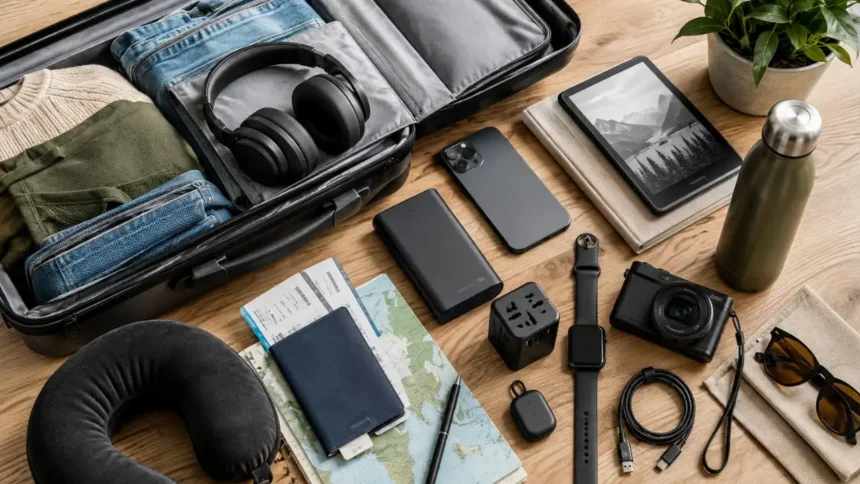
The best travel gadgets are not always the newest or most expensive products. They are compact, durable and useful in several situations. Current travel recommendations frequently favour power banks, universal adapters, luggage trackers, multi-port chargers, noise-cancelling headphones and compact organisers because these products solve common travel problems.
This guide explains which useful travel gadgets are worth buying, what features to compare and which products may add unnecessary weight. Whether you are preparing for a weekend break, business trip or international holiday, these practical recommendations can help you build a smarter and more reliable packing list.
What Makes a Travel Gadget Worth Buying?
A worthwhile travel gadget should solve a problem you are likely to experience more than once. For example, a power bank solves the problem of a dying phone, while a luggage scale helps prevent overweight baggage charges. Products designed around realistic situations usually provide greater value than accessories created around unlikely emergencies.
Portability is equally important because every gadget adds weight and occupies space. A device may appear useful at home but become inconvenient when carried through airports, train stations and crowded streets. Look for compact products that can replace several separate items or fit easily inside your existing carry-on bag.
Durability should also influence your buying decision. Travel equipment is regularly dropped, compressed or exposed to changing temperatures. Weak cables, loose plugs and poorly constructed cases may fail when you need them most. Reliable materials and protective designs are therefore more valuable than unnecessary decorative features.
Before buying anything, consider your destination, travel style and trip length. Someone taking frequent international business trips will need different travel tech essentials than a person visiting a nearby city for two days. Purchase products that address your personal routine rather than copying every item from a general packing list.
1. Portable Power Bank
A portable power bank is one of the most useful travel gadgets because phones often lose power faster during a trip. Navigation, mobile data, photography, translation apps and digital boarding passes can quickly drain the battery. A portable charger keeps essential information accessible when wall outlets are unavailable.
Choose the capacity according to your journey. A compact power bank may be enough for everyday sightseeing, while a larger model is more useful during long flights, train journeys or camping trips. Compare battery capacity, charging speed, weight, USB-C support and the number of devices that can be charged simultaneously.
Air passengers must also follow battery rules. The Federal Aviation Administration states that power banks and other spare lithium batteries must remain in carry-on baggage rather than checked luggage. Lithium-ion power banks are generally limited to 100 watt-hours unless additional airline approval applies.
Check the watt-hour rating before leaving for the airport and avoid travelling with damaged, swollen or recalled batteries. Keep the power bank protected from metal objects that could cause a short circuit. When a carry-on is checked at the gate, remove the portable charger and keep it with you inside the cabin.
2. Universal Travel Adapter
A universal adapter is one of the most practical international travel gadgets for people who visit countries with different socket designs. Instead of buying a separate plug for each destination, a multi-region model can support several common outlet types. Many models also provide USB-A and USB-C charging ports.
Before purchasing an adapter, confirm that it supports the plug type used at your destination. Some products described as universal do not cover every country, particularly destinations using less common socket types. Check the product specifications carefully instead of relying only on broad claims printed on the packaging.
Remember that an adapter changes the physical plug connection but does not automatically change electrical voltage or frequency. A voltage converter may be necessary when your appliance is not compatible with the destination’s supply. Check the label for an input range such as 100–240V before connecting any device.
Look for safety shutters, replaceable fuses, firm plug mechanisms and sufficient USB output for your equipment. Avoid connecting high-powered heating appliances unless both the adapter and appliance support the local voltage. Hair dryers, straighteners and similar products often require more caution than phones, tablets or laptops.
3. Multi-Port USB Charger
A multi-port USB charger can replace several separate wall plugs, making it valuable for travellers carrying a phone, tablet, smartwatch, camera and wireless earbuds. Using one compact charger also helps when hotel rooms provide only one or two convenient outlets near the bed or desk.
Choose a charger with enough total output to support your devices. A low-powered model may charge a phone successfully but struggle with a laptop or several products at the same time. USB-C Power Delivery is especially useful for compatible phones, tablets and lightweight computers that support faster charging.
Compact gallium nitride chargers have become common among current travel tech recommendations because they can provide considerable charging output without requiring a large body. However, output, heat management and port allocation still vary by model, so compare technical specifications instead of purchasing only because “GaN” appears on the label.
Use certified charging equipment from an established manufacturer and pair it with reliable cables. A powerful charger cannot deliver its full speed through a damaged or low-capacity cable. Carrying one short cable and one longer cable can also help when an airport or hotel outlet is positioned inconveniently.
4. Luggage Tracker
A luggage tracker allows you to view the approximate location of a suitcase through a connected phone application. It can be particularly useful when checked baggage is delayed, placed on the wrong carousel or left at another airport. The information may help you communicate more clearly with airline staff.
Different trackers operate through different device networks, so compatibility should guide your purchase. Some work best with Apple devices, while others are designed for Android-based tracking networks. Confirm that your phone supports the tracker and that the network provides coverage in the places you regularly visit.
A tracker does not prevent baggage from being delayed or stolen, and its location information may not always update instantly. It should be treated as an additional recovery tool rather than a replacement for airline baggage systems, identification tags, secure zippers or travel insurance.
Small baggage trackers powered by permitted batteries can be placed in luggage, but passengers should still review the current airline and destination rules. The FAA recognises luggage-tracking tags as portable electronic devices and provides specific guidance for baggage containing lithium-powered equipment.
5. Digital Luggage Scale
A compact digital luggage scale can help you avoid an unpleasant surprise at the check-in desk. Airline baggage limits vary by ticket, route and carrier, and even a small amount of extra weight can create additional charges. Weighing your bag before leaving allows you to reorganise it calmly.
Look for a scale with an easy-to-read display, a comfortable strap and a capacity that covers your usual luggage allowance. The scale should also display the measurement unit used by your airline. Switching between kilograms and pounds can prevent mistakes when checking a carrier’s baggage policy.
To get a more accurate reading, place the strap securely around the suitcase handle and lift the bag steadily. Keep it off the floor until the measurement locks on the screen. Taking two or three readings can help identify an inconsistent result caused by movement.
A luggage scale is especially valuable on return journeys because travellers often bring home gifts, clothing or souvenirs. Pack the device in an accessible pocket so it is available before travelling to the airport. Its small size and repeated usefulness make it one of the best travel gadgets for frequent flyers.
6. Noise-Cancelling Headphones
Noise-cancelling headphones are valuable travel gadgets for long flights, busy airports and noisy hotel rooms. They reduce steady background sounds such as aircraft engines, ventilation systems and train movement. This can make music, films, podcasts and audiobooks easier to hear without increasing the volume excessively.
Over-ear headphones generally provide stronger passive isolation and longer battery life, while wireless earbuds take up less space. Your best choice depends on comfort, packing space and how long you expect to wear them. Try the fit before travelling because pressure or poor ear-tip sizing can become uncomfortable.
Compare battery life, charging connection, microphone quality and transparency modes. A transparency setting allows you to hear announcements or speak with airline staff without completely removing the headphones. Current travel technology guides continue to place noise-cancelling headphones among the most useful items for frequent travellers.
Keep a wired cable or simple wired earphones as a backup when possible. Wireless headphones may run out of power, and some aircraft entertainment systems still use traditional audio sockets. A small backup option prevents an expensive device from becoming useless during an important part of the journey.
7. Bluetooth Flight Adapter
A Bluetooth flight adapter connects wireless headphones to an aircraft entertainment system through its headphone socket. This lets travellers watch films without using uncomfortable airline earphones or carrying large wired headphones. Some adapters can also connect to gym equipment, televisions and older audio devices.
Check whether the adapter supports one or two pairs of headphones. Dual connection is helpful for couples or family members who want to watch the same screen. Battery life should comfortably exceed the expected flight duration, especially when travelling on long-haul routes with limited charging access.
Bluetooth performance can vary according to the headphones and aircraft system. A slight audio delay may occur, particularly when watching dialogue-heavy content. Selecting an adapter with modern Bluetooth support and low-latency features may improve performance, although compatibility is never completely guaranteed.
This gadget is worth purchasing mainly for people who fly regularly and prefer wireless headphones. Occasional travellers may receive better value from carrying a basic wired pair. A product becomes worthwhile when it solves a repeated inconvenience, not simply because it appears on lists of smart travel accessories.
8. Compact E-Reader
An e-reader gives travellers access to several books without adding the weight of physical copies. It is particularly useful for long flights, beach holidays, train journeys and destinations where English-language books may be difficult to find. A single slim device can provide entertainment throughout an extended trip.
E-readers usually offer screens designed for comfortable reading in bright conditions. Models with adjustable lighting can also be used during night flights or in shared hotel rooms. Choose a screen size that remains readable without making the device too large for your day bag.
Storage capacity is rarely the most important feature because ordinary e-books use limited space. Battery life, waterproofing, screen clarity and access to your preferred book platform may matter more. Download your books before departure so that unreliable airport or hotel internet does not prevent access.
An e-reader is not essential for travellers who rarely read or are satisfied with a phone. However, frequent readers may find it more comfortable and less distracting than a mobile screen. It can also preserve phone battery by moving hours of entertainment onto a separate device.
9. Travel Tech Organizer
A travel tech organizer keeps charging cables, adapters, memory cards, earbuds and small electronics together. Without an organiser, these items can become tangled or disappear into different suitcase pockets. A structured pouch also makes it easier to check that everything has been repacked before leaving a hotel.
Choose a pouch based on the amount of equipment you actually carry. Large organisers can encourage overpacking and may occupy more room than the accessories inside them. A slim model with a few elastic loops and zipped sections is often enough for a phone charger, power bank and spare cables.
Arrange the organiser consistently so each item has a regular location. This makes missing equipment easier to notice and reduces the time spent searching during airport security checks. Keep frequently used items near the top instead of placing them beneath rarely needed adapters or backup accessories.
Current travel recommendations often include compact technology pouches because they are simple, affordable and useful across different types of trips. The best organiser is not necessarily the most complicated one. It should reduce clutter without becoming another bulky object that must be managed.
10. Compression Packing Cubes
Compression packing cubes organise clothing into separate categories while reducing loose space inside a suitcase. They are especially useful for travellers who move between several hotels and do not want to unpack everything at each destination. Separate cubes can hold shirts, trousers, underwear or clean and worn clothing.
Unlike vacuum bags, most compression cubes use an additional zipper to tighten the fabric around the contents. They can make packing neater, but they do not reduce the actual weight of clothing. Compressing too much can also create a dense suitcase that exceeds the airline’s baggage limit.
Choose lightweight cubes with strong zippers and breathable materials. A consistent set of two or three sizes is usually more practical than a large collection of unusual shapes. Before purchasing, compare the dimensions with your suitcase because badly sized cubes may leave more unusable space.
These portable travel gadgets are most valuable for organised packing rather than dramatic space creation. Rolling or folding clothing consistently can improve results, while keeping one empty cube provides a place for laundry. Travellers who already pack minimally may not need compression, but families and long-trip travellers often benefit.
11. Portable Door Alarm
A portable door alarm can provide an additional layer of awareness in hotels, rental apartments or guesthouses. Many models activate when someone pushes a door against a small wedge or pulls a connected device away from its position. The loud sound is intended to alert the traveller and discourage entry.
This product should never replace proper locks, reputable accommodation or basic safety decisions. A lightweight alarm may not stop forced entry, and some door shapes or floor surfaces may prevent it from working correctly. Test the gadget at home before depending on it during a trip.
Look for a simple design that can be installed and removed quickly without damaging the property. Check the battery before departure and pack a replacement if the model uses a less common size. The alarm should remain accessible at night rather than buried inside a suitcase.
Solo travellers may appreciate the extra reassurance, but usefulness depends on the accommodation and personal comfort level. Avoid devices that require permanent installation, create trip hazards or block emergency exits. The goal is to improve awareness without producing a false sense of complete protection.
12. Collapsible Water Bottle
A collapsible water bottle helps travellers stay hydrated without occupying the space required by a full-size rigid bottle. Once empty, it can be rolled or flattened inside a day bag. It is useful at airports, walking tours, outdoor attractions and destinations where carrying water is necessary.
Choose a bottle made from durable, food-safe material with a secure cap. A wide opening makes cleaning easier, while an attached lid reduces the chance of losing it. Check whether the bottle stands upright when filled because some very soft designs can be difficult to use on tables.
Empty the bottle before passing through airport security and refill it after entering the departure area where permitted. A reusable bottle can reduce repeated purchases, but it does not make unsafe water suitable for drinking. Check local water guidance before filling it from an unfamiliar source.
Travellers visiting areas with uncertain water quality may need a properly tested filter or purification method instead. Do not assume that every filtered bottle removes viruses, chemicals or all harmful organisms. Match the product’s verified capabilities to the conditions at your destination rather than relying on general marketing language.
Best Travel Gadgets for Long Flights
A practical long-flight kit should focus on power, comfort and entertainment. A charged power bank protects access to travel documents, while noise-cancelling headphones reduce constant cabin noise. An e-reader, downloaded films or offline podcasts provide entertainment when the aircraft’s system is limited or unavailable.
Add a multi-port charger for airport stops and a Bluetooth adapter when you prefer wireless headphones. Keep the most important items in a small carry-on pouch beneath the seat. Placing everything in the overhead compartment makes it difficult to reach useful equipment after boarding.
Do not carry every gadget you own simply because the flight is long. Extra devices create more charging responsibilities and increase the chance of leaving something behind. Select one tool for each important need instead of packing several products that perform nearly identical functions.
Charge all electronics before leaving home and download essential content in advance. Save copies of bookings and important addresses for offline access. The best travel gadgets for long flights support your journey without requiring constant setup, troubleshooting or dependence on aircraft Wi-Fi.
Smart Travel Accessories to Skip
Avoid novelty products designed for only one unlikely situation. A gadget may look impressive in an advertisement but remain unused throughout several trips. Single-purpose tools often take up space that could be given to a reliable charger, medication, clothing or another genuine travel essential.
Be cautious with very cheap universal adapters, unbranded power banks and poor-quality charging cables. Electrical products can fail, overheat or damage valuable devices when manufacturing standards are weak. Saving a small amount on essential charging equipment may create much larger replacement costs later.
Oversized organisers, complicated neck pillows and miniature versions of products already provided by your phone may also offer limited value. Before buying, ask whether you will use the item during most journeys. If the answer depends on one highly specific scenario, borrowing or skipping it may be better.
Current minimalist travel guidance increasingly recommends avoiding gimmicks, bulky organisers and accessories that solve only rare problems. Focus on compact products that perform several useful tasks and already fit your travel habits. A lighter, more dependable kit is usually more valuable than a suitcase filled with specialised gadgets.
How to Choose Useful Travel Gadgets
Start by listing the problems you experienced during your previous trips. You may have struggled to find an outlet, worried about luggage weight or found it difficult to sleep on a flight. Products connected to real past difficulties are more likely to provide value than accessories purchased for imaginary situations.
Next, compare size, weight, compatibility and charging requirements. A travel gadget should not create more inconvenience than it removes. Check whether it works with your phone, laptop, destination sockets and preferred applications. Also consider whether another item in your bag already performs the same task.
Read long-term reviews instead of relying only on promotional descriptions. Pay attention to durability, battery performance, warranty support and repeated complaints. A high rating based on initial appearance is less valuable than feedback from travellers who have used the product across several journeys.
Finally, set a realistic budget and prioritise equipment connected to safety, power and organisation. You do not need to buy everything at once. Build your collection gradually, beginning with the useful travel gadgets that solve your most frequent problems and adding specialised products only when a future trip requires them.
Conclusion: Useful Travel Gadgets Worth Buying
The most useful travel gadgets are products that make common travel tasks easier without adding unnecessary weight. A reliable power bank, universal adapter, luggage tracker and digital scale can prevent several common problems. Noise-cancelling headphones and an e-reader can also make long journeys more comfortable.
Not every traveller needs every product included in this guide. Business travellers may prioritise charging equipment, while holidaymakers may benefit more from packing cubes or a collapsible bottle. Your destination, trip length and existing equipment should determine which purchases provide genuine value.
Safety and compatibility should always come before appearance or low prices. Check battery restrictions, destination voltages, device support and product quality before leaving. Test important equipment at home so you are not learning how to use it while standing in an airport or unfamiliar hotel.
A smart travel kit should remain compact, dependable and easy to organise. Begin with products that solve problems you have experienced before, and avoid accessories that serve only one unlikely purpose. Buying fewer high-quality gadgets will usually improve your trip more than carrying numerous unnecessary tools.
Frequently Asked Questions
What are the most useful travel gadgets?
A portable power bank, universal adapter, digital luggage scale, luggage tracker and multi-port charger are useful for most travellers. The right selection depends on your destination, devices and travel habits.
Are power banks allowed on flights?
Power banks are generally allowed in carry-on baggage but must not be placed in checked luggage. Check the battery’s watt-hour rating and confirm the airline’s current requirements before travelling.
Is a universal travel adapter worth buying?
A universal adapter is worth buying when you visit countries with different outlet types. Remember that an adapter changes the plug shape but does not necessarily convert the electrical voltage.
Do luggage trackers work internationally?
Luggage trackers can work internationally when they connect to a supported device network in that location. Updates may be delayed, so they should complement airline tracking and identification tags rather than replace them.
Which travel gadgets are best for long flights?
Noise-cancelling headphones, a power bank, an e-reader and a Bluetooth flight adapter are useful on long flights. Choose lightweight devices with enough battery life for the entire journey.